
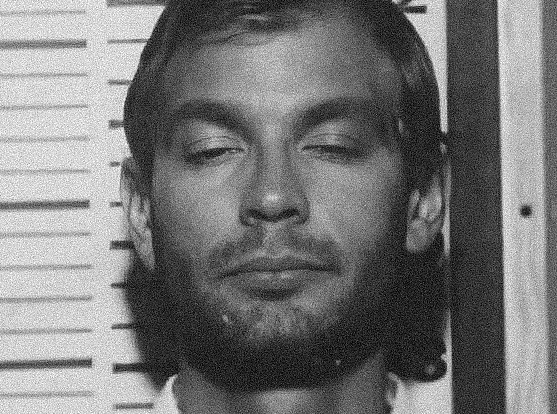
When we hear his name, Jeffrey Dahmer, one of the first things that pop into our heads probably will be “necrophilia“. His attorney, Mr Boyle, based his defense mostly on this “illness”. But necrophilia isn’t or wasn’t seen as a mental disorder. The definition of necrophilia is a bit complex. When people talk of necrophilia they usually mean sex with dead bodies. And yes that’s accurate. But necrophilia also means being sexually attracted to a dead person. The most common motive for necrophilia is possession of an unresisting and unrejecting partner. So in what sense was Jeff a true necrophile? Or is the term somnophilia a better fit for him? Maybe both?
Somnophilia generally refers to a sexual interest in engaging in sexual activity with a sleeping person. Other definitions have since been offered, although they tend to be inconsistent. This appears to be largely due to their emphasis on different elements of the interest (e.g., the specific state, the context, the recipient’s reaction, the lack of consent). For example, while Money’s original definition in 1986, was directed towards sleeping people, subsequent definitions were broadened to encompass ‘unconscious’ people. Somnophilia is also sometimes regarded as being synonymous with sleepysex. However, sleepysex refers to one or both partners being in near-sleep states whilst engaging in sexual behaviors. Here, sexual arousal is thought to stem from the intimacy of the interaction. These two additional concepts increase the scope of the term somnophilia, making it unclear as to whether it refers to an interest in sleeping people, waking people up, having sex in a sleepy state, or all of the above. Based on this, and the dearth of empirical data on somnophilia, it is difficult to form any firm conclusions about its definition.
Somnophilia has been theorised to lie along a continuum with necrophilia due to the passivity of the target individual. Some have even suggested that somnophilic behaviour functions as a substitute for necrophilia as it bypasses the crimes associated with the latter. Deehan and Bartels recently examined this proposed link empirically. They found that, in community-based male participants, fantasising about somnophilic behaviour and necrophilic behaviour were positively correlated. In their study, Deehan and Bartels also found that a subset of people interested in sexual activity during sleep were more interested in being the passive/sleeping person – which the authors termed ‘dormaphilia’. This bears a similarity to other paraphilias that have a seemingly complementary opposite (e.g., sadism and masochism; or exhibitionism and voyeurism). Deehan and Bartels did a study on somnophilia. They recruited 232 participants online to discuss the content, origin, sexual appeal, emotional appraisal, and behavioural enactment of their somnophilic and dormaphilic interests and fantasies. 30.4% participants mentioned the act of taking control, being dominant, and, as Participant 82 stated, having “total power” over the passive partner. Some participants described being able to control their partner’s body, as well as controlling what occurred within the sexual encounter without having to interact with their partner (“Somnophilia puts me in charge, and it allows things to be attempted that can’t be done if the other person is awake” – Participant 48). Some also mentioned the passive partner’s inability to resist the situation or the advances of the active partner. Here, the appeal of somnophilia lay in the guarantee of control.
People who have somnophilia may not wish to cause harm or force violence on someone but they receive sexual arousal and orgasm by intruding on and touching or fondling a sleeping person. If these urges are acted on as part of a consensual fantasy scenario, this can be perfectly safe, fun and legal. Those who can’t control urges around somnophilia may seek treatment.
—
Brain Masters made in The Shrine also an interesting observation about Jeff’s polaroids and necrophilia:
“Police officers found 74 Polaroid pictures in Dahmer’s drawer, which does not take into the scores he had taken and subsequently destroyed. This was not a hobby, it was imperative – pressing, impatient, ineluctable. There are some of the body whose bowels had fallen out, which implies that the photographer was working in conditions of unspeakable foulness. Why? Because the taking of photographs is an inherent part of the compulsion itself. It was strong enough to banish the smells, render them impotent, and unable to interfere.
The camera completes the objectification of the victim, destroys the last vestige of his individuality, robs him of his independent being. Just as murder creates a compliant corpse, so the photography of that corpse demonstrates total ownership and control – it is a step further in the same direction. The person, once threatenjngly alive, now exists only in so far as the photographer allows him to exist through images of his creating. It is the translation of life into death, of sentience into petrification, of will into object, the dissolution of all into one triumphant thing – the photograph.
Erich Fromm has analysed what he calls the necrophilous character, which may show itself in seemingly innocuous acts. Men who feel more tender towards their cars than their wives are demonstrating the dangers of inanimation (literally, soullessness). They wash it lovingly, even when they could afford to pay someone else to do it, they may give it a nickname, they caress it and gaze at it. The car has become, in such cases, almost a love object, which does not, unlike a love subject, occasionally refuse one’s attentions. The murderer is doing precisely the same in turning his love object into a still image, turning love (aliveness, mutuality) into pornography (passivity, self-gratification). With his camera, he conceptualises and conquers that which was once a free being, and in this way, uses the camera as a kind of weapon or instrument of control. The camera is a thing which records things, framing them, solidifying them.
It is important to recognise that the camera does not enhance. It reduses (in so far as the person photographed is now no more than an image), and it insultingly proclaims ownership, too. It has become a substitute for involvement, and in that regard, Dahmer’s photography of his corpses, his dismemberment, his trophies, is a loud signal of the condition which afflicts him – necrophilia.”
–
Based on this, I think Somnophilia also applied to Jeff, maybe even more than necrophila. A lot of sources use necrophilia to indicate a person having sex with corpses. Not only to indicate being sexually attracted to a dead person. Jeff himself said he would prefer to have a complete compliant person (alive) to do whatever he wished sexually, not to consider the other person’s needs. One of the reason why he started drugging the men in the bathhouses and why he tried to make ‘zombies’. So technically he is a necrophiliac because he had sex with the dead bodies of his victims, but he was more aroused by their unconscious state because it made him have complete control.
Please share with us your thoughts on this!
 Jeffrey Dahmer Memorial
Excellent ♥️
LikeLiked by 1 person