
There is a sentence in Jeffrey Dahmer’s psychiatric interview with Dr Frederick Fosdal, recorded on January 9, 1992, that functions less like a confession and more like a window.
Fosdal asks him whether he was lonely during his high school years.
“During high school years it was frustrating to not be able to meet someone of my interests so it was frustrating — yeah it was lonely.“
“What about afterwards?“
“And afterwards.“
“Like in Milwaukee — are you lonely?“
“Uh-huh.“
He was lonely his entire life. In Bath Township with no language for what he was. In the Army with no outlet. In Milwaukee — where, for the first time, there were places he could go, people who wanted something like what he wanted, a geography for a life that had previously had none — he was still lonely.
This is the article about that loneliness. About what Milwaukee offered him, and what it could not give him. About the specific architecture of isolation that can be built inside a crowd.
Milwaukee in the 1980s: The Geography of a Hidden World
Milwaukee in 1981, when Jeffrey Dahmer arrived more or less permanently, was not a city known for its gay scene. It was a mid-sized Midwestern working-class city, industrial in character, divided by neighbourhood and race and class in ways that had calcified over decades. Its gay community existed — as gay communities in such cities always existed — in specific and somewhat hidden spaces, known to those who knew where to look and invisible to everyone else.
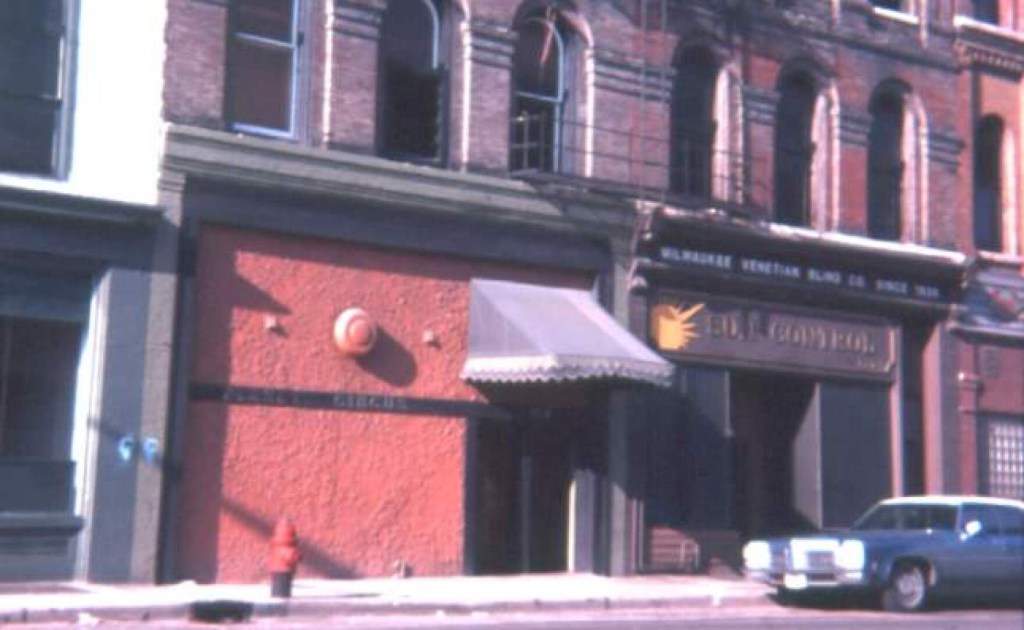
The central hub of Milwaukee’s gay social world in the 1980s was the strip of bars and clubs concentrated around the South Second Street area. Club 219 was perhaps the best known — a bar and dance club that served as a gathering point for the city’s gay men through the decade. There were others: The M&M Club, C’est La Vie, a rotating landscape of establishments that opened and closed and changed character as the decade moved forward. And then there were the bath houses. Milwaukee’s bath houses occupied a specific and now largely vanished role in gay male social life — particularly before AIDS transformed the cultural meaning of those spaces irrevocably. They were places of anonymous encounter, of brief and transactional intimacy, of men moving through a shared space looking for something that could be called connection but was more accurately called relief. They were places where the specific loneliness of being gay in a world that had no room for it could be briefly, bodily, but never lastingly addressed.

Jeffrey frequented both. The bars and the bath houses. The documented estimate, given by Jeffrey himself in the Fosdal interview, is seventy-five to a hundred sexual encounters over the years he spent in Milwaukee.
Seventy-five to a hundred encounters. And after each one, he went home alone.
The Ambience: What Those Spaces Actually Were
To understand what Jeffrey was moving through, it helps to understand what those spaces actually felt like — what the ambience was, what they offered and what they withheld. The bars were social spaces with all the complexity that implies. There was music, conversation, the specific chemistry of alcohol and proximity and the relief of being in a room where you didn’t have to hide what you were. For many men who passed through Club 219 and its neighbours in the 1980s, those bars were genuinely liberating — the first places they had ever existed openly, the first rooms where their sexuality was unremarkable, the first communities they had access to.
But liberation has its limits, and its limits are different for different people.
For someone like Jeffrey — whose attachment style, as we have explored in previous articles, was profoundly anxious-avoidant, who had learned since early childhood that emotional need went unmet, who had no model for what sustained intimacy looked like and a fundamental conviction that closeness would ultimately fail — those bars offered a particular and insufficient kind of belonging. You could be in the room. You could be not-hidden. But you could not, in a bar, be known. You could not, in a bar, be held in the particular way he needed to be held.
The bath houses were even more specific in what they offered and more absolute in what they withheld. They were places of encounter stripped to their physical core — brief, warm, anonymous. The very features that made them accessible to men who couldn’t or wouldn’t form more visible connections were the features that made them structurally incapable of providing what Jeffrey was actually looking for. What he was looking for was not sex. He said this himself, in the flattest and most honest possible way. The only long-term attachments that I was interested in was of a sexual nature — as far as regular friendships — it never interested me too much. After work I like to just go and do my own thing — go to the bars — try to meet the ideal person that I was physically attracted to. The ideal person. Not an encounter. A person.
Loneliness Among Crowds: The Specific Pathology of Social Isolation
Psychology has a term for what Jeffrey was experiencing in those bars and bath houses: social loneliness as distinct from solitary loneliness. Solitary loneliness is the absence of people. Social loneliness is the experience of being surrounded by people and still fundamentally unreached. Research by John Cacioppo — whose work on the neuroscience and social psychology of loneliness remains foundational — found that social loneliness is in many ways more damaging than physical isolation. The presence of others without genuine connection creates a specific form of psychological distress: the person can see what connection looks like, can be in its proximity, but cannot access it. The gap between the social world they inhabit and the intimate world they need is made vivid rather than obscured.
Jeffrey was in that gap every time he walked into Club 219. He could see connection happening around him. He could participate in its surface — the drinks, the conversation, the encounters. But the thing he actually needed, the permanent and warm and unwithdrawing presence that his psychology had organised itself around as its central unmet need, was not available in any bar. It was not, in fact, available anywhere in the external world. It was a need that had grown so distorted by years of deprivation and isolation that no real human relationship could have satisfied it. This is the cruelty at the heart of it. He went to those bars looking for something that no bar could give him. He went home alone each time not because he had failed to find what was available, but because what was available was categorically different from what he needed.
Alcohol: The Architecture of Numbness
Jeffrey began drinking in high school. By the time he reached Milwaukee in his early twenties, drinking was already the primary mechanism through which he managed the unbearable weight of his interior life. In the bars, the drinking was social, unremarkable. Everyone drank. The specific combination of a gay bar in 1980s Milwaukee and a person carrying the particular weight Jeffrey carried meant that alcohol was everywhere and its function was broadly understood — to ease the performance of sociability, to lower the threshold for connection, to make the gap between who you were inside and who you needed to be outside temporarily more navigable. For Jeffrey it did all of these things. And it did one more: it dulled the specific pain of the loneliness that the bars intensified rather than relieved.
Research on alcohol use in sexual minority populations — particularly in the period before greater social acceptance — consistently identifies self-medication as a primary driver of elevated rates of alcohol use disorder in gay men. The bars themselves were both the site of the problem and the site of the medication: the loneliness was felt most acutely in social spaces, and the social spaces were where alcohol was most available. Jeffrey drank before he went out. He drank while he was out. He drank when he came home. The drinking was not separate from the loneliness — it was the loneliness’s shadow, moving with it everywhere.
By the late 1980s, the drinking had become severe enough that it was affecting his work at the Ambrosia Chocolate Factory, where he worked the night shift. He had been cited for excessive absences. He was managing, barely, the basic requirements of a functional life. The alcohol that had once been a tool for managing emotional pain had become a pain of its own — neurologically, psychologically, practically. And still, he went to the bars.
The Hunt for the Ideal Person
There is a phrase Jeffrey uses in the Fosdal interview that repays very careful attention. He describes going to the bars to try to meet the ideal person that I was physically attracted to. The ideal person. Not a person. The ideal person.
In the psychological literature on attachment and desire, the search for an ideal rather than an actual person is a recognised feature of certain attachment styles — particularly the anxious type. Because the internal model of relationship has been formed around unmet need rather than satisfied need, the person does not know from experience what a good enough relationship looks like. They know only the fantasy of what it might look like — the imagined presence that would finally fill the gap. And that imagined presence, by definition, cannot be any actual person, because any actual person will eventually demonstrate the imperfection and limitations and capacity for withdrawal that real human beings inevitably possess.
Jeffrey was not looking for someone he could form a relationship with. He was looking for the ideal person — the fantasy that had formed in the years of isolation, that had taken on specific features (he was very particular about physical type), that had crystallised around the core requirement of permanent, compliant, unwithdrawing presence. No one in Club 219 was going to be that person. No one in the bath houses. No one anywhere. The ideal person existed only in the interior world that had built him — the world of the mannequin, the sleeping figure, the daydream of someone who would simply stay.
Seventy-Five to a Hundred: The Mathematics of Deepening Isolation
Jeffrey’s own estimate — seventy-five to a hundred encounters over the years he spent in Milwaukee before his arrest — is striking not as a measure of appetite but as a measure of futility. Each encounter was, in some sense, a repetition of the same failure. He went. He met someone. Whatever happened, happened. And then it ended. The person left. And Jeffrey was alone again in his apartment on North 25th Street, or his grandmother’s house in West Allis, or whatever temporary place he was inhabiting — alone in the way he had always been alone, in the specific way that no encounter had ever meaningfully addressed.
Research on sexual compulsivity — the repeated pursuit of sexual encounters that produces no lasting satisfaction — identifies this pattern clearly. The behaviour is not driven by excess desire but by the temporary relief from emotional distress that physical encounter provides. The problem is that the relief is brief. Its ending returns the person to the same or a worse emotional state. The cycle of pursuit continues not because it is working but because the brief interruption it provides is the only interruption available. Each time Jeffrey went to those bars and came home alone, the original wound was not addressed. If anything, it was confirmed. Connection had again failed to be what he needed it to be. The ideal person had again not been found. The gap between what he needed and what the world could offer had again been made visible. Seventy-five to a hundred times.
“I guess I never took the time to really nurture any long-term relationships.“
And then, in answer to whether he might have found something if he had looked harder:
“No. I didn’t. I guess I didn’t look hard enough.“
There is something almost unbearably sad about that answer. The pause before it. The admission of his own role in the failure. The recognition, from inside a prison cell in 1992, that somewhere out there were people who might have wanted what he wanted — and that he hadn’t found them, and that everything that followed came in the space between what he needed and what he could find. The Specific Loneliness of Milwaukee.
Milwaukee gave Jeffrey something Bath Township had never given him: a world where his sexuality had a geography. Places he could go. People he could be among. A community, however partial, of men who wanted something like what he wanted. It was not enough. It was, in fact, precisely not enough — because the thing it could not give him was the thing he needed most, and the fact of its almost-but-not-quite sufficiency made the gap more acute rather than less. He could be in those bars and not feel alien in the way he had felt alien in Bath Township. He could have encounters that addressed, briefly, the most surface layer of his need. He could be, for the duration of a night out, a person with somewhere to go. And then the bar closed, or the encounter ended, or the person left, and he was back in the apartment with the fish tank and the incense and the New Age cassettes and the beer, alone with the interior life that no amount of time in those bars had ever touched.
“When my father came home I was happy. When my mother came home I was watching TV.“
He wrote that as a child.
The asymmetry is everything: one parent whose arrival registered as joy, one parent whose arrival registered as nothing, as background. The child who wrote that sentence learned early that some arrivals do not reach you. That presence is not the same as presence. He spent the rest of his life trying to find someone whose arrival would reach him. He went to seventy-five to a hundred encounters in Milwaukee’s bars and bath houses. None of them reached him.
“I can take it to a point, but not years and years.“
He said that about loneliness. Years and years of it. The bars of Milwaukee were the architecture through which he tried to solve it, one night at a time, one encounter at a time.
The architecture failed. The loneliness held.
Sources: Frederick A. Fosdal, M.D., psychiatric interview with Jeffrey Dahmer, January 9, 1992; Patrick Kennedy and Robyn Maharaj, Grilling Dahmer, 2016; Brian Masters, The Shrine of Jeffrey Dahmer, 1993; John T. Cacioppo and William Patrick, Loneliness: Human Nature and the Need for Social Connection, 2008; Ilan Meyer, “Prejudice, Social Stress, and Mental Health in Lesbian, Gay, and Bisexual Populations,” Psychological Bulletin, 2003.

 Jeffrey Dahmer Memorial