
There is a detail in the testimony of Jeffrey Dahmer’s neighbours that receives almost no attention in the coverage of his case. A colony of stray cats would follow him down the street.
Not away from him. After him. Choosing him.
Animals don’t perform comfort. They don’t extend trust out of politeness or social obligation. They either feel safe with a person or they don’t. The cats that followed Jeffrey Dahmer through the streets felt safe. That is a simple fact, and it tells you something the courtroom record never could.
From the Very Beginning
Jeffrey Dahmer’s relationship with animals began almost as soon as he was old enough to have one.
At eighteen months old, he had a goldfish and a pet turtle. His mother Joyce wrote of him at that age: “Jeff was so very gentle with the turtle.” He was a toddler, exploring his relationship with another living creature, and what she observed was gentleness. Not curiosity that tipped into harm. Not the roughness of a child who hadn’t learned. Gentleness, from the beginning.
In Iowa, where the family moved for Lionel’s graduate studies, Jeff encountered animals everywhere. A kitten called Buff. A squirrel called Jiffy who came to the window-sill looking for food and didn’t run away — mother and son were photographed pointing at him together, delighted. Snakes, toads, crabs, turtles, fish, wild rabbits all fed his curiosity and imagination. His nursery school teacher gave him a pet grey mouse, hoping it might help with his shyness. He spent time at a nearby research centre, watching barnyard animals for hours, fascinated by the sheer fact of living creatures doing what they do.
Then one day, he and his father spotted something on the pavement while cycling together — a baby nighthawk that had fallen from its nest. At Jeff’s urging, Lionel picked it up and together they took it home. Over the following weeks, they nursed it back to health, feeding it milk and corn syrup from a baby bottle, then solid food, then small bits of hamburger. It grew and grew until the day they finally took it outside to release it.
Lionel writes of that moment: “I cradled the bird in my cupped hand, lifted it into the air, then opened my hand and let it go. As it spread its wings and rose into the air, we, all of us — Joyce, Jeff, and myself — felt a wonderful delight. Jeff’s eyes were wide and gleaming.”
He called the bird Dusty. It would return when they whistled, even after being gone for days. It was, in Lionel’s words, “the single happiest moment of his life.”
Frisky
When the family moved to Doylestown, Ohio, Jeff was six years old and had just gained a little brother. Joyce worried he might be jealous. What she observed instead was that Jeff loved his new brother but something else held his heart more fully. She wrote: “Frisky comes first in his heart, though. They really romp and play.”
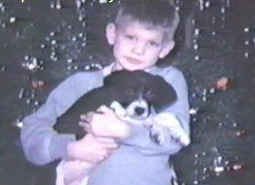
Frisky was a dog — cheerful, playful, loyal — given to Jeff to compensate for all the pets he had been made to leave behind in the various moves that punctuated his childhood. “We’d go out and play in the fields, run around,” he later remembered. “She was a good dog to have.”
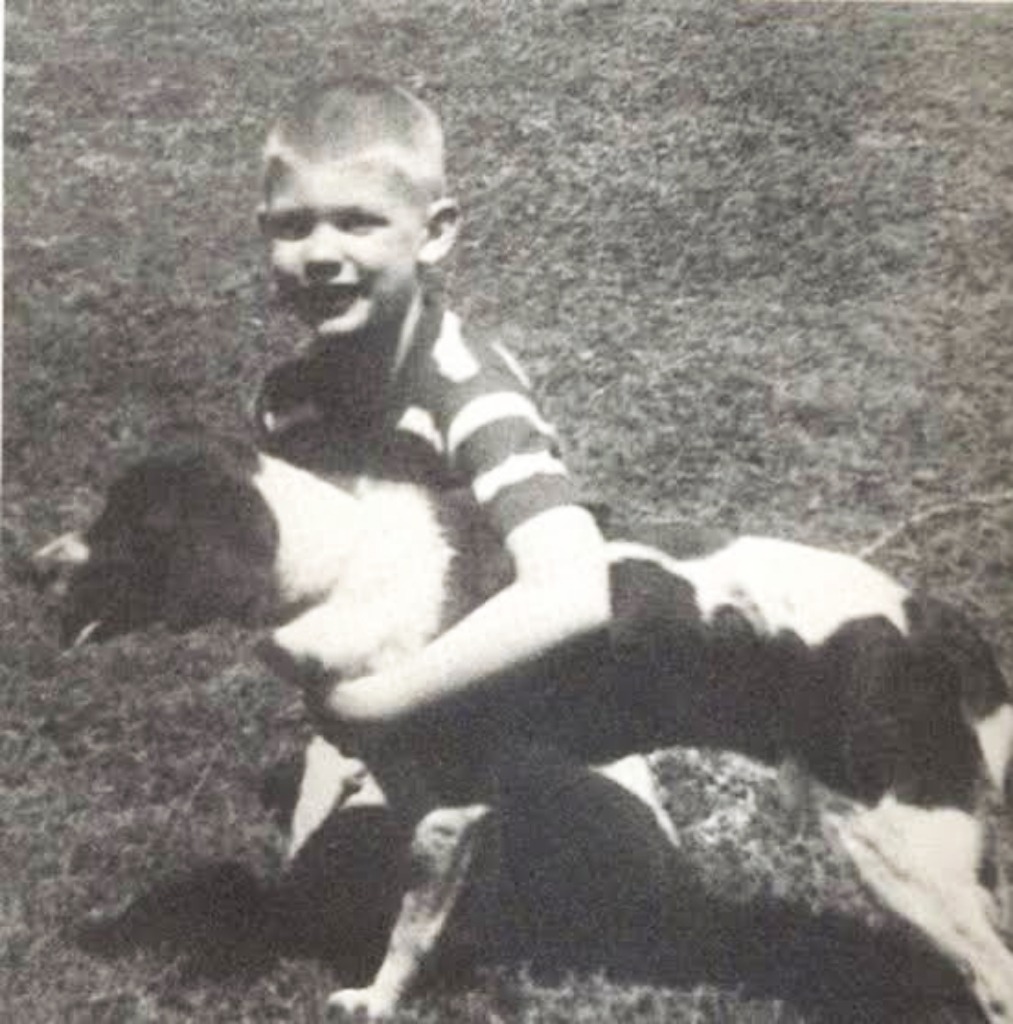
Frisky followed the family from Doylestown to Barberton to Bath Road, Ohio — neighbours built her a dog house when they arrived. In Barberton, Lionel took Jeff and Frisky on two-mile walks to a farm to buy eggs. On Saturdays they drove together for chocolate ice cream sodas, a ritual carried over from Iowa. Frisky roamed the woods of Bath Road and brought home a dead woodchuck. She was, by every account, one of the most consistent and uncomplicated sources of love in a childhood that was in most other respects increasingly fragmented and unhappy.
When Jeff eventually packed his bag for Ohio State University — the only attempt at college he would ever make — among the few things he brought with him were a snake skin from Boy Scout camp and two photographs of his dog.
He did not bring much. But he brought Frisky.
What He Would Not Do
Brian Masters, in his extensive study of the case, states it plainly: “Jeffrey Dahmer never killed an animal himself.”
This is important to say clearly, because the mythology of serial killers includes the near-universal assumption of childhood animal cruelty, and that assumption has been routinely applied to Jeffrey. It does not fit.
What is documented is that he collected and dissected animal carcasses he found already dead — road kills, bones, creatures the civets had left under the house. He was fascinated by anatomy, by the interior of living things, by the architecture of a body. That fascination would later take a devastating direction. But it was never accompanied by cruelty to a living animal. He was not interested in suffering. He was not interested in power over a sentient creature. His experiments were always with what was already gone.
He maintained a small graveyard for animals near the house, with crosses and skulls marking the sites. His brother David knew about it and thought Jeff was “doing a good service” by burying dead creatures. Nothing about it struck anyone who knew him as sinister.
One incident makes his orientation toward animals vivid and unmistakable. His friend Jeff Six had a habit of deliberately driving into dogs on the road, which he seemed to find amusing. “In one day he went through four dogs,” Jeffrey remembered. The last one — a puppy — went flipping over the hood of the car. “That just sickened me. I told him to take me back and let me out.”
He never forgot the eyes of that wounded dog. Brian Masters writes that the reproach in those eyes represented perhaps the last moment when a flicker of genuine sentiment still stirred in him — and that it was brought to flame by that one small tragedy. He felt it. He left.
The Fish
In the final years before his arrest, when Jeffrey had moved into Apartment 213 on North 25th Street and the world around him was sliding into catastrophe, he found one last innocent interest. He bought a thirty-gallon aquarium from a shop on West Oklahoma Avenue, some tropical fish, and books on how to care for them properly.
He described it with a warmth that he applied to almost nothing else in his life: “It was nice, with African cichlids and tiger barbs in it and live plants. It was a beautifully kept fish tank, very clean. I used to like to just sit there and watch them swim around, basically. I used to enjoy the planning of the set-up, the filtration, read about how to keep the nitrate and ammonia down to safe levels.”
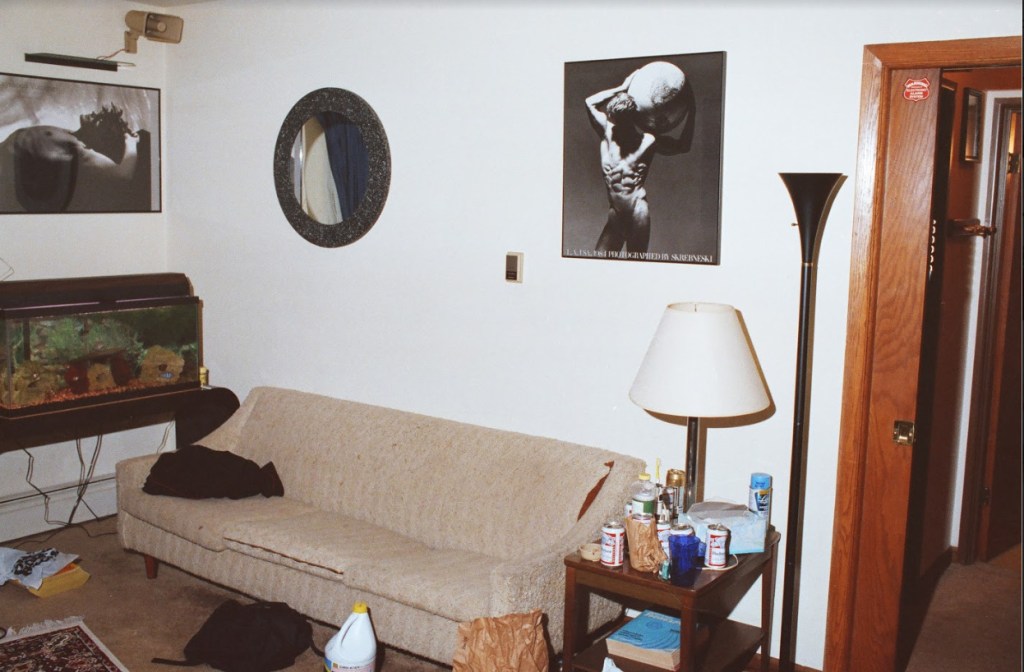
Brian Masters notes that it was only when talking about his fish that Jeffrey’s voice became animated. The aquarium sat on the black table that would later be described in court as a makeshift altar. But first, it held living things he tended carefully. He would walk around the fish store, fascinated by rare specimens.
Once, he saw a puffer fish. “It’s a round fish,” he said, “and the only ones I ever saw with both eyes in front, like a person’s eyes, and they would come right up to the front of the glass and their eyes would be crystal blue, like a person’s. Real cute.”
After his arrest, looking back on all of it, he said simply: “I really enjoyed that fish tank. It’s something I really miss.”
His co-workers at the Ambrosia Chocolate Factory confirmed what his apartment already showed — that he was always reading books about animals and fish when he was not working. Among the items Lionel catalogued in Apartment 213 were four books on the care of fish, a box of fish food, and the tank itself — still there, still lit.
What the Cats Knew
Neighbours observed him walking through the neighbourhood, and a colony of street cats would follow behind him. This is not a figure of speech or an embellishment. It was noted. It was real.
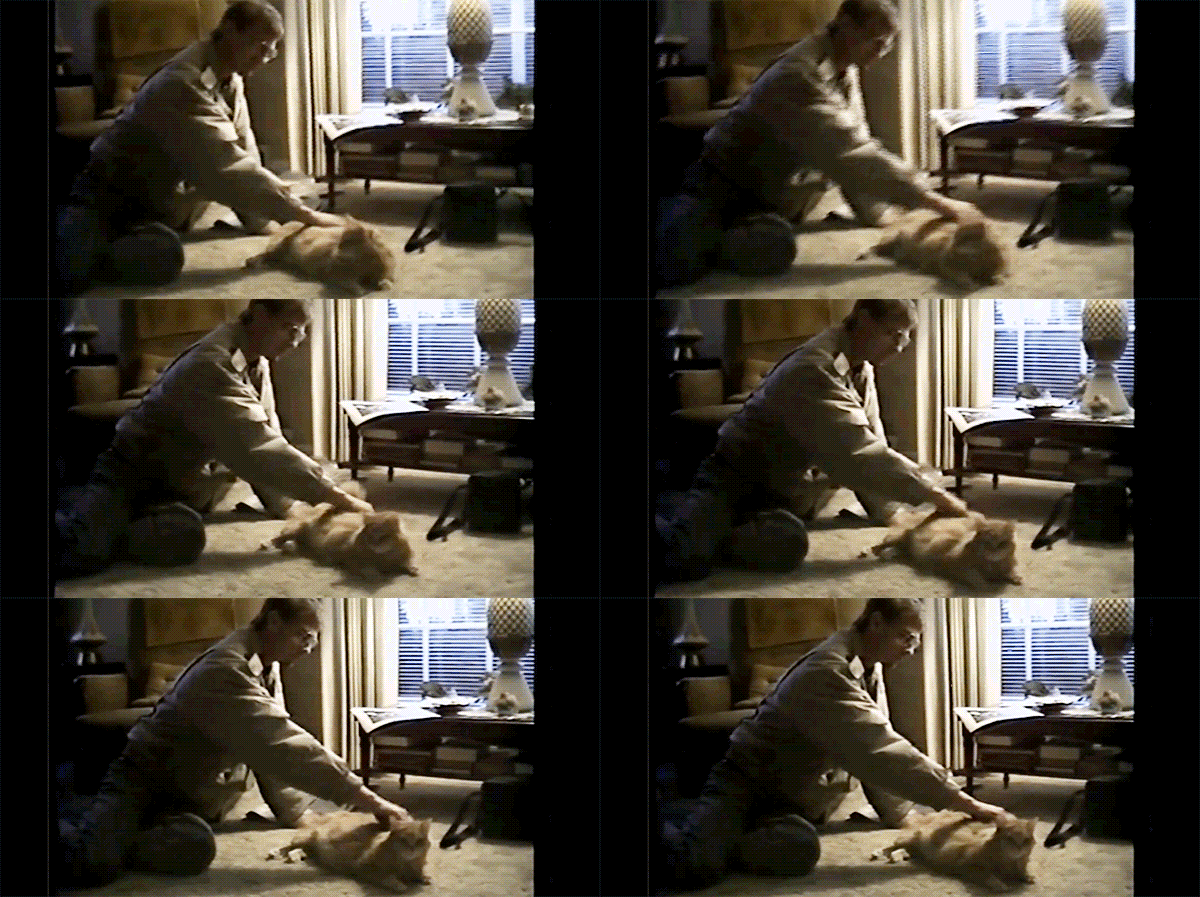
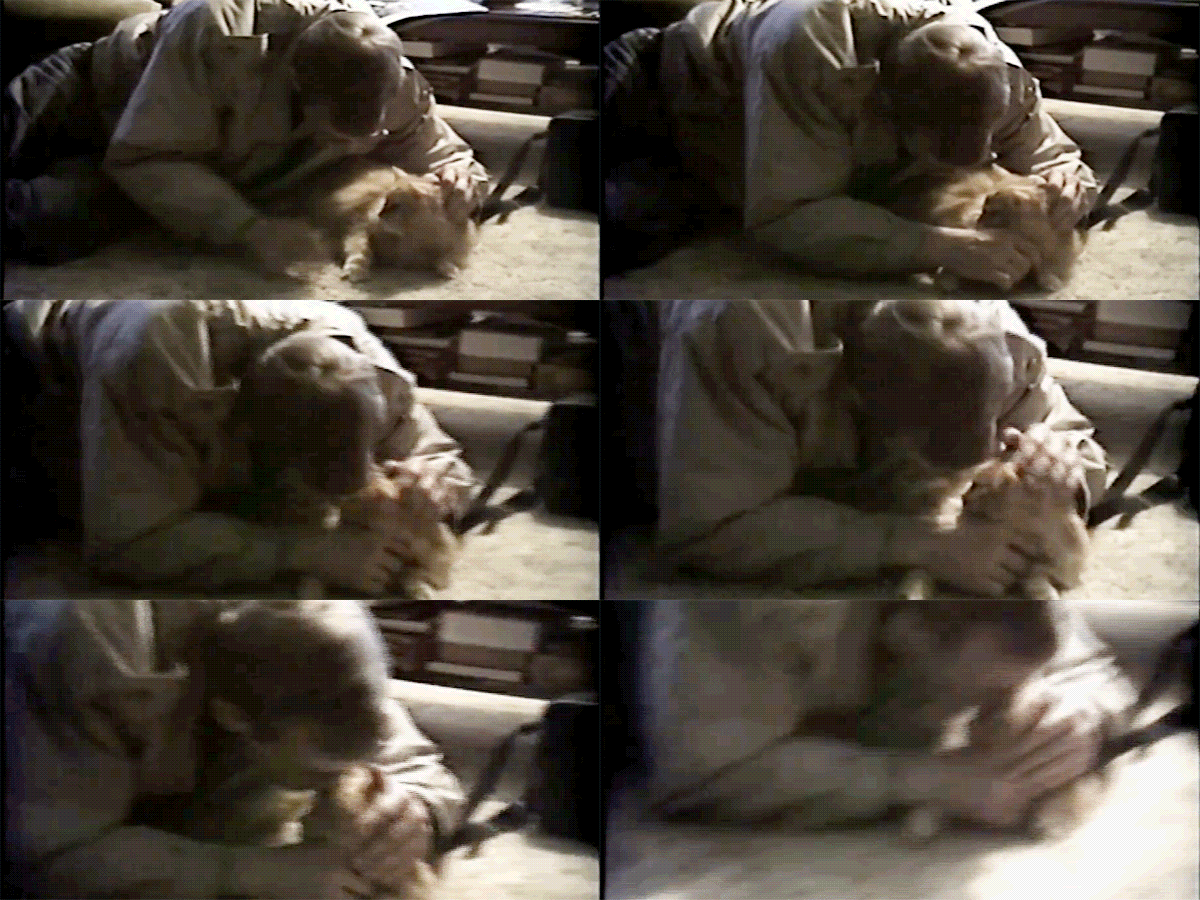
There is also a video — quiet, undramatic, briefly circulated — of Jeffrey sitting on the floor with a cat named Jodi, kissing her, stroking her. His hands are gentle. His face is soft. The cat does not pull away.
In prison, when Lionel visited, they talked about what he had been eating, the state of Lionel’s mother’s health, and the condition of the cats at home. It was ordinary conversation — the kind you have when there is little left to say but you still want to say something. The cats were worth mentioning. They were part of the world he was still connected to, even through prison glass.
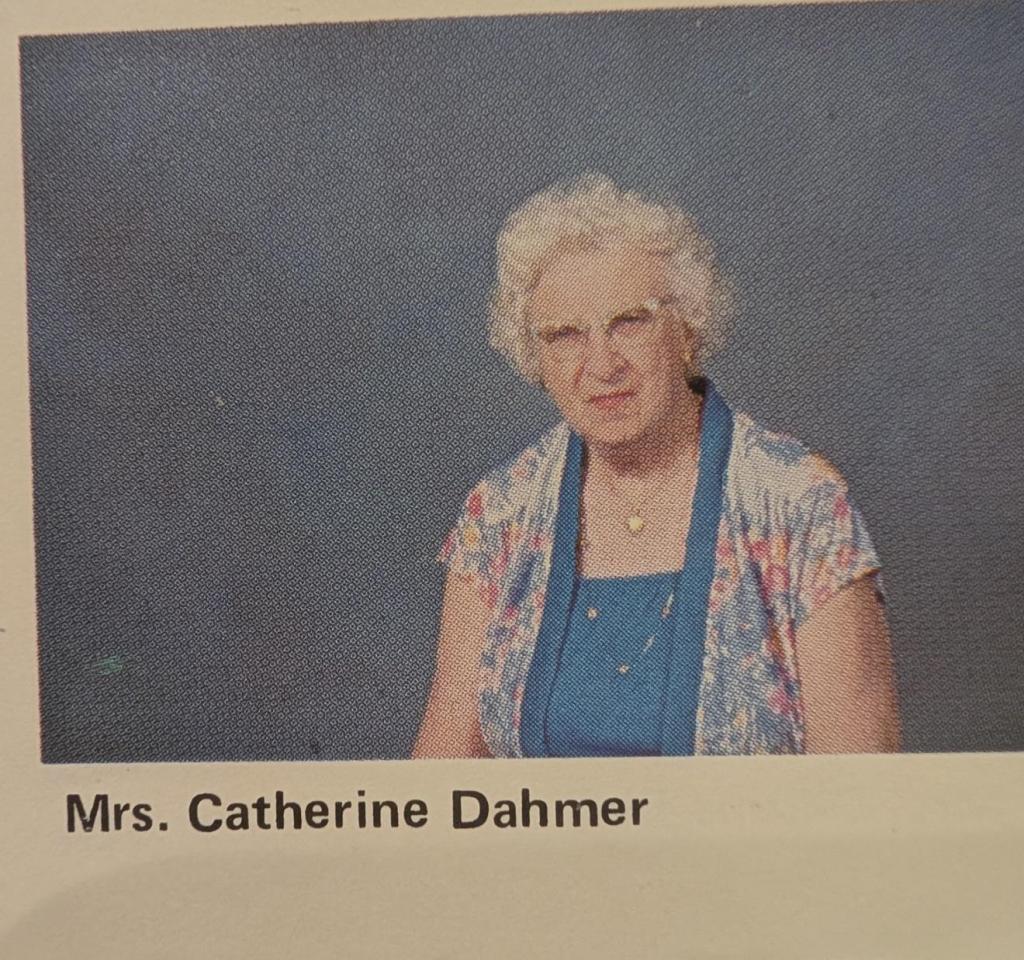
At one of his visits to Catherine Dahmer, when Lionel brought news of his mother’s minor car accident, Jeffrey expressed concern and hoped she would stay home with her cat and not drive again. Brian Masters notes this as a rare moment when he was able to externalise, to think of somebody other than the self which drove him and monopolised his energies. He was thinking about an old woman and her cat.
What It Means
Jeffrey Dahmer was a man who grieved when he had to leave his pets behind. Who nursed a baby bird back to health and watched it fly away with gleaming eyes. Who carried photographs of his dog to college. Who built a fish tank and read about nitrate levels and stood in a pet shop, moved by the blue eyes of a puffer fish. Who walked down a Milwaukee street with cats at his heels.
None of this explains what he did. Nothing explains that. But it is part of who he was — a real and documented part, not a sentimentalised myth. The same person who caused devastating harm to other human beings was consistently, throughout his entire life, gentle with animals. They were not afraid of him. They chose him.
Brian Masters suggests the eyes of living creatures held a particular significance for Jeffrey — that they were the thing that could still reach him, the harbingers of whatever conscience remained. The wounded puppy that haunted him. The puffer fish with its blue human eyes. Jodi the cat, who pressed close and let herself be held.
He felt things. They were distorted, misdirected, catastrophically expressed in one dimension of his life. But the capacity was there, and animals knew it, and they came to him anyway.
We think he deserved to be seen properly in return.
A Note on Plants
Jeffrey’s care for living things extended beyond animals. His grandmother Catherine told journalist Anne Schwartz: “He loves flowers, roses. He doesn’t hesitate to show his love for me.” Schwartz herself noted that Jeffrey “fancied roses, his fish tank, and his laptop computer.” When he lived with Catherine in West Allis, he helped her with the flowerbed and the lawn. Lionel later suggested gardening as a possible vocation, because it was something Jeff had seemed to enjoy. Father and son drove together to nurseries to buy plants for the garden. The living room of Apartment 213, when police first entered it, contained a healthy pot-plant on a tall pedestal — one of the details that made the room appear, in Brian Masters’ words, “surprisingly neat and tidy.” The fish tank held living aquatic plants he tended alongside the fish. In a life characterised by isolation and withdrawal, he kept things growing.
Sources: Brian Masters, The Shrine of Jeffrey Dahmer, 1993; Lionel Dahmer, A Father’s Story, 1994; Anne E. Schwartz, Monster: The True Story of the Jeffrey Dahmer Murders, 1992. All direct quotations attributed to Jeffrey Dahmer are drawn from his documented interviews with Dr Kenneth Smail, his confession to Milwaukee Police, and his interview with Stone Phillips, Dateline NBC, 1994.

 Jeffrey Dahmer Memorial