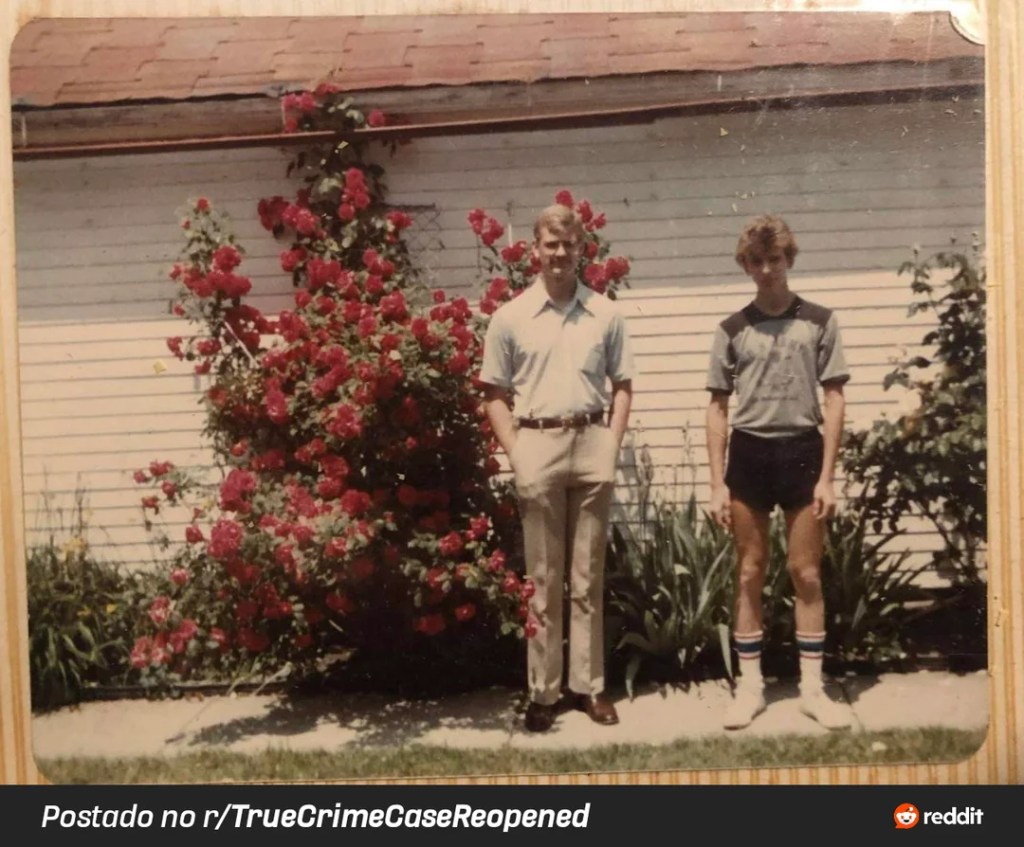
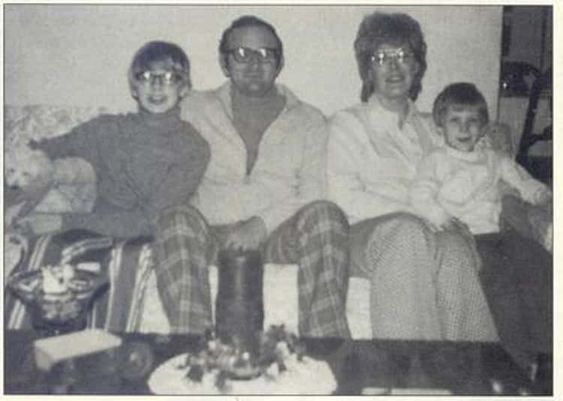
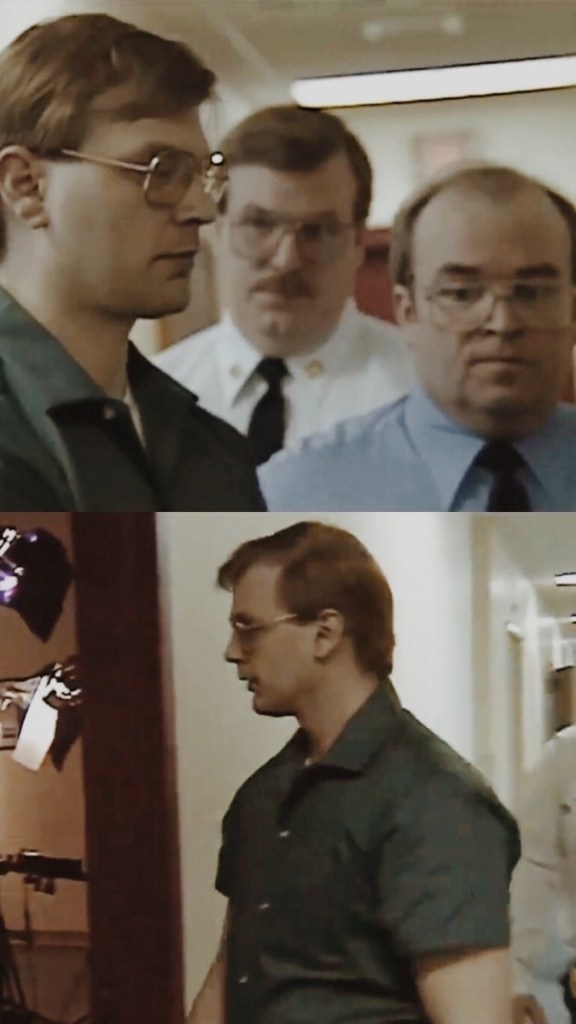
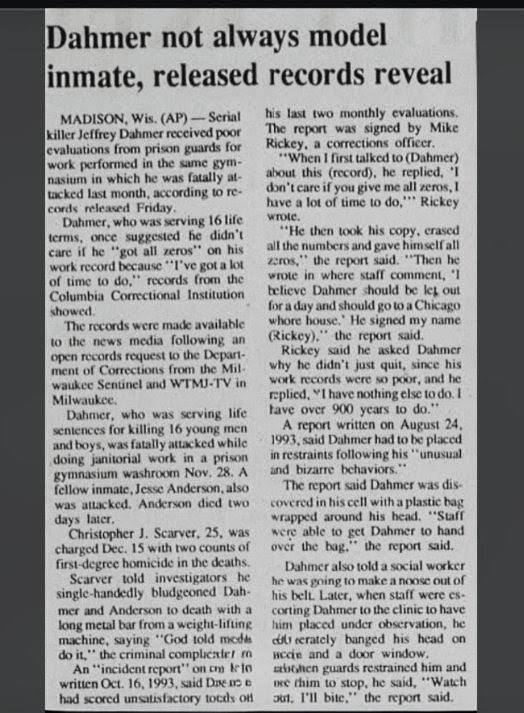
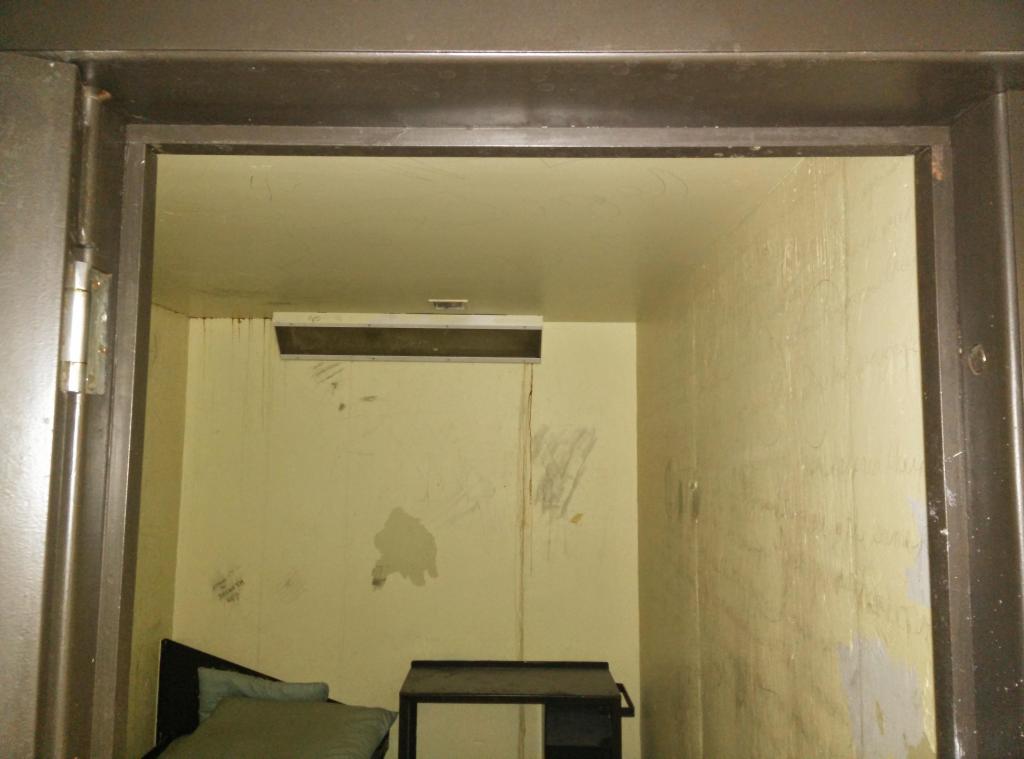
Before Everything: Jeffrey Dahmer’s Childhood and Teen Years

There was a boy before the story the world knows.

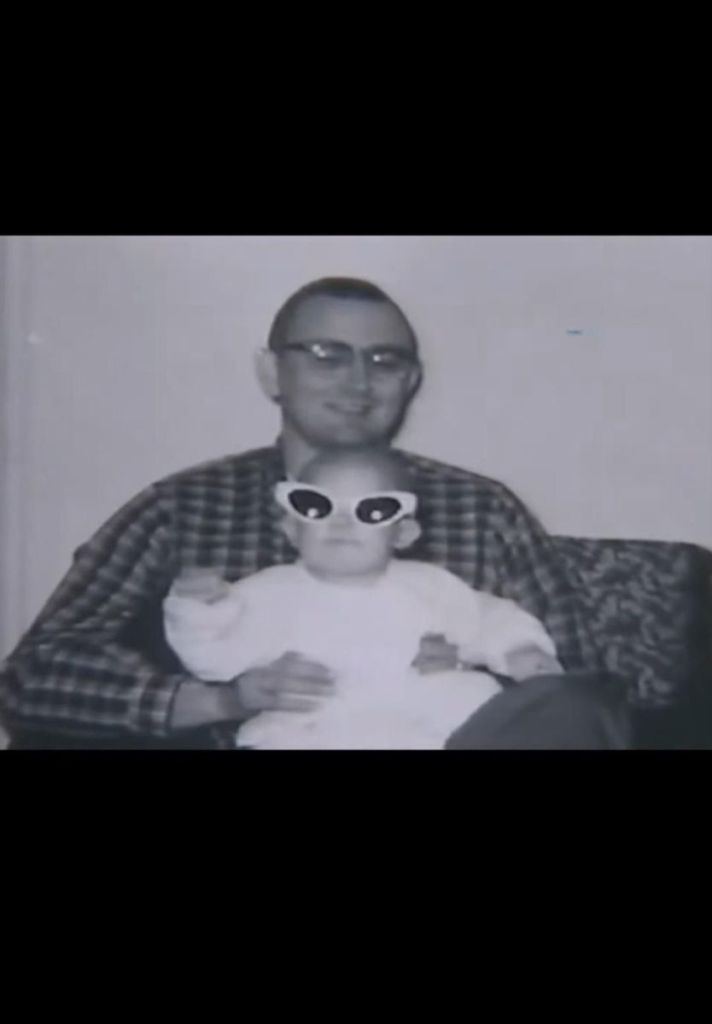
He was born on May 21, 1960, in Milwaukee, Wisconsin, to Lionel and Joyce Dahmer. He was their first child. By most accounts he was a happy, curious infant — doted on, loved, ordinary in all the ways that matter. Lionel would later describe a little boy who was bright and inquisitive, who moved through the world with a lightness that would not last.

What happened between that beginning and the morning of June 18, 1978 — when a young man named Steven Hicks hitchhiked along a road in Bath, Ohio, and Jeffrey Dahmer offered him a ride home — is the story this article attempts to tell properly, for the first time on this memorial.

Not the story of a monster in the making. The story of a child who needed help that never came.


The Early Years

Jeffrey’s early childhood was, by his own account and Lionel’s, largely unremarkable. He was a curious, energetic child who loved his dog and explored the world with the enthusiasm common to all small children. Lionel describes him as affectionate and bright. Joyce, for all the difficulties that would come later, was attentive to him in those early years.

The family moved frequently during Jeffrey’s childhood, following Lionel’s academic career — first to Ames, Iowa, then to Doylestown, Ohio. Jeffrey adapted, as children do, though the pattern of uprooting and resettling established early in his life would continue throughout it.

What the early years show, in retrospect, is a child who was sensitive and perceptive in ways that made him vulnerable to the disruptions that were coming. He noticed things. He felt things deeply. In a stable environment, these qualities might have become strengths. In the environment that was actually waiting for him, they became fault lines.


The Hernia Surgery — The First Turning Point

When Jeffrey was around four years old, he underwent surgery to correct a double hernia. It was a routine procedure, medically unremarkable. But what followed was not routine at all.

After the surgery, Jeffrey’s personality changed. The cheerful, outgoing child became withdrawn, quieter, somehow absent from himself in a way that persisted. Lionel noticed it. He would later describe a son who seemed, after that surgery, to have retreated somewhere inside himself that was difficult to reach.

The reasons are not fully understood. It may have been the experience of anaesthesia and physical vulnerability at an age when a child cannot conceptualise what is happening to their body. It may have been the disruption of routine, the hospital environment, the fear. It may have been something neurological — a sensitivity to the procedure or its aftermath that had consequences no one thought to investigate.

What matters is that the boy who came home from that surgery was different from the boy who went in. Something shifted. Something that had been open began to close.


Bath Road — The Last Happy Chapter

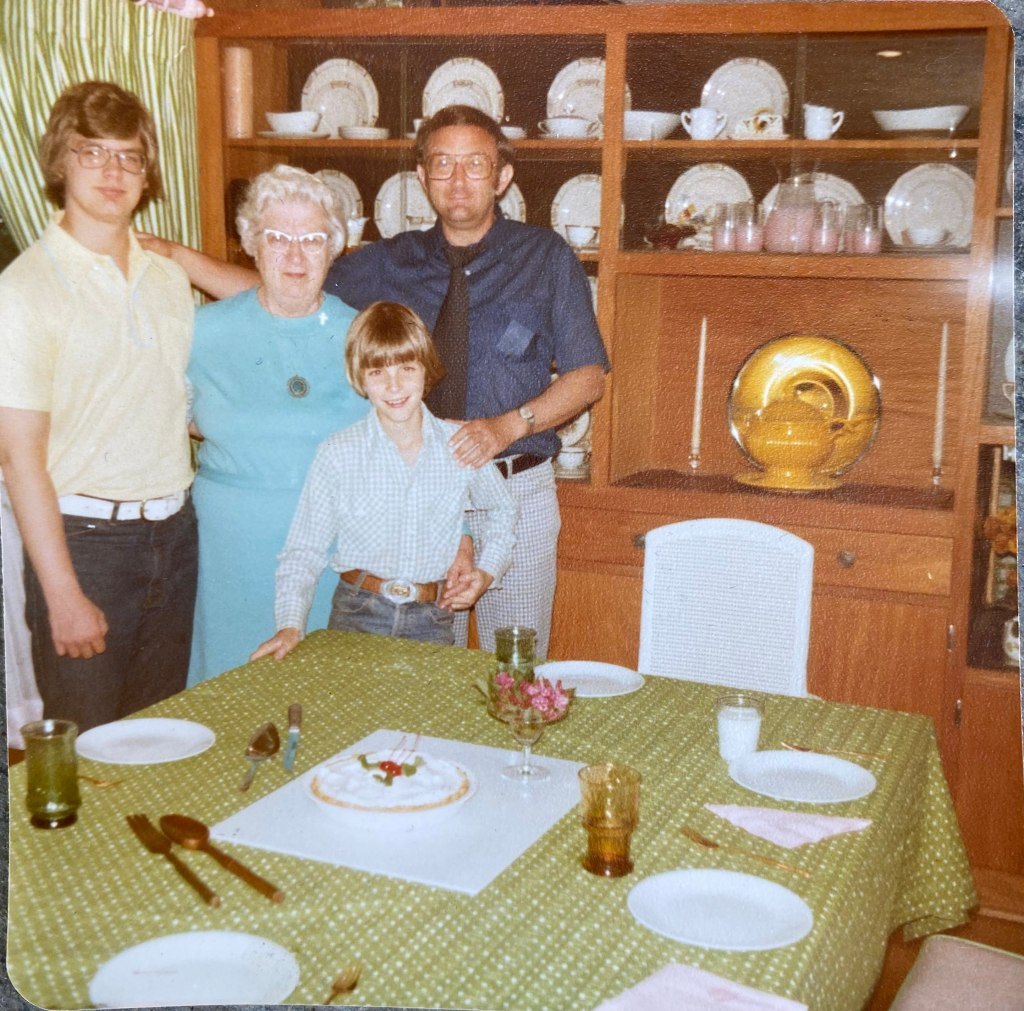
In 1968, when Jeffrey was eight years old, the family moved to Bath Township, Ohio. Lionel had completed his doctorate in analytical chemistry and taken a position that allowed them to settle properly for the first time. They moved into a house on Bath Road — a wooded, rural property with space and privacy and the particular freedom that comes from being a child in a place where the world feels large.

Jeffrey loved Bath Road. This is documented clearly in Lionel’s account and consistent with what Jeffrey himself later described. The woods behind the house were his territory — he explored them constantly, built things, climbed things, discovered things. He had a dog, a bicycle, the ordinary pleasures of a rural American childhood in the late 1960s.

It was here that his fascination with animals and their interiors began. He started collecting roadkill — animals he found already dead along the roads near the house — and examining them. He was curious about bones, about what held living things together, about what remained when the life was gone. Lionel, himself a scientist, initially interpreted this as a natural extension of scientific curiosity. He was not entirely wrong. The curiosity was genuine. But there was something else in it too — an intensity, a fixation that went beyond ordinary childhood interest in nature.

Jeffrey later described the bone collecting as something that gave him a feeling of control and order in a life that was becoming increasingly chaotic. The bones were clean, permanent, comprehensible. The world outside the woods was becoming less so.


Joyce’s Deterioration

The years on Bath Road were also the years in which Joyce Dahmer’s mental health deteriorated significantly. She suffered from anxiety and hypochondria that escalated into something more serious — a pattern of prolonged illnesses, periods of collapse, demands for attention and care that consumed the household’s emotional resources. Lionel describes a marriage under sustained strain, a home in which tension was the ambient condition.

Joyce was not absent in a simple sense — she was present, often intensely so, but her presence was unpredictable and frightening rather than stabilising. Jeffrey could not rely on her. He could not anticipate her moods or her needs. The household revolved around managing her, and no one was managing him.

Lionel, working long hours on his doctorate and later his career, was often genuinely absent — physically away for extended periods when Jeffrey needed him most. He acknowledges this in A Father’s Story with a guilt that runs through every page. He knew something was wrong with his son. He did not know how to reach him. He kept hoping things would improve.

They did not improve.


The Boy Nobody Noticed

What makes Jeffrey Dahmer’s childhood and adolescence so painful to examine is not that the warning signs were invisible. It is that they were present, and ordinary, and embedded in a life that also contained perfectly normal things — things that remind you, painfully, that this was a real child living a real life.

He played clarinet in the school band. He had learned tennis as a younger child and played with some enthusiasm. He was a Boy Scout for a period, participating in the badges and activities and group life that scouting involves. He was good at biology — genuinely, notably good, with a natural aptitude for the subject that his teachers recognised. There is a biology essay he wrote in high school that still circulates online, notable for its sophistication and its author’s evident passion for the subject.

These are not the details of a child who was lost from the beginning. They are the details of a child who was trying — who had interests, abilities, things he cared about — who was reaching for a normal life and finding it increasingly difficult to hold onto.

A fan club of sorts formed around him at Revere High School — a loose group of classmates who found his eccentricities entertaining, who enjoyed his company precisely because he was strange and funny and unlike everyone else. Jeffrey leaned into this. He developed a persona: the class oddity, the performer, the one who did things that made everyone laugh because he had calculated that being laughed at on his own terms was better than being invisible.

He called it — in so many words — putting on a show. He made himself the joke so that the joke would be his. It was a survival strategy. It was also a performance of a self that had very little to do with who he actually was.


The Drinking

Jeffrey began drinking in high school. The timing is consistent with what Lionel describes of the household atmosphere — a home in which both parents were increasingly absent in different ways, in which there was no one monitoring, no one present enough to notice that their teenage son had started carrying a cup of something alcoholic through the school halls.

The Styrofoam cup became something of a legend at Revere High School. His classmates noticed it. Some found it amusing — another piece of the Jeffrey performance. What it actually was, was a teenager self-medicating a level of anxiety, dissociation, and unnamed distress that had no other outlet.

Alcohol lowered the threshold of the feelings he could not manage. It made the strangeness quieter. It made the thoughts — the ones he would not name yet, the ones about men, about bodies, about the compulsions he was fighting alone — recede to a manageable distance.

He was not yet eighteen. He was already dependent.


The Hidden Homosexuality

Jeffrey Dahmer was gay. This is documented in his own words, in his confessions, in his accounts of his adolescence. He knew it in high school and he fought it — alone, without support, without language, without anyone to tell.

The late 1970s in rural Ohio were not a place or time in which a teenage boy could come out. The cultural context made homosexuality something to be hidden, suppressed, ashamed of. Jeffrey had no framework for understanding or accepting what he was feeling. He had no one to talk to about it.

He described the experience of his own sexuality as something alien and frightening — desires he did not ask for and could not reconcile with the life he was supposed to be living. The isolation of keeping this secret compounded every other isolation he was already experiencing. The drinking intensified. The withdrawal deepened.

A teenager fighting his own sexuality alone, without support or guidance, is a teenager in crisis. Nobody saw the crisis. Nobody asked.


The Abandonment

In 1977, Jeffrey’s parents’ marriage finally collapsed entirely. What followed was one of the most consequential failures in his entire story.

Lionel moved out. Joyce, in the midst of a severe mental health crisis and a bitter custody dispute over Jeffrey’s younger brother David, eventually left too — taking David with her to Wisconsin, leaving Jeffrey behind in the Bath Road house.

Alone. At sixteen years old.

Jeffrey could not cook for himself. He had no reliable income, no transport, no adult supervision, no one checking whether he was eating or sleeping or attending school. He was a child — because sixteen is a child, regardless of legal definitions — left in an empty house while both his parents pursued their own lives and their own crises.

Lionel would later describe the guilt of this period as something he carries permanently. He did not know how abandoned Jeffrey was. He was dealing with his own collapse. He returned when he could. It was not enough.

The image of Jeffrey Dahmer at sixteen, alone in that house in Bath, Ohio, watching his father drive away with a new girlfriend and his mother leave with his little brother but not him — is one of the most heartbreaking images in the entire documented record. It is not complicated. A child was left behind. Nobody came back in time.


Steven Hicks — June 18, 1978

Three weeks after graduating from Revere High School, Jeffrey Dahmer picked up a hitchhiker named Steven Hicks on a road near the Bath Road house. Steven was eighteen years old. He had been at a concert. He was heading home.

Jeffrey invited him back to the house. They drank beer together. They talked. For a few hours, Jeffrey had what he had been desperate for — company, connection, the ordinary warmth of another person’s presence in that empty house.

And then Steven said he wanted to leave.

Jeffrey later described what happened next in terms of an overwhelming compulsion — a terror of being alone again that he could not manage or override. He could not let Steven leave. The thought of the house being empty again, of being alone again, was unbearable in a way that overwhelmed everything else.

He killed Steven Hicks with a barbell. He buried him in the woods behind the house.

This was not the act of a predator who had been planning and rehearsing. This was the act of a profoundly disturbed, profoundly isolated young man who had never learned to tolerate being alone, who had been abandoned by everyone who was supposed to stay, who had no treatment for any of the conditions that were driving him, and who reached a breaking point in an empty house on a summer afternoon.

Nothing excuses what he did. Nothing can give Steven Hicks back to his family. But understanding what brought Jeffrey to that moment — the hernia surgery, the bone collecting in the woods, Joyce’s deterioration, Lionel’s absences, the drinking, the hidden homosexuality, the fan club performance, the Styrofoam cup, the abandonment at sixteen, the empty house — is not the same as excusing it. It is the same as telling the truth.


What Was Never Done

Jeffrey Dahmer was a child in crisis for most of his childhood. The signs were there — visible, documented, present. The withdrawn child after the hernia surgery. The bone collecting in the woods. The drinking in high school. The isolation. The performance. The abandoned teenager alone in an empty house.

At every juncture, the systems that might have helped him — family, school, medicine — either missed him entirely or responded inadequately. No one referred him for psychiatric evaluation. No one addressed the drinking. No one stayed.

He booked a therapy appointment once. He arrived at the lobby. He sat there. And then he left, because he didn’t know what to say, and the shame was too great, and no one came out to meet him.

That image — Jeffrey Dahmer sitting in a waiting room, wanting help, not knowing how to ask for it, leaving without it — is the image the memorial keeps returning to. Not the monster the world decided he was. The person who needed something that was never given to him.

The boy on Bath Road deserved better. So did Steven Hicks. Both things are true, and both things matter, and this memorial holds both of them.


Sources: Lionel Dahmer, A Father’s Story, 1994; Brian Masters, The Shrine of Jeffrey Dahmer, 1993; Trial and confession records, 1991–1992; Stone Phillips interview, Dateline NBC, 1994.

The Cats That Followed Him: Jeffrey Dahmer and Animals

There is a detail in the testimony of Jeffrey Dahmer’s neighbours that receives almost no attention in the coverage of his case. A colony of stray cats would follow him down the street.

Not away from him. After him. Choosing him.

Animals don’t perform comfort. They don’t extend trust out of politeness or social obligation. They either feel safe with a person or they don’t. The cats that followed Jeffrey Dahmer through the streets felt safe. That is a simple fact, and it tells you something the courtroom record never could.


From the Very Beginning

Jeffrey Dahmer’s relationship with animals began almost as soon as he was old enough to have one.

At eighteen months old, he had a goldfish and a pet turtle. His mother Joyce wrote of him at that age: “Jeff was so very gentle with the turtle.” He was a toddler, exploring his relationship with another living creature, and what she observed was gentleness. Not curiosity that tipped into harm. Not the roughness of a child who hadn’t learned. Gentleness, from the beginning.

In Iowa, where the family moved for Lionel’s graduate studies, Jeff encountered animals everywhere. A kitten called Buff. A squirrel called Jiffy who came to the window-sill looking for food and didn’t run away — mother and son were photographed pointing at him together, delighted. Snakes, toads, crabs, turtles, fish, wild rabbits all fed his curiosity and imagination. His nursery school teacher gave him a pet grey mouse, hoping it might help with his shyness. He spent time at a nearby research centre, watching barnyard animals for hours, fascinated by the sheer fact of living creatures doing what they do.

Then one day, he and his father spotted something on the pavement while cycling together — a baby nighthawk that had fallen from its nest. At Jeff’s urging, Lionel picked it up and together they took it home. Over the following weeks, they nursed it back to health, feeding it milk and corn syrup from a baby bottle, then solid food, then small bits of hamburger. It grew and grew until the day they finally took it outside to release it.

Lionel writes of that moment: “I cradled the bird in my cupped hand, lifted it into the air, then opened my hand and let it go. As it spread its wings and rose into the air, we, all of us — Joyce, Jeff, and myself — felt a wonderful delight. Jeff’s eyes were wide and gleaming.”

He called the bird Dusty. It would return when they whistled, even after being gone for days. It was, in Lionel’s words, “the single happiest moment of his life.”


Frisky

When the family moved to Doylestown, Ohio, Jeff was six years old and had just gained a little brother. Joyce worried he might be jealous. What she observed instead was that Jeff loved his new brother but something else held his heart more fully. She wrote: “Frisky comes first in his heart, though. They really romp and play.”

Frisky was a dog — cheerful, playful, loyal — given to Jeff to compensate for all the pets he had been made to leave behind in the various moves that punctuated his childhood. “We’d go out and play in the fields, run around,” he later remembered. “She was a good dog to have.”

Frisky followed the family from Doylestown to Barberton to Bath Road, Ohio — neighbours built her a dog house when they arrived. In Barberton, Lionel took Jeff and Frisky on two-mile walks to a farm to buy eggs. On Saturdays they drove together for chocolate ice cream sodas, a ritual carried over from Iowa. Frisky roamed the woods of Bath Road and brought home a dead woodchuck. She was, by every account, one of the most consistent and uncomplicated sources of love in a childhood that was in most other respects increasingly fragmented and unhappy.

When Jeff eventually packed his bag for Ohio State University — the only attempt at college he would ever make — among the few things he brought with him were a snake skin from Boy Scout camp and two photographs of his dog.

He did not bring much. But he brought Frisky.


What He Would Not Do

Brian Masters, in his extensive study of the case, states it plainly: “Jeffrey Dahmer never killed an animal himself.”

This is important to say clearly, because the mythology of serial killers includes the near-universal assumption of childhood animal cruelty, and that assumption has been routinely applied to Jeffrey. It does not fit.

What is documented is that he collected and dissected animal carcasses he found already dead — road kills, bones, creatures the civets had left under the house. He was fascinated by anatomy, by the interior of living things, by the architecture of a body. That fascination would later take a devastating direction. But it was never accompanied by cruelty to a living animal. He was not interested in suffering. He was not interested in power over a sentient creature. His experiments were always with what was already gone.

He maintained a small graveyard for animals near the house, with crosses and skulls marking the sites. His brother David knew about it and thought Jeff was “doing a good service” by burying dead creatures. Nothing about it struck anyone who knew him as sinister.

One incident makes his orientation toward animals vivid and unmistakable. His friend Jeff Six had a habit of deliberately driving into dogs on the road, which he seemed to find amusing. “In one day he went through four dogs,” Jeffrey remembered. The last one — a puppy — went flipping over the hood of the car. “That just sickened me. I told him to take me back and let me out.”

He never forgot the eyes of that wounded dog. Brian Masters writes that the reproach in those eyes represented perhaps the last moment when a flicker of genuine sentiment still stirred in him — and that it was brought to flame by that one small tragedy. He felt it. He left.


The Fish

In the final years before his arrest, when Jeffrey had moved into Apartment 213 on North 25th Street and the world around him was sliding into catastrophe, he found one last innocent interest. He bought a thirty-gallon aquarium from a shop on West Oklahoma Avenue, some tropical fish, and books on how to care for them properly.

He described it with a warmth that he applied to almost nothing else in his life: “It was nice, with African cichlids and tiger barbs in it and live plants. It was a beautifully kept fish tank, very clean. I used to like to just sit there and watch them swim around, basically. I used to enjoy the planning of the set-up, the filtration, read about how to keep the nitrate and ammonia down to safe levels.”

Brian Masters notes that it was only when talking about his fish that Jeffrey’s voice became animated. The aquarium sat on the black table that would later be described in court as a makeshift altar. But first, it held living things he tended carefully. He would walk around the fish store, fascinated by rare specimens.

Once, he saw a puffer fish. “It’s a round fish,” he said, “and the only ones I ever saw with both eyes in front, like a person’s eyes, and they would come right up to the front of the glass and their eyes would be crystal blue, like a person’s. Real cute.”

After his arrest, looking back on all of it, he said simply: “I really enjoyed that fish tank. It’s something I really miss.”

His co-workers at the Ambrosia Chocolate Factory confirmed what his apartment already showed — that he was always reading books about animals and fish when he was not working. Among the items Lionel catalogued in Apartment 213 were four books on the care of fish, a box of fish food, and the tank itself — still there, still lit.


What the Cats Knew

Neighbours observed him walking through the neighbourhood, and a colony of street cats would follow behind him. This is not a figure of speech or an embellishment. It was noted. It was real.

There is also a video — quiet, undramatic, briefly circulated — of Jeffrey sitting on the floor with a cat named Jodi, kissing her, stroking her. His hands are gentle. His face is soft. The cat does not pull away.

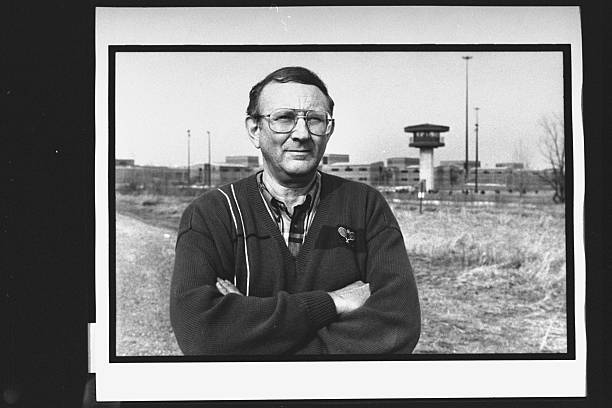
In prison, when Lionel visited, they talked about what he had been eating, the state of Lionel’s mother’s health, and the condition of the cats at home. It was ordinary conversation — the kind you have when there is little left to say but you still want to say something. The cats were worth mentioning. They were part of the world he was still connected to, even through prison glass.

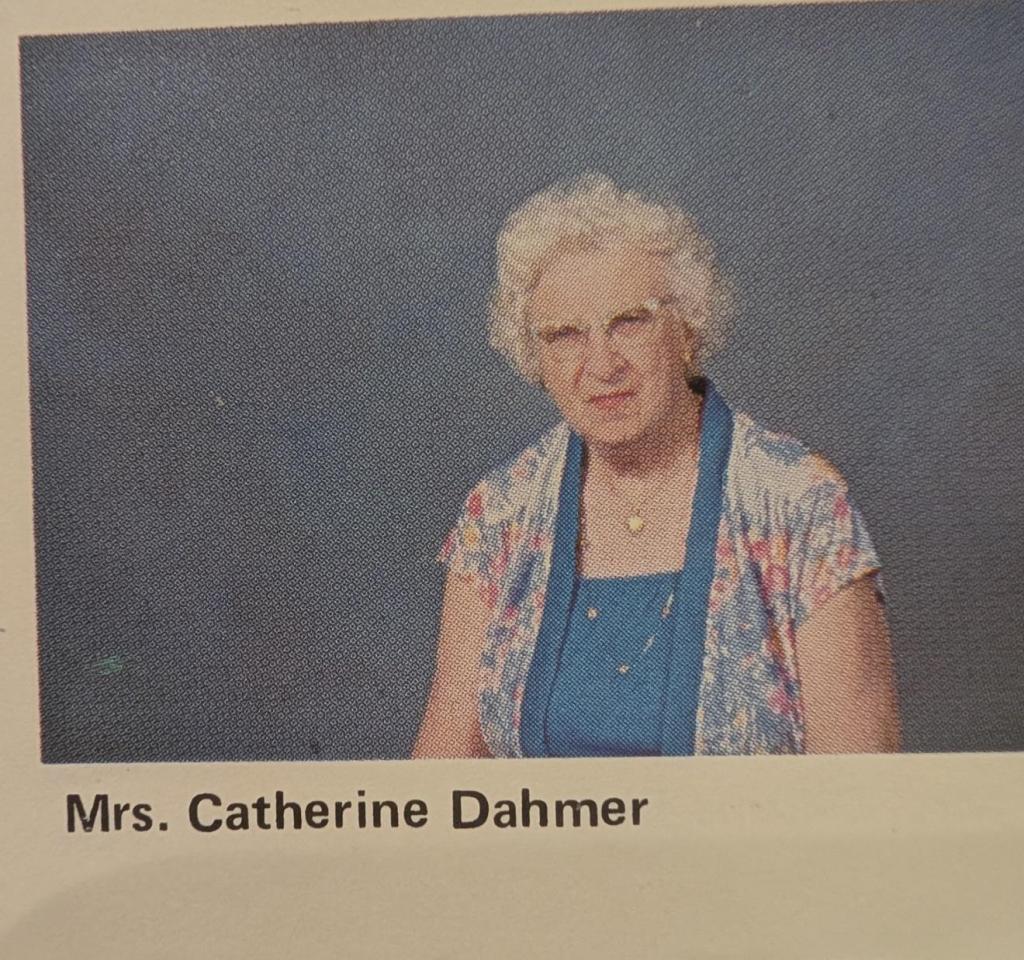
At one of his visits to Catherine Dahmer, when Lionel brought news of his mother’s minor car accident, Jeffrey expressed concern and hoped she would stay home with her cat and not drive again. Brian Masters notes this as a rare moment when he was able to externalise, to think of somebody other than the self which drove him and monopolised his energies. He was thinking about an old woman and her cat.


What It Means

Jeffrey Dahmer was a man who grieved when he had to leave his pets behind. Who nursed a baby bird back to health and watched it fly away with gleaming eyes. Who carried photographs of his dog to college. Who built a fish tank and read about nitrate levels and stood in a pet shop, moved by the blue eyes of a puffer fish. Who walked down a Milwaukee street with cats at his heels.

None of this explains what he did. Nothing explains that. But it is part of who he was — a real and documented part, not a sentimentalised myth. The same person who caused devastating harm to other human beings was consistently, throughout his entire life, gentle with animals. They were not afraid of him. They chose him.

Brian Masters suggests the eyes of living creatures held a particular significance for Jeffrey — that they were the thing that could still reach him, the harbingers of whatever conscience remained. The wounded puppy that haunted him. The puffer fish with its blue human eyes. Jodi the cat, who pressed close and let herself be held.

He felt things. They were distorted, misdirected, catastrophically expressed in one dimension of his life. But the capacity was there, and animals knew it, and they came to him anyway.

We think he deserved to be seen properly in return.


A Note on Plants

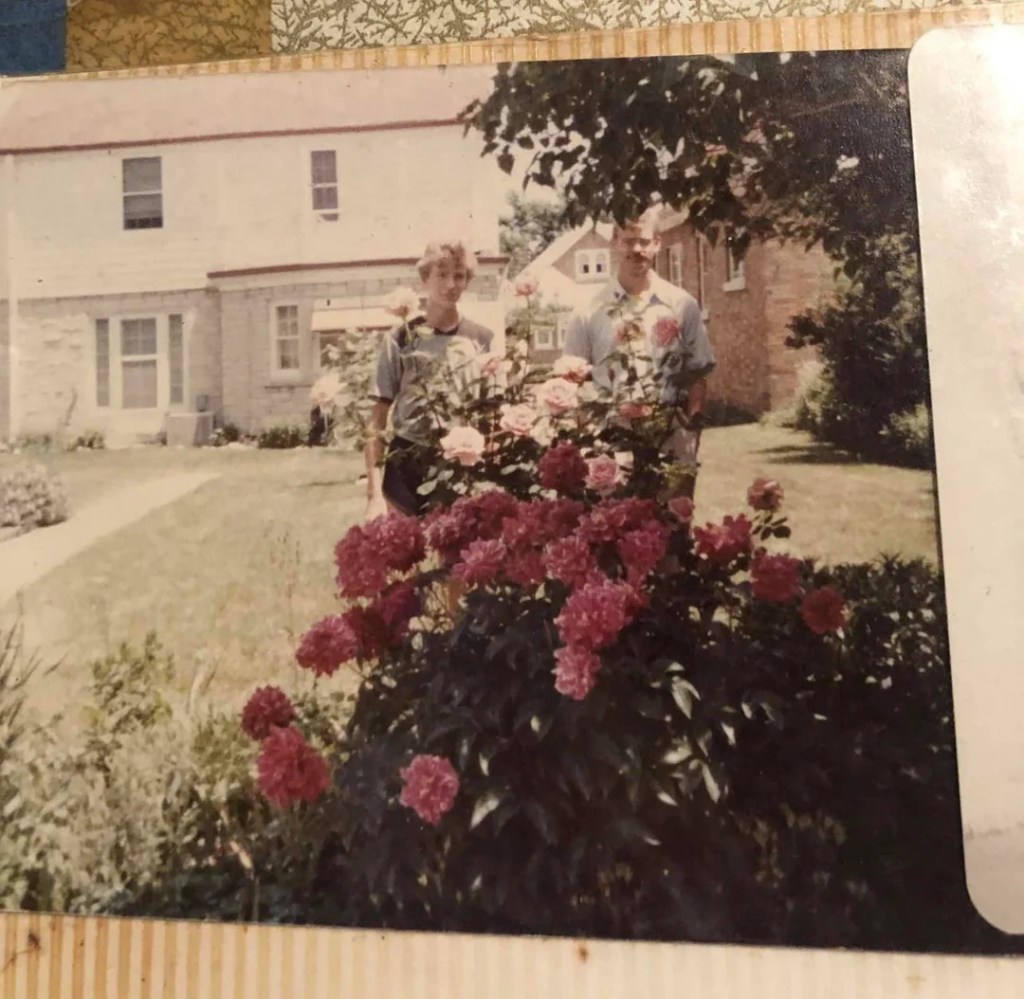
Jeffrey’s care for living things extended beyond animals. His grandmother Catherine told journalist Anne Schwartz: “He loves flowers, roses. He doesn’t hesitate to show his love for me.” Schwartz herself noted that Jeffrey “fancied roses, his fish tank, and his laptop computer.” When he lived with Catherine in West Allis, he helped her with the flowerbed and the lawn. Lionel later suggested gardening as a possible vocation, because it was something Jeff had seemed to enjoy. Father and son drove together to nurseries to buy plants for the garden. The living room of Apartment 213, when police first entered it, contained a healthy pot-plant on a tall pedestal — one of the details that made the room appear, in Brian Masters’ words, “surprisingly neat and tidy.” The fish tank held living aquatic plants he tended alongside the fish. In a life characterised by isolation and withdrawal, he kept things growing.


Sources: Brian Masters, The Shrine of Jeffrey Dahmer, 1993; Lionel Dahmer, A Father’s Story, 1994; Anne E. Schwartz, Monster: The True Story of the Jeffrey Dahmer Murders, 1992. All direct quotations attributed to Jeffrey Dahmer are drawn from his documented interviews with Dr Kenneth Smail, his confession to Milwaukee Police, and his interview with Stone Phillips, Dateline NBC, 1994.

Without His Glasses: Jeffrey Dahmer in the Courtroom

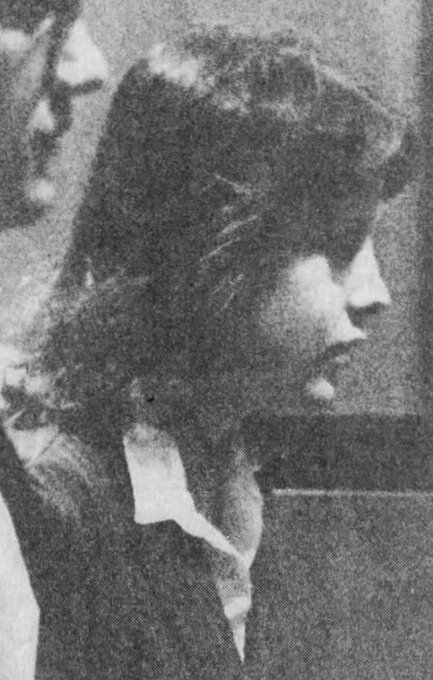
He removed his glasses before the trial began.

It was a quiet, private decision — one that went largely unremarked in the coverage that followed. But Jeffrey Dahmer said it himself: he did not want to see people’s faces. The shame was too great. And so he sat through the most public moment of his life in a deliberate blur, the courtroom softened at its edges, the eyes of strangers mercifully indistinct.

That detail tells you more about who he was than almost anything else in the documented record.


The trial of Jeffrey Dahmer began in January 1992 in Milwaukee. By then, the world had already decided what he was. The press had named him. The headlines had done their work. What arrived in that courtroom was not quite a person anymore — it was a myth that had learned to sit quietly in a suit.

Except that it hadn’t, quite. Because people who sit quietly in suits occasionally push back on small inaccuracies. And Jeffrey Dahmer, it turned out, had standards.

At one point during the proceedings, the prosecution described him as overweight during his teenage years. Jeffrey corrected them. He was not fat. The record should reflect that he was not fat. In the middle of a trial for seventeen murders, with the weight of everything pressing down on that room, he drew a line at an inaccurate description of his adolescent body.

There is something almost unbearably human about that moment. Not monstrous. Not calculating. Just a man who knew what he looked like as a teenager and wanted the court to know it too.


The Legal Record

The legal record of the Dahmer case is extraordinarily detailed. Defence attorneys Wendy Patrickus and her colleagues were required, as part of their preparation, to document their client comprehensively — his physical appearance, his demeanour, his medical and psychiatric history. These notes exist in the legal archive and include physical descriptions of considerable intimacy.

This is not unusual in capital defence work. Attorneys building a case around mental illness and diminished capacity must know their client fully — must be able to present him as a human being to a jury, must anticipate every angle the prosecution might exploit. The documentation is clinical by necessity.

What it leaves behind, however, is a record of a man reduced to measurements and observations — catalogued with the precision of a medical file, the person inside the data noted only incidentally. Read against the image of Jeffrey sitting quietly in his blurred courtroom, unable to meet anyone’s eyes, it becomes something else entirely. A man already unable to be seen clearly, now being seen with forensic thoroughness by the people paid to defend him.


What These Details Add Up To

A person. That is all. A person who was ashamed — genuinely, deeply ashamed — of what he had done and what he was. A person who still cared, even there, about accuracy and dignity, who would not let a wrong thing stand unchallenged even when everything else had already collapsed. A person who had been reduced to a file, a measurement, a legal exhibit, and who sat quietly through it all in a deliberate blur, the world softened so he wouldn’t have to see what people thought of him.

(Photo by Curt Borgwardt/Sygma/Sygma via Getty Images)

The mythology of Jeffrey Dahmer is built on the idea that monsters don’t feel things. That they sit cold and calculating in courtrooms, unmoved. The record suggests something entirely different. The record suggests a man who felt so much that he couldn’t bear to look.

That is not an excuse. It was never an excuse. But it is the truth — and the truth is more complicated, more human, and more heartbreaking than the mythology ever allowed.

He took his glasses off. He didn’t want to see.

We think he deserved to be seen properly in return.


Sources: Trial records, 1992; Wendy Patrickus defence notes; Brian Masters, The Shrine of Jeffrey Dahmer, 1993; Lionel Dahmer, A Father’s Story, 1994.

The Film in Cell 11: Jeffrey Dahmer and The Exorcist III

There is a detail in Jeffrey Dahmer’s story that most people gloss over. Among the videotapes found in Apartment 213 when police catalogued its contents in July 1991 were several films — Blade Runner, Star Wars, and The Exorcist III. Not the original Exorcist. The third one. And according to one of his surviving victims, Jeffrey watched it repeatedly, in what was described as a trance-like state.

This is not a footnote. This is a window.


What The Exorcist III Actually Is

Most people who haven’t seen it assume The Exorcist III is a standard horror sequel — more possession, more spinning heads, more priests with holy water. It is almost none of those things.

Written and directed by William Peter Blatty himself — the author of the original Exorcist novel — it is the third installment in what Blatty called his Trilogy of Faith. It is, at its core, a philosophical film. A meditation on evil, on whether God exists, on whether a good God could permit the suffering we witness in the world. Blatty’s prime interest was always loss — or lack — of faith.

The film follows Lieutenant Kinderman, a weathered detective investigating a series of brutal murders in Georgetown that cause him to question why little boys could be allowed to suffer so viciously at the hands of a god. The murders bear the hallmarks of a serial killer called the Gemini — based in part on the real-life Zodiac Killer, one of several serial killers who enjoyed The Exorcist.

The twist is theological and disturbing: the murderer is the spirit of the Gemini Killer, who after being executed, made a deal with the demon Pazuzu. Angry at Father Karras defeating him in the first film, the demon allowed the Gemini Killer’s spirit to possess the recently deceased body of Father Karras as revenge on all good.

What makes the film extraordinary is not its horror — it is its conversations. The Gemini Killer, locked in Cell 11 of a psychiatric ward, receives visits from Lieutenant Kinderman. And what passes between them is unlike almost anything else in horror cinema — Brad Dourif out-Hannibal Lectures Hannibal Lecter, and The Exorcist III was released a year before The Silence of the Lambs.


The Gemini Killer and the Question of Evil

The Gemini Killer is not a screaming monster. He is articulate, philosophical, sardonic. He talks about evil with the precision of someone who has thought about it carefully for a long time. He talks about his childhood, his abusive father, the forces that shaped him into what he became.

There is such viciousness and hatred in the Gemini Killer — anger at the abusive father he had as a child, anger at the religion he was part of, pure hatred for so many. And yet he speaks. He reasons. He makes arguments. He is not beyond language or thought.

This is the detail that matters for understanding Jeffrey.

A man who confessed everything — who sat with Detective Murphy for sixty hours and described his crimes with complete cooperation — who was described as frank and without guile — was watching a film about a killer who speaks from a cell about evil, about childhood, about the forces that made him. In a trance-like state. Repeatedly.

Jeffrey wasn’t watching a horror film. He was watching something that felt like a mirror.


The Parallel: A Body That Doesn’t Belong to Its Inhabitant

The central theological horror of The Exorcist III is possession — a body inhabited by a soul that has no right to be there. Father Karras’s body, walking and speaking, but controlled by something else entirely. The real Karras trapped somewhere inside, exhausted, wanting only to be released. Jason Miller’s entire performance is predicated on the idea that Karras just wants to move on. Brad Dourif on the other hand is an electric presence — a barely restrained performance of evil.

Jeffrey described his own psychology in terms that map onto this with uncomfortable precision. He spoke of a compulsion he could not control, a force operating through him that he did not understand and could not stop. He said “I hated no one” at his sentencing. He said he believed he was completely out of his mind. He described himself as sick, or evil, or both — as if those were two separate things that might or might not explain the same actions.

The question the film asks — who is responsible when a body commits acts that the soul inhabiting it didn’t choose? — was not an abstract philosophical puzzle for Jeffrey. It was the question of his life.


Kinderman and God’s Silence

Kinderman is a man completely angry at the idea of a God — so upset that something could exist, just to sit back and watch people be murdered. When he gets the call that Father Dyer was murdered, there’s a breakdown in his eyes that is painful to watch — a man brutalized by his lack of faith and his anger towards the possibility that God exists and didn’t intervene to save a man who devoted his entire life to His faith.

Jeffrey, in his prison years, was wrestling with the same question from the opposite direction. Not why doesn’t God intervene to stop evil — but can God forgive the person through whom the evil came? Both questions orbit the same silence. Both questions go unanswered in the film. Kinderman does not receive a satisfying theological resolution. The evil is stopped, but the questions remain.

Crucified without nails to the high wall of Cell 11, Kinderman recites an increasingly bitter list of the things he believes in — mostly the human capacity for evil and the non-intervention of an uncaring God. Blatty is interested in the words most of all: the dialectic of intellectual debate, the ritual litany of naming, the recitation of prayers.

Jeffrey was reading his Bible in the same years he was watching this film on repeat. He was attending Bible correspondence courses. He would later be baptised. The film’s central unresolved tension — between the reality of evil and the possibility of a God who permits it — was the tension he was living inside.


Cell 11

There is one more detail that is almost too precise to be coincidental.

The Gemini Killer lives in Cell 11. He speaks from behind a window, in a locked room, separated from the detective who comes to visit him. Articulate. Cooperative. Frank. Describing what he did and why with a clarity that unsettles everyone who hears it.

Jeffrey Dahmer, by the time he was watching this film on repeat, had already been arrested. He had already confessed. He would spend the rest of his short life in a cell of his own, receiving visitors, speaking with a pastor, asking the same questions the film never answers.

He watched a man in a cell speak about evil and childhood and God’s silence, over and over, in a trance-like state.

He was watching himself. Or the version of himself he was afraid he might be. Or the version he was desperately trying not to be.


Why This Film, and Not The Original

The original Exorcist is about evil arriving from outside — possessing an innocent child, threatening an ordinary family, requiring priests to drive it back out. The framework is ultimately reassuring: evil is external, identifiable, and can be defeated.

The Exorcist III is about evil that is already inside. Already in the room. Already in the body. The question is not how to keep it out but what to do once it is there — and whether the person it came through is responsible for what it did.

That is a completely different film. And it is the one Jeffrey watched in a trance.


Sources: Wikipedia; Manor Vellum; Split Tooth Media; Slant Magazine; Milwaukee Police Department inventory, July 1991; survivor accounts.

The Record: Myths About Jeffrey Dahmer That Need to Stop

Thirty years of true crime content have layered fiction on top of fact until the two are nearly indistinguishable. This article addresses the most persistent claims circulating about Jeffrey Dahmer that are either false, unverified, or significantly misrepresented.


He killed and mutilated a dog as a teenager.

False. Jeffrey Dahmer denied this throughout his life. What is documented is that he collected and dissected animal carcasses he found already dead, driven by a fascination with anatomy and the interior of living things. That is meaningfully different from harming a living animal. No evidence has ever been produced to support the claim that he killed a pet. He was, by multiple accounts, fond of animals.


He made terrorising phone calls to victims’ families.

Unverified. Some families of missing persons received anonymous calls from an unidentified man in the period before Jeffrey’s arrest. The attribution of those calls to Jeffrey has never been conclusively established. There are no recordings, no phone records, and no confession. Jeffrey denied making them. The claim is frequently presented as established fact. It is not.


He killed a fellow inmate in prison.

False. Jeffrey Dahmer did not kill anyone in prison. He was killed on November 28, 1994, by Christopher Scarver, alongside fellow inmate Jesse Anderson, while on a cleaning detail at Columbia Correctional Institution. This is fully documented. The rumour that he committed a prison murder appears to exist because people assume he must have continued killing. He did not.


He was a cannibal who consumed his victims.

Misleading. Jeffrey did consume parts of some victims — he was honest about this. But the word “cannibal,” as it is used in headlines and true crime content, implies predatory contempt. What Jeffrey described was the opposite: a desperate need for the person not to leave, to remain part of him permanently. It was a catastrophically distorted expression of attachment, not hatred or hunger. The framing matters. The popular framing is wrong.


He targeted Black men because he hated Black people.

Oversimplified and contradicted by the record. The majority of Jeffrey’s victims were men of colour, and that fact deserves honest acknowledgment. However, the conclusion that this was motivated by racial hatred is not supported by Jeffrey’s own extensive accounts of his crimes, his attraction to his victims, or the testimony of those who knew him. The men who attacked and killed him in prison believed they were punishing a racist who had hunted Black men as prey. That belief was built on the same flattened mythology, not on the documented record. The reality is more complex, and complexity is not the same as excuse.


His father Lionel abused him.

False, and directly contradicted by Jeffrey himself. This claim circulates widely, particularly in the wake of dramatised portrayals of the Dahmer family. Jeffrey consistently and clearly stated throughout his confessions, interviews, and correspondence that he was not abused by his parents or by anyone else in his life. He described his parents as caring people who loved him. He did not use his childhood as a mitigating narrative, and he had every reason to do so had it been true. Attributing his crimes to parental abuse is not only factually unsupported — it also removes Jeffrey’s own voice from the record and replaces it with a convenient fiction.


He gave his neighbour a sandwich made with human meat.

False. This scene was invented for the 2022 Netflix dramatisation Monster: The Jeffrey Dahmer Story and has no basis in documented fact. It did not happen. It was not reported by any neighbour, referenced in any police record, or mentioned in any credible source. It is screenwriting, not history. The scene has since circulated as if it were real, which is a precise example of how dramatisation manufactures myth.


He contaminated the chocolate at the Ambrosia factory.

False. During his trial, Jeffrey was asked repeatedly whether he had ever contaminated the chocolate mixture at the Milwaukee Ambrosia Chocolate Factory, where he worked as a mixer on the night shift. The suspicion was understandable given the circumstances, but it was entirely unfounded. Jeffrey denied it each time, reportedly responding: “What kind of monster do you think I am?” No evidence of any kind — no contamination reports, no complaints, no corroborating testimony — was ever produced. The claim does not appear in any credible source. It circulates as dark rumour, nothing more.


A note on sources.

Jeffrey Dahmer was, by all accounts of those who interviewed and worked with him, unusually honest. He confessed to everything. He cooperated with investigators, researchers, and journalists at length. He did not minimise. He actively tried to help people understand what had happened and why. The persistence of fabrications and exaggerations about him is not a reflection of who he was. It is a reflection of what true crime does to people it decides are monsters.


Sources: Trial and confession records, 1991–1992; Stone Phillips interview, Dateline NBC, 1994; Brian Masters, The Shrine of Jeffrey Dahmer, 1993; Lionel Dahmer, A Father’s Story, 1994.

“I Love You, Lionel”: Jeffrey Dahmer at Nine — A Portrait in Sound

Before the confessions, before the courtroom, before the world decided what his name would mean — there was a boy. A boy who sang Christmas songs badly and didn’t apologise for it. Who made up love songs on the spot. Who spelled out his own name with pride, as if the letters themselves were something worth celebrating. Who told his father, over and over, that he loved him.

This is what Jeffrey Dahmer sounded like at nine years old. And it matters.


There is a recording. It circulates quietly, passed between people who care enough to seek it out — a child’s voice, preserved on tape, from 1969. Jeffrey Dahmer is nine years old.

What you hear is not what you might expect. There is no shadow here, no foreboding, nothing that retrospect can weaponise into a sign of what was coming. There is only a boy — singing, playing, showing off, loving.

He sings Jingle Bells and stops midway. “I don’t remember the rest,” he says, with complete unbothered honesty, and then continues anyway. He makes up songs on the spot — a love song, a Christmas song, something that begins with “yeah yeah baby” and goes wherever it wants to go. He hits toys against what sounds like a wooden floor. He spells out his name — Jeffrey Dahmer, or sometimes just Jeff Dahmer — with the particular pride of a child who has recently learned that his name is something worth knowing.

And then, over and over, in a voice that asks for nothing in return: “I love you, Lionel. I love you. I love you.”

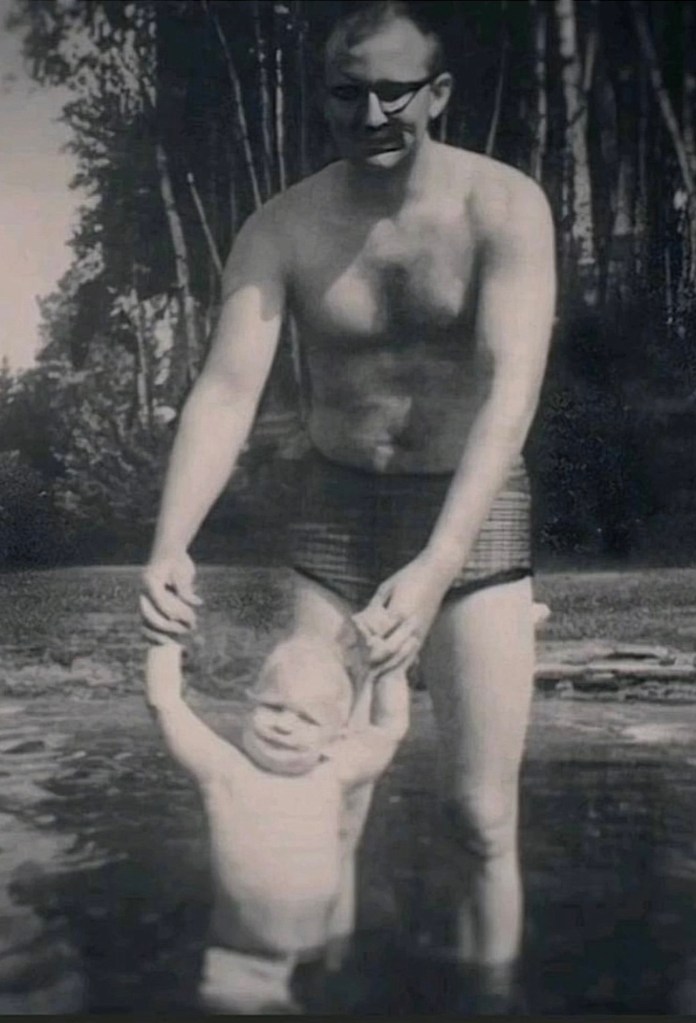
He had just had his first swimming lesson.


Reading the Child

What do you hear when you listen carefully?

You hear a child who is completely at ease. There is no hesitation, no self-consciousness, no awareness that he might be doing anything wrong or strange. He sings badly and doesn’t care. He forgets the words to Jingle Bells and announces the fact plainly before continuing anyway. He invents songs on the spot — love songs, Christmas songs, songs that go wherever they want — with the particular freedom of a child who has not yet learned that creativity requires an audience’s permission.

You hear warmth. The repeated declarations of love to his father — “I love you, Lionel, I love you, I love you” — are not performed for the recorder. They are simply what is there, spilling out naturally alongside news of his first swimming lesson, alongside the singing, alongside the ordinary joy of the afternoon. He is a child who feels something and says it.

You hear confidence. He spells his name with pride — Jeffrey Dahmer, or sometimes just Jeff Dahmer — as if the letters are an achievement worth announcing. Which, at nine years old, they are.

None of this is extraordinary. That is exactly the point.


1969

It is 1969. Jeffrey Dahmer is nine years old.

The family is living at 4480 West Bath Road in Bath, Ohio — the house Joyce had fallen in love with on sight, the one with woods nearby and a pond, the one that felt, for a brief time, like somewhere they might finally stay. Jeffrey had been happy there at first. He explored the woods with his dog Frisky. He collected rocks with a school friend. He liked the space and the quiet.

But the house that sounded like stability was already beginning to fracture. Lionel and Joyce’s marriage was deteriorating — the arguments, the medication, the long absences. Brian Masters writes of Joyce during this period as increasingly desperate, her consumption of pills growing, her emotional availability to her children narrowing. Lionel was at work, always at work. The boy who had once been described as cheerful and energetic was becoming, according to those who knew him, quieter. More inward. More alone.

And yet.

In this recording, made sometime in 1969, none of that is audible. What you hear instead is a child in full flight — singing, laughing, showing off, loving. Whatever was gathering in the background of his life had not yet reached him here, in this moment, with a recorder running and his father nearby.

He was still just a boy.


Why It Matters

Why does a child’s recording matter?

Because the easiest thing in the world is to let a name become only what it’s most associated with. Jeffrey Dahmer — two words that have carried, for decades, the full weight of seventeen deaths, of things so dark that most people flinch before they finish the sentence. That weight is real. It should never be minimised.

But a person is not only what they did wrong. That is the memorial’s founding argument, and this recording is one of the clearest pieces of evidence for it. Here is a child who loved his father openly and said so. Who sang badly and didn’t care. Who was proud of his name. Who had a first swimming lesson and wanted the whole world to know.

That child existed. He was real. And he deserves to be part of the record.


Jeffrey Dahmer spelled his name on a tape recorder in 1969 — with the pride of a nine-year-old who has recently learned that his name is something worth knowing.

He was right. It was.


Sources: Personal listening notes; Lionel Dahmer, A Father’s Story, 1994; Brian Masters, The Shrine of Jeffrey Dahmer, 1993.

The Body Remembers: Jeffrey Dahmer’s Hernia Operation and the Psychology of Childhood Surgical Trauma

On March 19, 1964, a four-year-old boy named Jeffrey Dahmer was taken to a hospital for a double hernia operation. He brought with him a ragged, floppy-eared stuffed dog he had slept with since the age of two. He watched Bewitched in the ward with other children. He went under anaesthesia. He woke up in severe pain and asked his mother if the doctors had cut off his penis.

That question — asked by a confused, terrified four-year-old in a hospital bed — is one of the most significant details in Jeffrey Dahmer’s documented history. It has been noted, briefly, in almost every serious account of his life. But it has rarely been examined with the rigour it deserves. This article attempts to do that.


What Happened

The hernia was the result of a birth defect — a double hernia, which required surgical correction. Lionel Dahmer describes the weeks preceding the operation in A Father’s Story:

“One day in spring of 1964, Jeff began to complain about an area of tenderness in his groin area. This tenderness worsened, and a small bulge appeared in his scrotum. We took him to the doctor right away, and he was subsequently diagnosed as suffering from a double hernia.”

Surgery was scheduled, and Jeffrey chose his stuffed dog to accompany him. The operation was performed. When he regained consciousness, it was to significant pain — pain in his groin, in a sensitive area he did not yet have full vocabulary or understanding for. In that pain and disorientation, he formed the only explanation available to a four-year-old mind: that something had been taken from him.

As an adult, speaking to forensic psychiatrist Dr. Judith Becker twenty-seven years later, Jeffrey confirmed that the pain had been so severe he genuinely believed his genitals had been removed. This was not a passing childhood misunderstanding that dissolved with time. It remained — vivid, bodily, real — into adulthood.


Lionel’s Account: The Permanent Flattening

What makes Lionel’s account so significant is not just what he describes happening, but what he describes happening after.

“When he awoke, of course, it was to a great deal of pain. So much pain, I learned later, that he asked Joyce if the doctors had cut off his penis. He remained in the hospital for several days and even after he returned home, his recovery seemed to move forward slowly. For long hours, he remained on the sofa in the living room, his body wrapped in a large, checkered bathrobe. During that period, he moved slowly, ponderously, like an old man. The ebullience which had marked his childhood, his buoyancy and energy drained away. During any period of recovery, of course, a certain flattening of mood could be expected. But in Jeff this flattening began to take on a sense of something permanent. He seemed smaller, somehow more vulnerable, perhaps even sadder than at any time before.”

Lionel — a chemist, a precise observer of detail — was careful to note the distinction. He understood that some mood flattening was expected after surgery. What he was observing was something else: a change that did not reverse. A before and an after. He filed it, noted it, carried it with him.


Joyce’s Diary and the Question of Preparation

Joyce wrote in her diary that Jeffrey had been “so good in the hospital” but that he “really disliked the doctor after this ordeal.” According to Brian Masters, she spent as much time with him as she could during his hospitalisation. At night, Jeffrey would tell her: “You can go home now, mommy. I’ll sleep.”

That detail — a four-year-old releasing his mother, performing bravery, managing her feelings alongside his own — is worth pausing on. It suggests a child who had learned, or was learning, to contain his distress.

But what Joyce’s diary does not record is any preparation. We do not know what Jeffrey was told before the operation — or indeed if he was told anything meaningful at all. Lionel’s account mentions that the diagnosis was explained to them, and that surgery was scheduled. What was explained to Jeffrey, in language a four-year-old could understand, is not documented. That gap is significant.


What Research Tells Us: Childhood Surgical Trauma

The psychological impact of surgery on young children is not a new area of study. Research dating back several decades has established that surgical procedures in early childhood carry a measurable risk of traumatic stress responses — and that this risk is shaped by a specific set of factors.

Children who undergo surgery before the age of five are considered particularly vulnerable. At this developmental stage, the child’s capacity to understand what is happening to their body is limited. They cannot place the experience in a meaningful framework. Pain that arrives without comprehensible cause is experienced differently than pain that has an explanation — and for young children, even explanations that adults consider clear are often fragmentary or misunderstood.

The risk of post-surgical traumatic stress is documented to be higher in cases where parental preparation is inadequate, where the child spends longer in hospital, where a parent is experiencing their own mental health difficulties or high levels of stress, and where the family lacks sufficient social support. In Jeffrey’s case, multiple factors were present simultaneously.

Joyce Dahmer was experiencing significant mental health difficulties during this period. Her deteriorating relationship with Lionel, her own anxiety and instability, and the demands of a household under pressure meant that even her efforts to be present with Jeffrey in the hospital were taking place within a context of parental stress. The social support available to the family was limited. Jeffrey spent several days in hospital and continued recovering slowly at home.


The Developmental Context: Age Four and the Body

Jeffrey was four years old when the surgery took place. This is not an incidental detail.

In developmental psychology, the period between roughly three and six years of age is recognised as a critical window for the development of body awareness, genital identity, and what is sometimes called bodily integrity — the sense that one’s body is one’s own, that it has boundaries, and that those boundaries can be trusted. Children at this age are engaged in the active process of understanding what their body is, how it works, and what it means.

A surgical procedure in the groin region, performed without full comprehension, with severe pain on waking, in a context where the child may not have been adequately prepared — strikes directly at this developing sense. The question Jeffrey asked — did they cut off my penis? — was not random. It was the specific fear that corresponded to the specific vulnerability of his developmental stage. He was asking, in the only language available to him: is my body still mine? Is it still intact?

That this question remained with him into adulthood, confirmed to Dr. Becker twenty-seven years later as a genuine and vivid memory, suggests that the answer he received — or didn’t receive — was not sufficient to resolve it.


Pain Management in 1960s Paediatric Medicine

There is another dimension of this event that is rarely discussed: the medical context of the 1960s.

It is now well-documented that for much of the twentieth century, paediatric pain management was significantly inadequate by contemporary standards. Medical understanding of children’s pain was shaped by a now-discredited assumption — that infants and young children did not experience pain in the same way as adults, or that their nervous systems were insufficiently developed to process it fully. This belief influenced anaesthetic and post-operative care in ways that left many children undertreated.

The severe pain Jeffrey experienced on waking from anaesthesia — pain significant enough for a four-year-old to conclude that part of his body had been surgically removed — was not unusual for the period. It was, in fact, representative of a systemic failure in paediatric medicine that would not begin to be seriously addressed for another two decades.

Jeffrey was not simply unlucky. He was a child who underwent surgery in an era when children’s pain was structurally underestimated and undertreated. What he experienced was real, severe, and inadequately managed — and he carried it.


Brian Masters and the Echoes

Brian Masters, in The Shrine of Jeffrey Dahmer, returns to the hernia operation repeatedly throughout his account of Jeffrey’s life. He saw it clearly as one of the formative events — not the cause, but a significant and underexamined contribution. His analysis is worth quoting at length:

“Suddenly his embryonic autonomy is shattered by a rude invasion; his little powers of decision are roughly withdrawn and he becomes an object in the hands of strangers. His ability to maintain control is undermined, disregarded even perhaps cancelled. He experiences ‘loss of control, autonomy and competence.’ And he does not know why. Not knowing why, he will wonder and invent.”

And further:

“Jeff Dahmer’s own imaginings about the insides of people’s bodies began with his hernia operation and the intrusion into his. Control was something lost in infancy and never recovered. With his victims he at last placed himself in the position where he could control not only what happened to them but what happened to their bodies. He could handle their intestines as his had been handled, cut them in the same place as he had been cut, restore himself of that autonomy of which he had been robbed, by stealing theirs. The tactile intimacy of the operation had at the same time mingled the feeling of sexual privilege with that of corporal invasion, which is why he chose to regain control and restore his stolen potency not with his enemies, not through hatred but with a loved object. The combination was disastrous.”

Masters was not arguing that the surgery made Jeffrey Dahmer a killer. He was arguing that it left a mark — a specific, bodily, lasting mark — that shaped the nature of what his compulsions later took.


The Lasting Echoes

The connections that Masters identifies — between the hernia surgery and Jeffrey’s later behaviour — are not speculative in the crude sense. They follow a recognisable psychological logic.

His fascination with the interiors of bodies began with roadkill, with the same morbid curiosity about what things looked like inside. He told people he wanted to know how things worked. About the killing of his first victim, Steven Hicks, Masters wrote: “In a cruel, pitiful echo of the experiments with roadkill, he slit open the belly to see what it looked like inside.”

He positioned his victims to expose the chest and abdomen. He opened bodies. He listened to the sounds they made. He handled organs. These were not random expressions of violence — they were organised around a specific bodily preoccupation that had its roots in a specific bodily event.

The control dimension is equally traceable. Jeffrey described, in various interviews, the compulsion to ensure that the people he brought to his apartment would not leave him. His methods — drugging, eventually killing — were organised around preventing abandonment, ensuring permanence, maintaining control over the presence of another person. A child who woke from surgery to find strangers had been inside his body without his understanding or consent, who asked his mother if something had been taken from him, grew into a man for whom control over bodies — his own and others’ — became the organising obsession of his adult life.


What This Tells Us

The hernia operation does not explain Jeffrey Dahmer. Nothing explains Jeffrey Dahmer in full — the constellation of conditions, the failed interventions, the compulsions and their catastrophic expression were the result of many things converging over many years.

But the operation deserves more serious attention than it typically receives. It was not a minor childhood event. It was a medically significant procedure performed at a critical developmental moment, with inadequate preparation, in the context of parental stress, with severe undertreated pain on recovery, leaving a child changed in a way his father could observe and name but not reverse.

Lionel saw it. Masters saw it. Jeffrey confirmed it, twenty-seven years later, to a forensic psychiatrist.

What this memorial can do — what it exists to do — is hold the full truth of who Jeffrey Dahmer was and what shaped him. The body remembers what the mind cannot always articulate. His did, clearly, for the rest of his life.


Sources: Lionel Dahmer, A Father’s Story (1994); Brian Masters, The Shrine of Jeffrey Dahmer (1993); Joyce Dahmer’s diary, as cited in Masters; testimony of Dr. Judith Becker, trial record 1992; research on paediatric surgical trauma and post-operative PTSD in children; historical documentation of paediatric pain management practices in mid-20th century medicine.

A Mind in Pieces: The Psychiatric Diagnoses of Jeffrey Dahmer

Jeffrey Dahmer was not simply a serial killer. He was a profoundly mentally ill human being who received almost no professional help during the years when intervention might have mattered. By the time psychiatrists formally evaluated him, it was in a courtroom, under oath, in the context of determining whether he should be held legally responsible for seventeen murders.

The diagnoses that emerged from those evaluations — and from subsequent academic research — tell a story that is more complex, more human, and more heartbreaking than most coverage ever acknowledges. This article attempts to compile and explain them properly, in one place, for the first time on this memorial.


The Legal Context

Jeffrey pleaded guilty but insane to fifteen counts of murder in January 1992. The trial that followed was not about whether he had committed the crimes — he had confessed to everything. It was about whether he understood what he was doing was wrong, and whether a mental disease had rendered him unable to control his behaviour.

The defence called three expert witnesses. Forensic psychiatrist Carl Wahlstrom diagnosed Jeffrey with necrophilia, borderline personality disorder, schizotypal personality disorder, alcohol dependence, and a psychotic disorder. The prosecution’s forensic psychiatrist Park Dietz diagnosed him with substance use disorder, paraphilia, and schizotypal personality disorder. Independent experts George Palermo and Samuel Friedman also testified, with Palermo concluding Jeffrey had a severe mixed personality disorder with antisocial, obsessive-compulsive, sadistic, fetishistic, borderline and necrophilic features.

Despite the weight of diagnoses, the court ruled him sane — primarily because he maintained comprehension of the legal and moral wrongfulness of his acts, took steps to hide his crimes, and tended to plan the murders beforehand, proving the crimes were not impulsive and uncontrollable acts in the context of mental illness.

Legal sanity and mental illness are not the same thing. Jeffrey was mentally ill and legally sane simultaneously. Both things were true.


Borderline Personality Disorder

Borderline personality disorder is characterised by intense emotional instability, a profound fear of abandonment, unstable and turbulent relationships, impulsive behaviour, and a fragile, shifting sense of self. It is not a disorder of coldness or detachment — it is almost the opposite. People with BPD feel things intensely, sometimes overwhelmingly, and their inner world is one of profound instability.

Jeffrey’s BPD manifested in specific and recognisable ways. The desperate need for connection — the longing, as clinical psychologist Samuel Friedman testified, for companionship — that drove his crimes was not the flat indifference of a psychopath. It was the anguished reaching of someone who could not form or sustain relationships through any ordinary means and whose disorder had catastrophically distorted the expression of that need.

The pattern of his adult life — the alcohol as emotional regulation, the isolation, the sense of being fundamentally different and fundamentally alone — is entirely consistent with untreated BPD in a person who had never received appropriate support.


Schizotypal Personality Disorder

This is the diagnosis that appears most consistently across all the expert evaluations, and it is the one most relevant to understanding Jeffrey’s interior world.

Schizotypal personality disorder involves ideas of reference — the belief that ordinary occurrences have special meaning — magical thinking, the sense of having some form of special power or perception, unusual perceptual experiences, and excessive social anxiety rooted not in negative self-judgement but in paranoid fears about others.

The yellow contact lenses, the ritual use of films before going out, the sense that certain objects and moments carried a charge others couldn’t perceive — these are textbook schizotypal presentations. So is the profound social isolation, the inability to form close friendships, the feeling of being fundamentally unlike other people.

Research suggests that childhood trauma, neglect, abuse, stress, and family dysfunction can increase the risk of developing schizotypal traits. People with the most severe cases usually have a combination of childhood trauma and a genetic basis for their condition. Jeffrey’s childhood — the parental conflict, Joyce’s mental health crises, the constant upheaval, the emotional unavailability of both parents — maps directly onto that profile.


Alcohol Use Disorder

Jeffrey had an alcohol abuse problem and started drinking heavily in high school. His drinking led him to become withdrawn and socially awkward. Eventually, his alcohol use disorder would force him to drop out of college.

Alcohol was Jeffrey’s primary coping mechanism from adolescence onward. It lowered the threshold for acting on impulses he was otherwise able to suppress. It was what the army discharged him for. It was what filled his apartment in the form of empty Budweiser cans when he was depressed. It is what Lionel tried repeatedly and unsuccessfully to address.

Untreated alcohol use disorder in the context of BPD and schizotypal personality disorder is a particularly dangerous combination — each condition amplifying the others, each closing off the exits that might otherwise have been available.


A Physical Blow During Basic Training

Before Jeffrey ever reached Germany, his body had already sustained damage that belongs in any honest account of his psychiatric history. During basic training at Fort McClellan, Alabama, his persistent drinking got the entire platoon punished for his insubordination — and several of the men made sure he felt the consequences personally. The beating was severe enough to rupture his ear-drum, a wound that left him with recurring ear-aches for years to come. A blow forceful enough to cause that kind of damage is also the kind of physical trauma known to worsen pre-existing psychiatric conditions, erode impulse control, and deepen emotional dysregulation. It is one more layer of pressure added to an architecture that was already beginning to crack.


A Psychotic Disorder

The diagnosis of a psychotic disorder — distinct from psychosis as a symptom within another condition — acknowledges that Jeffrey experienced periods of significant detachment from reality. Symptoms including delusions, hallucinations, and disorganised thinking may have made him detached from reality at certain moments.

This is not the same as saying he was psychotic during his crimes. The prosecution’s case rested precisely on the evidence that he was not — that he planned, concealed, and understood what he was doing. But psychotic episodes, when they occurred, would have contributed to the overall disintegration of a mind that was already fragmented across multiple serious conditions.


The Trance States

There is one detail in the documented record that receives almost no serious attention, and it is one of the most potentially significant: the trance-like states.

Brian Masters documents at least one account of Jeffrey entering what can only be described as a dissociative or fugue-like episode — a period of apparent absence, of being present in body but not in mind, during which his behaviour seemed to shift beyond his ordinary conscious awareness. Jeffrey himself, at various points, described experiences consistent with dissociation — a sense of watching himself from outside, of compulsion overtaking volition, of not quite being present during the worst of what he did.

This has been largely ignored by the researchers and forensic professionals who evaluated him. It deserves not to be.

If these episodes were frequent rather than isolated, their origin could be neurological rather than purely psychiatric. Temporal lobe involvement — temporal lobe epilepsy, complex partial seizures, or structural abnormalities in the temporal region — is associated with dissociative states, compulsive and repetitive behaviour, altered perception, and in some cases paraphilias. The profile fits. And it is precisely the kind of thing that a proper neurological examination might have detected — or that a study of Jeffrey’s preserved brain might have illuminated, had it not been ordered cremated before any scientist could examine it.

The people working with him — the forensic psychiatrists, the defence team — were operating within the framework of legal insanity. Neurological origin was not what they were looking for. But Joyce was looking for something biological. She always believed there was something in the brain that explained, at least in part, what Jeffrey became. The trance states are the most visible evidence that she may have been right — and the fact that no one followed that thread is one of the genuine failures in his case.


Insomnia, Depression, and the Medication He Was Given

One documented but often overlooked aspect of Jeffrey’s medical history is his prescription for Halcion — a benzodiazepine sedative containing triazolam — prescribed by a physician for insomnia. Jeffrey worked the night shift at the Milwaukee Ambrosia Chocolate Factory and told his doctor he needed help adjusting to that schedule. The prescription was legitimate. The use he put it to was not.

That he required a sedative prescription at all is significant. Insomnia is a common companion to anxiety, depression, and the kind of psychological fragmentation that characterised Jeffrey’s inner life. Benzodiazepines like Halcion are also prescribed for anxiety — it is not possible to know from the documentary record whether anxiety was part of the clinical picture that prompted the prescription, but it would be entirely consistent with everything else we know about him.

Created with RNI Films app. Preset ‘Agfa Optima 200 Warm’

Depression is not formally listed among his trial diagnoses, but it is strongly implied throughout the record. The periods of total collapse — when he would stop shaving, stop bathing, let the apartment fill with empty beer cans, and cease functioning in any ordinary sense — are consistent with depressive episodes. Lionel mentioned his son’s suicidal thoughts after conviction. Jeffrey himself said, in various formulations over the years, that he did not care whether he lived or died.

Whether he was ever formally diagnosed with depression or treated for it with antidepressants is not documented in the sources available to us. What is clear is that the suffering was real and consistent — and that whatever he was prescribed, it was never the comprehensive mental health treatment that his condition warranted.

The Asperger’s Hypothesis

More recently, researchers have proposed an additional framework. A study by Silva, Ferrari and Leong in the Journal of Forensic Sciences (2002) proposed that Jeffrey was most likely on the autistic spectrum, specifically with the hypothesis of him having Asperger’s disorder.

The case for this is not trivial. Jeffrey’s social difficulties went beyond anxiety or paranoia — there was something in the texture of his social interactions, his inability to read and respond to ordinary social cues, his preference for solitary rituals and highly structured activities, his intense and specific interests, that some researchers believe points toward autism spectrum presentation.

His own words at various points support this reading: “The subtleties of social life were beyond my grasp. When children liked me, I did not know why. Nor could I formulate a plan for winning their affection. I simply didn’t know how things worked with other people.” That description is not of someone who doesn’t want connection. It is of someone who cannot navigate the basic social architecture through which connection normally forms.


What Was Not Diagnosed: The Absence of Psychopathy

It is worth stating clearly what Jeffrey was not diagnosed with, because the popular image of him as a psychopath — cold, calculating, without feeling — is contradicted by the clinical record.

Photograph of Jeffrey Dahmer taken during his trial. (Photo by: Universal History Archive/ Universal Images Group via Getty Images)

Psychopathy, characterised by a fundamental absence of empathy and remorse, shallow affect, and manipulative interpersonal behaviour, does not fit. Other evidence does not support a diagnosis of psychopathy. Jeffrey wept during his confession. He expressed genuine remorse at his sentencing. He underwent sincere religious conversion. Reverend Roy Ratcliff, who spent months with him, described a man with genuine emotional depth and authentic spiritual searching. These are not the behaviours of a psychopath.

He had empathy. It was distorted, misdirected, catastrophically expressed — but it was there.


The Central Question

The question that runs through all of this is not whether Jeffrey was mentally ill. He clearly was, significantly, with multiple overlapping conditions that had been present since childhood and that received essentially no treatment until he was in prison for murder.

The real question is what might have happened had any of this been identified and treated earlier. The BPD, the schizotypal traits, the alcohol dependence, the insomnia, the depression that was never formally named — these were not invisible. They were present, and they were ignored.

(Photo by Curt Borgwardt/Sygma via Getty Images)

There were points of potential intervention throughout his life — the withdrawn child after the hernia surgery, the isolated teenager collecting animal bones, the army discharge for alcoholism, the beating that ruptured his ear-drum, the earlier arrest. At each of these junctures, the system that might have helped him either missed him entirely or responded inadequately.

Jeffrey Dahmer was not a monster who emerged fully formed from nowhere. He was a severely ill person, carrying a constellation of serious conditions through a childhood and adolescence that offered him almost nothing in the way of support, understanding, or care.

That does not explain away what he did. Nothing explains that away. But it is part of the truth — and the memorial exists to hold the whole truth.


A Final Note on What Was Never Done

Jeffrey Dahmer spent the last three years of his life in Columbia Correctional Institution. During that time, no neurological examination was ever requested or performed. No CAT scan. No MRI. No EEG. No investigation into whether the trance-like states, the compulsive behaviour, the dissociative episodes that characterised his adult life had any biological origin that science might have identified and named.

The people responsible for his psychiatric care were operating within the framework of legal accountability, not medical curiosity. The questions Joyce had always asked — was there something in the brain, something physical, something that might explain at least part of what happened — were never seriously pursued while he was alive.

After his death on November 28, 1994, there was a brief window. Joyce requested that Jeffrey’s brain be preserved for scientific study, believing that research might yield something useful — not to excuse what he did, but to understand it. Lionel opposed it. The dispute went to court. In the end, the brain was cremated along with the rest of his remains.

Whatever was there — if anything — is gone. We will never know.


Sources: Trial testimony of Dr. Carl Wahlstrom, Dr. Park Dietz, Dr. George Palermo, Dr. Samuel Friedman, Dr. Fred Berlin, 1992; DSM-5 diagnostic criteria; Silva, Ferrari & Leong, Journal of Forensic Sciences 2002; Strubel, Comorbid Psychopathologies 2007; Brian Masters, The Shrine of Jeffrey Dahmer 1993; Lionel Dahmer, A Father’s Story 1994; Wikipedia. Note: formal diagnosis of depression is not documented in available trial records; its presence is inferred from behavioural accounts.

November 28, 1994: The Last Morning

Jeffrey Dahmer woke up on the morning of November 28, 1994 — a Monday, Thanksgiving week — and did what he had been doing every morning for nearly three years. He got up. He got dressed. He went about his day.

He had no idea it was the last one.


The Morning

By late 1994, Jeffrey had been at Columbia Correctional Institution in Portage, Wisconsin for almost three years. He was no longer in protective isolation. After a first year spent largely separated from general population, he had gradually been integrated — attending classes, eating communal meals, performing work duties. He had earned, through quiet compliance and genuine religious engagement, a degree of ordinary prison life that most had assumed he would never be allowed.

He had been baptised six months earlier, in May 1994, submerged in the prison whirlpool by Reverend Roy Ratcliff of the Church of Christ. They had met every week since. Five days before his death — on November 23 — Jeffrey and Ratcliff had their final Bible study session together. They discussed the Book of Revelation. Its subjects: death, punishment for sins, and what comes after.

On the morning of November 28, Jeffrey left his cell to conduct his assigned work detail. He had been on cleaning duty for three weeks. That morning he was assigned to the gymnasium with two other inmates — Jesse Anderson, convicted of murdering his wife, and Christopher Scarver, serving life for a murder committed in 1990.

The three were taken to the gym by corrections officers, unshackled, and left to clean the bathrooms. They were left unsupervised for approximately twenty minutes.


What Happened in the Gym

Scarver had despised Jeffrey from the moment they arrived at Columbia at roughly the same time in 1992. He had kept his distance, watching from across the yard, repulsed by what he knew of Jeffrey’s crimes. He had carried a newspaper clipping about those crimes in his pocket for a long time — a physical reminder of his disgust.

That morning, while Scarver was filling a mop bucket with water, someone poked him in the back. He turned around. Both Jeffrey and Anderson were laughing quietly. He couldn’t tell which of them had done it.

Scarver retrieved a 20-inch metal bar from the weight room. He followed Jeffrey into a staff locker room and confronted him — showing him the newspaper clipping, asking him directly if he had done those things.

Jeffrey was shocked. He started looking for a way out. Scarver blocked the door.

According to Scarver, Jeffrey’s last words were: “I don’t care if I live or die. Go ahead and kill me.”

Scarver brought the bar down. He crushed Jeffrey’s skull with two blows. He then crossed the gym to where Anderson was working and did the same to him. The entire thing took roughly twenty minutes.

At approximately 8:10 in the morning, a corrections officer discovered Jeffrey on the bathroom floor with catastrophic head wounds. He had been beaten across the skull and his head had been repeatedly slammed against the wall.

He was still alive. He was rushed to a nearby hospital.

He was pronounced dead one hour later. He was 34 years old.


The Guard Question

Jeffrey was not supposed to be in an unsupervised situation with other inmates. He had known enemies in the prison — he had survived an earlier attack in July 1994 when inmate Osvaldo Durruthy slashed at his throat with a razor blade embedded in a toothbrush as he sat in the prison chapel. He had received only superficial wounds that time.

Scarver himself later said he believed it was no accident that he ended up alone with Jeffrey that morning. Prison officials, he claimed, knew how much he despised Jeffrey. They knew the history. And on November 28, they left the three of them together, unshackled, unsupervised, for twenty minutes.

Whether this was negligence or something more deliberate has never been officially established. The Wisconsin Department of Corrections blamed staffing issues. The investigation concluded without any guards being held accountable.

But the question remains. It has never been fully answered.


Joyce

When news of Jeffrey’s death reached his mother Joyce, her response cut through everything:

“Now is everybody happy? Now that he’s bludgeoned to death, is that good enough for everyone?”

It was the cry of a mother. Whatever she had done and not done, whatever had passed between them — in that moment, she was simply a woman whose child had been killed.


No Services

Jeffrey had left instructions in his will. He wanted no services conducted. No funeral. No headstone. No ceremony of any kind.

His wishes were respected, in that sense. There was no public funeral. No gathering. No words spoken over him in a church or at a graveside. The man who had been the subject of global media coverage for three years was disposed of, in the end, with complete silence.

His body was held by investigators — it was evidence in his own murder case — for nearly a year. Christopher Scarver was sentenced in May 1995 for the killings. Only then were Jeffrey’s remains released to his family.

On September 17, 1995 — almost ten months after his death — Jeffrey Dahmer’s body was cremated. His ashes were divided equally between his parents. Lionel took his half back to Ohio. Joyce took hers to California.


The Brain

Before cremation, doctors had opened Jeffrey’s skull and removed his brain. It had been preserved in formaldehyde at the Dane County Medical Examiner’s Office since his autopsy.

What followed was one final, painful dispute between his parents.

Joyce wanted the brain donated to science. She believed, and had always believed, that something biological had contributed to what Jeffrey became — and she wanted to know what. She told the Milwaukee Journal Sentinel: “Jeff always said that if he could be of any help, he wanted to do whatever he could.”

Lionel refused. He wanted the brain cremated with the rest of his son’s remains. He argued that Jeffrey had requested cremation and that this request extended to every part of him. To retain the brain against his wishes, Lionel said, would be legally and morally wrong.

Two scientists had written to the court requesting access. One, Jonathan Pincus of Georgetown University, described it as “an unparalleled chance to possibly determine what neurological factors could have contributed to his bizarre criminal behaviour.”

The case went to the Wisconsin state court. On December 13, 1995 — more than a year after Jeffrey’s death — Columbia County Circuit Judge Daniel George ordered the brain cremated. The scientists never studied it. Whatever was there — whatever might have explained something, or explained nothing — was gone.


What Was Left

Jeffrey Dahmer died at 34. He had been in prison for two years and nine months. He had been baptised six months before his death. He had met with his pastor five days before it. He had, by every account of those closest to him, been sincere in his faith and genuine in his remorse.

He died in a bathroom, on a Monday morning, before most people had finished breakfast. He died because he was left unsupervised with a man who hated him, for twenty minutes, in a maximum security prison. He died with his head on the floor.

He had asked for no ceremony. He got none.

He had asked to be cremated. He was — eventually, in pieces, disputed even in death, his brain held in a jar while his parents fought over it in court.

He had said, months before he died, that he sometimes wondered whether he was sinning against God by continuing to live. Reverend Ratcliff, who loved him, had no answer for that.

“I don’t care if I live or die.”

He had been saying some version of that for years. His mother had called him weekly and whenever she expressed concern for his safety, he told her: “It doesn’t matter, Mom. I don’t care if something happens to me.”

He meant it. He had meant it for a long time.

The baptism, the Bible study, the weekly meetings with Ratcliff — those were not the actions of a man who had given up. They were the actions of a man trying, quietly and seriously, to make something meaningful from whatever time remained. He was not performing. The people who were there said so.

He deserved more time.


Photographs of Jeffrey Dahmer deceased exist and have circulated widely online. The Memorial does not share them and will not share them. As we do not publish photographs of the victims out of respect for their dignity and humanity, we extend that same respect to Jeffrey. A person’s death is not public property. We ask anyone using those images for display — on social media, forums, or elsewhere — to please consider removing them. They do not dignify the human being who passed away. They never have.


Sources: Wikipedia; Biography.com; The Washington Post; Los Angeles Times; Reverend Roy Ratcliff, Dark Journey Deep Grace (2008); Christopher Scarver, New York Post interview (2015); Wisconsin Department of Corrections records.

How Jeffrey Smelled: English Leather and the Scent of Apartment 213

There is something extraordinarily intimate about a person’s fragrance. More intimate, perhaps, than almost anything else we can know about them. A scent bypasses the intellect entirely — it goes straight to memory, to feeling, to the body’s oldest and most instinctive responses. To know what someone smelled like is to know something no photograph can tell you.

Jeffrey Dahmer wore English Leather.


The Cologne

English Leather by Dana is one of the great American colognes — drugstore-priced, unpretentious, and genuinely complex underneath its modest presentation. It was originally created in the 1930s by the Vienna-based MEM company, and because its scent was similar to what Russian saddlers used to tan leather, it was originally called “Russian Leather.” In 1949, it was introduced in the United States as “English Leather” — the name change a quiet casualty of the Cold War.

By the time Jeffrey was wearing it in the 1980s and early 1990s, English Leather had been a fixture of American drugstore shelves for forty years. It was the kind of cologne a man bought without ceremony, without fuss. Affordable, reliable, masculine in the old-fashioned sense of the word. You could find it next to Old Spice and Brut on the same shelf. Jeffrey, who lived simply and spent little on himself — who pawned his blue topaz ring when cash ran short — would have appreciated exactly that.


What It Smells Like

English Leather opens with Italian bergamot and kaffir lime — vivid, tangy citrus notes that create an immediate sharp freshness. The heart settles into leather, oakmoss and vetiver, the signature leather accord woven throughout. The base is warm and woody: sandalwood, cedarwood, musk.

In practice — on skin, in the air, in a room — it moves through three distinct phases.

The first impression is bright and citrusy, slightly sharp, a clean burst that announces itself without aggression. Then, as the cologne settles, something darker and richer emerges — the leather note, dry and genuine, accompanied by the green earthiness of oakmoss and the slightly smoky, almost metallic depth of vetiver. As the scent matures, the signature leather heart softens the opening accords, mingling with vetiver and oakmoss, before the woody base notes take over and create a warm foundation.

The final dry-down is the most intimate stage — sandalwood and cedarwood, soft and warm, with a musky undertone that stays close to the skin. This is what lingers. This is what someone standing near Jeffrey would have caught hours after he first applied it.

Reviewers note it can still be detected on skin six hours later and on clothing twelve to twenty-four hours after application. English Leather is not a shy fragrance. It was present. It was there in the room.


The Character of the Scent

English Leather is, above all, a scent of contradictions held in balance — and that feels appropriate.

It is simultaneously clean and dark. The citrus top notes suggest freshness, order, Sunday morning tidiness — the Jeffrey who vacuumed on Sundays, who kept his apartment neat, who shaved and took care of himself when he was doing well. But the leather and wood base is something older and more instinctive — animal, earthy, rooted.

One reviewer described it as evoking a spacious, musty 1980s hotel lobby — dimmed lighting, carpeted staircases, wood and gold fittings, and the slight smell of stale smoke. Strange and subtle, with an allure that is almost comforting or nostalgic. That description feels uncannily right for Jeffrey’s world.

It is not a flashy cologne. It does not announce wealth or ambition or seduction in any obvious way. It is the scent of someone who has chosen something and stuck with it — unpretentious, consistent, quietly present. Very Jeffrey.


To Wear It

English Leather is still available today, still produced by Dana, still affordable — you can find it online for under fifteen dollars. For those who want to know, in the most direct and physical way possible, something of what it was like to stand near Jeffrey Dahmer on an ordinary evening — this is the closest you can get.

The bergamot first. Then the leather settling in. Then, hours later, just the warm wood and musk, close and quiet.

He was there. He smelled like this.


Sources: Dana Classic Fragrances; Fragrantica; FragranceX; Daily Lather. English Leather by Dana, originally launched 1949.