
Jeffrey Dahmer was not simply a serial killer. He was a profoundly mentally ill human being who received almost no professional help during the years when intervention might have mattered. By the time psychiatrists formally evaluated him, it was in a courtroom, under oath, in the context of determining whether he should be held legally responsible for seventeen murders.
The diagnoses that emerged from those evaluations — and from subsequent academic research — tell a story that is more complex, more human, and more heartbreaking than most coverage ever acknowledges. This article attempts to compile and explain them properly, in one place, for the first time on this memorial.
The Legal Context
Jeffrey pleaded guilty but insane to fifteen counts of murder in January 1992. The trial that followed was not about whether he had committed the crimes — he had confessed to everything. It was about whether he understood what he was doing was wrong, and whether a mental disease had rendered him unable to control his behaviour.
The defence called three expert witnesses. Forensic psychiatrist Carl Wahlstrom diagnosed Jeffrey with necrophilia, borderline personality disorder, schizotypal personality disorder, alcohol dependence, and a psychotic disorder. The prosecution’s forensic psychiatrist Park Dietz diagnosed him with substance use disorder, paraphilia, and schizotypal personality disorder. Independent experts George Palermo and Samuel Friedman also testified, with Palermo concluding Jeffrey had a severe mixed personality disorder with antisocial, obsessive-compulsive, sadistic, fetishistic, borderline and necrophilic features.
Despite the weight of diagnoses, the court ruled him sane — primarily because he maintained comprehension of the legal and moral wrongfulness of his acts, took steps to hide his crimes, and tended to plan the murders beforehand, proving the crimes were not impulsive and uncontrollable acts in the context of mental illness.
Legal sanity and mental illness are not the same thing. Jeffrey was mentally ill and legally sane simultaneously. Both things were true.

Borderline Personality Disorder
Borderline personality disorder is characterised by intense emotional instability, a profound fear of abandonment, unstable and turbulent relationships, impulsive behaviour, and a fragile, shifting sense of self. It is not a disorder of coldness or detachment — it is almost the opposite. People with BPD feel things intensely, sometimes overwhelmingly, and their inner world is one of profound instability.
Jeffrey’s BPD manifested in specific and recognisable ways. The desperate need for connection — the longing, as clinical psychologist Samuel Friedman testified, for companionship — that drove his crimes was not the flat indifference of a psychopath. It was the anguished reaching of someone who could not form or sustain relationships through any ordinary means and whose disorder had catastrophically distorted the expression of that need.
The pattern of his adult life — the alcohol as emotional regulation, the isolation, the sense of being fundamentally different and fundamentally alone — is entirely consistent with untreated BPD in a person who had never received appropriate support.
Schizotypal Personality Disorder
This is the diagnosis that appears most consistently across all the expert evaluations, and it is the one most relevant to understanding Jeffrey’s interior world.
Schizotypal personality disorder involves ideas of reference — the belief that ordinary occurrences have special meaning — magical thinking, the sense of having some form of special power or perception, unusual perceptual experiences, and excessive social anxiety rooted not in negative self-judgement but in paranoid fears about others.
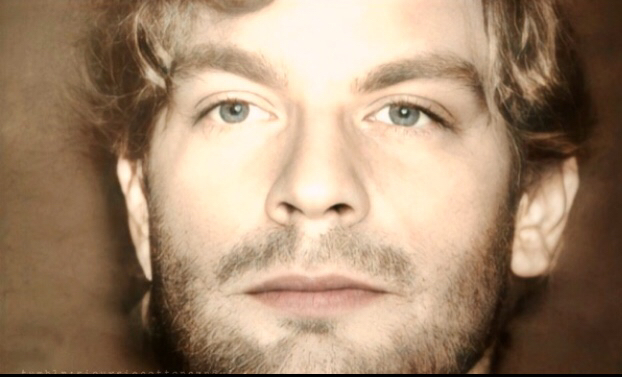
The yellow contact lenses, the ritual use of films before going out, the sense that certain objects and moments carried a charge others couldn’t perceive — these are textbook schizotypal presentations. So is the profound social isolation, the inability to form close friendships, the feeling of being fundamentally unlike other people.
Research suggests that childhood trauma, neglect, abuse, stress, and family dysfunction can increase the risk of developing schizotypal traits. People with the most severe cases usually have a combination of childhood trauma and a genetic basis for their condition. Jeffrey’s childhood — the parental conflict, Joyce’s mental health crises, the constant upheaval, the emotional unavailability of both parents — maps directly onto that profile.
Alcohol Use Disorder
Jeffrey had an alcohol abuse problem and started drinking heavily in high school. His drinking led him to become withdrawn and socially awkward. Eventually, his alcohol use disorder would force him to drop out of college.
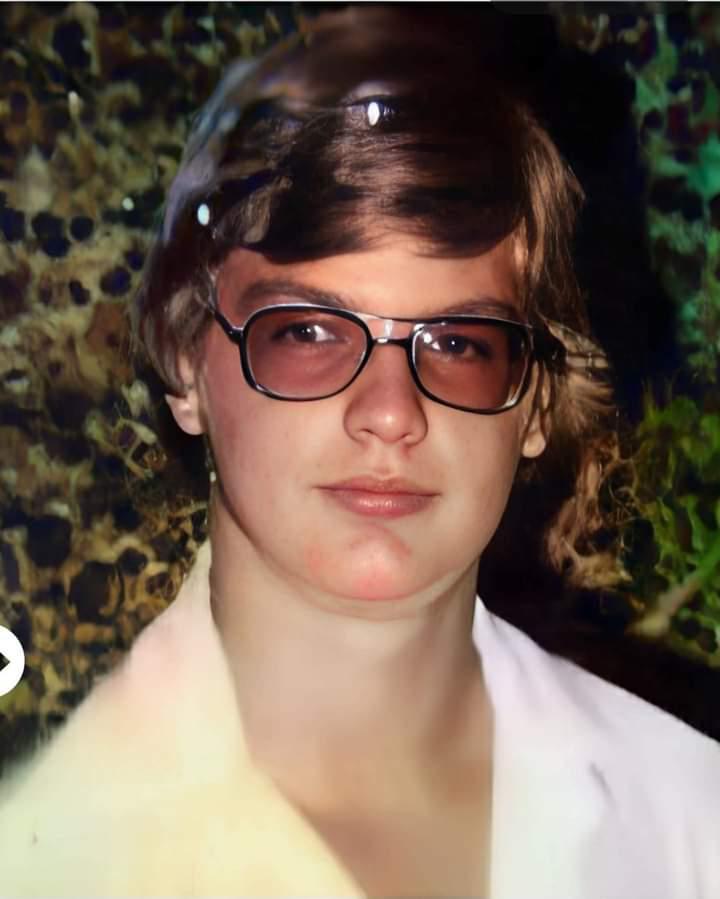
Alcohol was Jeffrey’s primary coping mechanism from adolescence onward. It lowered the threshold for acting on impulses he was otherwise able to suppress. It was what the army discharged him for. It was what filled his apartment in the form of empty Budweiser cans when he was depressed. It is what Lionel tried repeatedly and unsuccessfully to address.
Untreated alcohol use disorder in the context of BPD and schizotypal personality disorder is a particularly dangerous combination — each condition amplifying the others, each closing off the exits that might otherwise have been available.
A Physical Blow During Basic Training
Before Jeffrey ever reached Germany, his body had already sustained damage that belongs in any honest account of his psychiatric history. During basic training at Fort McClellan, Alabama, his persistent drinking got the entire platoon punished for his insubordination — and several of the men made sure he felt the consequences personally. The beating was severe enough to rupture his ear-drum, a wound that left him with recurring ear-aches for years to come. A blow forceful enough to cause that kind of damage is also the kind of physical trauma known to worsen pre-existing psychiatric conditions, erode impulse control, and deepen emotional dysregulation. It is one more layer of pressure added to an architecture that was already beginning to crack.
A Psychotic Disorder
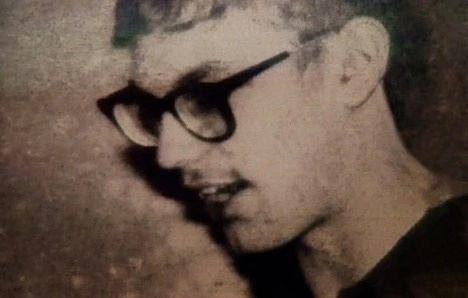
The diagnosis of a psychotic disorder — distinct from psychosis as a symptom within another condition — acknowledges that Jeffrey experienced periods of significant detachment from reality. Symptoms including delusions, hallucinations, and disorganised thinking may have made him detached from reality at certain moments.

This is not the same as saying he was psychotic during his crimes. The prosecution’s case rested precisely on the evidence that he was not — that he planned, concealed, and understood what he was doing. But psychotic episodes, when they occurred, would have contributed to the overall disintegration of a mind that was already fragmented across multiple serious conditions.
The Trance States
There is one detail in the documented record that receives almost no serious attention, and it is one of the most potentially significant: the trance-like states.
Brian Masters documents at least one account of Jeffrey entering what can only be described as a dissociative or fugue-like episode — a period of apparent absence, of being present in body but not in mind, during which his behaviour seemed to shift beyond his ordinary conscious awareness. Jeffrey himself, at various points, described experiences consistent with dissociation — a sense of watching himself from outside, of compulsion overtaking volition, of not quite being present during the worst of what he did.
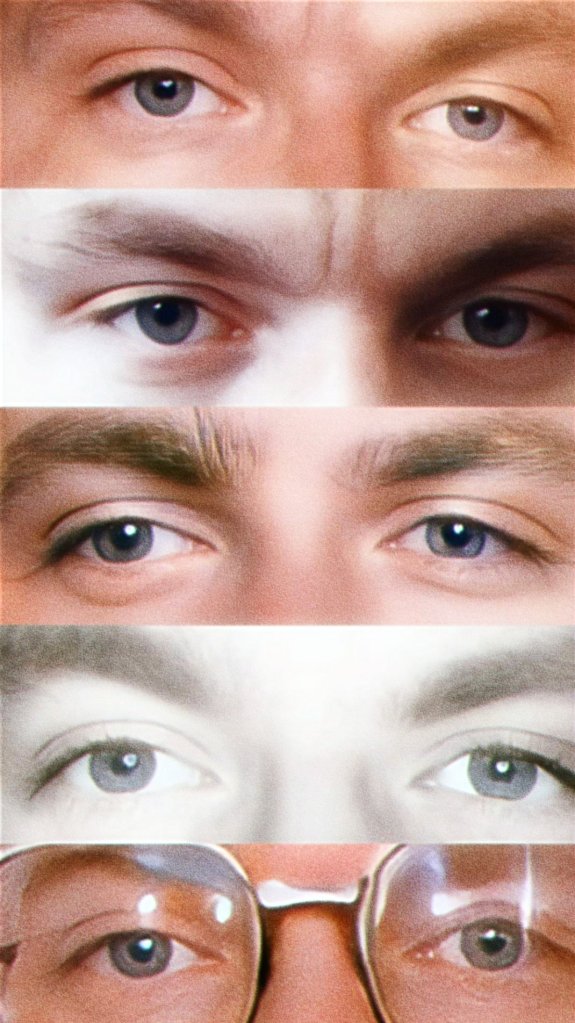
This has been largely ignored by the researchers and forensic professionals who evaluated him. It deserves not to be.
If these episodes were frequent rather than isolated, their origin could plausibly have been neurological rather than purely psychiatric. Temporal lobe involvement — temporal lobe epilepsy, complex partial seizures, or structural abnormalities in the temporal region — is associated with dissociative states, compulsive and repetitive behaviour, altered perception, and in some cases paraphilias. It was, on paper, exactly the kind of thing a neurological examination might detect.
As it turns out, that examination was performed. A competency evaluation conducted in April 1992 confirms that Jeffrey underwent an electroencephalogram (EEG), a CAT scan of the brain, and a chromosomal analysis. All three were reported as negative for pathology — no structural abnormality, no seizure activity, no chromosomal anomaly. This does not rule out every possible neurological contribution to the trance states, and EEGs in particular can miss intermittent or deep-seated abnormalities, especially when not conducted during an actual episode. But it meaningfully narrows the most obvious biological explanation. Joyce’s instinct that something physical might be found was tested, and the tests that existed in 1992 did not find it. The trance states remain real, documented, and significant — but the evidence available points toward a psychological and developmental origin rather than an undetected structural one. See our companion piece, “The Mind That Wouldn’t Stay,” for a fuller exploration of the dissociative reading.
Insomnia, Depression, and the Medication He Was Given
One documented but often overlooked aspect of Jeffrey’s medical history is his prescription for Halcion — a benzodiazepine sedative containing triazolam — prescribed by a physician for insomnia. Jeffrey worked the night shift at the Milwaukee Ambrosia Chocolate Factory and told his doctor he needed help adjusting to that schedule. The prescription was legitimate. The use he put it to was not.
That he required a sedative prescription at all is significant. Insomnia is a common companion to anxiety, depression, and the kind of psychological fragmentation that characterised Jeffrey’s inner life. Benzodiazepines like Halcion are also prescribed for anxiety — it is not possible to know from the documentary record whether anxiety was part of the clinical picture that prompted the prescription, but it would be entirely consistent with everything else we know about him.
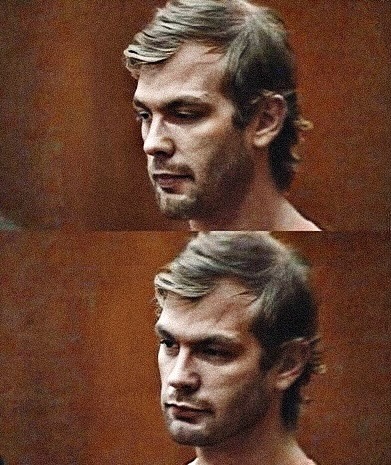
Depression is not formally listed among his trial diagnoses, but it is strongly implied throughout the record. The periods of total collapse — when he would stop shaving, stop bathing, let the apartment fill with empty beer cans, and cease functioning in any ordinary sense — are consistent with depressive episodes. Lionel mentioned his son’s suicidal thoughts after conviction. Jeffrey himself said, in various formulations over the years, that he did not care whether he lived or died.
By April 1992, we know this was addressed, at least in part: the competency evaluation prepared ahead of his trial documents a prescription for Prozac — two 20mg capsules each morning — from his treating psychiatrist Dr. Richard Arnesen, alongside sessions three times a week with clinical psychologist Dr. Patricia Allen. What isn’t documented is whether that level of care continued through the remainder of his incarceration; see our companion piece, “August 24, 1993: A Crisis Report,” which examines what the record shows roughly a year and a half later. What is clear is that the suffering was real and consistent — present since adolescence, visible on paper as early as the 1986 MMPI, and addressed only partially and only very late.
The Asperger’s Hypothesis
More recently, researchers have proposed an additional framework. A study by Silva, Ferrari and Leong in the Journal of Forensic Sciences (2002) proposed that Jeffrey was most likely on the autistic spectrum, specifically with the hypothesis of him having Asperger’s disorder.
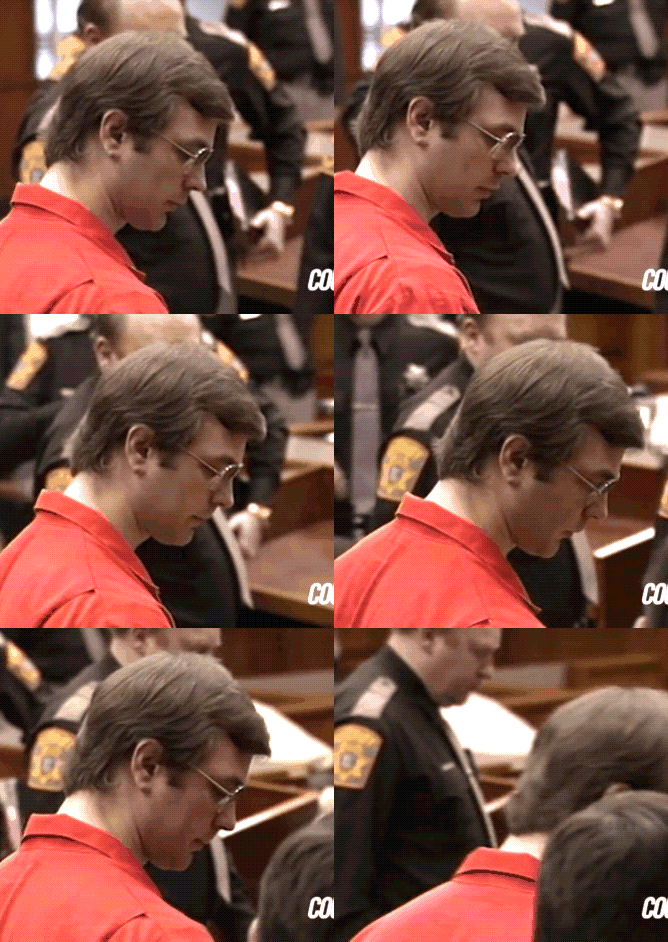
The case for this is not trivial. Jeffrey’s social difficulties went beyond anxiety or paranoia — there was something in the texture of his social interactions, his inability to read and respond to ordinary social cues, his preference for solitary rituals and highly structured activities, his intense and specific interests, that some researchers believe points toward autism spectrum presentation.
His own words at various points support this reading: “The subtleties of social life were beyond my grasp. When children liked me, I did not know why. Nor could I formulate a plan for winning their affection. I simply didn’t know how things worked with other people.” That description is not of someone who doesn’t want connection. It is of someone who cannot navigate the basic social architecture through which connection normally forms.
What Was Not Diagnosed: The Absence of Psychopathy
It is worth stating clearly what Jeffrey was not diagnosed with, because the popular image of him as a psychopath — cold, calculating, without feeling — is contradicted by the clinical record.

Psychopathy, characterised by a fundamental absence of empathy and remorse, shallow affect, and manipulative interpersonal behaviour, does not fit. Other evidence does not support a diagnosis of psychopathy. Jeffrey wept during his confession. He expressed genuine remorse at his sentencing. He underwent sincere religious conversion. Reverend Roy Ratcliff, who spent months with him, described a man with genuine emotional depth and authentic spiritual searching. These are not the behaviours of a psychopath.
He had empathy. It was distorted, misdirected, catastrophically expressed — but it was there.
The Central Question
The question that runs through all of this is not whether Jeffrey was mentally ill. He clearly was, significantly, with multiple overlapping conditions that had been present since childhood and that received essentially no treatment until he was in prison for murder.
The real question is what might have happened had any of this been identified and treated earlier. The BPD, the schizotypal traits, the alcohol dependence, the insomnia, the depression that was never formally named — these were not invisible. They were present, and they were ignored.
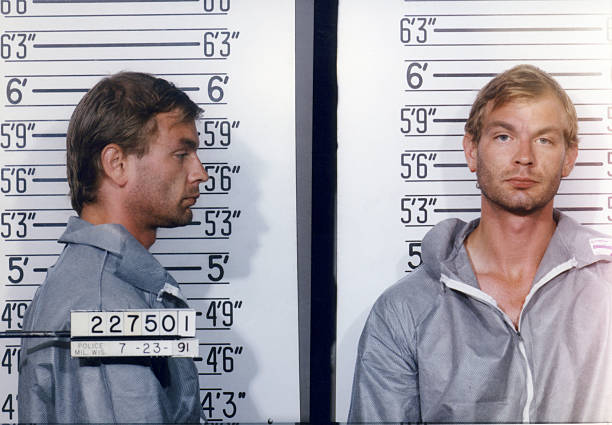
There were points of potential intervention throughout his life — the withdrawn child after the hernia surgery, the isolated teenager collecting animal bones, the army discharge for alcoholism, the beating that ruptured his ear-drum, the earlier arrest. At each of these junctures, the system that might have helped him either missed him entirely or responded inadequately.
Jeffrey Dahmer was not a monster who emerged fully formed from nowhere. He was a severely ill person, carrying a constellation of serious conditions through a childhood and adolescence that offered him almost nothing in the way of support, understanding, or care.
That does not explain away what he did. Nothing explains that away. But it is part of the truth — and the memorial exists to hold the whole truth.
A Final Note, Corrected
This article originally claimed that no neurological examination was ever performed on Jeffrey Dahmer — no CAT scan, no MRI, no EEG — and that the questions about a possible biological origin for his trance states and compulsive behaviour were never seriously pursued while he was alive.
That claim was incorrect, and the record deserves to be set straight. A competency evaluation dated April 27, 1992, conducted ahead of his trial, confirms that Jeffrey underwent an electroencephalogram, a CAT scan of the brain, and a chromosomal analysis. All three were reported as negative for pathology. He was also administered a substantial battery of psychological testing across multiple dates in 1991 and 1992, building on earlier testing from 1986 and 1989, including the Wechsler Adult Intelligence Scale, the Rorschach, and the Minnesota Multiphasic Personality Inventory — corroborating findings of high IQ and an absence of psychotic thinking.
So the picture is more complete, and more carefully examined, than this article previously suggested. The biological question Joyce had always asked — was there something in the brain — was in fact tested, at least to the extent 1992 neurology allowed. The tests came back clean.
What remains true is this: those tests happened before trial, in the context of determining legal competency and sanity — not in the context of ongoing psychiatric care during his three years at Columbia Correctional Institution afterward. No further neurological investigation is documented during his incarceration, and the trance states, the dissociative episodes, the compulsive patterns that defined his adult life were not revisited neurologically after 1992. The brain itself was never studied after death, despite Joyce’s wish that it be — a separate and still-accurate fact, addressed in our article “The Dehumanisation of Jeffrey Dahmer.”
What we got wrong was the claim that no examination ever took place. What remains accurate is that the examination that did take place was early, limited to the tools available in 1992, and was never revisited as his case — and his trance states — continued to raise unanswered questions for the rest of his life.
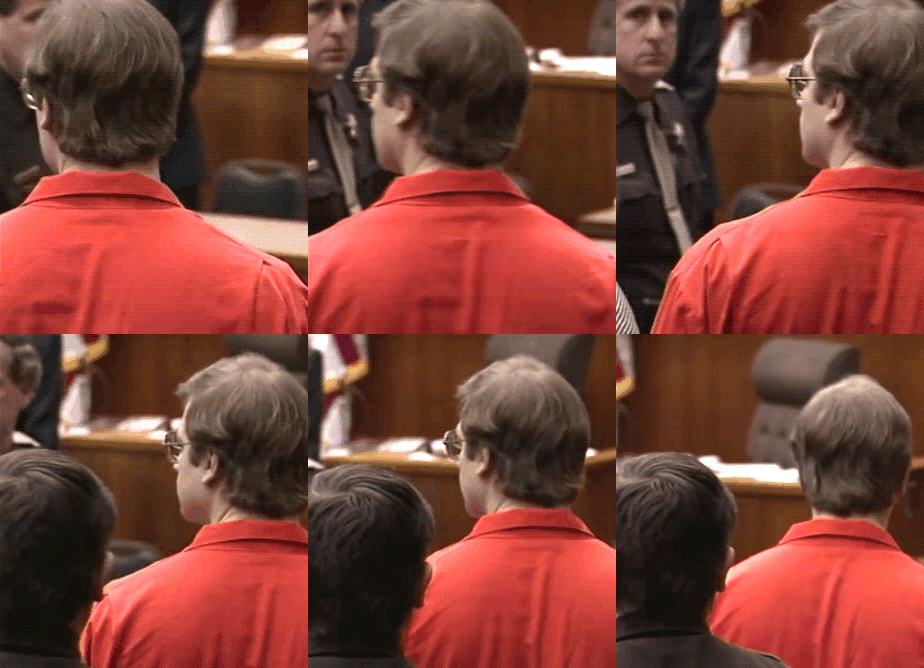
After his death on November 28, 1994, there was a brief window. Joyce requested that Jeffrey’s brain be preserved for scientific study, believing that research might yield something useful — not to excuse what he did, but to understand it. Lionel opposed it. The dispute went to court. In the end, the brain was cremated along with the rest of his remains.
Whatever was there — if anything — is gone. We will never know.
Sources: Trial testimony of Dr. Carl Wahlstrom, Dr. Park Dietz, Dr. George Palermo, Dr. Samuel Friedman, Dr. Fred Berlin, 1992; Jeffrey L. Dahmer, Competency Evaluation, Case No. F-912542, April 27, 1992 (primary source document); DSM-5 diagnostic criteria; Silva, Ferrari & Leong, Journal of Forensic Sciences 2002; Strubel, Comorbid Psychopathologies 2007; Brian Masters, The Shrine of Jeffrey Dahmer 1993; Lionel Dahmer, A Father’s Story 1994; Wikipedia. Note: formal diagnosis of depression is not documented in available trial records; its presence is inferred from behavioural accounts.


The author of “Grilling Dahmer” follows me on BlueSky and she read and reposted this article. Congratulations
😁
LikeLiked by 1 person