
He removed his glasses before the trial began.
It was a quiet, private decision — one that went largely unremarked in the coverage that followed. But Jeffrey Dahmer said it himself: he did not want to see people’s faces. The shame was too great. And so he sat through the most public moment of his life in a deliberate blur, the courtroom softened at its edges, the eyes of strangers mercifully indistinct.
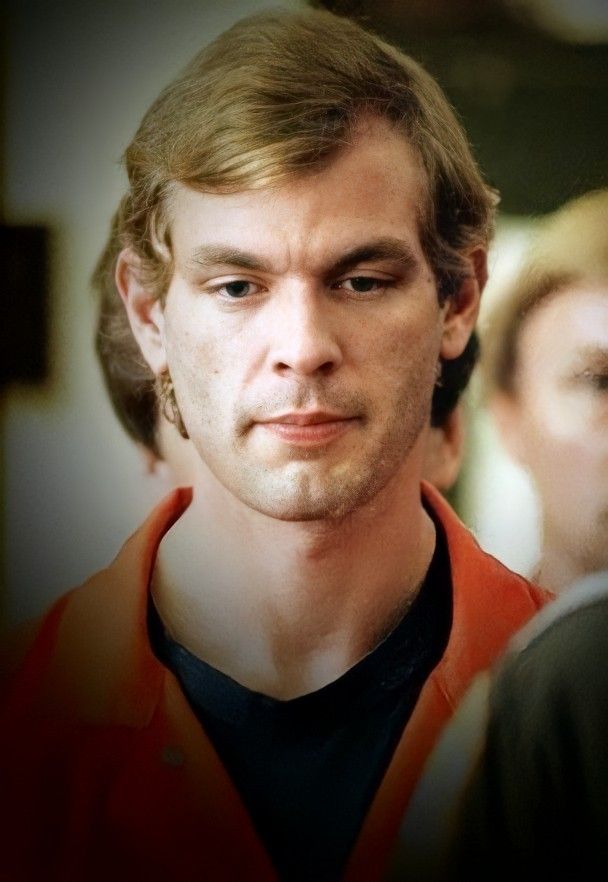
That detail tells you more about who he was than almost anything else in the documented record.
The trial of Jeffrey Dahmer began in January 1992 in Milwaukee. By then, the world had already decided what he was. The press had named him. The headlines had done their work. What arrived in that courtroom was not quite a person anymore — it was a myth that had learned to sit quietly in a suit.
Except that it hadn’t, quite. Because people who sit quietly in suits occasionally push back on small inaccuracies. And Jeffrey Dahmer, it turned out, had standards.
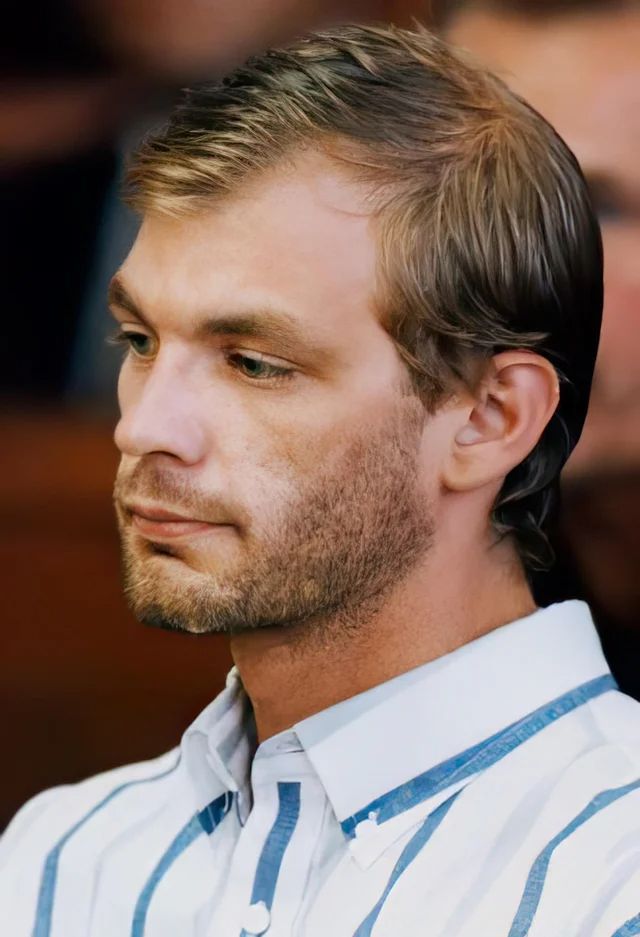
At one point during the proceedings, the prosecution described him as overweight during his teenage years. Jeffrey corrected them. He was not fat. The record should reflect that he was not fat. In the middle of a trial for seventeen murders, with the weight of everything pressing down on that room, he drew a line at an inaccurate description of his adolescent body.
There is something almost unbearably human about that moment. Not monstrous. Not calculating. Just a man who knew what he looked like as a teenager and wanted the court to know it too.
The Legal Record
The legal record of the Dahmer case is extraordinarily detailed. Defence attorneys Wendy Patrickus and her colleagues were required, as part of their preparation, to document their client comprehensively — his physical appearance, his demeanour, his medical and psychiatric history. These notes exist in the legal archive and include physical descriptions of considerable intimacy.
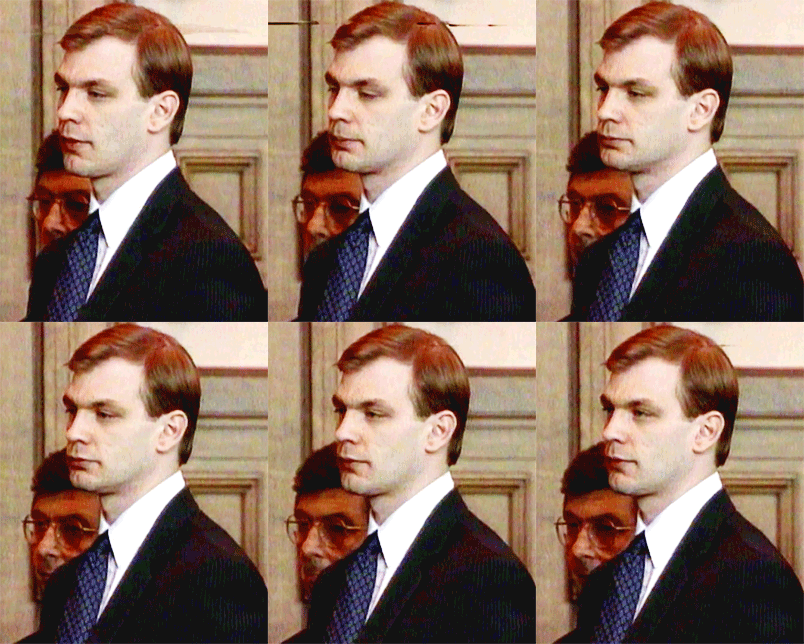
This is not unusual in capital defence work. Attorneys building a case around mental illness and diminished capacity must know their client fully — must be able to present him as a human being to a jury, must anticipate every angle the prosecution might exploit. The documentation is clinical by necessity.
What it leaves behind, however, is a record of a man reduced to measurements and observations — catalogued with the precision of a medical file, the person inside the data noted only incidentally. Read against the image of Jeffrey sitting quietly in his blurred courtroom, unable to meet anyone’s eyes, it becomes something else entirely. A man already unable to be seen clearly, now being seen with forensic thoroughness by the people paid to defend him.
What These Details Add Up To
A person. That is all. A person who was ashamed — genuinely, deeply ashamed — of what he had done and what he was. A person who still cared, even there, about accuracy and dignity, who would not let a wrong thing stand unchallenged even when everything else had already collapsed. A person who had been reduced to a file, a measurement, a legal exhibit, and who sat quietly through it all in a deliberate blur, the world softened so he wouldn’t have to see what people thought of him.
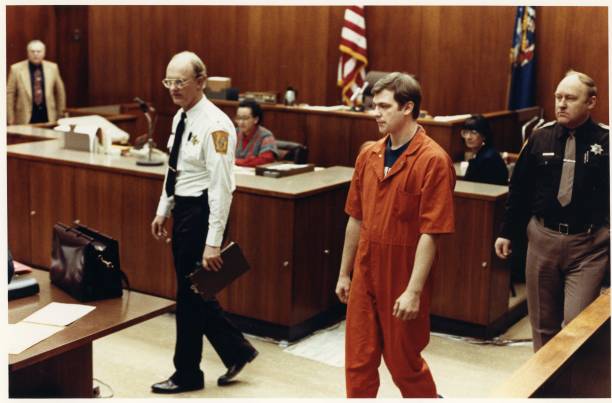
The mythology of Jeffrey Dahmer is built on the idea that monsters don’t feel things. That they sit cold and calculating in courtrooms, unmoved. The record suggests something entirely different. The record suggests a man who felt so much that he couldn’t bear to look.
That is not an excuse. It was never an excuse. But it is the truth — and the truth is more complicated, more human, and more heartbreaking than the mythology ever allowed.
He took his glasses off. He didn’t want to see.
We think he deserved to be seen properly in return.
Sources: Trial records, 1992; Wendy Patrickus defence notes; Brian Masters, The Shrine of Jeffrey Dahmer, 1993; Lionel Dahmer, A Father’s Story, 1994.

 Jeffrey Dahmer Memorial