
Before the confessions, before the courtroom, before the world decided what his name would mean — there was a boy. A boy who sang Christmas songs badly and didn’t apologise for it. Who made up love songs on the spot. Who spelled out his own name with pride, as if the letters themselves were something worth celebrating. Who told his father, over and over, that he loved him.
This is what Jeffrey Dahmer sounded like at nine years old. And it matters.
There is a recording. It circulates quietly, passed between people who care enough to seek it out — a child’s voice, preserved on tape, from 1969. Jeffrey Dahmer is nine years old.
What you hear is not what you might expect. There is no shadow here, no foreboding, nothing that retrospect can weaponise into a sign of what was coming. There is only a boy — singing, playing, showing off, loving.
He sings Jingle Bells and stops midway. “I don’t remember the rest,” he says, with complete unbothered honesty, and then continues anyway. He makes up songs on the spot — a love song, a Christmas song, something that begins with “yeah yeah baby” and goes wherever it wants to go. He hits toys against what sounds like a wooden floor. He spells out his name — Jeffrey Dahmer, or sometimes just Jeff Dahmer — with the particular pride of a child who has recently learned that his name is something worth knowing.
And then, over and over, in a voice that asks for nothing in return: “I love you, Lionel. I love you. I love you.”
He had just had his first swimming lesson.
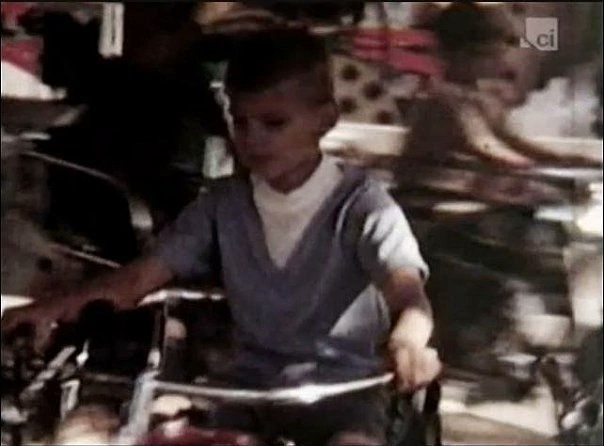
Reading the Child
What do you hear when you listen carefully?
You hear a child who is completely at ease. There is no hesitation, no self-consciousness, no awareness that he might be doing anything wrong or strange. He sings badly and doesn’t care. He forgets the words to Jingle Bells and announces the fact plainly before continuing anyway. He invents songs on the spot — love songs, Christmas songs, songs that go wherever they want — with the particular freedom of a child who has not yet learned that creativity requires an audience’s permission.
You hear warmth. The repeated declarations of love to his father — “I love you, Lionel, I love you, I love you” — are not performed for the recorder. They are simply what is there, spilling out naturally alongside news of his first swimming lesson, alongside the singing, alongside the ordinary joy of the afternoon. He is a child who feels something and says it.
You hear confidence. He spells his name with pride — Jeffrey Dahmer, or sometimes just Jeff Dahmer — as if the letters are an achievement worth announcing. Which, at nine years old, they are.
None of this is extraordinary. That is exactly the point.
1969
It is 1969. Jeffrey Dahmer is nine years old.
The family is living at 4480 West Bath Road in Bath, Ohio — the house Joyce had fallen in love with on sight, the one with woods nearby and a pond, the one that felt, for a brief time, like somewhere they might finally stay. Jeffrey had been happy there at first. He explored the woods with his dog Frisky. He collected rocks with a school friend. He liked the space and the quiet.
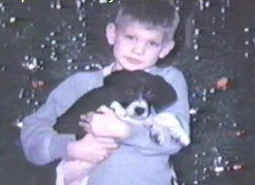
But the house that sounded like stability was already beginning to fracture. Lionel and Joyce’s marriage was deteriorating — the arguments, the medication, the long absences. Brian Masters writes of Joyce during this period as increasingly desperate, her consumption of pills growing, her emotional availability to her children narrowing. Lionel was at work, always at work. The boy who had once been described as cheerful and energetic was becoming, according to those who knew him, quieter. More inward. More alone.
And yet.
In this recording, made sometime in 1969, none of that is audible. What you hear instead is a child in full flight — singing, laughing, showing off, loving. Whatever was gathering in the background of his life had not yet reached him here, in this moment, with a recorder running and his father nearby.
He was still just a boy.
Why It Matters
Why does a child’s recording matter?
Because the easiest thing in the world is to let a name become only what it’s most associated with. Jeffrey Dahmer — two words that have carried, for decades, the full weight of seventeen deaths, of things so dark that most people flinch before they finish the sentence. That weight is real. It should never be minimised.
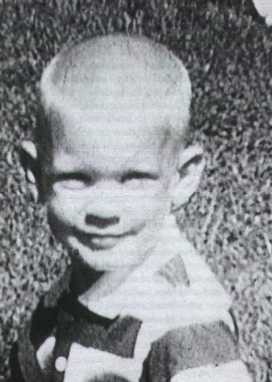
But a person is not only what they did wrong. That is the memorial’s founding argument, and this recording is one of the clearest pieces of evidence for it. Here is a child who loved his father openly and said so. Who sang badly and didn’t care. Who was proud of his name. Who had a first swimming lesson and wanted the whole world to know.
That child existed. He was real. And he deserves to be part of the record.
Jeffrey Dahmer spelled his name on a tape recorder in 1969 — with the pride of a nine-year-old who has recently learned that his name is something worth knowing.
He was right. It was.
Sources: Personal listening notes; Lionel Dahmer, A Father’s Story, 1994; Brian Masters, The Shrine of Jeffrey Dahmer, 1993.

 Jeffrey Dahmer Memorial