
There was a boy before the story the world knows.
He was born on May 21, 1960, in Milwaukee, Wisconsin, to Lionel and Joyce Dahmer. He was their first child. By most accounts he was a happy, curious infant — doted on, loved, ordinary in all the ways that matter. Lionel would later describe a little boy who was bright and inquisitive, who moved through the world with a lightness that would not last.
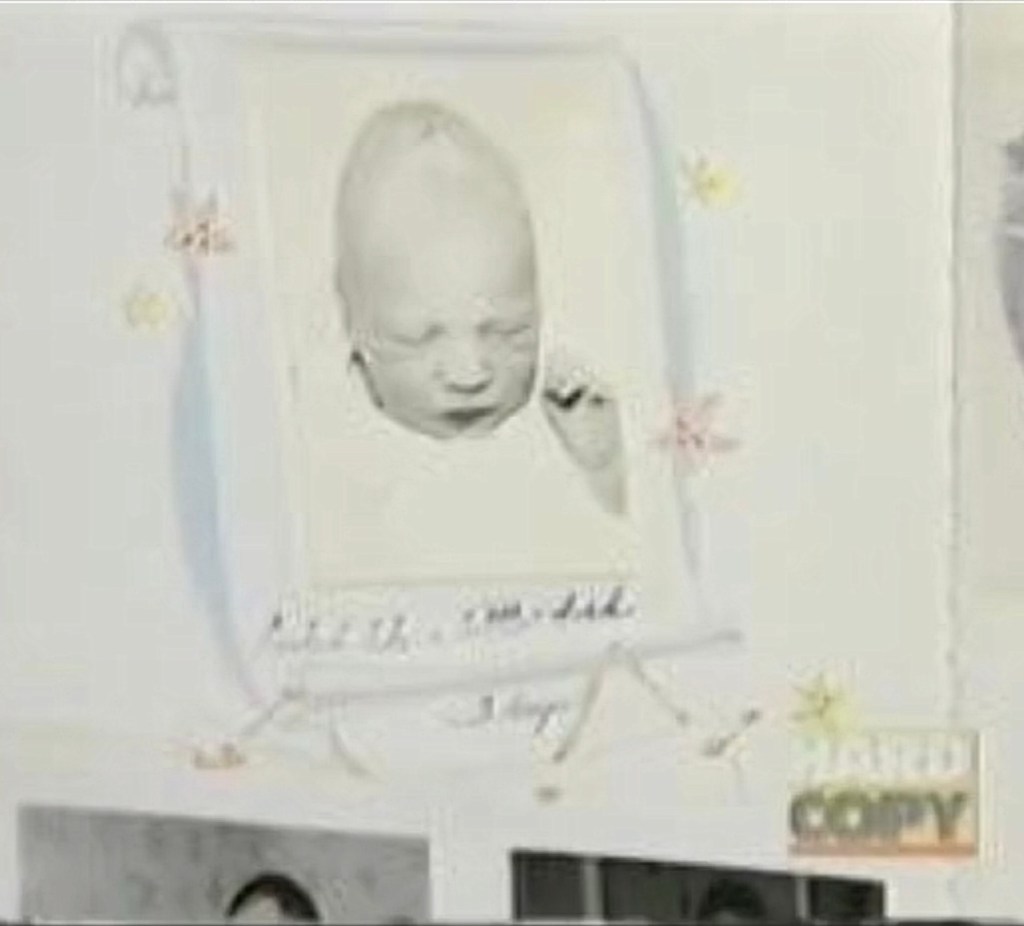
What happened between that beginning and the morning of June 18, 1978 — when a young man named Steven Hicks hitchhiked along a road in Bath, Ohio, and Jeffrey Dahmer offered him a ride home — is the story this article attempts to tell properly, for the first time on this memorial.
Not the story of a monster in the making. The story of a child who needed help that never came.
The Early Years
Jeffrey’s early childhood was, by his own account and Lionel’s, largely unremarkable. He was a curious, energetic child who loved his dog and explored the world with the enthusiasm common to all small children. Lionel describes him as affectionate and bright. Joyce, for all the difficulties that would come later, was attentive to him in those early years.
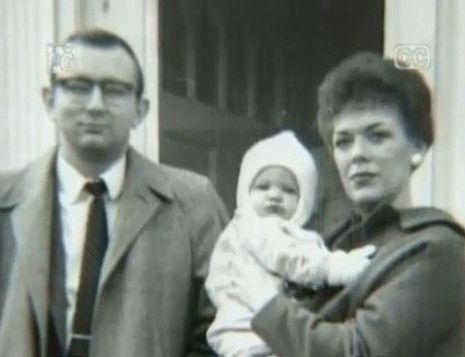
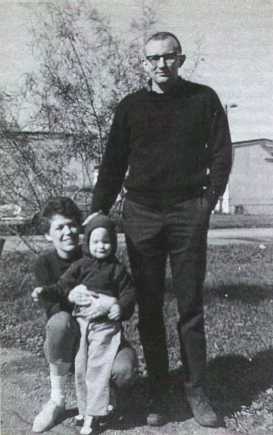
The family moved frequently during Jeffrey’s childhood, following Lionel’s academic career — first to Ames, Iowa, then to Doylestown, Ohio. Jeffrey adapted, as children do, though the pattern of uprooting and resettling established early in his life would continue throughout it.
What the early years show, in retrospect, is a child who was sensitive and perceptive in ways that made him vulnerable to the disruptions that were coming. He noticed things. He felt things deeply. In a stable environment, these qualities might have become strengths. In the environment that was actually waiting for him, they became fault lines.
The Hernia Surgery — The First Turning Point
When Jeffrey was around four years old, he underwent surgery to correct a double hernia. It was a routine procedure, medically unremarkable. But what followed was not routine at all.
After the surgery, Jeffrey’s personality changed. The cheerful, outgoing child became withdrawn, quieter, somehow absent from himself in a way that persisted. Lionel noticed it. He would later describe a son who seemed, after that surgery, to have retreated somewhere inside himself that was difficult to reach.
The reasons are not fully understood. It may have been the experience of anaesthesia and physical vulnerability at an age when a child cannot conceptualise what is happening to their body. It may have been the disruption of routine, the hospital environment, the fear. It may have been something neurological — a sensitivity to the procedure or its aftermath that had consequences no one thought to investigate.
What matters is that the boy who came home from that surgery was different from the boy who went in. Something shifted. Something that had been open began to close.
Bath Road — The Last Happy Chapter
In 1968, when Jeffrey was eight years old, the family moved to Bath Township, Ohio. Lionel had completed his doctorate in analytical chemistry and taken a position that allowed them to settle properly for the first time. They moved into a house on Bath Road — a wooded, rural property with space and privacy and the particular freedom that comes from being a child in a place where the world feels large.
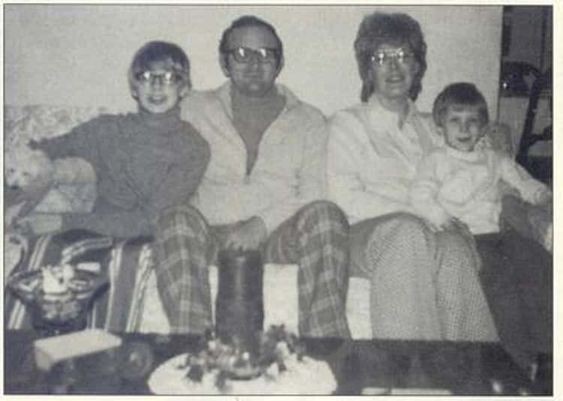
Jeffrey loved Bath Road. This is documented clearly in Lionel’s account and consistent with what Jeffrey himself later described. The woods behind the house were his territory — he explored them constantly, built things, climbed things, discovered things. He had a dog, a bicycle, the ordinary pleasures of a rural American childhood in the late 1960s.
It was here that his fascination with animals and their interiors began. He started collecting roadkill — animals he found already dead along the roads near the house — and examining them. He was curious about bones, about what held living things together, about what remained when the life was gone. Lionel, himself a scientist, initially interpreted this as a natural extension of scientific curiosity. He was not entirely wrong. The curiosity was genuine. But there was something else in it too — an intensity, a fixation that went beyond ordinary childhood interest in nature.
Jeffrey later described the bone collecting as something that gave him a feeling of control and order in a life that was becoming increasingly chaotic. The bones were clean, permanent, comprehensible. The world outside the woods was becoming less so.
Joyce’s Deterioration
The years on Bath Road were also the years in which Joyce Dahmer’s mental health deteriorated significantly. She suffered from anxiety and hypochondria that escalated into something more serious — a pattern of prolonged illnesses, periods of collapse, demands for attention and care that consumed the household’s emotional resources. Lionel describes a marriage under sustained strain, a home in which tension was the ambient condition.
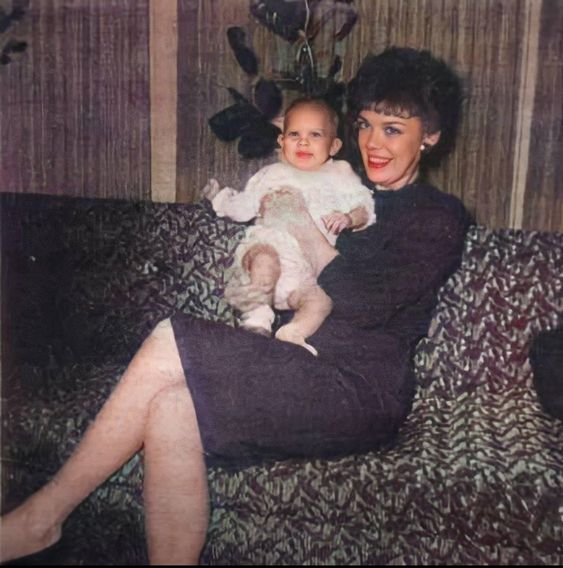
Joyce was not absent in a simple sense — she was present, often intensely so, but her presence was unpredictable and frightening rather than stabilising. Jeffrey could not rely on her. He could not anticipate her moods or her needs. The household revolved around managing her, and no one was managing him.
Lionel, working long hours on his doctorate and later his career, was often genuinely absent — physically away for extended periods when Jeffrey needed him most. He acknowledges this in A Father’s Story with a guilt that runs through every page. He knew something was wrong with his son. He did not know how to reach him. He kept hoping things would improve.
They did not improve.
The Boy Nobody Noticed
What makes Jeffrey Dahmer’s childhood and adolescence so painful to examine is not that the warning signs were invisible. It is that they were present, and ordinary, and embedded in a life that also contained perfectly normal things — things that remind you, painfully, that this was a real child living a real life.
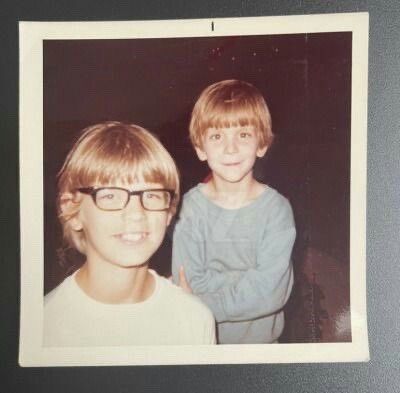
He played clarinet in the school band. He had learned tennis as a younger child and played with some enthusiasm. He was a Boy Scout for a period, participating in the badges and activities and group life that scouting involves. He was good at biology — genuinely, notably good, with a natural aptitude for the subject that his teachers recognised. There is a biology essay he wrote in high school that still circulates online, notable for its sophistication and its author’s evident passion for the subject.
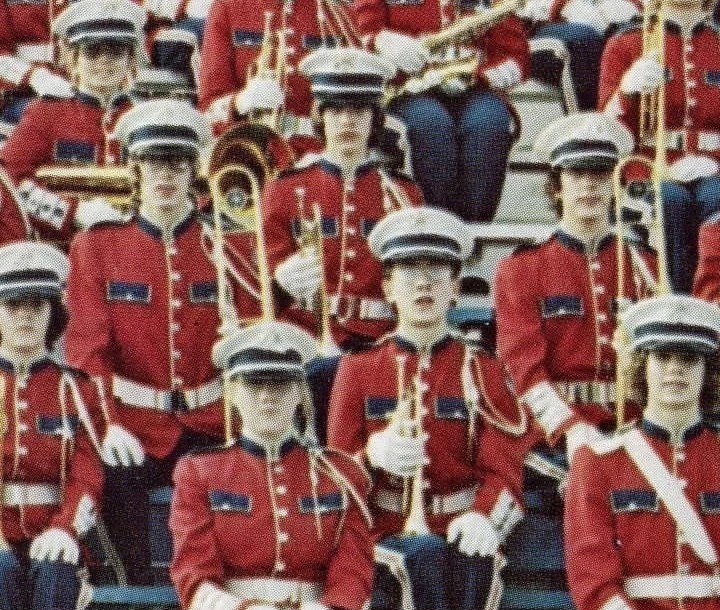
These are not the details of a child who was lost from the beginning. They are the details of a child who was trying — who had interests, abilities, things he cared about — who was reaching for a normal life and finding it increasingly difficult to hold onto.

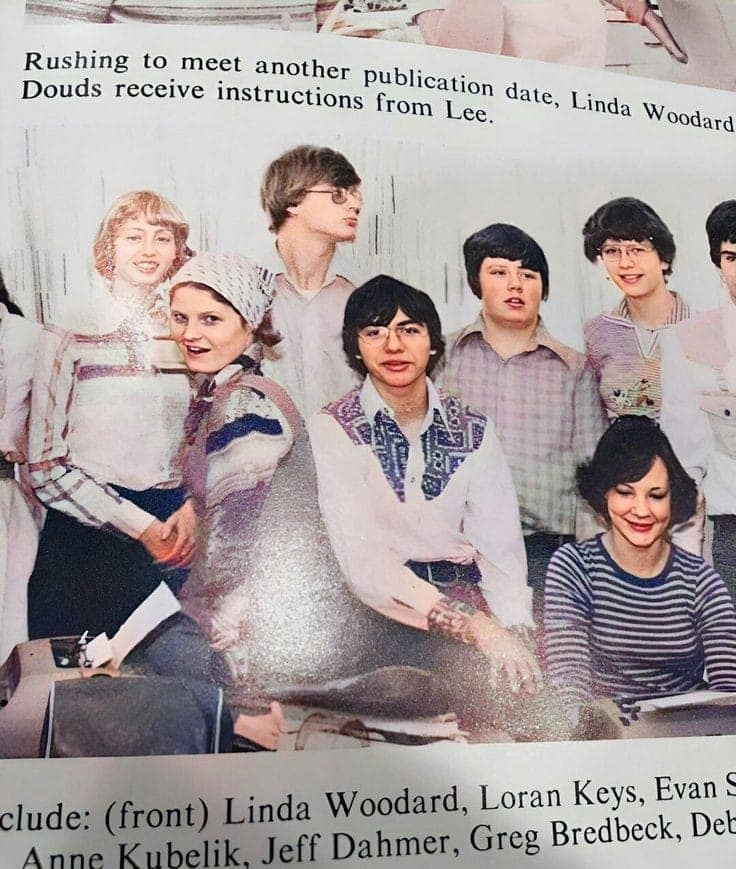
A fan club of sorts formed around him at Revere High School — a loose group of classmates who found his eccentricities entertaining, who enjoyed his company precisely because he was strange and funny and unlike everyone else. Jeffrey leaned into this. He developed a persona: the class oddity, the performer, the one who did things that made everyone laugh because he had calculated that being laughed at on his own terms was better than being invisible.
He called it — in so many words — putting on a show. He made himself the joke so that the joke would be his. It was a survival strategy. It was also a performance of a self that had very little to do with who he actually was.
The Drinking
Jeffrey began drinking in high school. The timing is consistent with what Lionel describes of the household atmosphere — a home in which both parents were increasingly absent in different ways, in which there was no one monitoring, no one present enough to notice that their teenage son had started carrying a cup of something alcoholic through the school halls.
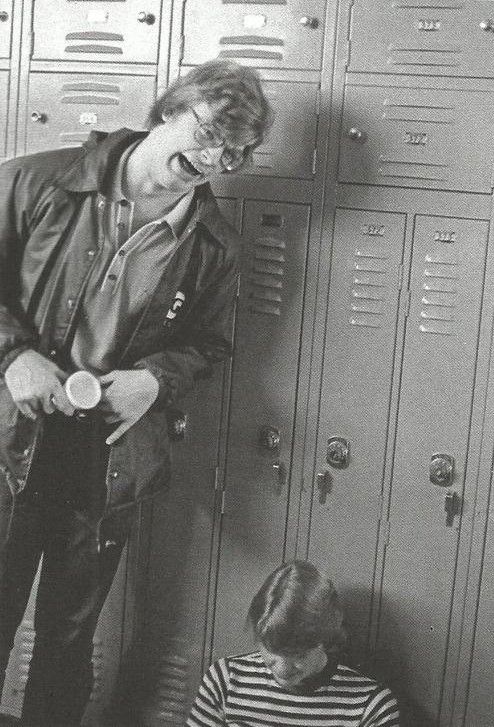
The Styrofoam cup became something of a legend at Revere High School. His classmates noticed it. Some found it amusing — another piece of the Jeffrey performance. What it actually was, was a teenager self-medicating a level of anxiety, dissociation, and unnamed distress that had no other outlet.
Alcohol lowered the threshold of the feelings he could not manage. It made the strangeness quieter. It made the thoughts — the ones he would not name yet, the ones about men, about bodies, about the compulsions he was fighting alone — recede to a manageable distance.
He was not yet eighteen. He was already dependent.
The Hidden Homosexuality
Jeffrey Dahmer was gay. This is documented in his own words, in his confessions, in his accounts of his adolescence. He knew it in high school and he fought it — alone, without support, without language, without anyone to tell.
The late 1970s in rural Ohio were not a place or time in which a teenage boy could come out. The cultural context made homosexuality something to be hidden, suppressed, ashamed of. Jeffrey had no framework for understanding or accepting what he was feeling. He had no one to talk to about it.
He described the experience of his own sexuality as something alien and frightening — desires he did not ask for and could not reconcile with the life he was supposed to be living. The isolation of keeping this secret compounded every other isolation he was already experiencing. The drinking intensified. The withdrawal deepened.
A teenager fighting his own sexuality alone, without support or guidance, is a teenager in crisis. Nobody saw the crisis. Nobody asked.
The Abandonment
In 1977, Jeffrey’s parents’ marriage finally collapsed entirely. What followed was one of the most consequential failures in his entire story.
Lionel moved out. Joyce, in the midst of a severe mental health crisis and a bitter custody dispute over Jeffrey’s younger brother David, eventually left too — taking David with her to Wisconsin, leaving Jeffrey behind in the Bath Road house.
Alone. At sixteen years old.
Jeffrey could not cook for himself. He had no reliable income, no transport, no adult supervision, no one checking whether he was eating or sleeping or attending school. He was a child — because sixteen is a child, regardless of legal definitions — left in an empty house while both his parents pursued their own lives and their own crises.
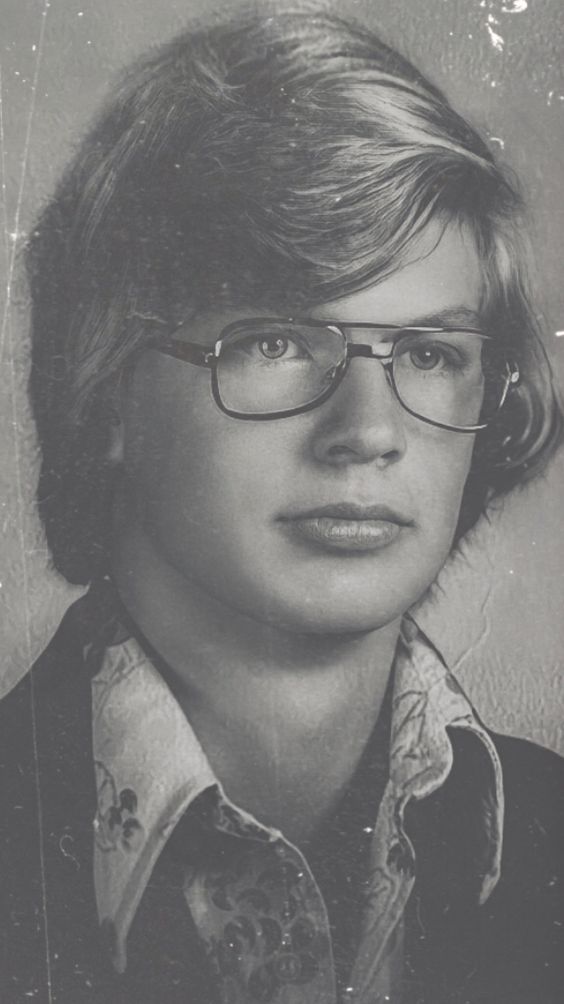
Lionel would later describe the guilt of this period as something he carries permanently. He did not know how abandoned Jeffrey was. He was dealing with his own collapse. He returned when he could. It was not enough.
The image of Jeffrey Dahmer at sixteen, alone in that house in Bath, Ohio, watching his father drive away with a new girlfriend and his mother leave with his little brother but not him — is one of the most heartbreaking images in the entire documented record. It is not complicated. A child was left behind. Nobody came back in time.
Steven Hicks — June 18, 1978
Three weeks after graduating from Revere High School, Jeffrey Dahmer picked up a hitchhiker named Steven Hicks on a road near the Bath Road house. Steven was eighteen years old. He had been at a concert. He was heading home.
Jeffrey invited him back to the house. They drank beer together. They talked. For a few hours, Jeffrey had what he had been desperate for — company, connection, the ordinary warmth of another person’s presence in that empty house.

And then Steven said he wanted to leave.
Jeffrey later described what happened next in terms of an overwhelming compulsion — a terror of being alone again that he could not manage or override. He could not let Steven leave. The thought of the house being empty again, of being alone again, was unbearable in a way that overwhelmed everything else.
He killed Steven Hicks with a barbell. He buried him in the woods behind the house.
This was not the act of a predator who had been planning and rehearsing. This was the act of a profoundly disturbed, profoundly isolated young man who had never learned to tolerate being alone, who had been abandoned by everyone who was supposed to stay, who had no treatment for any of the conditions that were driving him, and who reached a breaking point in an empty house on a summer afternoon.
Nothing excuses what he did. Nothing can give Steven Hicks back to his family. But understanding what brought Jeffrey to that moment — the hernia surgery, the bone collecting in the woods, Joyce’s deterioration, Lionel’s absences, the drinking, the hidden homosexuality, the fan club performance, the Styrofoam cup, the abandonment at sixteen, the empty house — is not the same as excusing it. It is the same as telling the truth.
What Was Never Done
Jeffrey Dahmer was a child in crisis for most of his childhood. The signs were there — visible, documented, present. The withdrawn child after the hernia surgery. The bone collecting in the woods. The drinking in high school. The isolation. The performance. The abandoned teenager alone in an empty house.
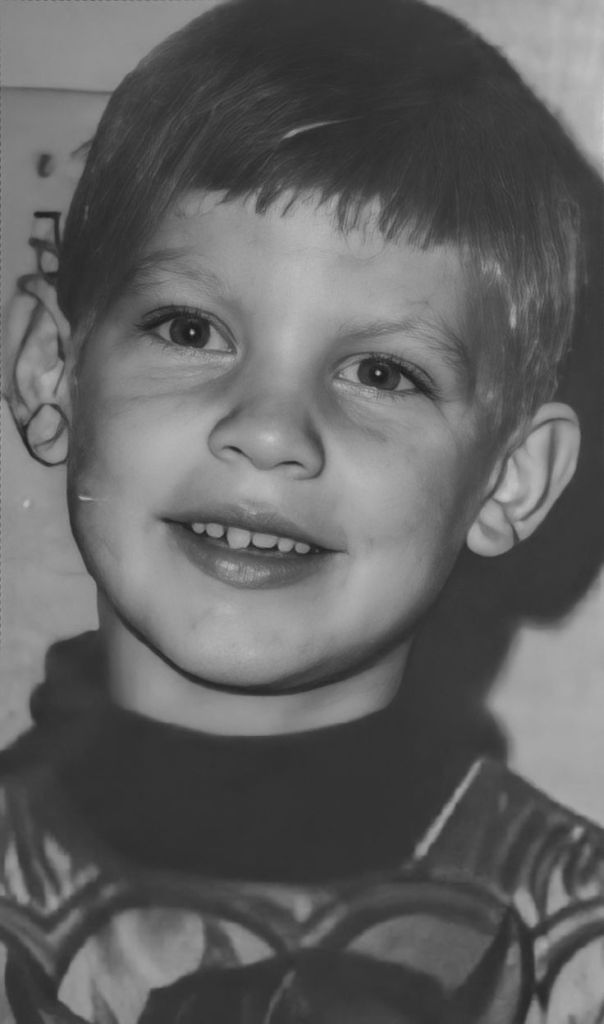
At every juncture, the systems that might have helped him — family, school, medicine — either missed him entirely or responded inadequately. No one referred him for psychiatric evaluation. No one addressed the drinking. No one stayed.
He booked a therapy appointment once. He arrived at the lobby. He sat there. And then he left, because he didn’t know what to say, and the shame was too great, and no one came out to meet him.
That image — Jeffrey Dahmer sitting in a waiting room, wanting help, not knowing how to ask for it, leaving without it — is the image the memorial keeps returning to. Not the monster the world decided he was. The person who needed something that was never given to him.
The boy on Bath Road deserved better. So did Steven Hicks. Both things are true, and both things matter, and this memorial holds both of them.
Sources: Lionel Dahmer, A Father’s Story, 1994; Brian Masters, The Shrine of Jeffrey Dahmer, 1993; Trial and confession records, 1991–1992; Stone Phillips interview, Dateline NBC, 1994.


