
The word necrophile has followed Jeffrey Dahmer’s name for over thirty years. It appears in newspaper headlines, documentary voiceovers, true crime podcasts, Wikipedia articles, and casual conversation. It is repeated so often and so confidently that it has become accepted fact — one of the defining labels of who he was and what he wanted.
It is also, clinically speaking, inaccurate. Or at the very least, profoundly incomplete.
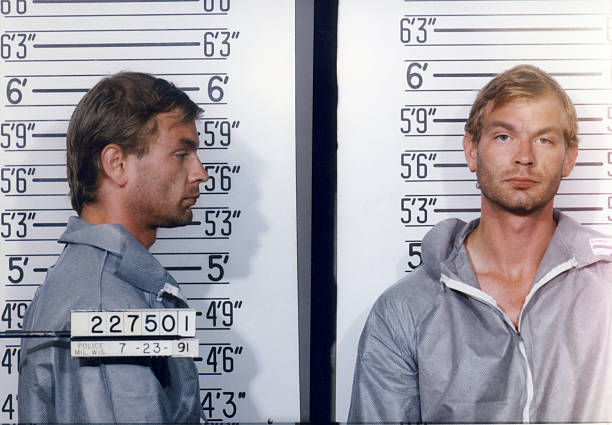
This is not a semantic argument. The distinction between necrophilia and somnophilia is not a footnote — it is the difference between understanding Jeffrey Dahmer and misunderstanding him. And the memorial has always been committed to understanding him, even when that understanding is difficult, even when it requires sitting with complexity rather than reaching for the nearest available label.
What the Terms Actually Mean
Necrophilia, as defined clinically, is a paraphilia characterised by sexual attraction to corpses. The object of desire is death itself — the stillness, the decay, the fact of no longer being alive. It is a specific and well-documented condition with its own psychological literature.
Somnophilia is a paraphilia characterised by sexual attraction to sleeping or unconscious persons. The object of desire is not death but a specific quality of presence — a body that is there, warm, breathing, alive, but unresisting. Compliant. Still.
These are not the same thing. They share the element of non-responsiveness, which is why they are sometimes conflated. But their objects are fundamentally different. One desires death. The other desires a particular kind of living stillness — a person who will not leave, will not resist, will not reject.
Jeffrey Dahmer himself told us, repeatedly and clearly, which category he belonged to.
What Jeffrey Actually Said
In his psychiatric interview with Dr Frederick Fosdal on January 9, 1992 — one of the most detailed and honest accounts of his psychology we have — Jeffrey describes his fantasies with a precision that is clinically significant.
He did not describe wanting dead bodies. He described wanting compliance.
He talked about daydreams of lying with a good-looking man, kissing, touching — in total compliance with my wishes. He described wanting someone who would stay. He described the fantasy of having someone completely present and completely unresisting. Warm. Alive. There.
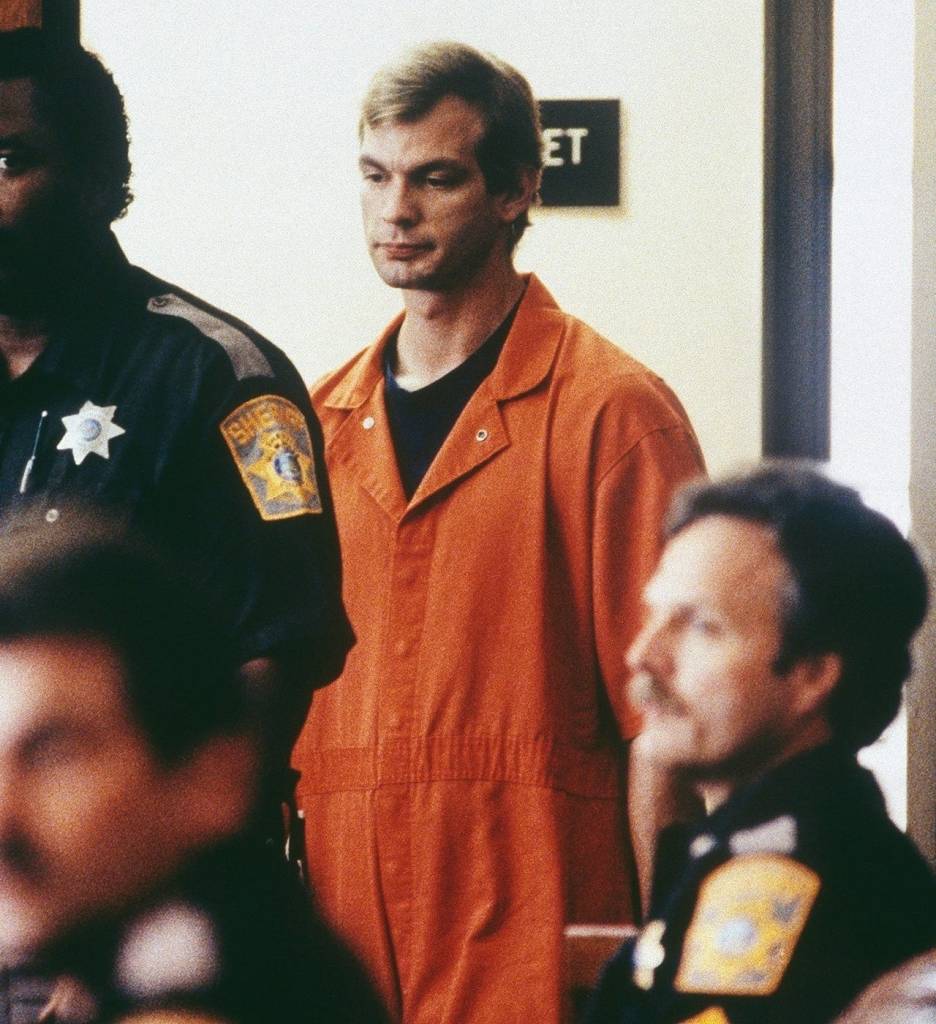
This is not the language of necrophilia. This is the language of somnophilia — the desire for a living body in a state of passive surrender.
In Patrick Kennedy’s Grilling Dahmer, the interrogation sessions reveal more. Jeffrey describes his earliest fantasies as centering on unconscious men — men he imagined finding, men who would be unable to leave. He describes the appeal of control, of having someone present who would not withdraw. The sexual fantasy was about the unconscious state, not the dead state.
The drugging of victims — the sleeping pills crushed into drinks, the attempts to induce deep unconsciousness — is the most telling evidence of all. Jeffrey was not trying to kill his victims in order to have sex with them. He was trying to render them unconscious so that they would stay. The deaths, when they occurred, were often a result of the drugging going wrong, or of the panic that followed when victims began to regain consciousness.
He wanted them sleeping. Not dead.
The Distinction in His Own Behaviour
The timeline of what happened in Apartment 213 is important here and is documented across multiple sources including the confession transcripts and the Fosdal interview.
The pattern, repeated across victims, was this: Jeffrey would meet someone, bring them back to the apartment, drug their drink, wait for unconsciousness, and then lie with the unconscious person. In many cases he would talk to them, touch them, position them. He described feelings of closeness, of companionship, of having someone present who would not leave him.
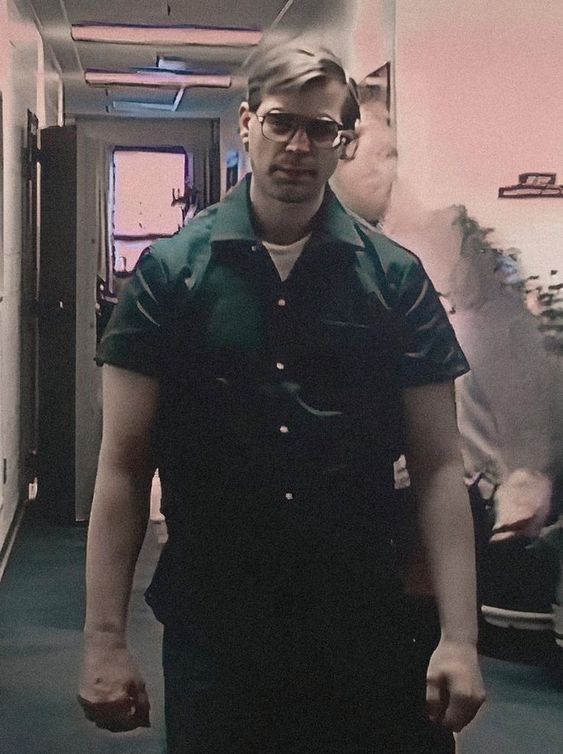
The killing, when it happened, was typically when the victim began to wake — when the unconscious state that Jeffrey had created began to dissolve, and with it the fantasy of someone permanently, peacefully present.
This is the most devastating irony in the entire case. He killed to preserve the unconscious state. Death was not the goal — it was the terrible consequence of trying to maintain the fantasy of living stillness when the living person began to reassert themselves.
Dr Judith Becker, one of the most respected forensic psychologists who evaluated Jeffrey, noted this distinction in her clinical assessment. Her evaluation pointed toward the primary paraphilia being oriented around unconsciousness and control rather than death per se. The necrophilic acts that occurred post-mortem were, in the clinical reading, secondary — what happened when the somnophilic fantasy could no longer be sustained with a living body.
This is not a defence. It is not a mitigation. It is an attempt to understand accurately.
The Mannequin: Evidence Beyond Doubt
There is a detail in the Jeffrey Dahmer case that rarely receives the attention it deserves — and yet it may be the single most clarifying piece of evidence in the entire debate between necrophilia and somnophilia.
Jeffrey stole a mannequin.
The incident is documented and confirmed. At some point during his time in Milwaukee, Jeffrey took a mannequin from a shop and kept it in his apartment. He described lying with it, holding it, experiencing a sense of comfort and closeness from its presence. When the mannequin was eventually discovered — by his grandmother, during one of the periods he was living with her — it was disposed of, and Jeffrey gave an explanation that satisfied her at the time.
Let us be precise about what a mannequin is. It is not a corpse. It has never been alive. It does not decay, does not smell, does not carry any of the qualities that define necrophilic attraction. A mannequin is simply a body-shaped object that holds a position, stays where it is placed, and does not leave.
What it shares with an unconscious person is exactly and only this: stillness and compliance.
This is the somnophilic core laid completely bare. Jeffrey was not aroused by death. He was not seeking the qualities of a corpse. He was seeking the quality of a presence that would remain — a body-shaped warmth that could not withdraw, could not reject, could not walk out of the door at the end of the night and leave him alone in the apartment on North 25th Street.
The mannequin is the fantasy stripped of everything except its essence. No drugging was required. No violence. Just a body that stayed.
He wanted someone to stay.
That sentence, which runs beneath almost everything we know about Jeffrey Dahmer, could not be more clearly illustrated than by a man alone in a Milwaukee apartment, lying beside a stolen mannequin, finding in its permanent stillness something he had been unable to find anywhere else.
It is one of the most quietly devastating images in the entire case. And it is not the image of a necrophile. It is the image of a profoundly lonely man whose mind had found the most distorted possible solution to the most human of all problems.
Why the Label Matters
Labels shape understanding. When we call Jeffrey Dahmer a necrophile — cleanly, completely, without qualification — we place the desire for death at the centre of his psychology. We make him a man who wanted corpses.
But that is not who he was.
He was a man who wanted someone to stay. Who wanted the impossible — complete presence without the possibility of rejection or abandonment. Who wanted the warmth and proximity of another person without the terrifying vulnerability of that person being conscious, autonomous, capable of leaving.
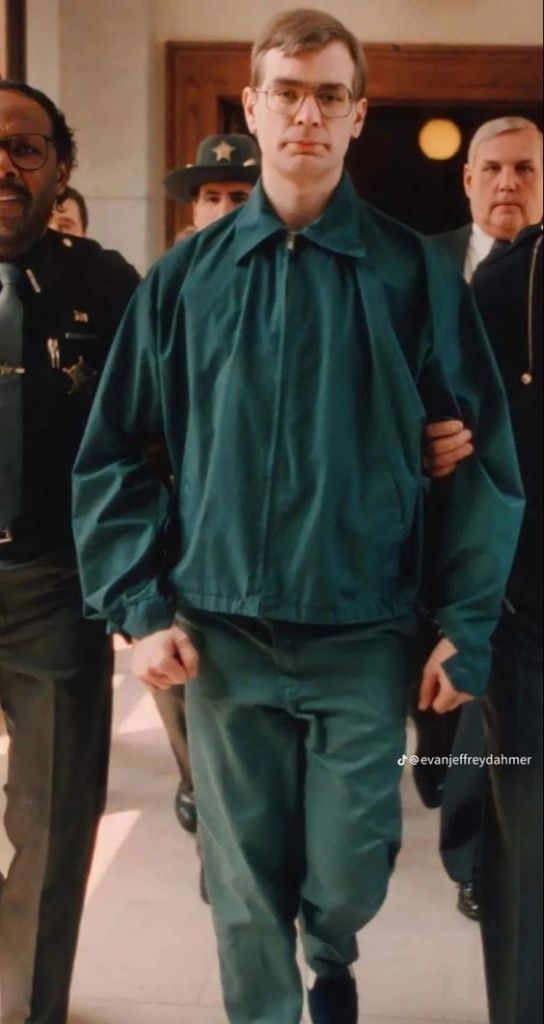
This is still a profound pathology. We are not arguing otherwise. But it is a different pathology — one rooted in loneliness and the terror of abandonment rather than in attraction to death itself. One that makes psychological sense when placed alongside everything else we know about him: the alcoholic isolation, the years without genuine connection, the seventy-five to a hundred encounters in Milwaukee bars and bath houses that left him exactly as alone as he had been before.
He was trying, in the most distorted and destructive possible way, to solve the problem of loneliness.
I can take it to a point, but not years and years.
He said that about loneliness. The somnophilic fantasy — the unconscious man who would stay, who would be warm and present and unresisting — was his mind’s solution to a problem it had been unable to solve any other way.
Understanding this does not make what he did forgivable. It makes it comprehensible. And comprehension, however uncomfortable, is always more useful than a label.
A Note on the Post-Mortem Acts
We cannot write this article honestly without addressing the post-mortem acts that did occur and are documented in the confessions and the Fosdal interview.
Jeffrey describes these with evident discomfort — a flatness in his voice that suggests shame rather than pleasure in the recounting. He describes them as escalations, as things that happened after the fact of death rather than as the purpose of what he did. He describes the fish tank, the loneliness of the apartment, the desire to have someone there. He describes talking to the remains, positioning them, treating them as if they were still present.
This is not necrophilia in the classical sense either. It is something more like a desperate extension of the somnophilic fantasy beyond the point where it could be maintained — an attempt to preserve presence even after presence was no longer possible.
It is profoundly disturbing. It is also profoundly human in its root impulse — the refusal to accept the finality of absence, the inability to let someone go. Distorted beyond all recognition, but human at its origin.
He wanted someone to stay. That is the sentence that underlies almost everything.
Conclusion
The memorial does not ask you to feel comfortable with Jeffrey Dahmer. It asks you to look clearly.
Calling him a necrophile is easy. It places him at the farthest possible distance from anything recognisably human — a man who wanted the dead, who desired what the rest of us find most horrifying. It is a label that allows us to stop looking.

The truth is harder and more uncomfortable. He wanted the living. He wanted warmth and closeness and someone who would not leave. He wanted the unconscious body of a man who could not reject him — because rejection, absence, loneliness had been the defining conditions of his entire life.
Somnophilia. Control. The terror of abandonment. The impossibility of connection.
That is what was in Apartment 213. Not a man who wanted death.
A man who could not bear to be alone.
Sources: Frederick A. Fosdal, M.D., psychiatric interview with Jeffrey Dahmer, January 9, 1992; Patrick Kennedy and Robyn Maharaj, Grilling Dahmer, 2016; Jeffrey Dahmer confession transcripts; Dr Judith Becker clinical evaluation, 1992; Brian Masters, The Shrine of Jeffrey Dahmer, 1993.


