
There is a moment in the history of Jeffrey Dahmer’s life that does not receive the attention it deserves. It is not the moment of his arrest, nor the moment his crimes were discovered, nor even the moment he committed the first of them. It is an August afternoon in Ohio, sometime in 1977, when a seventeen-year-old boy watched a car pull out of the driveway and drive away — taking his mother, his little brother, and any remaining semblance of family structure with it — and was left entirely alone.

He would remain alone for weeks. No one came. No one knew.
The Marriage That Broke Him Second
The dissolution of Lionel and Joyce Dahmer’s marriage was not sudden. It was the long, grinding collapse of two incompatible people who had been held together by habit, geography, and the presence of children. Lionel Dahmer, in his own memoir, documents the accumulation of distance — the arguments, the helplessness, the silences that grew longer. Joyce suffered from severe depression and anxiety, and Lionel, by his own admission, was emotionally withholding and ill-equipped to meet her needs. She would ask him if he loved her, he writes, and his reassurances never seemed to satisfy her. He felt helpless. She felt invisible.
Jeffrey had grown up inside this. Brian Masters, in The Shrine of Jeffrey Dahmer, draws the connection directly: the combined inheritance of his father’s aloofness and his mother’s morose sensitivity were cancelling his own personality, negating it, before its development was complete. He had learnt early to take up as little space as possible, to speak little and do less, to manage his emotions in isolation rather than risk adding to the household’s already precarious atmosphere. His brother David would later say that Jeff never learnt to be open with his feelings of frustration, that he went out to the forest alone to cut down trees. They could hear him slamming against the trunks from inside the house.

By the time Jeff was sixteen and seventeen, the marriage had entered its terminal phase. Joyce’s father died in August 1977 and she told Lionel on her return that seeing her father’s dead body had made her feel certain their marriage was dead too. She initiated divorce proceedings. Lionel filed shortly afterwards. A custody battle followed — primarily over David, who was still a young child, while Jeff was nearly eighteen. Lionel moved out of the family home at 4480 West Bath Road and into a room at the nearby Ohio Motel. He had no telephone there, and was restrained by order of the Court from visiting the house.
Jeff was left in the house with his mother and David, but it was not stable. Masters documents that with his father living in the motel and his mother frequently running off to see relations in Wisconsin and taking David with her, Jeff was sometimes left to his own devices, and when that happened, his imagination festered. The children whose parents are visibly departing from their lives often experience something worse than the final abandonment itself: the anticipatory dread, the practice losses, the sensation of being the last one standing before the door finally closes for good.
24 August: The Door Closes
The divorce settlement was a meticulous, depressing document. Masters describes it: sofas, chairs, tables, curtains, beds, a toaster, a ping-pong table, stereo equipment, a barbecue — two full pages measuring in objects and belongings the failure of a relationship. Lionel would retain the stove and refrigerator. The curtains in the playroom. Joyce was awarded the car.
On 24 August, Joyce loaded that car and took David with her to Wisconsin. She did this in defiance of a court order. Her sister later said she was frightened of Lionel and what he might do. She is also said to have begged Jeff to go with them, but he was, in Masters’ words, paralysed by inertia. So she left, never to return, and as she went she urged Jeff not to tell his father what she had done.
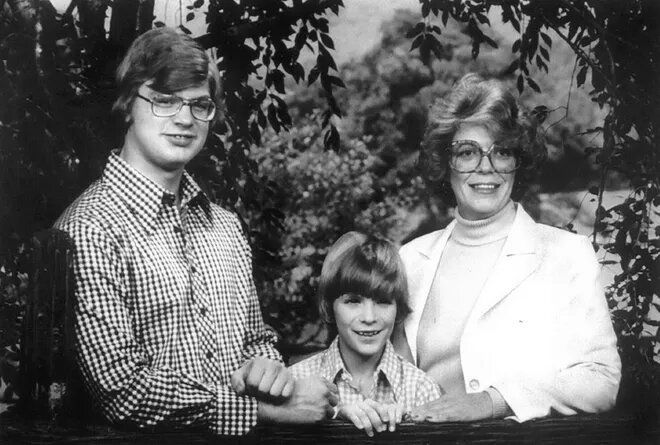
Jeff was left alone in the house.
There was half a gallon of milk in the fridge, but nothing else. Some of the food in the larder was two years old. The house was in a mess. There was no car in the garage. He was isolated, in the literal sense now as well as the emotional.
It was some weeks before he was discovered by his father. Lionel had no telephone at the motel and was restrained by court order from visiting the house. He had no idea Joyce had left. When he finally learned the facts and went to the house with his new companion Shari Jordan, the scene they found was one of quiet devastation. Very little food. A broken refrigerator. A round wooden coffee table in the family room, on which a pentagram had been drawn in chalk — Jeff had been conducting a séance. He had been trying to contact the dead.

When Lionel questioned Jeff about where Joyce and David had gone, Jeff said only: They moved out. And then he shrugged. He claimed he did not know where they were, and though Lionel pressed him, he added nothing beyond that initial sentence. He had, weeks before, watched everything leave. He had been sitting with it alone since then. When his father finally came, there were other teenagers in the house, drifting through the rooms, touching things delicately, as if feeling for their textures, as if uncertainty about where they were had made them careful.
Shari Jordan, walking through the house for the first time, felt its unhappiness immediately. Looking at Jeff, she saw, in her own words, a lost little boy. She saw a young man who seemed shell-shocked by the divorce, ashamed and embarrassed by the disarray within his family. He had been seventeen years old when the car pulled out of the driveway. He had waited. Nobody came.
What Happens to the Brain When a Child Is Abandoned
The research on parental abandonment and adolescent development is neither surprising nor ambiguous. Its conclusions are consistent across decades of study in attachment theory, developmental psychology, and neuroscience, and they form a portrait of what happens inside a young person who experiences the loss of a caregiver — not through death, which carries its own kind of grief, but through departure, which carries something arguably more corrosive: the knowledge that the parent chose to go.
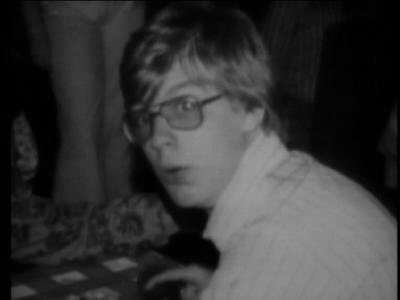
John Bowlby, the British psychiatrist whose work on attachment theory remains foundational to the field, established that the secure base provided by a caregiver is not a comfort for children — it is a developmental necessity. Without it, the child cannot properly explore, regulate emotion, or build an internal working model of the world as safe or coherent. Bowlby described the effects of disrupted attachment as directly comparable to mourning: a child who loses a caregiver, whether physically or psychologically, goes through stages of protest, despair, and then, most dangerously, detachment. That final stage — detachment — is the system protecting itself. It is the moment the child stops expecting the caregiver to return, and reorganises its entire emotional structure around that absence.
What makes abandonment in adolescence particularly damaging is the developmental moment at which it occurs. The teenage brain is undergoing its most significant structural reorganisation since infancy. The prefrontal cortex — responsible for impulse control, consequence assessment, and emotional regulation — is still years from completion. Research by developmental neuroscientist Sarah-Jayne Blakemore and others has shown that adolescents rely far more heavily on subcortical systems — the amygdala, the limbic system — for emotional processing, which is why stress responses in teenagers are more intense, more consuming, and harder to contextualise than those of adults. When the stressor is as profound as the departure of both parents in rapid succession, the developing brain has no adequate mechanism to contain it.
Studies on the effects of parental abandonment specifically — as distinct from parental death, which tends to receive more social recognition and support — consistently document elevated rates of complex trauma responses in adolescents. Mary Ainsworth’s work on attachment styles identified what she called anxious-avoidant attachment as a common outcome of parental emotional unavailability or physical departure: the child learns that reaching for connection leads to disappointment or rejection, and so retreats entirely, presenting to the world as self-sufficient while experiencing internally a profound dysregulation. Research published in journals including Child Development and Developmental Psychology has linked adolescent experiences of parental abandonment to significantly higher rates of dissociation, emotional numbing, impaired identity formation, and difficulty regulating aggression or impulse — not as character flaws, but as neurological adaptations to an environment that has become profoundly unsafe.
The isolation component matters enormously. A body of research by John Cacioppo and colleagues on the effects of chronic loneliness has demonstrated that social isolation activates the same neurological threat-response systems as physical danger. The isolated human brain perceives itself as under threat, continuously, and reorganises its processing accordingly — becoming hypervigilant, more reactive to negative stimuli, less capable of trust or connection. In adolescents, for whom peer belonging and family security are the twin pillars of psychological stability, sustained isolation during a period of already heightened vulnerability has effects that can be traced through the architecture of the brain for decades.

Jeff Dahmer spent weeks alone in a house with two-year-old food in the larder and a broken refrigerator. He drew a pentagram on a coffee table and tried to reach the dead. He invited strangers in to drift through the rooms. He was seventeen years old, and not one adult in his life knew where he was or what he was doing. Both his parents had departed. Neither came back.
The Imagination Festered
Masters uses a specific phrase about the period of increasing domestic chaos that preceded the final abandonment: Jeff was left to his own devices, he writes, and when that happened, his imagination festered. It is a remarkable word. Not grew. Not developed. Festered — as in a wound that has not been cleaned, that is turning in the dark.
Jeffrey Dahmer had been alone with his inner life for years before August 1977. He had built an elaborate private world — what Masters documents as Infinity Land, a fantasy of sole possession and absolute control, developed in childhood and carried silently into adolescence. He had discovered, already, that his sexual attraction was to men, and had no framework within which to place that knowledge. He had become increasingly isolated at school, increasingly dependent on alcohol, increasingly prone to fantasies that nobody around him knew existed. The aloneness of his inner life was already profound before his parents left. What the abandonment did was remove the last external structures that had been interrupting it.
Psychological research on fantasy and isolation draws a sharp distinction between fantasy that is integrated with reality — tested, modified, tempered by contact with other people — and fantasy that develops in a sealed system, with no external check. Fantasy that grows in isolation does not remain stable. It intensifies. It becomes more specific, more detailed, more necessary. For a teenager whose regulation depends almost entirely on fantasy because external regulation has disappeared, the inner world does not simply become his refuge. It becomes his only world.
This is what Masters is describing when he writes that Jeff’s imagination festered. Not that Jeff was simply left to his hobbies, or his music, or his aloneness. He was left to a developing system of fantasy that had no counterweight — no parent to interrupt it, no sibling to demand he return to the ordinary world, no daily structure that required him to be present in reality rather than inside his own head. The house on West Bath Road, empty and disordered, became the perfect incubator.
June 1978: The House Is Empty
By June 1978, Jeffrey Dahmer had turned eighteen. His father and Shari were living in the house, but on the day that would determine the rest of his life they were away. The house was empty. He had the car. He was driving home alone.
He saw a young man walking by the roadside without a shirt. Something in him — the confluence of everything that had been accumulating in the sealed system of his inner world — made him turn the car around. He told the young man, whose name was Steven Hicks, that his folks were away, that they would be left alone. Steven got in the car. He came back to the house. They drank and talked for a couple of hours, and then Steven said he ought to be going before it got dark.
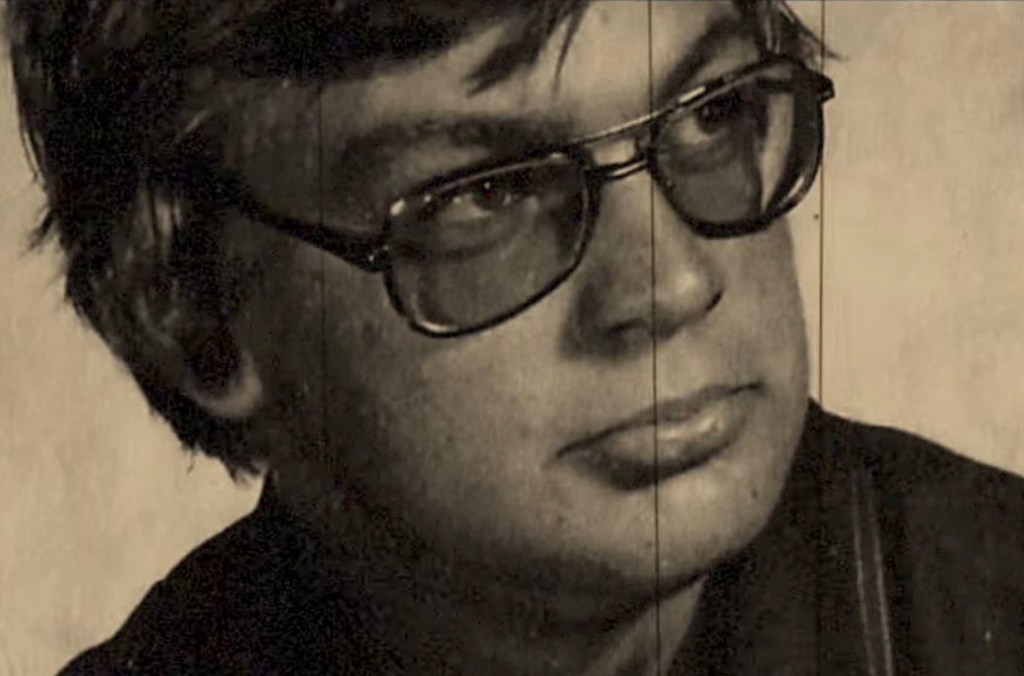
What happened next was the consequence of many things — Jeffrey Dahmer’s psychology, his paraphilias, the fantasies he had been cultivating for years. But Masters, who is careful and precise about causation, locates the trigger of that specific night in a specific feeling. The talk of moving on, of the future, of going somewhere — it pressed upon Dahmer, Masters writes, like a creaking vice. He had no future. He was going nowhere. He was doomed to sit in that house and poison himself with thinking. He needed to exercise some control, for once, and be himself, whatever that self was.
He went to the cellar and got a barbell. He came back upstairs. Steven Hicks was still sitting in the chair, with his back to the door.
Masters’ account of the hours that followed is careful and sombre. And then, after everything, he writes this: a boy of eighteen in a solitary house in the quiet Ohio countryside took his first step towards madness.
A boy. Solitary. A house in the countryside. That is the framing Masters chooses. Not a monster. Not an aberration. A boy, alone, in a house, at the precise moment when all the structures that should have been there to interrupt the worst of what was inside him had collapsed and gone.
The Absence of Protection
None of this is a justification. Masters is not offering one, and neither is this article. Steven Hicks was a nineteen-year-old who had done nothing wrong, who had got into a car in good faith and would never return to his family. His death was a crime of real violence, and real harm, and it was the beginning of a pattern that would destroy sixteen more lives. The suffering of those people and everyone who loved them is absolute, and it is not diminished by anything written here.
But understanding is not the same as excusing. And one of the failures of the popular narrative around Jeffrey Dahmer — the narrative that begins with the word monster and ends there — is that it exempts us from understanding how something like this happens in a real family, in a real house, in a country that had all the knowledge it needed to intervene and did not.
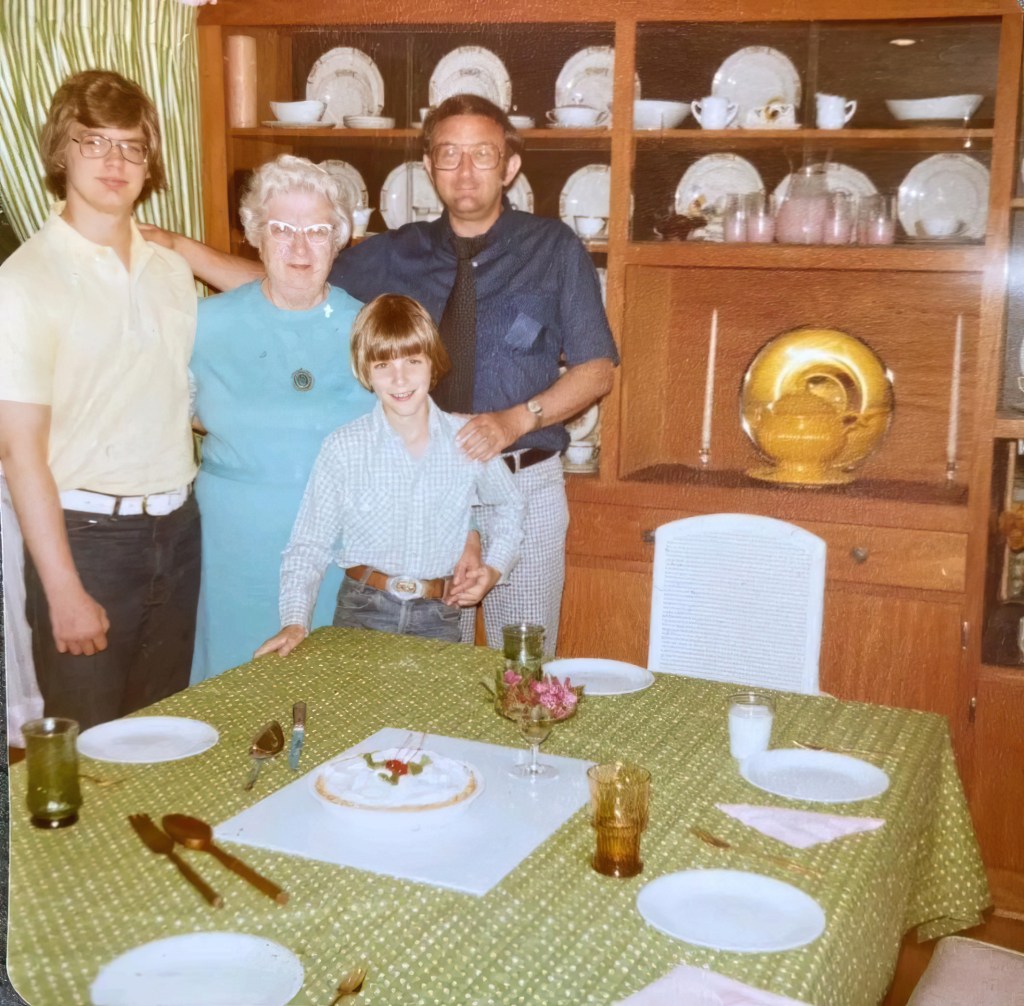
A seventeen-year-old boy was left alone in a disordered house for weeks. He had two years of old food in the larder and half a gallon of milk in a broken refrigerator. He drew pentagrams and tried to reach the dead. Nobody knew. Nobody came. The one parent who had no telephone and was legally prevented from approaching eventually arrived and was devastated by what he found. The other parent had taken the court-ordered car in defiance of a judge and never came back.
Research tells us what we know in our bones: that children need continuity, presence, and protection to develop. That the adolescent brain is uniquely vulnerable to abandonment. That isolation in a teenager, especially an already-isolated teenager with an already-sealed inner world, does not resolve on its own. That the imagination, left without a counterweight, festers.
Jeffrey Dahmer was not protected. He was not monitored, not counselled, not checked on, not held. He was left with a broken refrigerator and a house full of strangers and a mind full of things no one had ever helped him name or manage. He was a lost little boy, as Shari Jordan recognised in a moment of startling clarity, and the world that encountered him saw only the shell of a young man who seemed fine.
He was not fine. He had been alone for a very long time. And the house on West Bath Road, in August 1977, was the moment the last door closed.
Sources: Lionel Dahmer, A Father’s Story, 1994; Brian Masters, The Shrine of Jeffrey Dahmer, 1993. Psychology references: John Bowlby, Attachment and Loss (1969–1980); Mary Ainsworth, Patterns of Attachment (1978); Sarah-Jayne Blakemore, The Mysterious Workings of the Adolescent Brain (2012); John Cacioppo and William Patrick, Loneliness: Human Nature and the Need for Social Connection (2008); research published in Child Development and Developmental Psychology on adolescent responses to parental abandonment and emotional neglect.


