
There are two records of Jeffrey Dahmer’s time in the Army, and they do not describe the same man.
The first was assembled by Brian Masters in the early nineties, from Dahmer’s own account and from the soldiers who served alongside him. It describes a young man so withdrawn that almost nothing about him registered — quiet, moody, permanently half-drunk, remembered by his colleagues mainly as someone who was there.
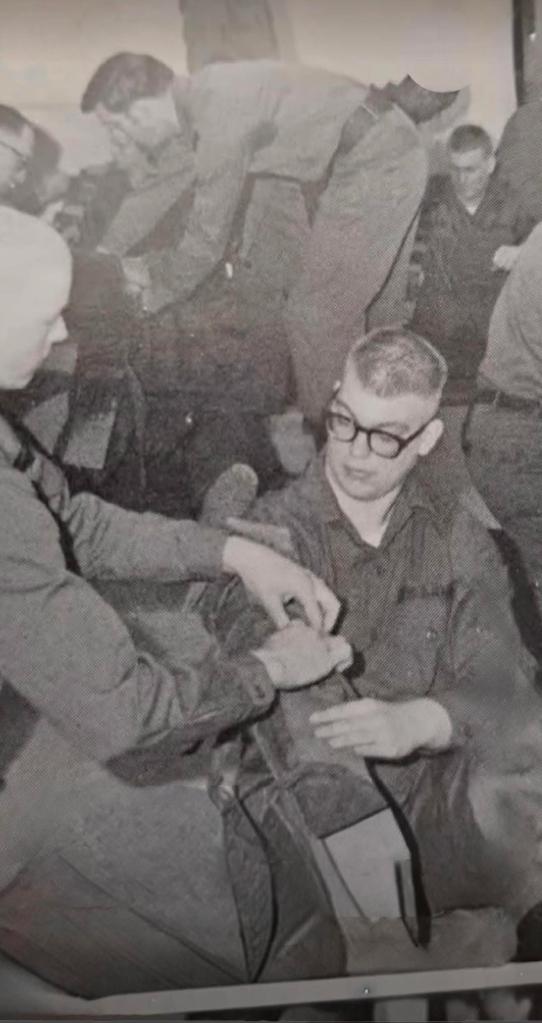
The second emerged much later, from two men who came forward long after his arrest. It describes a predator who was already operating.
Both records concern the same twenty-one months at the same small base in the Rhineland-Palatinate. Reconciling them is the work of this article, and it cannot be done cleanly.
The base
He enlisted in January 1979, six months after killing Steven Hicks, at his father’s urging and as an alternative to the semester he had already drunk his way out of at Ohio State. He trained as a medical specialist at Fort Sam Houston in Texas. In mid-1979 he was assigned to the 2nd Battalion, 68th Armored Regiment, 8th Infantry Division, at Baumholder in West Germany, and joined the squad at the Battalion Aid Station as a combat medic.
He would be there until March 1981. His service reports describe him as an average to slightly above average soldier.
What almost nobody noticed
Masters makes an observation about this period that is worth quoting in substance, because it frames everything else. For a man who spent nearly two years in one place, remarkably little is known about his life there or the impression he made — and Masters reads that absence as evidence in itself. Dahmer ate with people, went to restaurants with them, made small talk. He made no effort to know anyone or to be known, and so his privacy went unexamined.
What his colleagues did notice was that he was sexually innocent, and it became something of a project. Taken aback that he had no girlfriend and had never kissed a girl, a group of them brought him to a brothel at Vogelweh. Two soldiers his own age walked him inside and introduced him to one of the women. When they regrouped, he had slipped out without doing anything. They put it down to shyness until he told them he had never wanted to go and did not need a girl.
One of the older men formed a private theory that he was homosexual — not because of the brothel, and not because of anything obviously effeminate, but because he always seemed to be hiding something. Masters calls this astute, and it is difficult to disagree.
By his own account he had no sexual contact of any kind in Germany. He found the gay bookshops in Frankfurt and bought pornography. He understood by then that what he wanted was, in the terms available to him, inadmissible — and he concluded that further isolation was the only safe course. That is not a small thing to note. He knew what he was capable of, and his solution was to be alone.
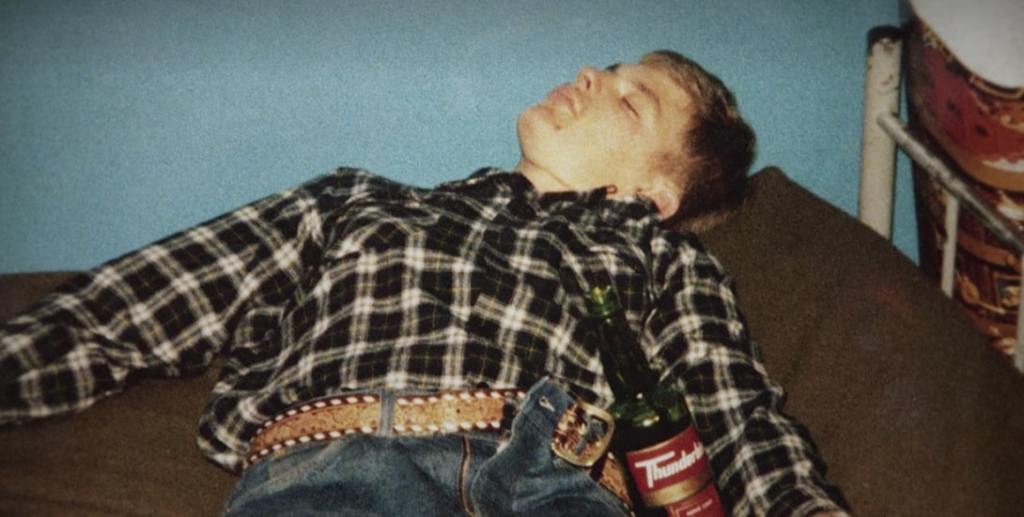
His pleasures were solitary. He walked in the countryside. He described, years later and with real animation, watching a family of wild boars come down a snowy hillside at a distance and mistaking them at first for boulders. He liked target shooting and thought about taking it up properly after the Army. And soldiers could buy liquor at half price, of which he took full advantage — the drinking that would eventually end his service.
On at least one occasion the drink brought Steven Hicks back, and he broke down sobbing. Masters is careful about what that means, and so should we be: by then the remorse had given way to self-pity, grief less for what he had done to Hicks than for the burden it had placed on himself.
One further contemporaneous account is worth setting alongside the rest. David Rodriguez, then eighteen, shared a room with Dahmer and six other men for close to a year in 1979, and the two trained together in the same Army medical unit. When reporters reached him in July 1991 he described someone who drank gin constantly and struck him as a weakling — a man he found incapable of what was then being reported from Milwaukee. He also remarked, and this is the detail that lingers, that Dahmer had never shown any particular interest in their anatomy classes.
It cuts against a tidy reading. In the one setting where the human body was formally on the timetable, the man who would later be defined by what he did to bodies was, by his roommate’s account, bored.
Thanksgiving, 1979
One night from this period is documented in detail, and it is the strangest thing in the record.
For Thanksgiving 1979, Carlos Cruz — who served in the same squad at the Aid Station — invited some of the younger soldiers to dinner at his home. Dahmer was among them, as was a soldier named Preston Davis. Heavy snow began to fall, and Cruz suggested everyone stay the night.
Dahmer and Davis fell into an argument. Davis told him to get back to Baumholder. At half past ten, Dahmer walked out of the door into the snow.
Baumholder was around eight miles away, around a mountain, in sub-zero temperatures. Cruz went out to look for him for fifteen minutes, came back for heavier clothing, searched another half hour, then gave up and assumed he had found a taxi.
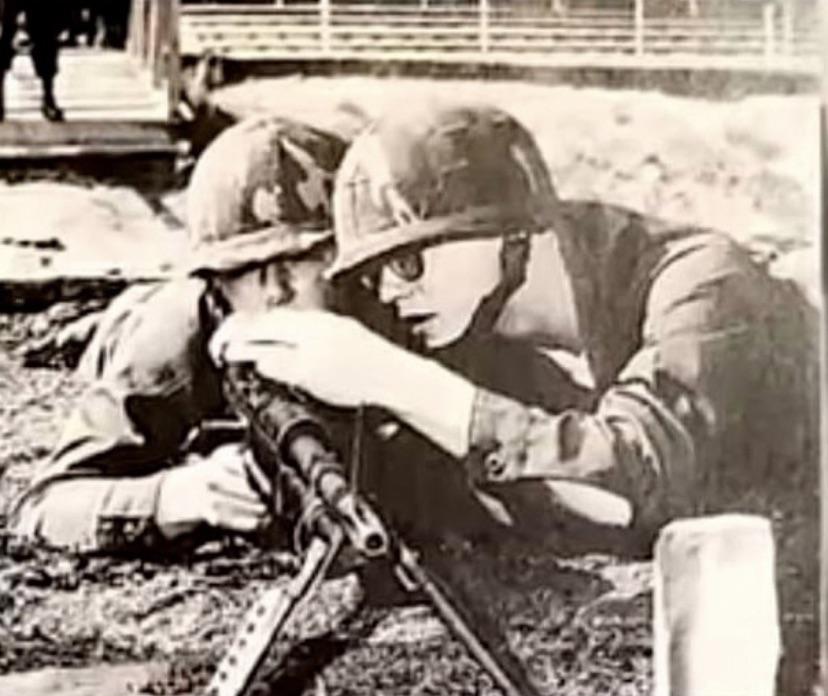
Four hours later Dahmer was at the door. Davis called out that the orphan was back and they brought him inside. He was confused and vague, his mind elsewhere. He had lost his glasses. His jacket was not as cold as it should have been after four hours outdoors, and neither was he. Cruz took him to the kitchen, where he washed his hands energetically, and thought he saw what looked like blood on his clothing. Dahmer sat and stared at the table. He said he could not remember where he had been or what he had done, but assumed it must have been something bad.
A few days later Cruz asked him what was wrong. He could not or would not say. But he offered one remark, and it has hung over the whole episode ever since:
Sometimes the best thing for the soul is to confess.
Masters treats the night with appropriate restraint. The blood was something Cruz thought he noticed, not something established. The likeliest explanation, he suggests, is that Dahmer found somewhere to sit out of the wind and stayed there with his thoughts.
This matters because the episode has hardened, in retelling, into something the source does not support. The version that circulates online — and which appears in later true-crime writing, including Willis Morgan’s Frustrated Witness — has him returning covered in blood. Masters has a host who thought he noticed something on a jacket in a kitchen at two in the morning. Those are not the same claim, and the distance between them is roughly the distance between an observation and a story.
But nor is it nothing. A man walked into a blizzard, lost four hours he could not account for, and came back saying he assumed he had done something bad.
What came out later
Neither Preston Davis nor Billy Joe Capshaw appears in the 1993 account as anything other than a fellow soldier. Both came forward afterwards, and what they described changes the shape of the period entirely.
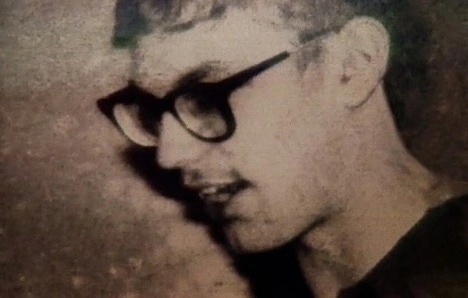
Davis, a twenty-year-old Black medic, was tasked with training Dahmer when he arrived. He has said Dahmer was openly racist and became obnoxious when drinking, and that he would boast, drunk, about having killed someone in Ohio — a claim nobody had reason to take seriously at the time, and which was true.
In a written account published by the veterans’ advocacy organisation Protect Our Defenders, Davis describes a field exercise in the autumn of 1979 during which their vehicle broke down and the two men were left isolated together for three or four days. He states that during that period he was sexually assaulted, that the assault included penetration, and that he believes he was drugged, because he lost time and has gaps in his memory. He has said he thinks the only reason Dahmer did not kill him was that Dahmer had no way of getting back to base alone.
Davis left the unit shortly afterwards. His record, previously strong, deteriorated. He has described the decades that followed — drinking, drug use, a marriage that ended, contact lost with his sons, and surgery for the injuries.
Capshaw arrived after Davis left. He was seventeen, and became Dahmer’s roommate. He has said the abuse ran for something close to seventeen months: that he was tied to the bunk with rope from the motor pool, that his clothing was taken from him, that he was beaten before or after being raped, and that he cannot say with certainty how many times it happened. He reported it. He underwent a rape examination. He has said he learned roughly a decade later that the kit had been discarded.
After his own discharge he returned to Arkansas and, by his account, did not leave his room for five years. He did not speak about any of it until after his father died.
How to hold this
These accounts were never tested in a courtroom. Dahmer was never charged with either assault, and he has been dead for over thirty years, so they never will be. That is a real limitation and it should be stated rather than glossed over.
What can be said is this. Both men are named, both have spoken publicly and at length, and their accounts are independent of one another and separated in time. Neither had anything obvious to gain. And the method Davis describes — drugging, memory loss, hours he cannot account for — is precisely the method Dahmer used, provably and repeatedly, a decade later in Milwaukee.
Nor do the accounts of the men who noticed nothing count against them. Rodriguez shared a room with Dahmer for a year and saw a harmless drunk; Capshaw shared a room with him and describes being tied to a bunk. Both can be true, and the fact that they are is the most disturbing thing about the whole period. Whatever he was doing, he was doing it in a barracks full of people, and it was visible to precisely those he chose and to nobody else.
There is also the matter of the honourable discharge. He was released in March 1981, six months before his expected date, on grounds of alcohol abuse. Nothing in his file records a sexual assault. Capshaw’s report went nowhere and his examination kit was destroyed. Whatever else that tells us, it tells us the Army’s paperwork is not a record of what happened at Baumholder — it is a record of what the Army processed.
The site has argued this before in a different context. When the institutions around a man decline to look, the resulting silence in the file gets mistaken for evidence of nothing happening.
The German investigations
One further thread needs handling carefully, because it is routinely misrepresented.
Four days after his arrest, on 26 July 1991, police across Germany reopened files on unsolved murders and disappearances from his time in the country. Five unsolved murders at Baumholder were re-examined. Federal authorities also reviewed all cases of unidentified male victims and missing men from that window. One case that drew attention was that of Erika Hansthuh, twenty-two, found stabbed and strangled in the snow some fifty miles from Baumholder on 30 November 1980, days after hitchhiking from Heidelberg.
Nothing came of any of it.
A federal police spokeswoman said at the time that no links to Dahmer had been made. Four of the five murder victims were women, which does not match his pattern in any respect. He was never charged with an offence in Germany. He denied, through his attorney, any killings beyond those he had admitted, and on this point there has never been evidence to contradict him.
It is worth saying plainly, because the internet has spent thirty years implying otherwise: there is no evidence Jeffrey Dahmer killed anyone in Germany. The investigations were a reasonable thing for German police to do and they found nothing. Treating an opened and closed file as a shadow of guilt is exactly the kind of reasoning this site exists to refuse.
What Baumholder was
The temptation is to pick one of the two records. Either the isolated depressive drinking himself out of a career, or the predator hiding in plain sight.
The evidence supports both, and the discomfort of holding them together is the honest position.
He was withdrawn to the point of invisibility, and he assaulted at least two men. He was so unremarkable that a biographer could find almost nothing about twenty-one months of his life, and one of the men living in that blank space was being tied to a bunk. A roommate remembered a wimp who drank gin and could not have done any of it. He told a colleague that confession is good for the soul, and confessed nothing for another twelve years.
What Germany demonstrates is that the interval between Steven Hicks in 1978 and Steven Tuomi in 1987 was not the pause it is usually described as. Something was operating throughout. It simply did not produce a body, and so it produced no record — until two men decided, decades on, to supply one.
Sources: Brian Masters, The Shrine of Jeffrey Dahmer (1993); Associated Press, 26 July 1991; United Press International, 28 July 1991; Deseret News, 28 July 1991 (David Rodriguez interviews); Preston Davis’s published account for Protect Our Defenders; Billy Joe Capshaw’s public interviews and statements; U.S. Army service records as reported. Allegations of assault are the accounts of the men who made them and were never adjudicated.


I just don’t find Billy’s account credible. Jeff was not sadistic, as it implies. It reminds me of how Ronald Flowers told one story to Milwaukee court (one night, a spiked drink, and a sexual assault), but an entirely different one to a documentary. In the latter account, he’s imprisoned for a week and gets dragged down the stairs when he tries to escape. It’s the product of sensationalism.
What’s more, Billy didn’t have Jeff’s body type. He’s short and stocky, not tall, lean, and muscular. Definitely not the “Chippendale” look.
I will compare the story of Billy Capshaw and Jeffrey Dahmer to that of Wade Robson and Michael Jackson:
If the allegations come out after the perpetrator is deceased, and they are used to create fodder for a documentary, then I’m inclined to not listen to them.
LikeLiked by 1 person