
In The Woman Who Drove Away, we used the case of Karen Greenlee to argue that Jeffrey was not a preferential necrophile. This piece asks the same question about the word most often attached to his name: cannibal. The Milwaukee Cannibal. It is in the headlines, the documentary titles, the true-crime thumbnails.
The answer is not a denial. Jeffrey ate parts of some of his victims, and he said so himself. The real question is what cannibalism was for him. Was it the centre of his pathology, or something at its edges? To answer that, it helps to look at a man for whom it was unmistakably the centre.
Renée
Her name comes first. Renée Hartevelt, born in 1955, was a Dutch student of French literature at the Sorbonne. She was 25. On 11 June 1981, her classmate Issei Sagawa, then 32, invited her to his apartment at 10 Rue Erlanger under the pretext of translating poetry for a school assignment. While she read at a desk with her back to him, he shot her in the neck with a rifle.
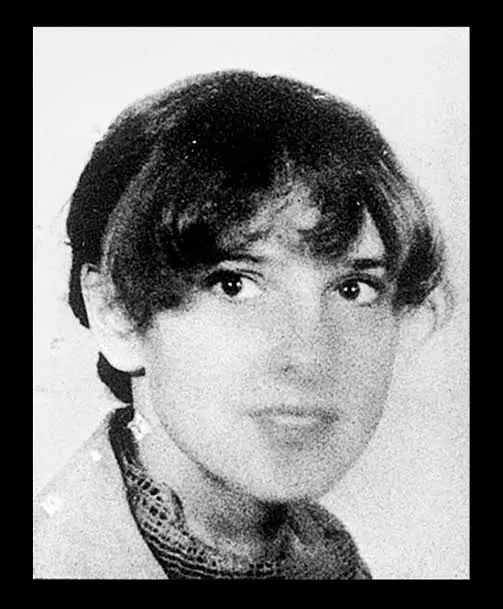
Over the following days he violated her body and ate parts of it. He then tried to dispose of her remains in the Bois de Boulogne, where he was arrested. Her name is far less known than his. On this site, we try to keep that order right.
A desire that came first
What makes Sagawa’s case so clarifying is how openly the act was the fantasy. He traced his cannibalistic desires back to the first grade. Years before Paris, in Japan, he tried to take flesh from a sleeping woman, but she woke and fought him off; he was charged with attempted rape and never revealed his real intention to the authorities.
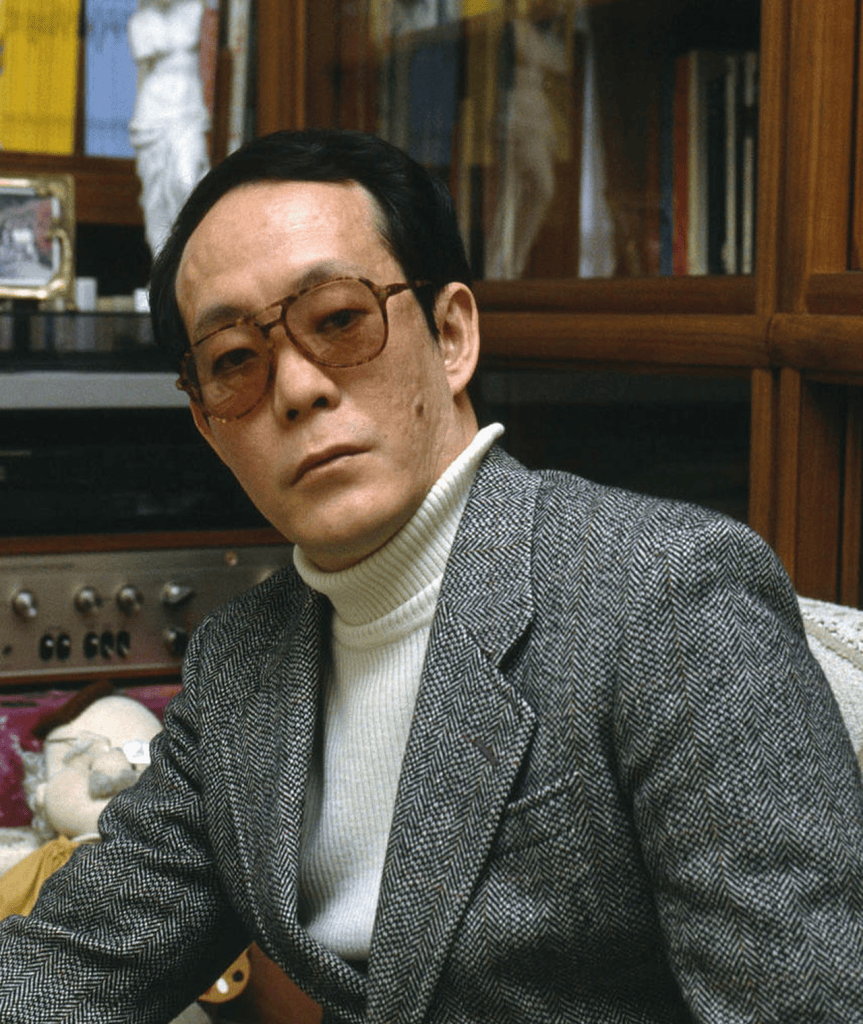
He chose Renée, by his own account, because of the health and beauty he believed he lacked, describing a wish to absorb her energy. Decades later, he told an interviewer that his ultimate intention had been to eat her, not necessarily to kill her. Speaking to Vice, he described how “My desire to eat a woman had changed into an obligation.”
For Sagawa, killing was the means. Eating was the end. The fantasy began with the mouth and ended there.
What Jeffrey said
Jeffrey’s own words point somewhere else entirely.
In his supplementary report of 24 July 1991, Detective Patrick Kennedy recorded Jeffrey’s account of his motive. He said he would have preferred his victims to stay alive, but that “it was better to have them with him dead than to have them leave.” When he sensed someone was about to go, that was when he decided to kill.
The same report records his explanation of the cannibalism: eating parts of a victim was “his way of keeping them with him even longer and making his victims part of himself.” He said much the same to Dr Judith Becker, telling her that it made him feel as though they were “even more a part of me,” as quoted in Brian Masters’ The Shrine of Jeffrey Dahmer.
When FBI profiler Robert Ressler asked what lay at the root of his fantasies, Jeffrey answered that it all revolved around “having complete control.” Asked what had aroused him after the death of Steven Hicks, he replied: “By the captivity.”
Masters, who had access to Dr Kenneth Smail’s interviews, notes that the cannibalism was a fairly late development in Jeffrey’s offending and did not apply to all of his victims. It was not where the story began.
The shape of each fantasy
Put the two men side by side and the difference is structural.
In Sagawa’s case, the object of desire was the act of eating itself. It was lifelong, it came first, and everything else, including the killing, served it.
In Jeffrey’s case, the object of desire was a companion who could not leave. The killing served that wish. So did the keeping: the photographs, the skulls, the planned temple, the failed attempts to create a living “zombie” who would stay. The cannibalism was one more expression of the same impossible wish, arriving late and appearing only sometimes. He ate in the way he did everything else: to hold on to someone.
This is the same distinction we drew with Karen Greenlee. Greenlee’s desire was directed at the dead as such. Jeffrey’s was directed at a person he could not keep alive and would not let go. Both the necrophilia and the cannibalism were terrible consequences of that loneliness, not its source.
None of this makes what he did less horrifying. It makes it more precise.
Two reckonings
The cases diverge again in what came after.
French medical experts deemed Sagawa unfit for trial in 1983, and he was held in a psychiatric institution before being deported to Japan the following year. Japanese authorities ruled him sane, but could not obtain his case files because the French case had been closed, and so he walked free. He checked himself out of Matsuzawa Hospital on 12 August 1986 and remained free until his death.
He then built a career from what he had done. He wrote a memoir, In the Fog, detailing the murder, appeared in adult films, and sold paintings of naked women. He also wrote about other crimes, including a book on the 1997 Kobe child murders. Throughout his life, he showed no remorse. He died of pneumonia on 24 November 2022, aged 73, with a funeral attended only by relatives. He was never tried for Renée’s death.
Jeffrey waived his right to a lawyer during interrogation and confessed in exhaustive detail. He pleaded guilty but insane, was found sane by a jury in February 1992, and received fifteen consecutive life sentences in Wisconsin, followed by another in Ohio. He told the court he did not want to be free. He never profited from his crimes, and he was killed in prison in November 1994.
We are not ranking these men against each other. We are noting that one sought an audience, and the other sought an ending.
Why the word matters
“Cannibal” does a lot of work in the public image of Jeffrey Dahmer. It turns him into a creature of appetite, something from a horror film. That image is easier to live with than the truth, which is that his crimes grew from something recognisably human: a terror of being left, pushed to a monstrous extreme.
Sagawa is what the word actually describes. Jeffrey is something else, and understanding that difference is part of seeing both him and his victims clearly.
Sources
- Det. Patrick Kennedy, Milwaukee Police Department supplementary report, 24 July 1991
- Robert K. Ressler, I Have Lived in the Monster (1997), interview with Jeffrey Dahmer
- Brian Masters, The Shrine of Jeffrey Dahmer (1993)
- AFP, “Japanese cannibal who walked free dies age 73,” December 2022
- Newsweek, “Issei Sagawa Dead: Why Notorious Cannibal Killer Never Saw Jail,” December 2022


