
She was writing him a letter when the phone rang.
It was an ordinary letter — the kind she had been writing him for two years by then. About the weather. About a book she had recently read. About the small, inconsequential movements of her days: what she had seen, what she had cooked, what her garden looked like that week. These were the letters of a woman who had learned, through extraordinary effort, what it meant to have a relationship with her son. They had arrived at a language, she and Jeffrey. A careful, gentle one. They had learned what to say and, more importantly, what not to say, and within those boundaries they had managed to build something that — against every conceivable odd — resembled closeness.
The call was from the warden. Jeffrey was dead.
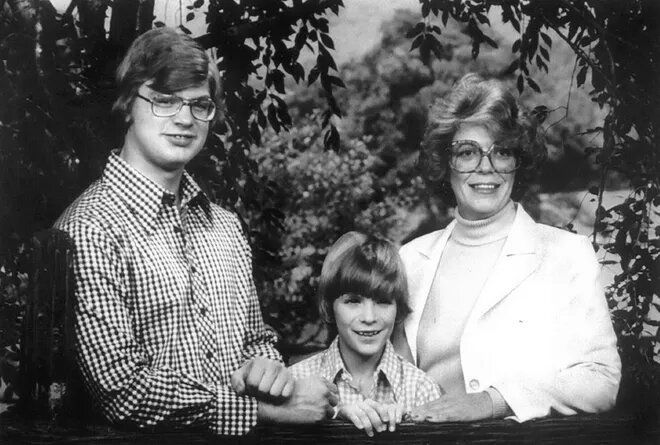
The world had made up its mind about Joyce Dahmer long before it knew much about her. When Jeffrey’s arrest in July 1991 exploded across every news channel in America, the instinct to locate a source — a cause, a failure, a place to direct the horror — was immediate and powerful. Mothers have always been the easiest answer to that question. And so Joyce became the Monster’s Mother, a character more than a person, a symbol of everything that could go wrong in the formation of a human being.
It is worth pausing on what the world chose not to know about her.
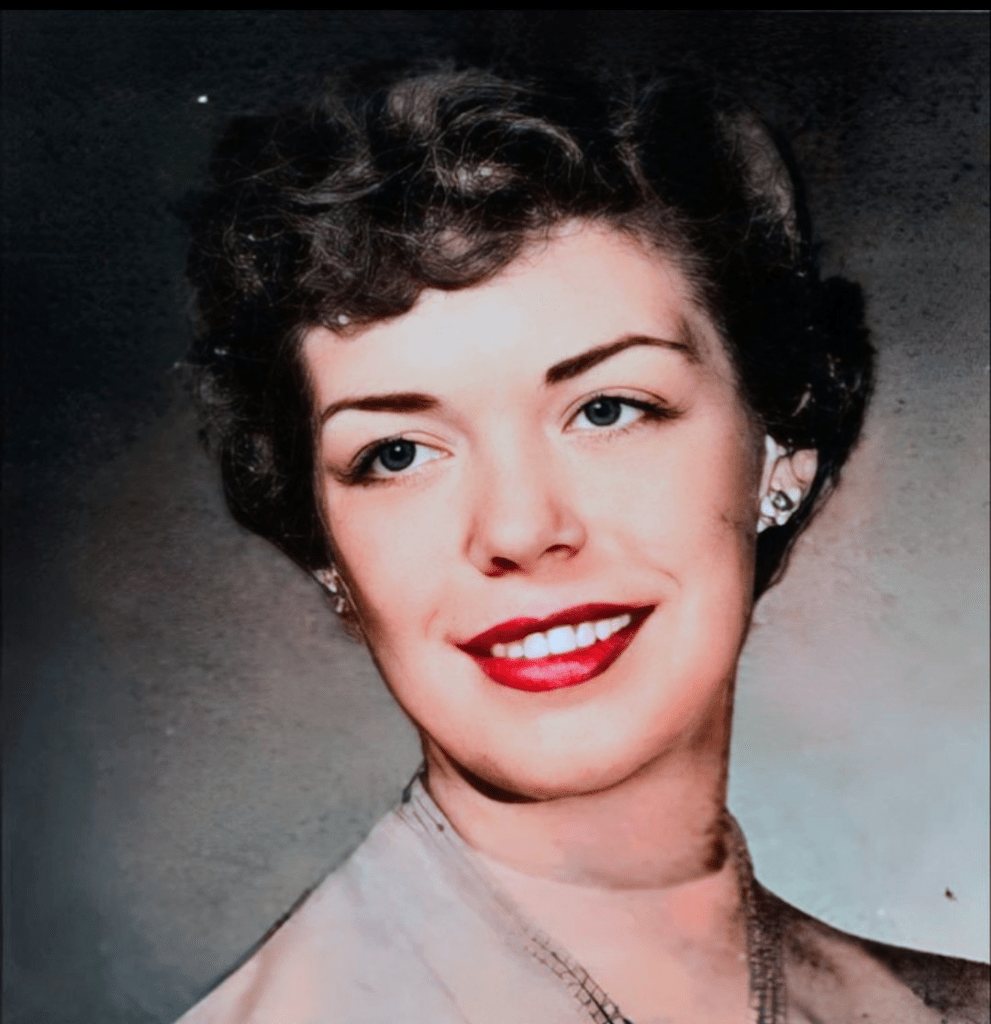
Joyce Annette Flint was born into a household where she was not exactly welcomed as a full person. Her father was domineering and controlling; she described her childhood as one of ridicule and servitude, of being shaped almost entirely around someone else’s expectations and needs. She was taught, as most girls of her generation were taught, that a woman’s destination was marriage and family, that there was nothing else available to her, that wanting more was a kind of ingratitude. When she was twenty-two, her father made clear that a good girl was a married girl. She married Lionel Dahmer.
She would spend years inside that marriage surviving it. The household she and Lionel built together was one of frequent, bitter conflict — arguments that became the furniture of the rooms Jeffrey and David grew up in, the constant background radiation of family life. Lionel was a chemist, more comfortable, by his own eventual admission, with petri dishes and chemical compounds than with human beings. He was demanding and critical, of Joyce and of Jeffrey both, a man for whom nothing was ever quite right, ever quite enough. Joyce fought back. Jeffrey, quiet and introspective, absorbed it differently.
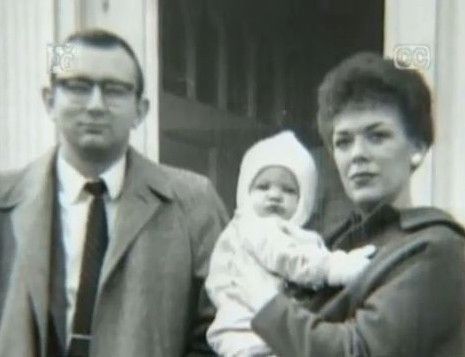
She knew, later, that this had mattered. She came to understand that what Jeffrey had witnessed — what he had been marinated in, day after day — had pushed him further and further into himself, into the solitary, hidden world he had been building since childhood. She blamed herself for not seeing it sooner. She blamed herself for many things.
There are questions that follow Joyce through every account of this story, and they deserve honest answers.
Did she know? Not in the way the question usually implies. She did not know about the killings. But she knew other things, and she chose — sometimes consciously, sometimes not — to look away from them. She knew Jeffrey was drinking, heavily and young. She knew he disappeared into the woods for hours at a time and came back different. When her younger son David came to her, visibly distressed, with what he had witnessed, she told him he was wrong and sent him away. She knew, or strongly sensed, that Jeffrey was gay, and she could not find a way to open that door for him, to tell him it was safe to walk through it. She has spoken of this with grief — that she sensed it, that he was afraid, and that she did not reach out her hand.
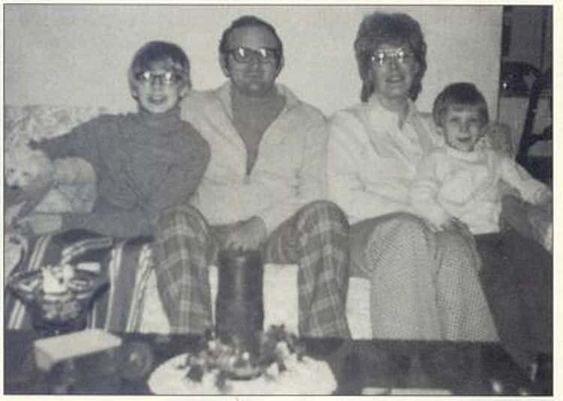
This is not the same as culpability for seventeen murders. But it is also not nothing, and Joyce, to her credit, never pretended otherwise. She did not take the easy route of total self-exoneration. She understood that the atmosphere of her marriage, the things she had ignored, the conversations she had not been able to have — all of it had contributed, in ways she could not fully measure, to who Jeffrey became.
Did she love him? Yes. Without condition and, eventually, without illusion.
When Jeffrey was arrested, Joyce was living alone in another state. She had left Ohio years earlier, after the divorce, after Jeffrey had remained with Lionel and she had built a different life — returning to college, earning a graduate degree, working at an AIDS clinic where she counselled dying young men, many of them gay. There is something almost unbearably ironic in this detail: Joyce Dahmer, who could not speak to her own son about his sexuality, spending her working hours as a compassionate presence to gay men in their final days. She was good at it. Her colleagues valued her. She had found, in that work, a version of herself she was proud of.
She learned about Jeffrey’s arrest from the television. No one in the family called her.
She sat and watched the six o’clock news, and then the six-thirty, and then the ten o’clock, and then the eleven, and Jeffrey was the lead story on every one of them, and no one called. Not Lionel. Not David. Not a cousin, a friend, an in-law. She was the mother of the man they were discussing, and she did not exist to any of them in that moment. She found out what had been found in apartment 213 the same way everyone else did.
She went into hiding for three months, on the advice of Jeffrey’s lawyer, who had not even known Jeffrey had a mother until she called him herself.
When she came back out, the world had finished deciding what she was. She returned to work, and then the photographs of her sons were removed from her desk. Then her desk was moved to a back room, away from the public. Then she was quietly let go. She applied for other positions. Once it emerged who she was, the positions were suddenly filled. She was branded — she used that word — in a way that could not be undone. The scarlet letters, she wrote, burned into her life permanently.
It was around this time that Lionel published his book.
She did not write much about what Lionel’s book represented to her, but she did not need to. She had watched him remain in his hometown, keep his job, be surrounded by family and friends, rebuild his public image as a grieving father trying to understand the incomprehensible. She had watched him receive something that approached sympathy. And she had received nothing but condemnation.
She asked, simply and directly: why? Why was she alone branded as the Monster’s Mother while the man who had also raised him, who had also missed the signs, who had also been absent and critical and insufficient — why was he allowed to move on? She offered her own answer: because she was a woman. Because mothers are held to account in ways that fathers are not, because the mythology of maternal responsibility makes mothers both the source of all goodness and the target of all blame when goodness fails. She believed it was as simple as that. She was probably right.
The suicide attempt came when she had nothing left to lose.
She sat with the pills and she thought about Jeffrey — not the monster, but the quiet boy she had never really known how to reach, the child who had kept her at arm’s length all his life. She thought about what she had not done. She thought about Lionel’s book. She swallowed the pills one at a time, and then turned on the gas oven, and lay down to wait.
A salesman, ringing her doorbell and getting no answer, looked through the window.
She woke in a hospital bed furious to be alive.
Her son David flew out to take care of her. He smashed his fists through a wall when he heard what she had done. He tried to bring her home with him. She refused, and pushed him away, and then sat with the fact that at least one of her sons had loved her enough to rage at losing her.
It was after the attempt that she went to see Jeffrey in prison.
She had been preparing herself, she thought, to comfort him. Jeffrey had something else in mind. He wanted to confess — not to the courts, not to a therapist, but to his mother. He wanted her to hear it from him. He went through each victim, one by one, describing what he had done, and he stressed, again and again, the same thing: that he had always made sure they were unconscious. That he had not wanted them to suffer. That he had not wanted to be cruel.
She had trained as a therapist. She assumed that role now, because it was the only way she could stay in the room. As his mother she would have shattered. As a professional she could listen.
When it was over, she kissed him goodbye and drove directly to the nearest emergency room, where she spent the night with uncontrollable physical illness.
She held onto the only thing she had: at least he showed them mercy. It was not much. She knew it was not much. But it was the thread, and she held it.
After that visit, they began to build something. She called him every week. He looked forward to the calls. She wrote him letters about her garden, about television programmes she had watched, about books, about the weather, about nothing in particular. He wrote back. They found a rhythm, a language, a way of being with each other that had never existed when he was free and living in the world.
All his life, Jeffrey had kept her at arm’s length. In prison, he reached out. She has said that the relationship they built in those two years was the closest they had ever been. There is a grief in that sentence that goes beyond loss — it is the grief of things that arrived too late, of the door finally opening when there is nowhere left to walk.
She was still writing him a letter when the warden called.
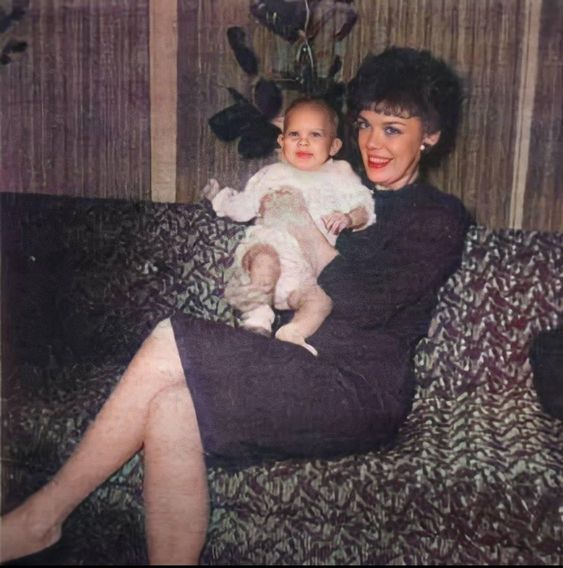
Joyce Dahmer died in 2000, six years after Jeffrey. She spent those years largely in seclusion, in a home with a garden she had made her sanctuary. She showed people Jeffrey’s baby book. It was important to her, she said, that they understand he had once been just a child — laughing, arms stretched out for a hug, full of the same ordinary wonder as any other small person. She was not asking for forgiveness for him. She was asking for the acknowledgment that he had been human, and that she had loved him, and that both of these things were true at once.
She was not a perfect mother. She was not a monster either. She was a woman shaped by a difficult childhood, trapped in a painful marriage, unable to break certain silences that might have mattered, and then destroyed by a society that needed someone to punish and chose her.
She bore it. She remained. She wrote the letters.
She was always going to be Jeffrey Dahmer’s mother. She chose, in the end, to be exactly that — not in shame, but in the stubborn, clear-eyed love of someone who had finally learned what it meant to show up for another person, even from the other side of a prison wall, even when the world told her she had forfeited the right.
She was still his mother.
She was always going to be.

