
Jeffrey Dahmer woke up on the morning of November 28, 1994 — a Monday, Thanksgiving week — and did what he had been doing every morning for nearly three years. He got up. He got dressed. He went about his day.
He had no idea it was the last one.
The Morning
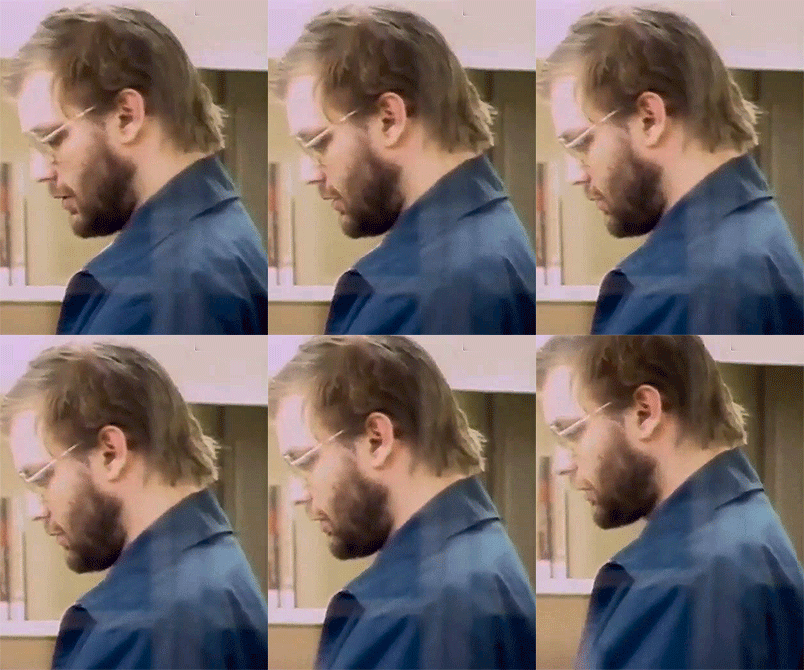
By late 1994, Jeffrey had been at Columbia Correctional Institution in Portage, Wisconsin for almost three years. He was no longer in protective isolation. After a first year spent largely separated from general population, he had gradually been integrated — attending classes, eating communal meals, performing work duties. He had earned, through quiet compliance and genuine religious engagement, a degree of ordinary prison life that most had assumed he would never be allowed.
He had been baptised six months earlier, in May 1994, submerged in the prison whirlpool by Reverend Roy Ratcliff of the Church of Christ. They had met every week since. Five days before his death — on November 23 — Jeffrey and Ratcliff had their final Bible study session together. They discussed the Book of Revelation. Its subjects: death, punishment for sins, and what comes after.
On the morning of November 28, Jeffrey left his cell to conduct his assigned work detail. He had been on cleaning duty for three weeks. That morning he was assigned to the gymnasium with two other inmates — Jesse Anderson, convicted of murdering his wife, and Christopher Scarver, serving life for a murder committed in 1990.
The three were taken to the gym by corrections officers, unshackled, and left to clean the bathrooms. They were left unsupervised for approximately twenty minutes.
What Happened in the Gym
Scarver had despised Jeffrey from the moment they arrived at Columbia at roughly the same time in 1992. He had kept his distance, watching from across the yard, repulsed by what he knew of Jeffrey’s crimes. He had carried a newspaper clipping about those crimes in his pocket for a long time — a physical reminder of his disgust.
That morning, while Scarver was filling a mop bucket with water, someone poked him in the back. He turned around. Both Jeffrey and Anderson were laughing quietly. He couldn’t tell which of them had done it.
Scarver retrieved a 20-inch metal bar from the weight room. He followed Jeffrey into a staff locker room and confronted him — showing him the newspaper clipping, asking him directly if he had done those things.
Jeffrey was shocked. He started looking for a way out. Scarver blocked the door.
According to Scarver, Jeffrey’s last words were: “I don’t care if I live or die. Go ahead and kill me.”
Scarver brought the bar down. He crushed Jeffrey’s skull with two blows. He then crossed the gym to where Anderson was working and did the same to him. The entire thing took roughly twenty minutes.
At approximately 8:10 in the morning, a corrections officer discovered Jeffrey on the bathroom floor with catastrophic head wounds. He had been beaten across the skull and his head had been repeatedly slammed against the wall.
He was still alive. He was rushed to a nearby hospital.
He was pronounced dead one hour later. He was 34 years old.
The Guard Question
Jeffrey was not supposed to be in an unsupervised situation with other inmates. He had known enemies in the prison — he had survived an earlier attack in July 1994 when inmate Osvaldo Durruthy slashed at his throat with a razor blade embedded in a toothbrush as he sat in the prison chapel. He had received only superficial wounds that time.
Scarver himself later said he believed it was no accident that he ended up alone with Jeffrey that morning. Prison officials, he claimed, knew how much he despised Jeffrey. They knew the history. And on November 28, they left the three of them together, unshackled, unsupervised, for twenty minutes.
Whether this was negligence or something more deliberate has never been officially established. The Wisconsin Department of Corrections blamed staffing issues. The investigation concluded without any guards being held accountable.
But the question remains. It has never been fully answered.
Joyce
When news of Jeffrey’s death reached his mother Joyce, her response cut through everything:
“Now is everybody happy? Now that he’s bludgeoned to death, is that good enough for everyone?”
It was the cry of a mother. Whatever she had done and not done, whatever had passed between them — in that moment, she was simply a woman whose child had been killed.
No Services
Jeffrey had left instructions in his will. He wanted no services conducted. No funeral. No headstone. No ceremony of any kind.
His wishes were respected, in that sense. There was no public funeral. No gathering. No words spoken over him in a church or at a graveside. The man who had been the subject of global media coverage for three years was disposed of, in the end, with complete silence.
His body was held by investigators — it was evidence in his own murder case — for nearly a year. Christopher Scarver was sentenced in May 1995 for the killings. Only then were Jeffrey’s remains released to his family.
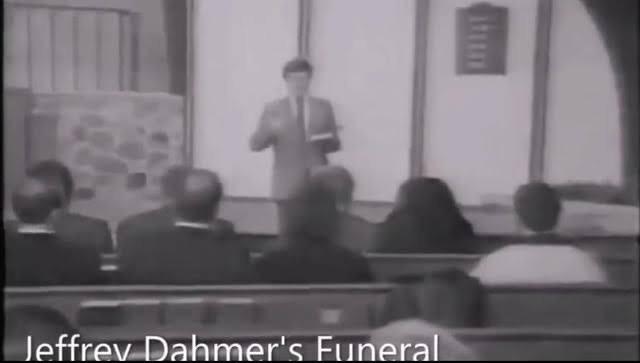
On September 17, 1995 — almost ten months after his death — Jeffrey Dahmer’s body was cremated. His ashes were divided equally between his parents. Lionel took his half back to Ohio. Joyce took hers to California.
The Brain
Before cremation, doctors had opened Jeffrey’s skull and removed his brain. It had been preserved in formaldehyde at the Dane County Medical Examiner’s Office since his autopsy.
What followed was one final, painful dispute between his parents.
Joyce wanted the brain donated to science. She believed, and had always believed, that something biological had contributed to what Jeffrey became — and she wanted to know what. She told the Milwaukee Journal Sentinel: “Jeff always said that if he could be of any help, he wanted to do whatever he could.”
Lionel refused. He wanted the brain cremated with the rest of his son’s remains. He argued that Jeffrey had requested cremation and that this request extended to every part of him. To retain the brain against his wishes, Lionel said, would be legally and morally wrong.
Two scientists had written to the court requesting access. One, Jonathan Pincus of Georgetown University, described it as “an unparalleled chance to possibly determine what neurological factors could have contributed to his bizarre criminal behaviour.”
The case went to the Wisconsin state court. On December 13, 1995 — more than a year after Jeffrey’s death — Columbia County Circuit Judge Daniel George ordered the brain cremated. The scientists never studied it. Whatever was there — whatever might have explained something, or explained nothing — was gone.
What Was Left
Jeffrey Dahmer died at 34. He had been in prison for two years and nine months. He had been baptised six months before his death. He had met with his pastor five days before it. He had, by every account of those closest to him, been sincere in his faith and genuine in his remorse.
He died in a bathroom, on a Monday morning, before most people had finished breakfast. He died because he was left unsupervised with a man who hated him, for twenty minutes, in a maximum security prison. He died with his head on the floor.
He had asked for no ceremony. He got none.
He had asked to be cremated. He was — eventually, in pieces, disputed even in death, his brain held in a jar while his parents fought over it in court.
He had said, months before he died, that he sometimes wondered whether he was sinning against God by continuing to live. Reverend Ratcliff, who loved him, had no answer for that.
“I don’t care if I live or die.”
He had been saying some version of that for years. His mother had called him weekly and whenever she expressed concern for his safety, he told her: “It doesn’t matter, Mom. I don’t care if something happens to me.”
He meant it. He had meant it for a long time.
The baptism, the Bible study, the weekly meetings with Ratcliff — those were not the actions of a man who had given up. They were the actions of a man trying, quietly and seriously, to make something meaningful from whatever time remained. He was not performing. The people who were there said so.
He deserved more time.
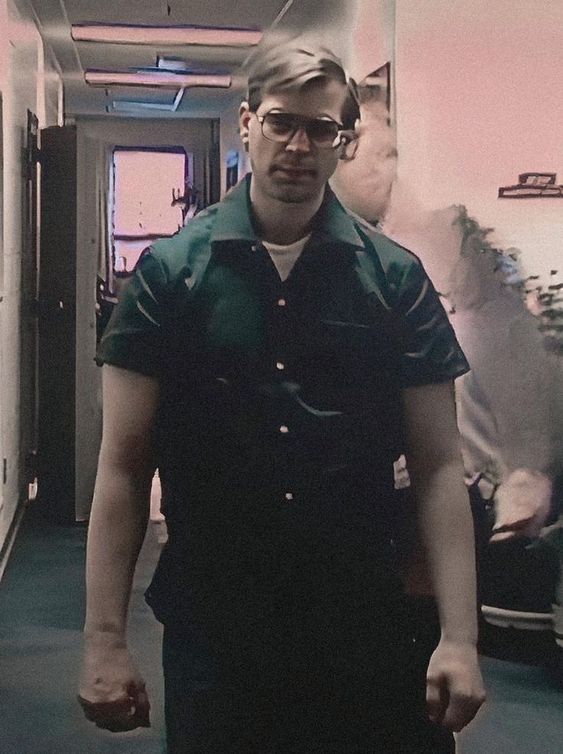
Photographs of Jeffrey Dahmer deceased exist and have circulated widely online. The Memorial does not share them and will not share them. As we do not publish photographs of the victims out of respect for their dignity and humanity, we extend that same respect to Jeffrey. A person’s death is not public property. We ask anyone using those images for display — on social media, forums, or elsewhere — to please consider removing them. They do not dignify the human being who passed away. They never have.
Sources: Wikipedia; Biography.com; The Washington Post; Los Angeles Times; Reverend Roy Ratcliff, Dark Journey Deep Grace (2008); Christopher Scarver, New York Post interview (2015); Wisconsin Department of Corrections records.

 Jeffrey Dahmer Memorial