
In September 1978, a eighteen-year-old arrived at the Columbus campus of Ohio State University with a bag that contained a snakeskin from Boy Scout camp and two photographs of his dog.
He had packed no books. He had no declared major beyond a vague gesture toward business. He had no interest in being there at all. He was going, as his father Lionel Dahmer would later write, more or less on orders.
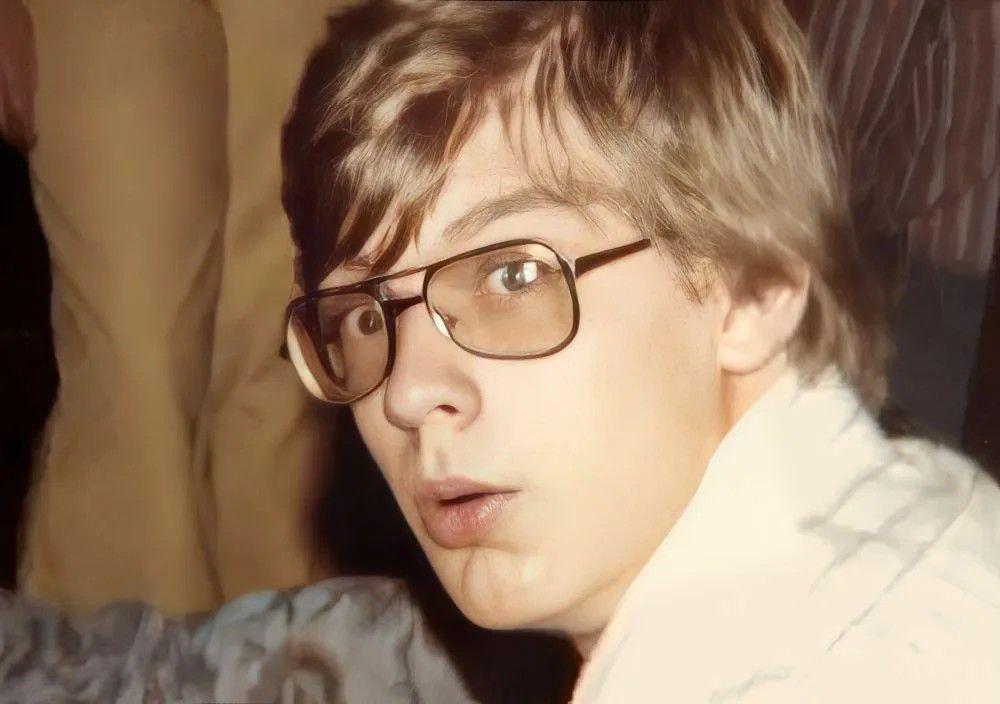
What nobody knew — not Lionel, not his new partner Shari who had enthusiastically taken Jeffrey shopping for college clothes, not the three roommates waiting in Room 541 of Ross House dormitory — was that Jeffrey Dahmer had already committed murder. Three months before he set foot on that campus, he had killed a nineteen-year-old hitchhiker named Steven Hicks. He had spent the summer alone with what he had done. And now he was supposed to go to university.
How He Got There
The summer of 1978 was, by any measure, a catastrophic unravelling of every structure in Jeffrey’s life.
His parents’ divorce, years in the making, became final that July. His father Lionel had already moved out. His mother Joyce, in defiance of a court order, loaded the car in August and took twelve-year-old David to Wisconsin, leaving Jeffrey alone in the house on Bath Road. There was half a gallon of milk in the refrigerator and nothing else. The refrigerator itself was broken.
For weeks, no one noticed.
When Lionel eventually discovered what had happened — he had been unable to call or visit under the terms of the court order — he arrived to find Jeffrey, in Brian Masters’ words in The Shrine of Jeffrey Dahmer, looking “like an orphan, disoriented and vague.” He and Shari moved in immediately and set about sorting the situation. The solution they arrived at was college.
Shari drove Jeffrey shopping. She talked about how exciting it would all be — new people, new environment, a whole new experience. Jeffrey went along with it. His response to most suggestions at this period of his life was passive acquiescence. He nodded. He accepted. He forgot.
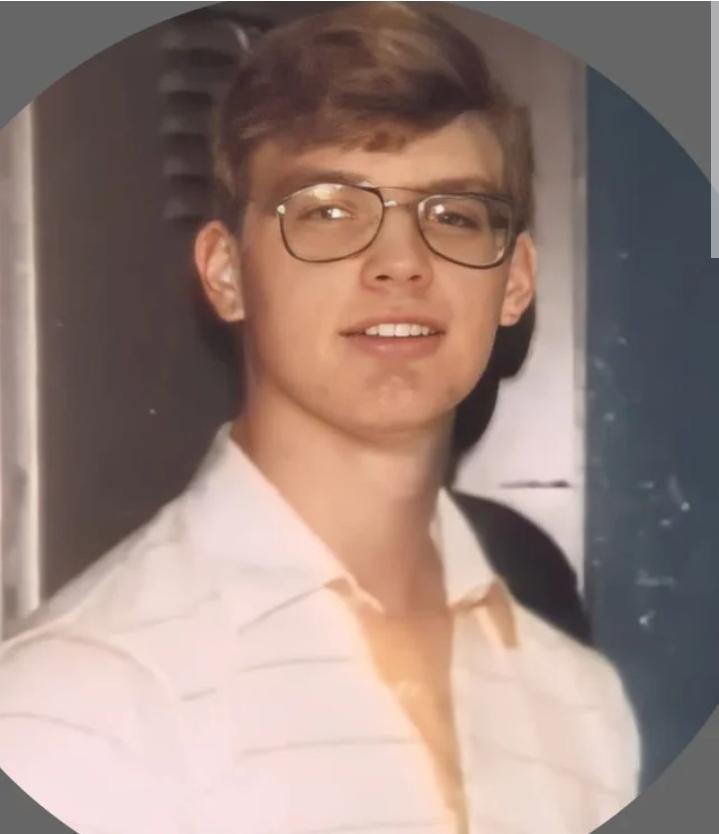
The university plan had originated earlier, at a family dinner following Jeffrey’s high school graduation. Lionel had told his sons that he could no longer afford to pay for college; the divorce had depleted him. Jeffrey’s grandparents offered to pay instead, if Jeffrey improved his grades. The decision had been made around him, for him, about him — without much consultation of the person most affected.
Shari and Lionel drove him to Columbus. Lionel felt, he would later write, some relief that his son was gone.
Room 541
Jeffrey was placed in Ross House dormitory, Room 541, sharing with three roommates: Craig Chweiger, Michael Prochaska, and Jeffrey Gerderick.
He gave them good reason, almost immediately, to think him strange.
He spent most of his time lying on his back in the top bunk, playing a Beatles album on repeat. The track he returned to most was I Am the Walrus. He pinned a photograph of Vice President Walter Mondale to the wall. He stacked all the room’s furniture in one corner for no apparent reason. He kicked the tiled wall of the bathroom and damaged it, again for no apparent reason.
Most of all, he drank.
The roommates’ account, gathered later by Lionel when he came to collect Jeffrey’s belongings, described a daily pattern of hard liquor — two bottles of whiskey a day — that left Jeffrey unable to get up for his morning classes. He would sometimes tape lectures so he could listen to them while he drank. He sold blood plasma at a university donation centre with such frequency that the staff eventually marked his fingernails to prevent him giving too often. He had no friends, no acquaintances. He seemed, as Masters records, to “appear to live in limbo.”
When the roommates went out together in the evenings, they left Jeffrey behind. He was considered, simply, too strange to bring along.
There was a row of beer and wine bottles lined up along the top of his closet. When Lionel collected his belongings at the end of the semester, it was the first thing he saw.
The grade report arrived a few days before Jeffrey himself did. After a full quarter at Ohio State, he had earned a cumulative grade point of 0.45 — two hours of college credit. He had failed Introduction to Anthropology. He had not completed Greco-Roman History. His highest grade was a B- in Riflery.
When Lionel told him he would not be returning, Jeffrey looked relieved. A burden had been lifted.
What He Was Carrying
It is impossible to understand the Ohio State semester without understanding what Jeffrey was carrying through it.
In June 1978, three months before he enrolled, Jeffrey had picked up a hitchhiker on a rural Ohio road and taken him back to the house on Bath Road, which was empty. Steven Hicks was nineteen years old. He had been on his way to see his girlfriend. He had taken off his shirt in the summer heat.
After a few hours, when Hicks said he was leaving, Jeffrey struck him with a barbell, strangled him, and spent the rest of that night and the following days in a state of terror, dismembering the body and scattering the remains.
He was eighteen years old. He was then left alone in that house for the rest of the summer, with what he had done.
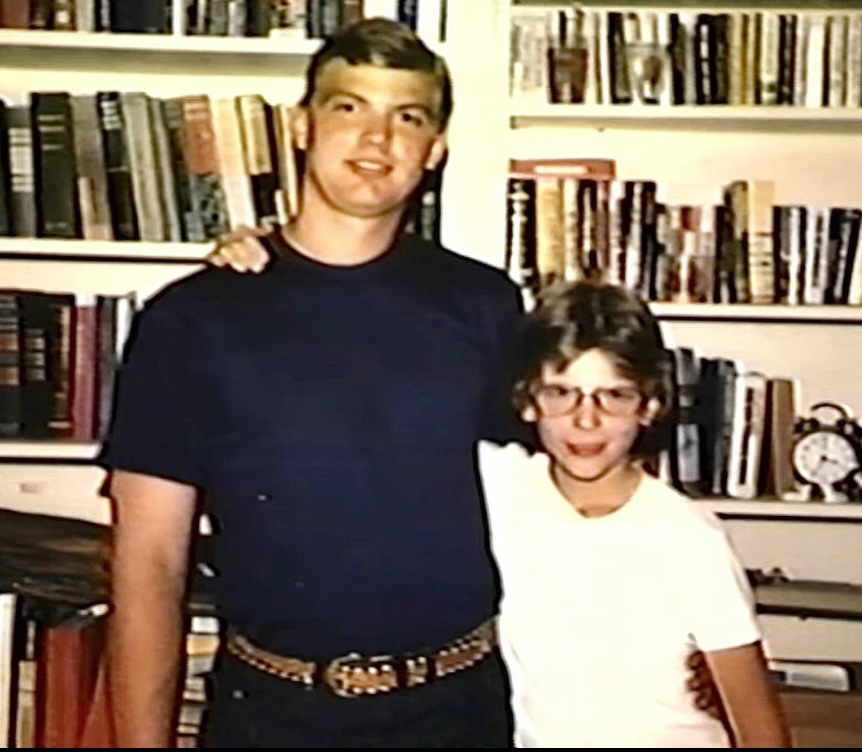
Lionel Dahmer, reflecting years later on the Ohio State period, would write that he knows now what Jeffrey was listening to in his silences, what pictures were flashing behind his eyes as he sat slumped on the living room sofa giving monosyllabic answers to questions. He was watching it again and again. His father described it as a horror show running ceaselessly behind Jeffrey’s moving eyes.
How trivial, Lionel would write, his talk of college and careers must have seemed to Jeffrey at that time. How odd and unrealisable all of it — my system of values, built on work and family, like quaint, incomprehensible artifacts from a vanished civilisation.
Masters’ account draws on interviews with Jeffrey himself, who confirmed that at Ohio State he broke down and cried alone in his room — once, and about Hicks. Not about any of the failures at university. About Steven Hicks.
After
By December 1978, it was agreed on all sides that Jeffrey would not return to Ohio State. Lionel began looking for what he could do with his son. Jeffrey cycled through aborted attempts at employment, was arrested drunk and disorderly at a local Ramada Inn, and finally exhausted the available options.
In January 1979, Lionel drove Jeffrey to the Army recruiting office in Akron. Jeffrey filled in the forms on what Lionel described as automatic pilot. He enlisted for three years.
He seemed, as he left for basic training, afraid.
The brief Army period that followed would be the only time in Jeffrey’s adult life when his drinking was controlled by external discipline — during the first weeks when no alcohol was permitted. When it was permitted again, he rushed back to it. He was discharged early, for alcohol dependency, in March 1981.
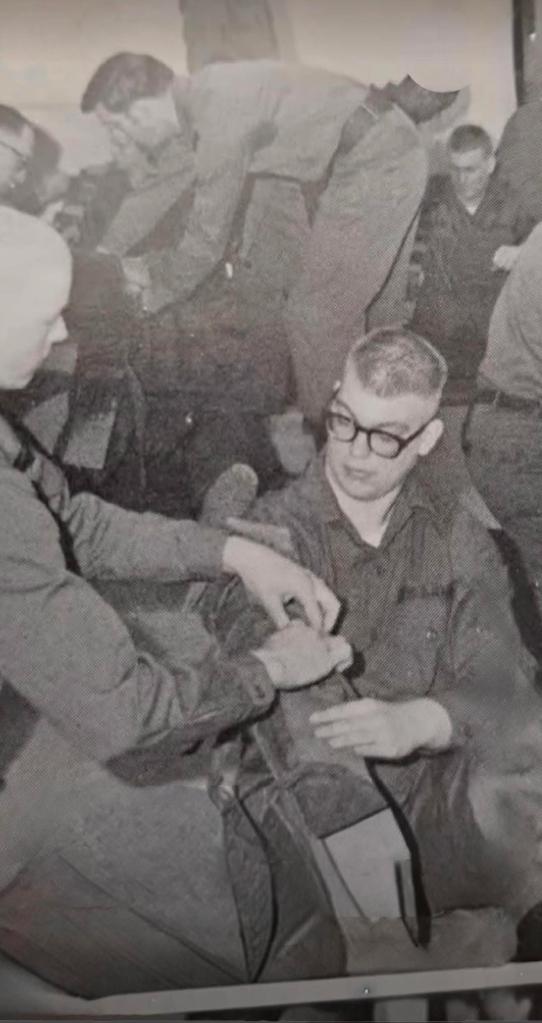
The Ohio State semester was one door closing among many. But it closes with particular weight. It was the first attempt by anyone to provide Jeffrey with the structures of an ordinary life — routine, study, peer community — after the summer in which everything had gone wrong. It failed completely, because the summer had left him carrying something no university semester, however well-intentioned, could contain or address.
He left that campus with 0.45 of a grade point and a beer bottle collection lined along a closet shelf. He left knowing something no one else in that dormitory knew, something he would carry for another thirteen years until, finally, in July 1991, he told Detective Patrick Kennedy what had happened on Bath Road in the summer of 1978.
Primary sources: Lionel Dahmer, A Father’s Story (1994); Brian Masters, The Shrine of Jeffrey Dahmer (1993).
A note on chronology: Steven Hicks was murdered on 18 June, 1978. His remains were not found until 1991.

 Jeffrey Dahmer Memorial