
The cleanest thing in the room
There was a thirty-gallon aquarium in Apartment 213. It stood in the living room, on the long black table Jeffrey Dahmer had bought for another purpose entirely, and by every account it was immaculate.
That is the uncomfortable fact this article starts from. In a flat where twelve of his seventeen victims died, where the smell had neighbours complaining for months, one thing was looked after with patience and skill. The water was clear. The fish were fed. The plants were alive.
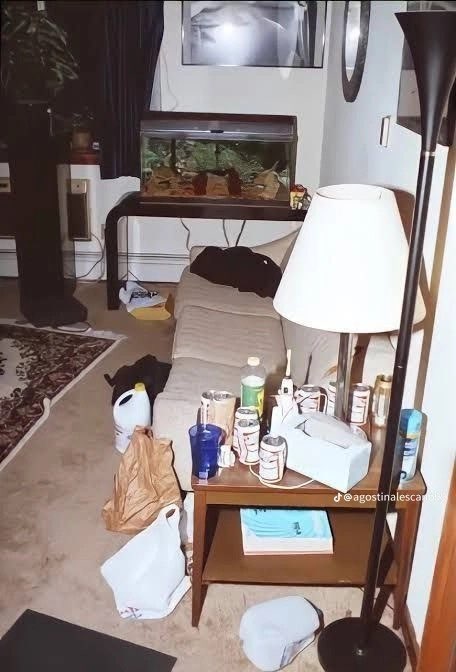
The tank does not redeem anything, and it is not offered here as a counterweight. It is offered as a document. A fish tank is a small record of daily attention, and what Jeffrey paid attention to, and how, is part of what this memorial exists to examine.
In his own words
After his arrest Jeffrey described the tank to an interviewer, and the passage is one of the longest stretches of plain enthusiasm on record from him. He called it “a beautifully kept fish tank, very clean”, stocked with “African cichlids and tiger barbs” and live plants.
What he liked was not only looking. He said he used to sit and watch the fish swim, but he also enjoyed “the planning of the set-up, the filtration”, and reading about how to keep nitrate and ammonia down to safe levels. “The whole spectrum of fish-keeping interested me,” he said.
He ended simply: “It’s a fun hobby. I really enjoyed that fish tank. It’s something I really miss.”
A second remark is quoted often. Looking back on his life, he said he should have gone to college, gone into real estate, and got himself an aquarium. It reads as a joke, and partly it is one. It is also a man naming the quietest life he could imagine and placing a fish tank at the centre of it.
The long description has been reproduced many times and is generally attributed to his interview with the FBI profiler Robert Ressler, printed in I Have Lived in the Monster (1997).
The fish
Jeffrey named two kinds of fish in his tank and one he only admired. None of the sources gives exact species or numbers, so what follows separates what he said from what is general knowledge about the fish.
African cichlids
“African cichlids” is a hobbyist’s label, not a species. It usually means the cichlids of the East African Rift lakes, Malawi, Tanganyika and Victoria, and in American shops it most often meant the small, rock-dwelling fish of Lake Malawi.
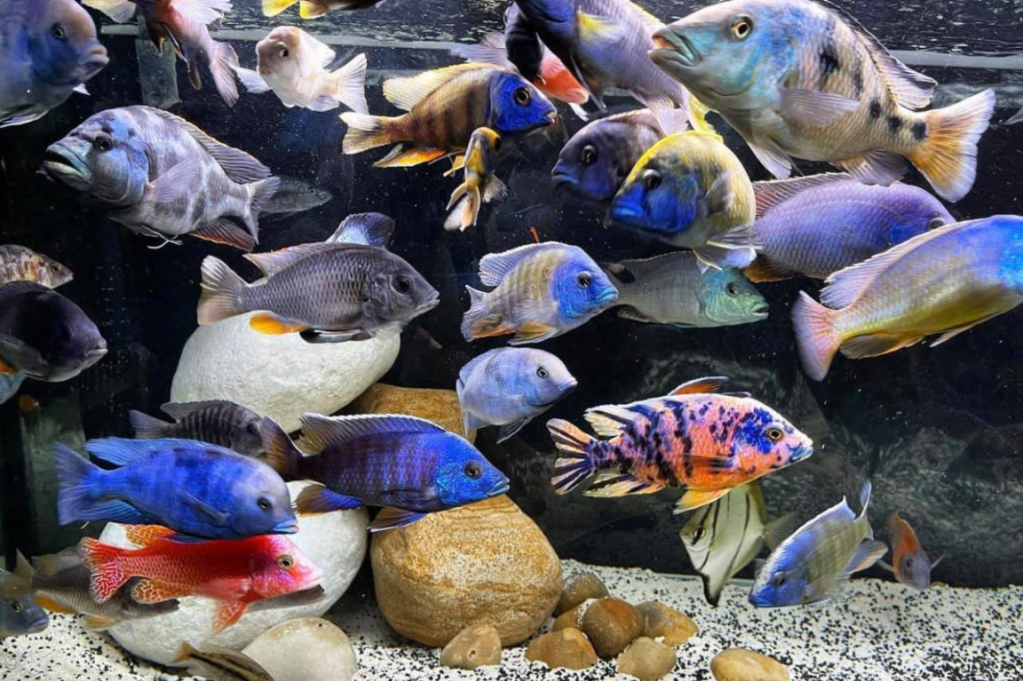
They are among the most vivid freshwater fish there are, in electric blues, yellows and oranges, and they are not gentle. They hold territory, chase rivals and rearrange the gravel to suit themselves. Many are mouthbrooders: the female carries the eggs, and then the fry, in her mouth.
They are also demanding. Rift lake cichlids want hard, alkaline water and stable chemistry, which fits what Jeffrey said about reading up on nitrate and ammonia. Which cichlids he kept, and how many, is not recorded.
Tiger barbs
The tiger barb (Puntigrus tetrazona) comes from Sumatra and Borneo. It is a small gold fish, five to seven centimetres long, with four black vertical bars and red-edged fins.
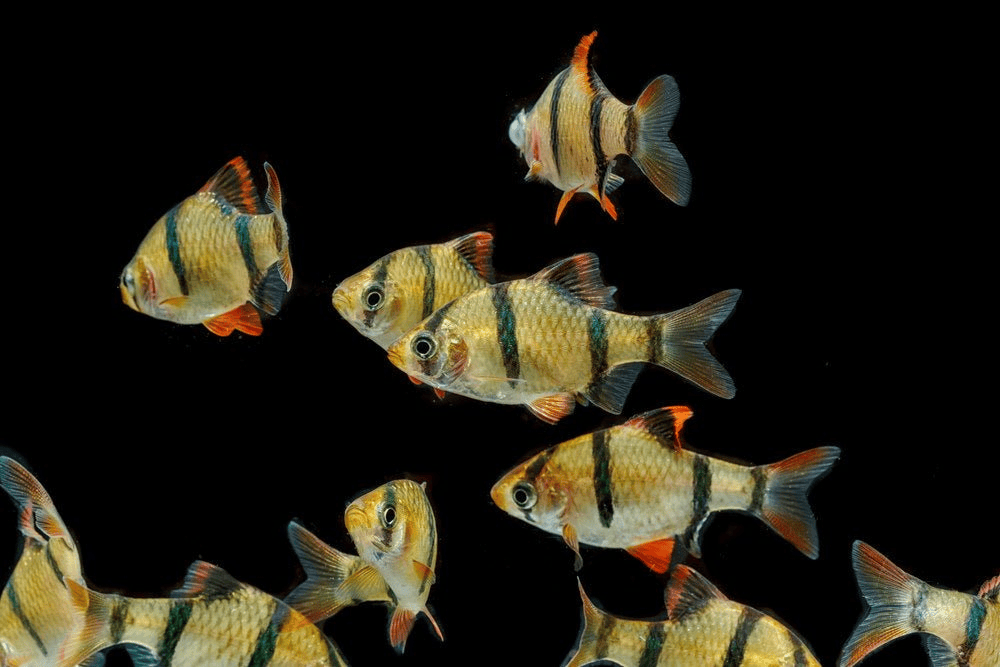
Tiger barbs are schooling fish and are usually kept in groups of six or more. They are fast, restless and famous for nipping the fins of slower tankmates. Kept alone or in pairs they become bullies; kept in a group they mostly squabble among themselves.
Pairing them with African cichlids is unusual. The two come from different continents and prefer different water, the barbs softer and the cichlids harder. But both are hardy, quick and assertive, and an attentive keeper can make the mix work. It was a tank full of movement, not a peaceful community.
The puffer fish he never kept
The fish Jeffrey talked about with the most feeling was one he did not own. He said he once saw puffer fish in a shop: “a round fish”, the only ones he had ever seen “with both eyes in front”. Their eyes, he said, were crystal blue, “like a person’s, real cute”.
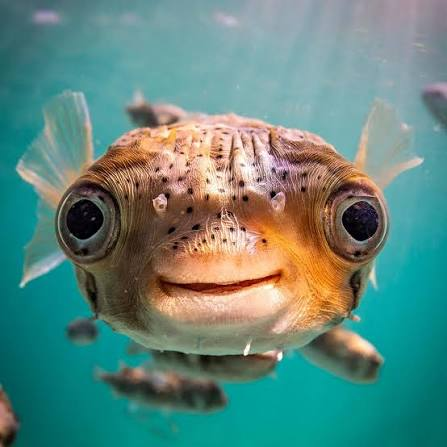
He did not say which puffer it was, and nothing shows that he bought one. Puffers are difficult fish, often needing brackish or salt water and a tank of their own. He seems to have known that and left them in the shop.
It is a small remark. It is also a rare case of Jeffrey describing a living creature’s face with open affection, and doing so in the same months in which he was describing what he had done to people.
The first fish
The aquarium was not his first. Secondary accounts drawing on his father’s memoir and Brian Masters’ biography say Jeffrey had a goldfish and a turtle as a toddler, at about eighteen months old.
Plants, wood and water
The inventories of the apartment add a few objects to his description: the thirty-gallon tank itself, a box of fish food, a piece of ornamental driftwood, and four books on the care of fish and aquarium maintenance. One account says he bought the tank at The Fish Factory, a Milwaukee shop where he liked to browse, though that detail comes from a secondary account.
The plants
Jeffrey said the tank had live plants, and that is harder than it sounds. African cichlids dig, and many of them eat or uproot anything green. Keepers who want plants with cichlids usually fall back on a few tough species, such as Anubias, Java fern and Vallisneria, often tied to wood or rock so the fish cannot pull them up.
Which plants he grew is not recorded. That any survived suggests either careful choices or regular replanting, and both take effort.
The driftwood
Driftwood gives fish cover and gives plants something to grip. It also releases tannins that soften and slightly acidify the water, which suits tiger barbs better than Rift lake cichlids. In a mixed tank like his, the wood was one more variable to watch.
The water
The most telling words in his description are “nitrate and ammonia”. Fish excrete ammonia, which is toxic. Bacteria in the filter turn it into nitrite and then into nitrate, which is safer but still has to be diluted by changing water. This is the nitrogen cycle, and managing it is the real work of keeping fish.
It is invisible work. Nobody admires a tank for its ammonia reading. Someone who talks about it, years later and from a prison, is someone who did the dull part properly.
The table underneath
The tank cannot be separated from what it stood on. Jeffrey had bought the black table as the base for the shrine he was planning, an arrangement of skulls and skeletons that he sketched and never built. At the time of his arrest, the table intended for the dead was holding up the one thing in the flat he was keeping alive.
It would be easy to make too much of that. It would also be dishonest to leave it out. The same man who could not tolerate another person leaving kept a glass box of creatures that could not leave, asked nothing, and needed him every day. The tank fits the pattern this memorial has traced elsewhere, in the cats, the insects and the animals of his childhood: care that flowed most freely towards beings that could not walk away.
What happened to the fish
No source we have found says what became of the fish after 22 July 1991. The apartment was sealed as a crime scene, his belongings were removed, and the building was demolished in November 1992. Whether anyone rehomed the cichlids and barbs, or whether they died in the days after the arrest, is an open question.
If a reader holds a property inventory or a police narrative that mentions the tank, we would like to see it.
Something he missed
In prison Jeffrey had no aquarium. He had a cell, a Bible, and eventually a tin whistle. When he looked back on his flat, he did not say he missed the furniture or the freedom. He said he missed the fish tank.
It was the one project in Apartment 213 that worked the way it was supposed to. He planned it, read for it, maintained it, and for a while it stayed alive under his hands. That is not an excuse for anything. It is a fact about him, and it belongs on the record with the rest.
Sources
- Jeffrey Dahmer’s description of the tank, as widely reproduced and generally attributed to Robert K. Ressler and Tom Shachtman, I Have Lived in the Monster (1997).
- Inventory details (thirty-gallon tank, fish food, driftwood, four fish-care books, the black table): 213 Things from Apartment 213, Control out of Control, compiled from Brian Masters’ The Shrine of Jeffrey Dahmer, Lionel Dahmer’s A Father’s Story and case documents.
- The Fish Factory, the childhood goldfish and turtle: pyramidsoul, “Jeffrey Dahmer and the relationship with animals”, a secondary compilation.
- Fish biology and aquarium practice: general reference knowledge, not specific to his tank.


The pufferfish story is super cute! It puzzles me that in one of the photos of Jeff’s fish tank available online, I can clearly see a pleco on the fish tank’s glass. However, neither any source nor Jeff himself mentions this species, and it seems to me that Jeff, who paid such close attention to his fish tank, wouldn’t have forgotten about one of the species he kept.
LikeLike