
Ask almost anyone to describe Jeffrey Dahmer in one word, and somewhere in the first three answers you will hear it: psychopath. In the popular imagination, the words “serial killer” and “psychopath” are simply synonyms — one implies the other, automatically, in both directions.
Here is what the actual record says: Jeffrey Dahmer was examined by more forensic psychiatrists and psychologists than almost any defendant of his era. He was tested, interviewed, evaluated before trial and during it, by experts for the defense, the prosecution, and the court. And across all of it, psychopathy is the diagnosis that never arrives.
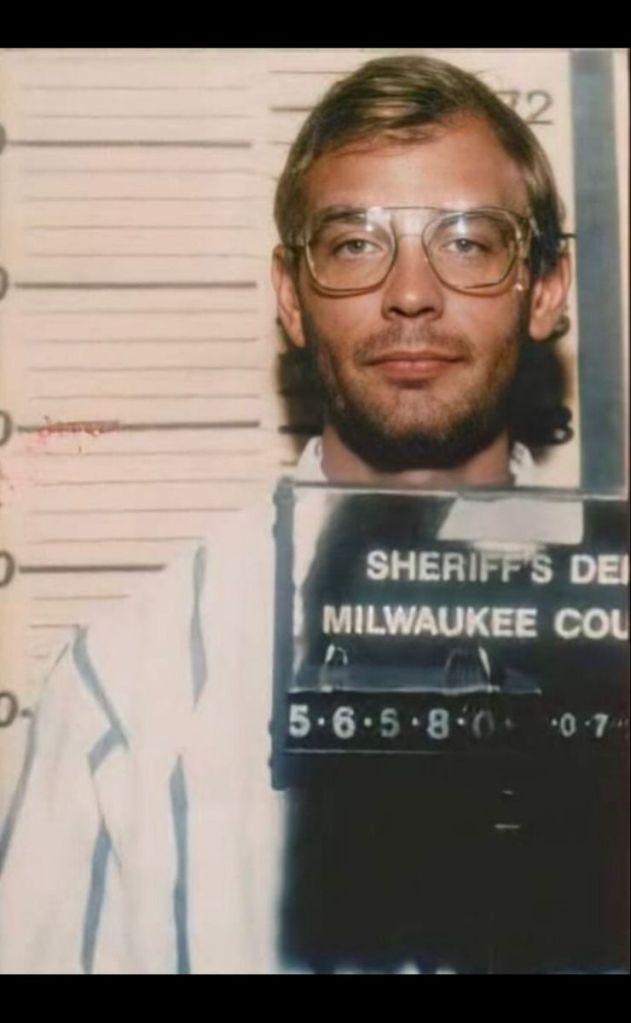
This article is about that absence — what it means, what it doesn’t, and why the distinction matters more than a label should.
What Psychopathy Actually Is
Psychopathy is not, strictly speaking, a diagnosis at all. It does not appear in the DSM, psychiatry’s diagnostic manual; the nearest DSM category, antisocial personality disorder, overlaps with it but is not the same thing. Psychopathy is a research construct, given its modern shape by Robert Hare’s Psychopathy Checklist–Revised (PCL-R) — a 20-item instrument, scored 0 to 2 per item by a trained examiner, maximum 40 points, with a conventional diagnostic threshold of 30 in North America.
The traits it measures fall into two clusters. The first is interpersonal and affective: glibness and superficial charm, grandiosity, pathological lying, manipulativeness, lack of remorse, shallow emotions, callous absence of empathy. The second is behavioural: impulsivity, parasitic lifestyle, poor behavioural controls, early and versatile criminality. The classic psychopath — the Ted Bundy type — is charming, grandiose, remorseless, and lies as easily as breathing.
Hold that portrait in mind, and now look at the man in the record.
What He Was Actually Diagnosed With
The experts at Jeffrey’s 1992 trial disagreed about many things, but their diagnostic vocabulary is consistent and conspicuous. Borderline personality disorder. Schizotypal features. Paraphilia — necrophilia — as the engine of the crimes. Alcohol dependence. Anxiety and depression, treated with Prozac at Columbia Correctional, as documented in the 1992 competency evaluation the memorial published earlier this year. (See “A Mind in Pieces” for the full diagnostic history.)

What no evaluator who examined him made central — not the defense experts, not the prosecution’s Dr. Park Dietz, not the court’s appointees — was psychopathy. The forensic literature since has noticed the same thing. A scholarly analysis of media portrayals notes plainly that Dahmer does not fit the clinical criteria for psychopathy, despite decades of media reporting to the contrary. Forensic psychology teaching materials routinely use him as the standard counter-example: Bundy the textbook psychopath, Dahmer the emotionally disturbed, compulsion-driven opposite.
And in 2018, the question was put to the instrument itself. A research team led by criminologist Eric Hickey retrospectively scored five serial killers commonly assumed to be psychopaths — Dahmer, Bundy, Gacy, Kemper, and Ridgway — using trained raters and the PCL-R. Only Bundy crossed the diagnostic threshold. Jeffrey Dahmer scored 23 out of 40: elevated, certainly, but seven points below the cutoff — closer to the general prison population than to the Bundys of the world. The researchers used his case specifically to illustrate their central finding: not all serial killers are psychopaths, and the most infamous one of all wasn’t.
Trait by Trait, Against the Record
Set the checklist beside the documented man, and the mismatches are striking.
Glibness, charm, grandiosity. Jeffrey was, by every firsthand account, socially awkward, monosyllabic, and self-effacing to the point of self-erasure. His documented self-descriptions run the other direction entirely: he called his crimes “a nightmare,” himself something that should have been put to death. His one flash of wit about fame — rolling his eyes at “the price of my infamy” — is wry and deflating, the opposite of grandiose.
Pathological lying and manipulativeness. Here honesty requires precision. During the crime years, Jeffrey lied constantly and sometimes with chilling effectiveness — most catastrophically in the Konerak Sinthasomphone incident. Deception in the service of concealment was fully present. But the psychopathic trait is lying as a way of being, gratuitous and lifelong. And the moment concealment ended, something remarkable happened: he became almost pathologically truthful. Sixty hours of confession. Every victim identified, including those police could never have connected to him. Photographic tests seeded with living men to catch him lying — he never once took the bait. Detectives and psychiatrists alike remarked that they had never seen a defendant so intent on being accurately understood.
Lack of remorse, shallow affect. This is the heart of the construct, and it is where the record diverges most sharply. The man who told Roy Ratcliff, unprompted, that he believed he deserved execution — and then asked whether continuing to live was itself a sin against God — was not performing shallowness. He wept over Steven Hicks alone in a dorm room at Ohio State. He described his own emotional numbness not with indifference but with grief: he hadn’t cried in years and didn’t know if he still could. A psychopath does not mourn his missing feelings. Mourning them is precisely the thing psychopathy takes away.
And the honest counterweight. The 1992 competency evaluation contains a harder sentence: one evaluator described him as lacking sincere empathy and real remorse. That assessment exists; the memorial does not hide it. Psychopathic traits were present in Jeffrey Dahmer — a 23/40 is not a zero, and no one should mistake this article for a claim that he was empathically whole. The question is not whether he had elevated traits. It is whether “psychopath” is the accurate frame. The instrument built to answer exactly that question says no.
Why the Label Matters
Because “psychopath” is not just a word — it is a full stop. It says: born without conscience, nothing here to understand, no door that anyone could have knocked on. It converts a human catastrophe into a species difference, and in doing so it lets everyone off the hook — the family that couldn’t reach him, the systems that missed him, the society that would rather have monsters than mirrors.
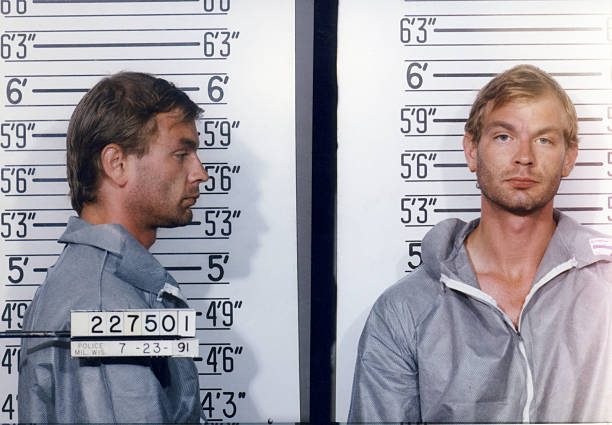
The documented reality is harder to sit with. Jeffrey Dahmer appears to have had a conscience — damaged, buried under dissociation and alcohol and compulsion, but present and in pain. He knew what he was doing was monstrous; he said so, before and after arrest. The engine of his crimes was not the absence of feeling but a compulsion that overwhelmed the feeling that was there. That is not an exoneration — seventeen men and boys are dead, and elevated traits plus intact knowledge of wrong makes moral responsibility heavier, not lighter. But it is a different tragedy than the one the label tells. The psychopath story says such men must be detected and caged, because nothing else was ever possible. Jeffrey’s actual story — the lonely, drowning, help-resisting, guilt-carrying reality of it — suggests something more disturbing and more useful: that he was reachable, at least in principle, and no one reached him until a pastor with a whirlpool tub arrived twenty-two months before the end.
The memorial exists for precisely this kind of distinction. Getting the label right is not pedantry. It is the difference between a warning the world can learn from and a monster story it can only repeat.
Sources: E. Hickey et al., retrospective PCL-R assessment of serial murderers (2018), as reported in K. Ramsland, “Are All Serial Killers Psychopaths?”, Psychology Today (2025); R. Hare, Psychopathy Checklist–Revised; Jeffrey L. Dahmer, Competency Evaluation, Case No. F-912542 (April 27, 1992); Brian Masters, The Shrine of Jeffrey Dahmer (1993); Lionel Dahmer, A Father’s Story (1994); Roy Ratcliff, Dark Journey Deep Grace (2006). Related memorial articles: “A Mind in Pieces,” “The Mind That Wouldn’t Stay,” “A New Primary Source: The 1992 Competency Evaluation.”


