
The word “necrophile” has been attached to Jeffrey Dahmer’s name for over three decades, usually without much thought about what it actually means. It appears in headlines, documentaries, and casual conversation as though it were self-evident. But forensic psychology draws real distinctions within that word, and those distinctions matter — not to excuse anything, but to understand it. The clearest way to see what Jeffrey was not is to look closely at someone who genuinely was. Her name is Karen Greenlee, and her case is one of the best-documented examples of preferential necrophilia in American history.
Sacramento, December 1979
On 17 December 1979, Greenlee was working as an apprentice embalmer at Sacramento Memorial Lawn in California. Her task that morning was simple: drive a 1975 Cadillac hearse carrying the body of John Mercure, a 33-year-old man who had died a week earlier, to his burial. His family was waiting at the cemetery, dressed in black.
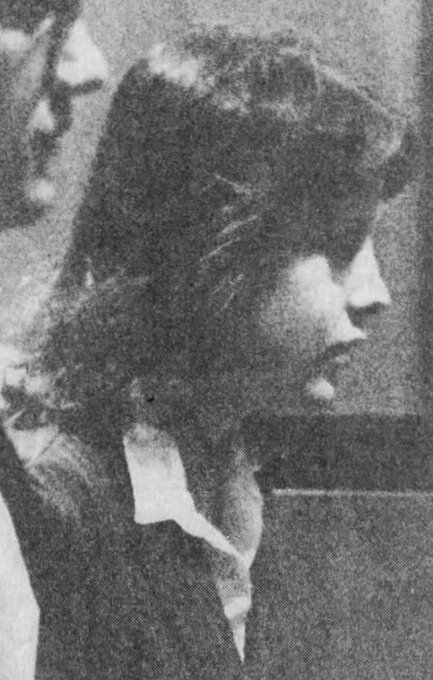
The hearse approached the entrance — and then turned around and sped away. Greenlee had absconded with both the vehicle and the body.
She was found two days later near Alleghany, a remote community in Sierra County, having attempted suicide with an overdose of Tylenol and codeine. She survived. What she left behind was a four-and-a-half-page confession letter in which she admitted to sexual contact with somewhere between twenty and forty deceased men over the course of her time in the funeral industry.
Then came the detail that made the case famous: necrophilia was not a crime in California in 1979. There was simply no law against it. Greenlee could only be charged with stealing the hearse and interfering with a burial. She pleaded guilty and received eleven days in jail, a $255 fine, and probation with mandatory therapy. Mercure’s mother, Marian Gonzales, later sued Greenlee and the mortuary for severe emotional distress — a reminder, before anything else is said, that these acts were not victimless. A grieving family stood at a cemetery gate and watched their son’s body be driven away by the person entrusted with it.
The Unrepentant Necrophile
In 1987, Greenlee gave a long interview to writer Jim Morton, published under the title “The Unrepentant Necrophile” in Adam Parfrey’s anthology Apocalypse Culture. It remains one of the only extended first-person accounts of necrophilia ever recorded, and it is remarkable for its complete lack of evasion.
Greenlee described her attraction as exactly that — an attraction. She spoke about a preference for the bodies of young men. She described the sensory experience of the morgue in the language other people use for perfume or music, stating plainly that she found “the odor of death very erotic”. She called herself a “morgue rat”. She framed her necrophilia not as a compulsion she fought, but as something closer to an orientation: this was what she wanted, in itself, for its own sake.
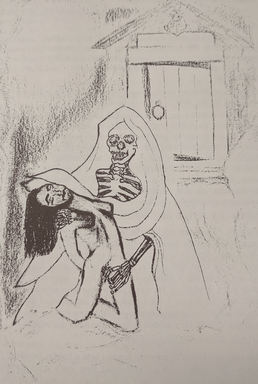
That last part is the key to everything that follows. For Greenlee, the corpse was the object of desire. Death was not an obstacle, a by-product, or a price. It was the point.
And here is the fact that must be stated plainly, because the comparison ahead is meaningless without it: Karen Greenlee never killed anyone. She never assaulted a living person, never abducted one, never threatened one. Across the twenty to forty encounters she described, and across her entire working life in the funeral industry, not one living human being was harmed by her hands. She did not need to hurt anyone, because hurting people was never any part of what she wanted. She went to work at a mortuary, and the dead arrived on their own.
She did cause harm — real harm, of a kind this memorial will not minimise. John Mercure’s family were left standing at a graveside; his mother suffered enough that she sued for severe emotional distress; and the dead men themselves could not consent to what was done to them. But the harm was grief and violation, not violence. There is no body count. There was never a danger to the living public, and after her arrest she completed therapy, left the funeral trade, and lived out an ordinary private life.
That is what a preferential necrophile looks like when the paraphilia stands alone, uncoupled from any impulse to kill: transgressive, distressing to the bereaved, illegal in most jurisdictions today — and not lethal.
The Object of Desire
Now place Jeffrey Dahmer beside her, and the picture inverts.
Let it be said clearly, because this memorial does not flinch from the record: Jeffrey committed sexual acts with the bodies of his victims, and he admitted this in his confessions. Nothing in this article disputes that. The question is not whether those acts occurred, but what they meant — what he was actually seeking.
And on this point, the record is unusually consistent. In his confessions to Milwaukee police, in his conversations with psychologists, and in Dr. Judith Becker’s trial testimony, the same theme returns again and again: what Jeffrey wanted was a companion who would not leave. A living person, present, compliant, permanently his. He told investigators that he killed because his victims wanted to go — that the killing itself was, in his own framing, a means to an end, and the part of the process he found hardest.
A preferential necrophile does not describe killing as the hardest part. A preferential necrophile does not need to kill at all — as Greenlee’s entire history demonstrates. Her desire was fully satisfied by bodies that were already dead, arriving by natural means, in a building designed to receive them. Seventeen people are dead because of Jeffrey Dahmer. Nobody is dead because of Karen Greenlee. If death itself had been the thing Jeffrey wanted, he had the same option she had, and every reason to take it: morgues, mortuaries, cemeteries, the whole quiet infrastructure of the already-dead. He did not go there. He went to bars and bus stops, looking for people who were alive.
The Experiments That Settle the Question
If any single piece of evidence resolves this, it is the one that is hardest to write about: the drilling experiments.
In the final period of his crimes, Jeffrey attempted to create what he called a compliant, “zombie-like” companion by drilling into the skulls of drugged, living victims and injecting acid or boiling water — attempts which caused unimaginable suffering and death. Dr. Becker’s testimony explored these attempts in detail at trial.
Strip away the horror for one clinical moment and look at what the act reveals about desire. These were attempts to keep a person alive. Damaged, will-less, catastrophically harmed — but alive. A man whose actual attraction was to corpses would have no conceivable reason to attempt this. The experiments only make sense as the actions of someone for whom death was the problem, not the goal — someone trying, in the most monstrous way imaginable, to stop his companions from crossing the line into death, because on the other side of that line they were no longer what he wanted, only what he could keep.
Greenlee drove a body away from its burial because the body was what she desired. Jeffrey drilled into living skulls because the living person was what he desired. These are not two examples of the same paraphilia. They are close to opposites.
What the Classifications Say
Forensic taxonomy supports the distinction. Anil Aggrawal’s widely used classification of necrophilia separates, among other categories, the regular or preferential necrophile — whose primary erotic interest is the dead body itself — from the homicidal necrophile, who kills and whose contact with the dead follows from the killing. Greenlee is a textbook example of the first category. Jeffrey, to the extent the label applies at all, falls into the second — and even there, his own accounts complicate it, because his stated desire was never for the dead but for the permanently present.
Brian Masters reached a similar conclusion in The Shrine of Jeffrey Dahmer: the engine underneath everything was a terror of abandonment and a hunger for total possession. The post-mortem acts were the wreckage of that hunger, not its fulfilment.
Why Precision Matters
None of this is exculpatory, and it should not be read as an attempt to soften the record. Seventeen men and boys are dead. What was done to them, before and after death, was done. A diagnostic distinction does not move a single gram of that weight.
But this memorial exists on the premise that understanding is not the same as excusing, and that lazy labels obstruct understanding. “Necrophile”, applied to Jeffrey as a primary description, points investigators of the human condition in exactly the wrong direction. It suggests a man drawn to death, when every serious piece of evidence describes a man in flight from it — from departure, from abandonment, from the empty apartment. Karen Greenlee shows us what genuine preferential necrophilia looks like: unambiguous, self-described, oriented toward death itself — and, crucially, harming no living person. The paraphilia by itself does not produce corpses. Something else has to be present for that, and in Jeffrey’s case that something else was not a love of the dead. Jeffrey Dahmer, held against that mirror, does not match. He was something else — arguably something lonelier, and in its consequences, something infinitely worse.
Sources: Jim Morton, “The Unrepentant Necrophile”, in Adam Parfrey (ed.), Apocalypse Culture (1987); contemporary press coverage of the 1979 Sacramento case; Milwaukee Police Department confession records; trial testimony of Dr. Judith Becker (1992); Brian Masters, The Shrine of Jeffrey Dahmer (1993); Anil Aggrawal, Necrophilia: Forensic and Medico-Legal Aspects (2011).


