
A building razed, a household buried in an unmarked landfill, and thirty years of grass at 924 North 25th Street: what Milwaukee’s great erasure accomplished, and what it could not.
I. Fifteen Months
The Oxford Apartments outlived their most famous tenant’s freedom by only fifteen months.
The building at 924 North 25th Street was a 49-unit complex in Milwaukee’s Avenues West, and there was nothing about it that asked to be remembered. Jeffrey moved into Apartment 213 in May 1990, coming from his grandmother’s house in West Allis, and lived there for fourteen months. Twelve men died in that small second-floor unit. Neighbours complained to the building manager, Sopa Princewill, about the smells and the sounds; Jeffrey offered his excuses — a broken freezer, dead tropical fish — and the complaints never travelled further. Then came 22 July 1991, and the building became the most notorious address in America.

It never recovered, and nobody expected it to. By August 1992 only around fifteen of the forty-nine units were still occupied. The Campus Circle Project — a neighbourhood redevelopment initiative affiliated with Marquette University — bought the property for $325,000, offered the remaining tenants relocation help, and brought in the wrecking crews. Demolition began on 16 November 1992. The project’s leaders framed the building as a standing symbol of pain and violence, and its removal as an act of healing for the neighbourhood. Grass and flowers were planted where the foundations had been.
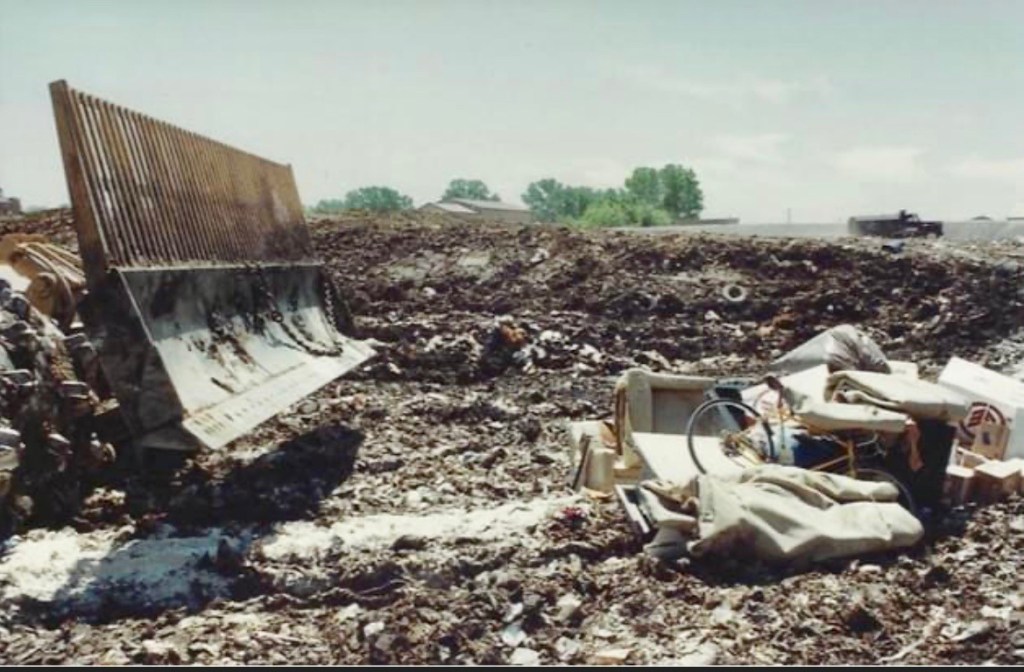
That was the plan in its entirety: remove, plant grass, heal. It is worth sitting with how much faith that sequence places in absence.
II. Thirty Years of Grass
Here is what stands at 924 North 25th Street today: grass, a few trees, and a black iron fence. No building. No plaque. No marker of any kind.
In the three decades since the demolition, every proposal for the site has failed. A memorial garden. A playground. New housing. Even, at the other extreme, a museum. None advanced past conversation. A Marquette official admitted as early as 1998 that no one was willing to take the parcel on — its history made ownership itself feel like contamination. So the lot has simply persisted, mown and fenced, a hole in the street grid that everyone understands and no one names.
The demolition was supposed to be an act of healing, and perhaps for the immediate neighbourhood, in 1992, it was. But look at what the erasure actually erased. The building is gone — and with it went the only physical place where Anthony Sears, Raymond Smith, Ernest Miller, David Thomas, Curtis Straughter, Errol Lindsey, Tony Hughes, Konerak Sinthasomphone, Matt Turner, Jeremiah Weinberger, Oliver Lacy and Joseph Bradehoft could have been remembered where they died. Milwaukee did not replace the site of the crimes with a site of mourning. It replaced it with nothing. Thirty years on, the men whose lives ended there have no marker on that ground, because giving them one would require the city to acknowledge the ground at all.
This is the “monster” logic we have written about many times, expressed in urban planning. The word monster exists to end thought; the empty lot exists to end memory. Both offer the same bargain: you will never have to look at this again, and the price is that you will never have to think about it again either — including the parts that deserved thought. The victims were part of what got bulldozed into silence.
The selectiveness of the erasure is its own tell. The childhood house in Bath, Ohio — where Steven Hicks died in 1978 — still stands, has been lived in for decades, and surfaces on the property market from time to time like any other house. His grandmother’s home in West Allis still stands. Even the Ambrosia Chocolate factory where Jeffrey worked was demolished for ordinary commercial reasons, its site now occupied by a basketball arena. Only the Oxford Apartments were removed as an act of meaning. The erasure was never really about the buildings. It was about which memories a city could bear to have addresses.
III. The Landfill
What the demolition did to the place, the summer of 1996 did to the things.
After Jeffrey’s death, his estate passed to the families of eleven of his victims, who had won civil judgments against him. In 1996 a court ordered his assets liquidated for their benefit, and Thomas Jacobson, the lawyer representing most of the families, announced an auction. He set the ambition at a million dollars, pointing to the staggering sums the Jacqueline Kennedy Onassis auction had just fetched in New York — if Camelot could command that market, he reasoned publicly, the interest in this estate was undeniable. The inventory was a study in the case’s terrible ordinariness: a refrigerator, a Sears freezer, the 57-gallon drum, two sets of handcuffs, tools, a lava lamp.
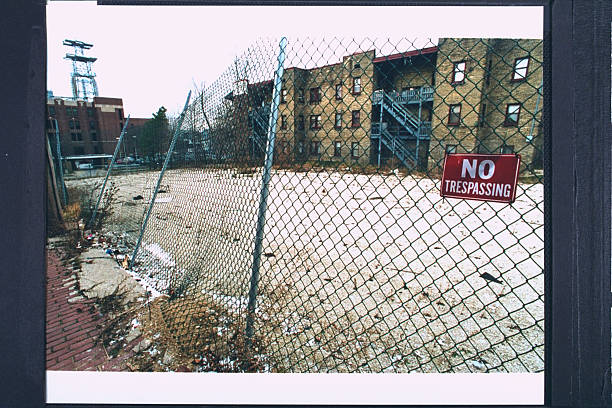
Milwaukee recoiled. A civic group — Milwaukee Civic Pride, anchored by the real-estate developer Joseph Zilber, who put in $100,000 of his own — raised a pledge of $407,225 to buy the entire estate and keep it off the market. Zilber’s stated purpose was blunt: the “tools of death” should be destroyed, not sold to collectors and preserved in museums. The families accepted the offer in what was reported as a very close vote — a detail worth pausing on, because it means this was genuinely contested even among the people with the greatest standing to decide. Each of the eleven families received roughly $32,000 once the lawyers were paid.
And then, in June 1996, everything Jeffrey Dahmer had owned was hauled to an undisclosed landfill in Illinois and buried.
Let us be fair to everyone in that story, because fairness is the point of this site. The families’ vote deserves respect either way it had gone; there is no correct answer to the question they were asked. Zilber’s motive was decency — he wanted to spare the families the spectacle of a bidding war over the instruments of their grief, and to strangle the collectors’ market before it could feed. Nothing in this article should read as contempt for any of them.
But notice the form the solution took, because it is remarkable. The objects were not merely destroyed — they were buried in secret, in another state, at a location deliberately kept from the public. That is not disposal; disposal does not require secrecy. It is the inverse of a relic. Medieval cultures enshrined fragments of their saints so that presence could radiate from a known place; Milwaukee interred the possessions of its great sinner so that presence could radiate from nowhere. The unmarked landfill and the unmarked lot are the same gesture at different scales: the belief that meaning is a property of objects and coordinates, and that if you scatter the coordinates, the meaning dies too.
Thirty years of true-crime saturation, a Netflix series watched by hundreds of millions, and the steady traffic to sites like this one have delivered the verdict on that belief.
IV. What We Hold
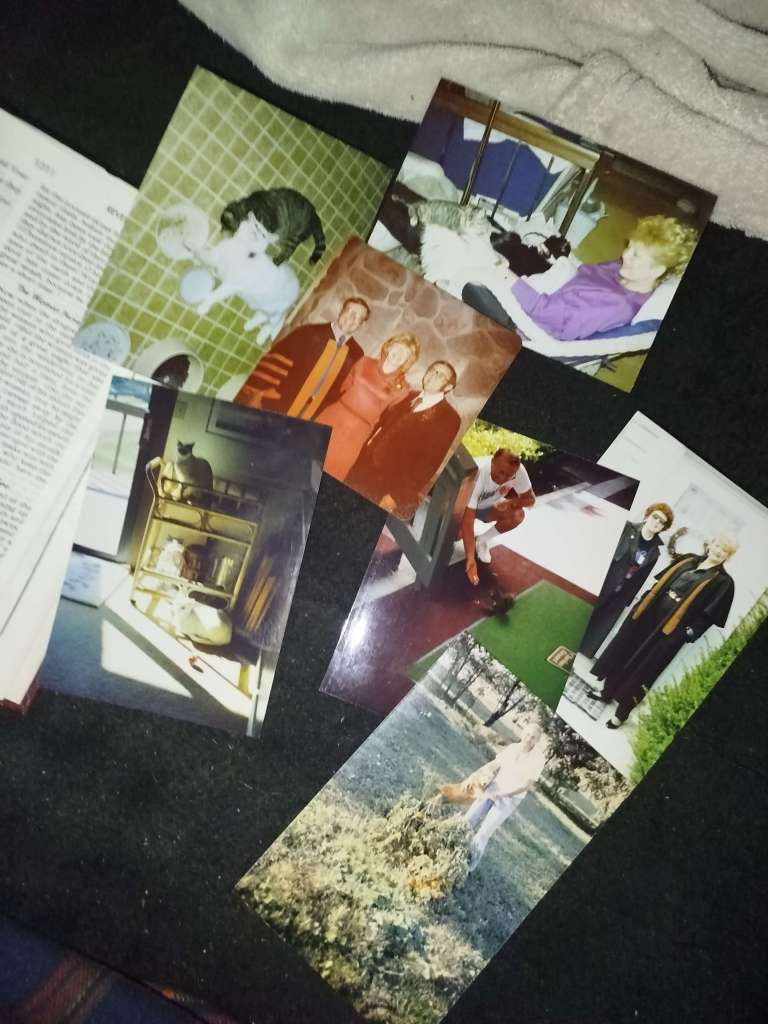
This memorial keeps objects. Among them are things salvaged from Lionel Dahmer’s estate: photographs, a shirt, a red Bible whose pages carry fingerprints that appear under ultraviolet light. Given everything above, we owe our readers a straight answer to the obvious question: how is this different from the collectors’ market that Joseph Zilber spent $407,225 to prevent?
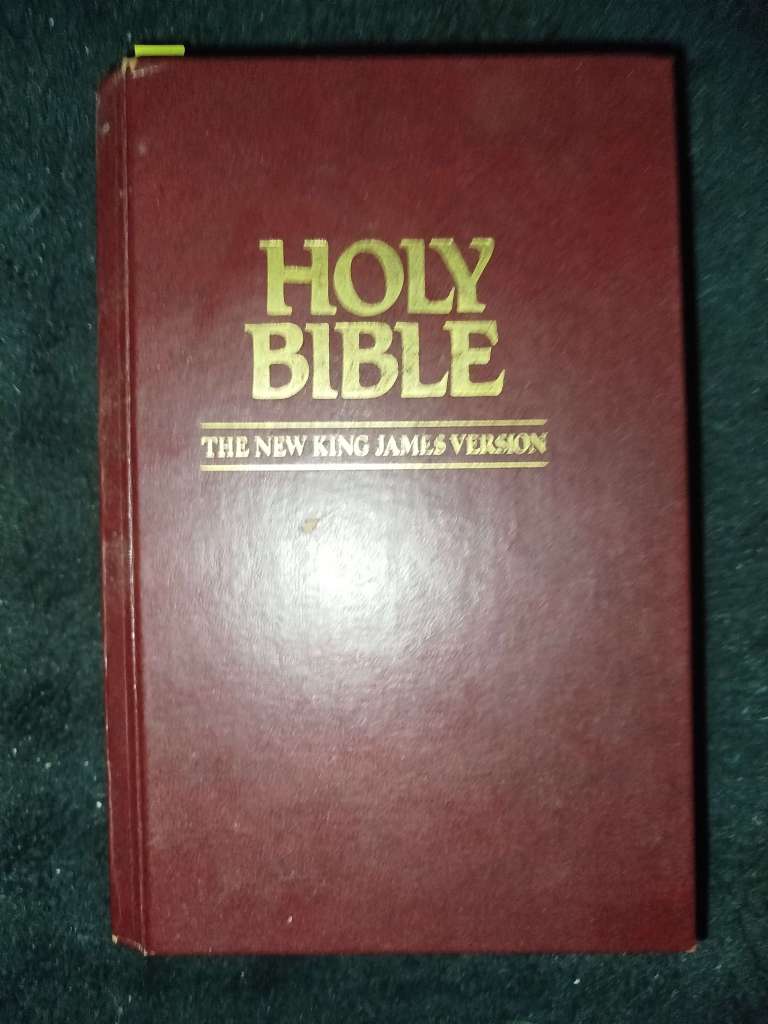
The honest answer is that the difference is not in the objects. It is in what is done with them. The murderabilia trade that Zilber feared treats objects as trophies — their value rises with the body count, and they are held privately, as proximity to infamy. What this memorial does with its objects is closer to what an archive does: they are studied, contextualised, written about, and used as evidence in work that treats every person in this story, victims included, as fully human. A fingerprint on a Bible is not a thrill here. It is a document — of a father’s grief, of a son’s strange late-life faith that we examined in the baptism article, of the fact that these were people whose hands touched things, which is precisely what both the landfill and the word monster were designed to make unthinkable.
We would also say, carefully, that the 1996 burial and the empty lot have not aged as their architects hoped. The erasure did not end the remembering; it only ended the city’s participation in it. The remembering moved elsewhere — into documentaries, streaming series, forums, and the collectors’ market that grew anyway around whatever objects escaped the landfill. By refusing to build anything at 924 North 25th Street, Milwaukee did not close the story. It abdicated its voice in the story, and left the telling to whoever showed up. Thirty years of grass behind a black fence, and still no memorial to the twelve men who died there: that is not healing. That is a city holding its breath.
Somewhere in Illinois, under unrecorded ground, there is a refrigerator, a freezer, a drum, a lava lamp. Somewhere in Milwaukee there is a rectangle of lawn where a building used to be. Both are supposed to mean nothing, by design. And both, by that very design, have become the most eloquent monuments the case has: monuments to the idea that if you cannot bear to think about something, you can bury it — and to the thirty years of evidence that you cannot.
Sources and notes
- Milwaukee Journal Sentinel reporting on the Oxford Apartments’ purchase by the Campus Circle Project ($325,000), the November 1992 demolition, and the lot’s continued vacancy.
- Contemporary reporting (Washington Post, Associated Press, Deseret News, May–June 1996) on the court-ordered liquidation of the estate, Thomas Jacobson’s planned auction, Milwaukee Civic Pride’s $407,225 pledge, Joseph Zilber’s role, the families’ close vote, and the June 1996 burial of the items in an undisclosed Illinois landfill.
- Reporting on failed redevelopment proposals for 924 North 25th Street and Marquette University statements (1998) on the parcel’s unwanted status.
- Reporting on the Bath, Ohio childhood home’s continued private ownership and periodic sale listings, and on the Ambrosia Chocolate factory site’s redevelopment.


Two things stand out to me in this article:
This is the “monster” logic we have written about many times, expressed in urban planning. The word monster exists to end thought; the empty lot exists to end memory
In Norse mythology, the All-Father, Oðin, has two ravens, Hugin and Munin. These are Thought and Memory. They serve as his eyes and ears. In the epic poem Grímnismál, Oðin, in disguise, says this to a mortal man:
“Hugin and Munin fly each day over the spacious earth.I fear for Hugin, that he come not back, yet more anxious am I for Munin.”
The meaning is not hard to figure out. He fears losing his memories.
Then this stood out to me:
Medieval cultures enshrined fragments of their saints so that presence could radiate from a known place; Milwaukee interred the possessions of its great sinner so that presence could radiate from nowhere.
The most famous archeological discovery in Scandinavia is that of the Oseberg ship. It’s the single best preserved Viking ship ever found. It was buried with the body of a suspected queen and her assistant. There were once many more precious artifacts inside, but they were gradually looted. The best evidence of their wealth is that their DNA suggests that they ate meat. Meat (of that other than fish) was a luxury of the time period.
My question is this:
You can go to Norway and Sweden and see artifacts from Vikings, including berserker and ulfheðnar, the fearsome warriors who raped and murdered countless men, women, and children.
You can go to Romania and visit the castle of Vlad Țepeș, King of Wallachia, otherwise known as Dracula. The locals are actually very proud of him despite how many people he killed and tortured in his lifetime.
I’m getting ready to visit Gettysburg, a place where 50,000 people died over the course of three days.
Why in heaven’s name are those places memorialized, but not this one?
LikeLiked by 1 person