Infinity Land

There is a moment in almost every childhood where the world becomes too large and too unpredictable to bear. The adults are fighting. The house is moving again. Nobody is explaining anything. And so a child does what children do when the outside offers no safety — they build something on the inside. A private world with its own rules, its own logic, its own borders. A place that belongs entirely to them.
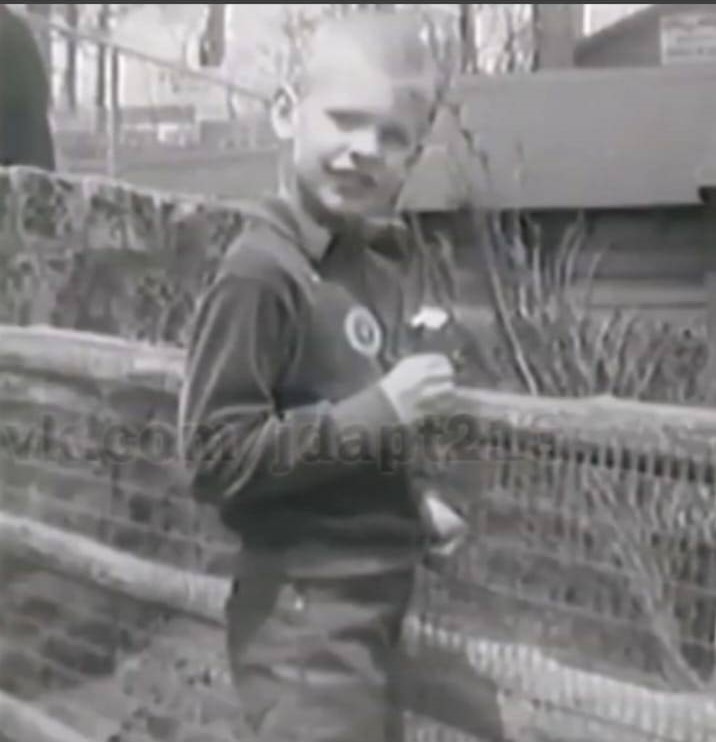
Jeffrey Dahmer built his at around the age of nine. He called it Infinity Land.


What It Was

The game was drawn on paper. Stick figures — fleshless, bone-only, stripped of flesh entirely — moved across a landscape governed by a single absolute rule: if they came too close to one another, they were annihilated. Surrounding them were spirals, tightly wound, intensely imagined, pulling downward toward a black hole at the centre of everything.

He shared it with his friend David Borsvold — a quiet, rock-collecting, dinosaur-studying boy who was perhaps the closest thing Jeffrey had to a genuine companion during those years. Together they played out these annihilations, moving their little armies across a world where closeness meant destruction and the only destination was oblivion.

Brian Masters, in The Shrine of Jeffrey Dahmer, described the game with the care it deserves. The stick figures were not conceived with the full contours of people. They were bone. Their danger lay in proximity. And the spirals descended, always, toward the black hole of infinity.

He called it Infinity Land. He was nine years old.


What It Meant

Here is what I believe, having lived with Jeffrey in my thoughts for so long: Infinity Land was not a symptom. It was a solution.

By the time Jeffrey drew those first spirals, his life was already shaped by things a child has no language for and no power over. His mother Joyce’s mental health crises — the seizures, the medication, the hospitalizations, the rages. His father Lionel’s long absences, buried in his chemistry PhD. A family in near-constant motion, address after address, the ground never quite solid underfoot. A boy who had become, very early, extremely alert to instability — watching the room, reading the atmosphere, waiting for the next thing to shift.

He could not control any of that. But in Infinity Land, he controlled everything.
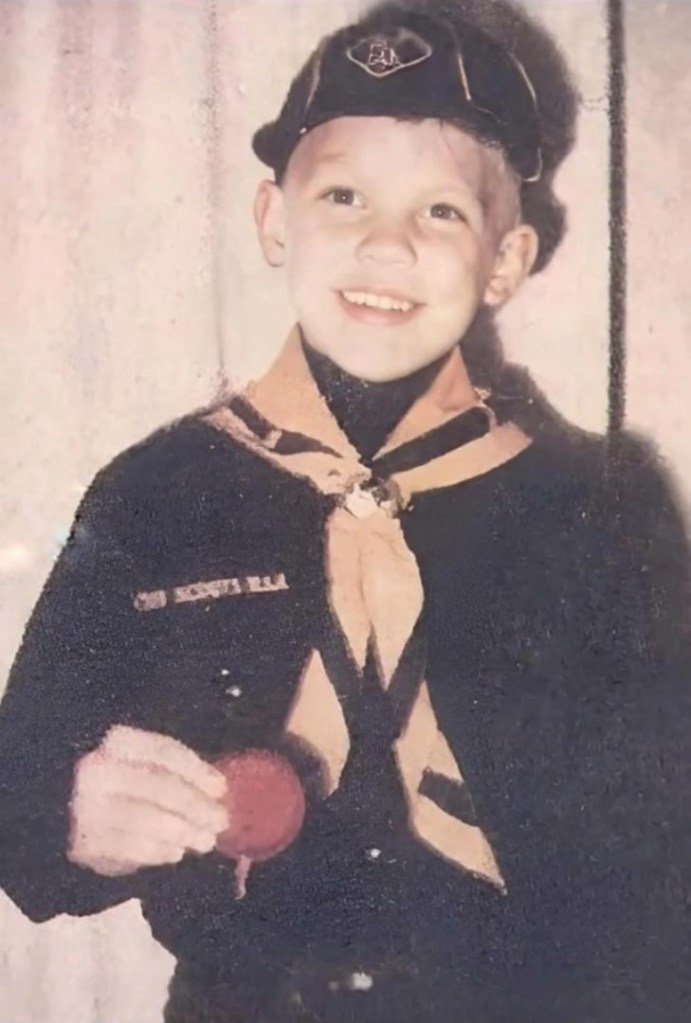
He made the rules. He decided the physics. He drew the borders of the world and determined what happened inside them. The stick figures obeyed laws he invented. The spirals descended at his direction. The black hole waited at the centre, patient and absolute, because he had placed it there.

This is what children do with anxiety they cannot name. They build containers for it. Games with highly defined rules — and Lionel Dahmer himself noted that Jeffrey always preferred games with exactly that: defined rules, repetitious actions, nothing left to chance or confrontation. The structure was the comfort. The rules were the shelter.

Infinity Land was Jeffrey’s most complete version of that shelter.


The Symbology of the Spiral

A spiral is not simply a shape. It is a direction. It implies movement — inward, downward, tightening — toward a centre that cannot be reached or escaped. Every civilisation that has ever drawn a spiral has understood, on some level, that it means something about time, about fate, about the way certain forces pull you regardless of your will.

Jeffrey drew spirals at nine years old and gave them a destination: a black hole. Infinity. Nothingness that was not frightening but — as he would say decades later in prison, when a therapist asked him about the game — soothing. Nice. Like a child asking for a warm blanket.

That detail stops me every time I return to it.

The nothingness at the centre of Infinity Land was not a threat. It was a comfort. For a boy who lived in a house full of noise and volatility and unpredictability, the absolute stillness of the void was something to move toward rather than away from. It was the one thing that could not suddenly change its mind, raise its voice, or disappear.
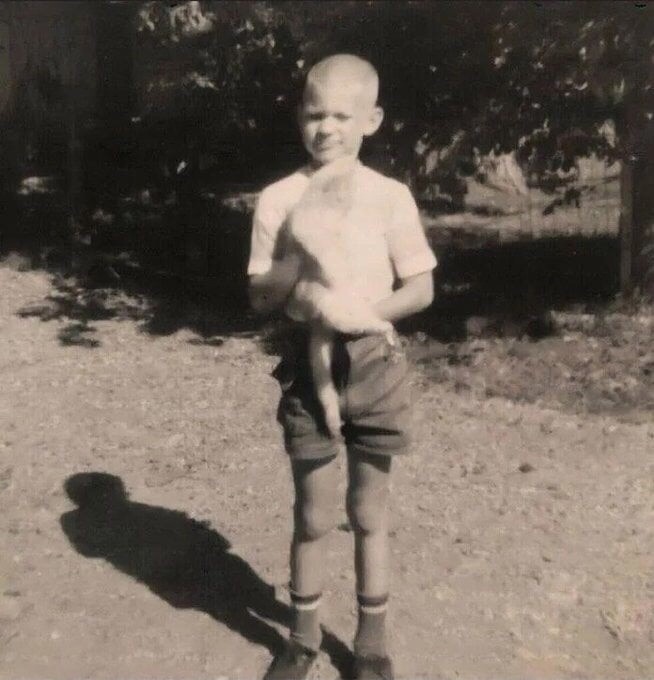
It was reliable. In its way, it was safe.


The Annihilation Rule

The stick figures were annihilated if they came too close.

Masters read this as a sign of Jeffrey’s relationship with intimacy — the danger of closeness, the way contact meant destruction. And he was right. But I think there is something else in it too.

When you are a child and the people closest to you are also the sources of the most unpredictability — when the arrival of a parent means tension rather than relief, when love comes wrapped in volatility — you learn, very early, that proximity is risk. You learn to keep a careful distance. You learn that the safest position is adjacent, not close.

Jeffrey encoded that knowledge into his game at nine years old without knowing that’s what he was doing. He made a world where the rule he was already living by — don’t get too close, it ends badly — was written into the physics of the universe itself. Not as a wound but as a law. Clean, legible, certain.

In Infinity Land, you always knew exactly what would happen if someone came too close. There were no surprises.


The Game That Didn’t Stay a Game

Brian Masters returned to Infinity Land again and again throughout The Shrine of Jeffrey Dahmer — not as a curiosity but as a key. He described Jeffrey’s adult descent as “descending with frightening rapidity down one of his own spirals into Infinity Land.” He described Jeffrey’s panic attacks in prison as spiralling “to the pit of despair, parodying his imaginary descents into Infinity Land as a child.”

The game, in Masters’ reading, never ended. It simply scaled up.

The spirals became real. The annihilation became real. The black hole at the centre — the nothingness Jeffrey had called soothing as a child — became the “deep, clawing depression” and the sense of “total, final hopelessness” that he described in prison as feeling “a bit like what hell is like.”

What had been shelter became structure. What had been comfort became compulsion. The rules of Infinity Land — closeness destroys, the spiral descends, the void awaits — did not stay on paper.

This is not to say the game caused what happened later. That would be too simple, and Jeffrey’s story resists simplicity at every turn. But it is to say that the interior world Jeffrey built at nine years old to make sense of a life he couldn’t control became, over the following decades, the template through which he understood everything. The logic of Infinity Land was the logic of his mind. He never entirely left it.


The Trial, and the Silence

In 1992, during Jeffrey’s trial, the defence psychologist Dr Judith Becker mentioned Infinity Land in her testimony. She described it gently, on gentle prompting from defence attorney Gerald Boyle. And then nobody pursued it.

Masters found this extraordinary, and so do I. Here was a window into the interior world of a man whose crimes the trial was trying to explain — a childhood game that encoded, with startling precision, his deepest beliefs about closeness, destruction, and the pull of the void. And it was left in limbo, as Masters put it. A curiosity not to be tampered with.

Perhaps it was too strange. Perhaps the courtroom had no framework for it. Perhaps nobody present understood what they were looking at.

We do.


A Child Who Built His Own World

Jeffrey Dahmer was a boy who needed safety and couldn’t find it in the world around him. So he made one. He drew it on paper with fleshless figures and tight spirals and a black hole at the centre, and he played it with his friend, and for a little while it was enough.

That is the most human thing in this entire story.

The boy who built Infinity Land was not building toward horror. He was building away from pain. He was doing what every frightened child does — reaching for some small corner of existence that he could control, that had rules he understood, that would not suddenly change.

He called it Infinity Land. He was nine years old. He was just trying to feel safe.
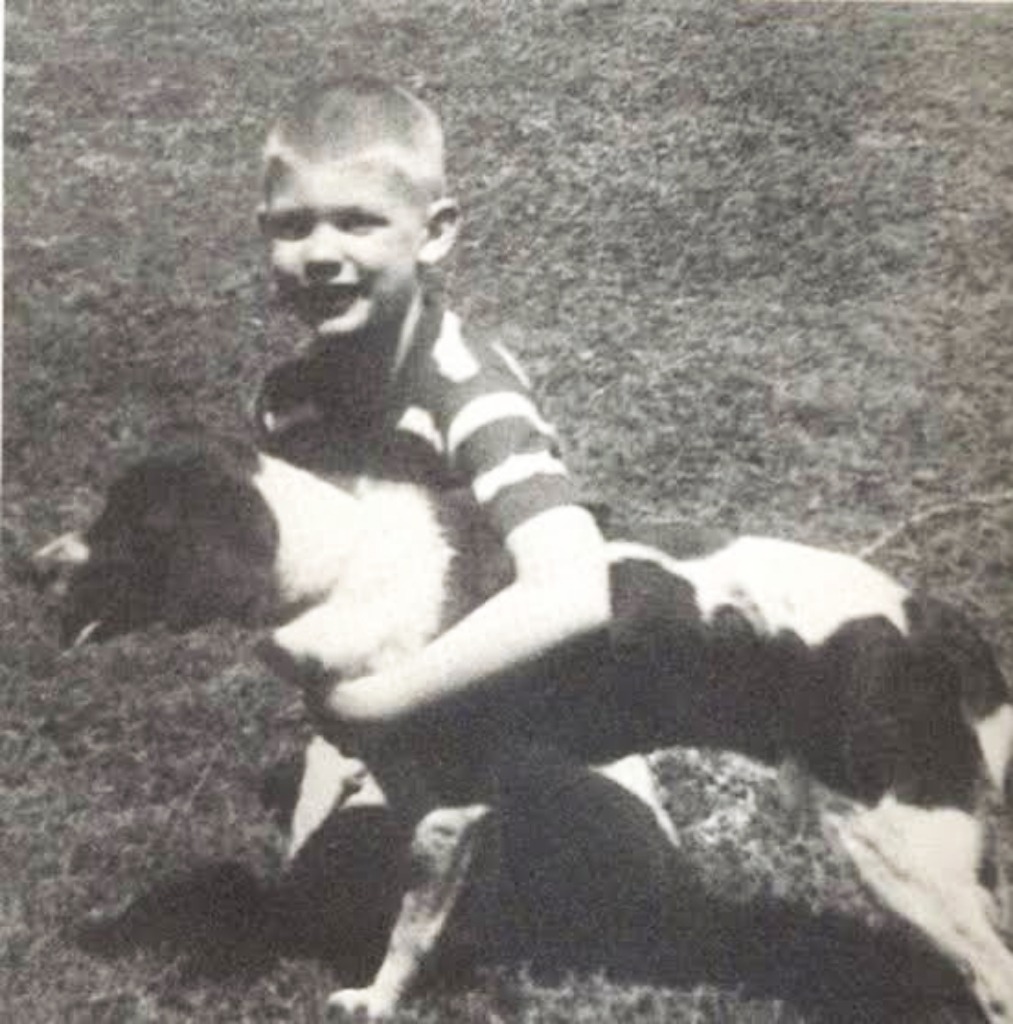

Sources: Brian Masters, The Shrine of Jeffrey Dahmer (1993); Lionel Dahmer, A Father’s Story (1994); Trial testimony of Dr Judith Becker, Milwaukee, 1992.
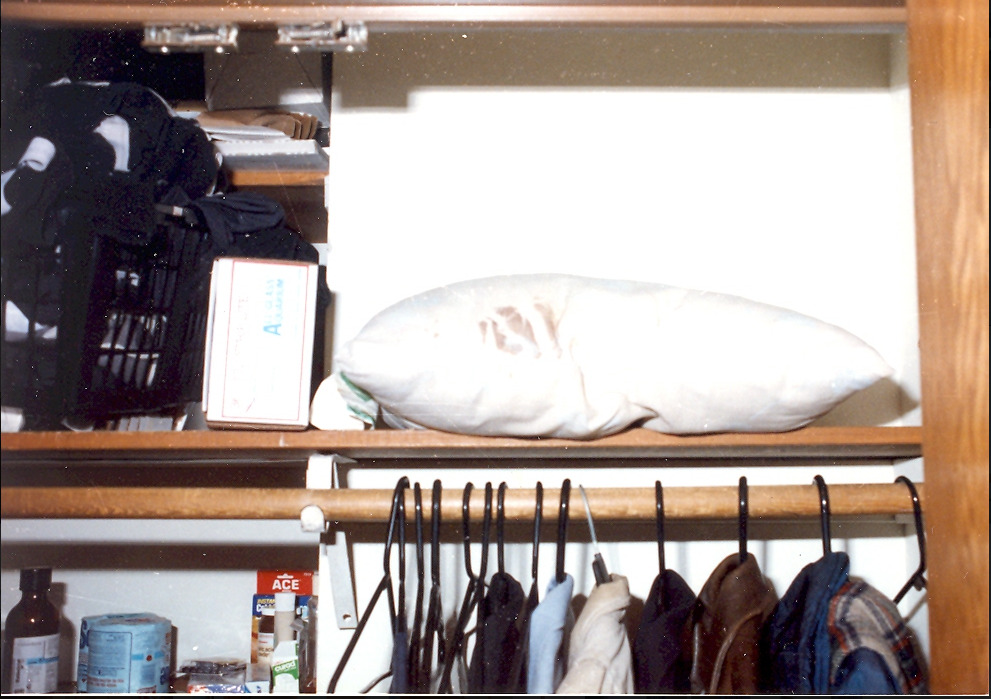
The Man in Apartment 213: Jeffrey Dahmer’s Private World

There is a version of Jeffrey Dahmer that true crime coverage almost never reaches. Not the crimes, not the psychology, not the diagnosis — but the small, private, ordinary things. The colour he loved. The roses he planted. The fish he tended. The films he watched on a Tuesday night. The ice cream sodas he shared with his father on Saturday afternoons.

These details do not diminish what he did. But they are part of who he was, and the memorial exists precisely to hold that whole picture — the human being alongside the horror.


Yellow

Jeffrey’s favourite colour was yellow. Not tentatively, not occasionally — yellow was a running thread through his life. Yellow roses in his grandmother’s garden in West Allis, which Lionel would later mention during a prison visit: “The roses look good, the ones you planted. The yellow ones and the red ones.” A yellow toothbrush. A yellow bike. The colour of something warm and specific in a life that was otherwise deeply dark.

It is such a small and human detail. Jeffrey Dahmer had a favourite colour, and it was yellow.


Flannel

Jeffrey had a fondness for flannel long before it became a cultural statement. His neighbour Vernell Bass recalled often seeing him in flannel shirts, and he can be seen wearing flannel in several photographs from his adult years. It was comfortable, unpretentious, practical — the kind of clothing that asks nothing of the world and expects nothing back. Very Jeffrey.


The Blue Topaz Ring

Jeffrey admired jewellery, especially rings. In the summer of 1987 he bought a blue topaz ring for $1,500 — a significant sum for a man working the night shift at a chocolate factory. He wore it for about a year before pawning it when he was short on cash. The detail is quietly touching: a man who rarely spent money on himself, who kept a spare and functional apartment, who bought a beautiful ring and wore it until necessity took it away.


The Garden

Jeffrey genuinely enjoyed gardening. Lionel mentions it among the things he suggested as possible career paths, noting that Jeff “seemed to enjoy it, at least so far as I had observed him when he worked in the yard around my house.” At his grandmother Catherine’s house in West Allis, he tended the garden himself — those yellow and red roses were his. The man who worked the night shift at a chocolate factory and came home to an apartment that police would later describe as a slaughterhouse also knelt in the dirt and planted flowers.


The Fish

The aquarium in Apartment 213 was not decorative. Jeffrey was genuinely interested in tropical fish — four books on their care were found in his apartment, and during a visit to the House of Correction before his murders resumed, he talked to Lionel with real animation about his “new-found interest in aquarium fish.” He fed them. He read about them. The fish were alive and tended in that apartment while other things were happening there that no one should know about.


Jodi

Catherine’s cat was named Jodi — an orange female tabby. During a visit to his grandmother’s house filmed on Lionel’s video camera, Jeffrey got down on the floor and played with her. He knew exactly how she liked to be brushed. “She’s always trying to be brushed,” Lionel said during a prison visit. “You know how she likes that.” And Jeffrey did. He remembered.

And at West Allis, neighbours recalled a quietly tender relationship with animals more broadly. One neighbour remembered Jeffrey standing near the trash container in the backyard with a beer, surrounded by cats. Not a couple. A lot. Following him all over the place.


Sundays

Jeffrey vacuumed his apartment on Sundays. He generally kept both his home and his person very neat and tidy — the apartment that police described as orderly when they first entered it was not an accident. It was maintained. The oriental rug, the fish tank, the incense. He took care of his space.

When he was depressed, however, this changed completely. He would stop shaving, stop bathing, go days without taking care of himself, and the apartment would fill with empty beer bottles. The tidiness was a signal of his interior state. When it collapsed, so had he.


Budweiser

Jeffrey’s favourite beer was Budweiser — “the king” of beers, in his opinion. The police inventory confirmed it: Budweiser cans among the bottles of rum and other beers. He had a brand loyalty, an opinion about it. In the midst of everything, he had a favourite beer and a reason for it.


McDonald’s

Jeffrey described himself as practically living off McDonald’s at various points in his life — a detail captured in a Thanksgiving home video recorded by his father, where he mentioned it casually. He also took refuge at the nearest McDonald’s during his senior prom — having attended for reasons that remain unclear, he slipped away during the evening and spent time at the fast food restaurant before returning. The image of him sitting alone at McDonald’s during his own prom is one of the loneliest small facts in the entire story.


Chocolate Ice Cream Sodas

Every Saturday afternoon, during the years the family lived in Ohio, Lionel and Jeffrey drove to nearby Barberton for their regular chocolate ice cream sodas — a habit they had carried over from their earlier years in Ames, Iowa. Two people in a car, a standing tradition, a flavour they both liked. Lionel describes it with the casualness of someone who couldn’t know how precious it would later seem.


He Took German

Jeffrey took German in high school. Given his German and Welsh ancestry on his father’s side, and the two years he would later spend stationed in Baumholder, West Germany, it was perhaps not a coincidental choice. A language that connected him to something. He also kept a Latin learning kit in his apartment years later — a man who quietly, privately, kept trying to learn things.


Drag Queens

Jeffrey enjoyed camp and the theatricality of drag queens. The performance, the artifice, the deliberate construction of an identity for public display — it is easy to see why someone who spent his entire life performing a version of himself for the world around him might find something genuinely appealing in an art form built on exactly that. The drag queen knows she is performing. The audience knows it too. There is an honesty in the artifice that Jeffrey’s own performances never had.


The Films

The police inventory of Apartment 213 found several videotapes. Among them were Blade Runner, Star Wars, and Exorcist III. The presence of Exorcist III is interesting — it is not the famous original but the third instalment, a quieter and more philosophical film about a detective confronting evil and the existence of God. Blade Runner is perhaps the most telling: a film about beings manufactured to feel but not permitted to live, about the question of what makes something human, about a man hunting creatures who simply want more life.

According to accounts from one of his surviving victims, Jeffrey was seen watching one of the Exorcist films repeatedly, in a trance-like state. Also among the tapes: a recorded episode of The Bill Cosby Show — just a TV programme he wanted to keep.


The Music

When Milwaukee Police searched Apartment 213, they found a specific and revealing cassette collection. The confirmed tapes included Mötley Crüe and Def Leppard’s Hysteria — but the full picture of his musical world goes further than the inventory alone.

Jeffrey was a genuine fan of Black Sabbath and Iron Maiden — the dark, dystopian weight of those bands was a constant in his isolated life. In Germany, stationed at Baumholder, he decorated his barracks room with an Iron Maiden poster. A young man far from home, putting something on the wall that was his.

Alongside the heavy metal sat classical music and opera, which he played at high volumes inside the apartment — documented by neighbours and investigators alike. And perhaps most surprisingly, among the cassettes recovered were New Age and nature sound recordings — relaxation tapes, ambient sounds, the kind of thing sold for meditation and sleep. The contrast is almost unbearable to sit with: the same person, the same apartment, the same shelf.

Also worth noting — for the record — is what was not there. Despite persistent internet rumours, Jeffrey was not a KISS fan. No significant collection of their music was ever documented in his possession. The myth appears to have no basis in the evidence.

The Bible study cassettes and Creation Science tapes sat on the same shelf as the metal and the ambient sounds. The contradictions were absolute and apparently untroubling to him. He listened to what he liked.


Hated Sticking People With Needles

Jeffrey briefly worked as a phlebotomist at the Milwaukee Blood Plasma Center in the early 1980s, drawing blood from donors. He disliked the job because he hated sticking people with needles. The irony is extraordinary — and the detail deepens when you learn that at some point during this period, he took a vial of blood up to the roof and drank it out of curiosity. He spat it out. He didn’t like the taste. A man who would later do things of incomprehensible violence had no appetite for blood and couldn’t bear to cause the minor discomfort of a needle. The compartmentalisation that defined his psychology ran in all directions.


The Army and the Cigarettes

Jeffrey started smoking in the army and came home smoking a pack a day. He had also, by then, acquired a broken eardrum — the result of a severe beating by several fellow soldiers, leaving him bloody and his hearing damaged. He suffered periodic bouts of earache from it for years afterward. The army was supposed to be a fresh start, urged on him by his father. It became, instead, two years of escalating alcohol abuse, violence visited upon him by the men he lived with, and a discharge for being unfit for service.


Lambs, Tennis and Saturday Science Fiction

Among the books found in his room as a teenager were science fiction novels and Alfred Hitchcock’s Horror Stories for Children. He played intramural tennis for three years at Revere High School. He was on the school newspaper for one year. He participated in 4H for two years with his father — raising lambs, building fences, planting gardens, hiking in the metropolitan parks around Bath. Jeffrey Dahmer raised lambs.

He liked, according to Lionel, games with highly defined rules and repetitious actions — nothing confrontational, nothing that required improvisation. He preferred hide-and-seek, kick the can, ghost in the graveyard. The structure of rules was always important to him.


Infinity Land

When Jeffrey was around nine years old, he invented a private game he called Infinity Land. He drew stick figures — deliberately fleshless, just bone — and gave them one rule: if they came too close to one another, they were annihilated. The spirals he drew alongside them descended toward a black hole. He shared the game with his friend David Borsvold, who also collected rocks and studied dinosaurs with him.

Brian Masters, in The Shrine of Jeffrey Dahmer, saw Infinity Land as a key that unlocked the whole interior world — the fleshless figures, the danger of intimacy, the pull of oblivion. He returned to it throughout the book as a recurring image for Jeffrey’s descent. It even came up at the 1992 trial, mentioned by Dr Judith Becker, and then passed over without anyone pursuing what it might mean.

We will return to this game in a dedicated article. It deserves its own space.


The Apartment Itself

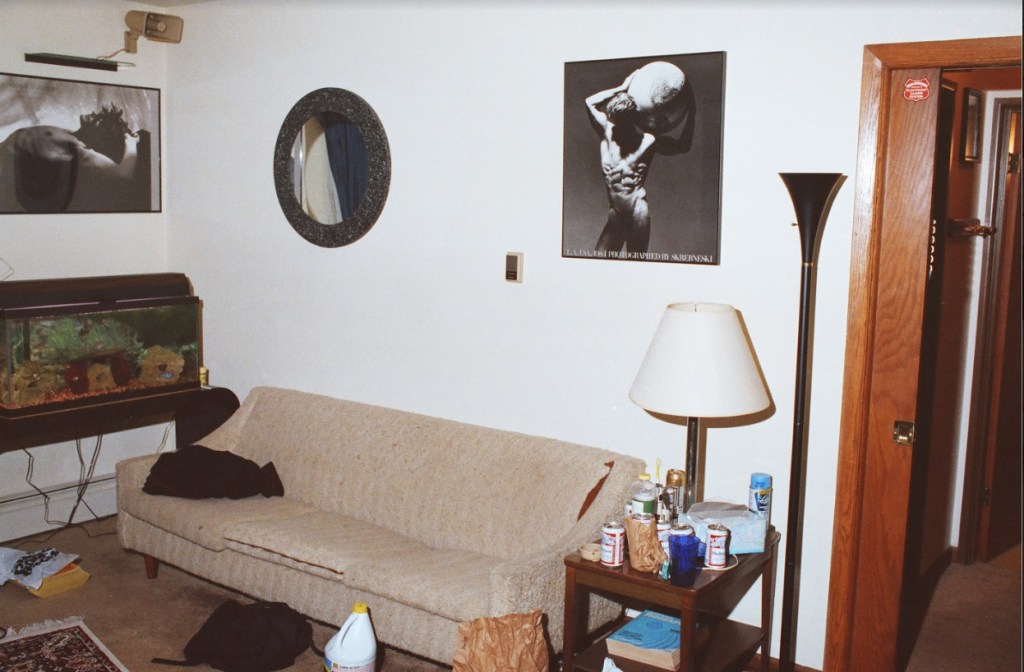
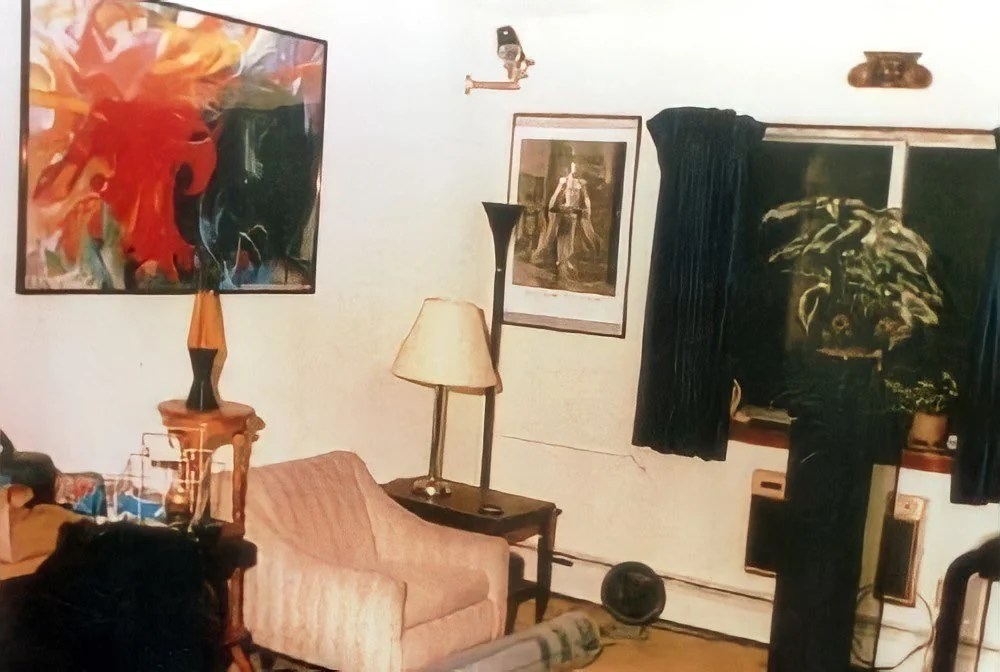
When police catalogued the contents of Apartment 213 after the arrest, the inventory ran to sixty-nine separate sheets. Among the horror there was also a life. Ornamental driftwood. Artificial peacock feathers. Two plastic griffins. An incense burner with incense sticks. A computer and a guide to learning DOS. A Latin learning kit. Bible study tapes and Creation Science cassettes alongside Numerology and the Divine Triangle. Fish food. An aquarium full of living fish.

He was working out — Anabolic Fuel, Vita, Yerba Prima supplements alongside Doritos and Ruffles chips. He had an Oral-B toothbrush and a contact lens cleaning kit and a tube of acne lotion. He had envelopes from Woolworth’s and a library card with his name on it. There was no air conditioning. When neighbours complained about smells coming from his apartment, he explained that his freezer had broken and meat had spoiled. He placed air fresheners throughout. The neighbours, for the most part, accepted this.

The floor plan below — reconstructed from police documentation — shows exactly how Jeffrey’s world was arranged. The aquarium sat in the living room, close to the couch where he spent his evenings. The upright freezer and refrigerator occupied the kitchen area. The bedroom was separate, modest. Everything in its place in a space that was, outwardly, unremarkable.

Jeffrey Lionel Dahmer's Apartment 213 Floor Plan
Floor plan of Apartment 213, 924 North 25th Street, Milwaukee — reconstructed from police documentation. © 2018 Steven David Lampley.

Two Sentences

At some point Jeffrey wrote down two sentences, side by side:

“When my father came home I was happy.”

“When my mother came home, I was watching TV.”

That is the entirety of it. No elaboration. The contrast is so precise and so devastating that it requires nothing else.


“She’s Lived in That House a Long Time”

When asked, at some point, whether he loved his grandmother, Jeffrey replied: “Yes, she’s lived in that house a long time.”

It is one of the strangest answers imaginable to that question. Not warmth, not a memory, not an expression of feeling — just the duration of her presence in a place. And yet it was clearly meant as an affirmation. He said yes. He just couldn’t, or didn’t, translate it into the emotional register that the question expected. His grandmother was part of the permanent furniture of his world. That was love, in his language.


“Much, Much Better”

Late in his prison years, Jeffrey said: “It would have been better if I’d just stuck to the mannequins. Much much better.”

It is as close as he ever came, in a single sentence, to expressing regret for the shape his life had taken. The mannequins — which he had been fixated on since adolescence, visiting department stores to be near them — represented the version of his compulsion that could have existed without victims, without horror, without the destruction of seventeen lives. Much much better. The repetition is not rhetorical flourish. It sounds like someone saying it to themselves, quietly, in the dark.


What It Means

The point of gathering these details is not to soften the reality of what Jeffrey did. It is to resist the simplification that makes monsters of people we don’t want to understand. Jeffrey Dahmer had a favourite colour and planted roses and read science fiction and raised lambs and vacuumed on Sundays and drove to get chocolate ice cream sodas with his father and got down on the floor to play with Jodi the cat and watched Blade Runner alone at night in his apartment with no air conditioning.

All of this was true at the same time as everything else was true.

That is the hardest thing to hold. And it is the most important.


Sources: Lionel Dahmer, A Father’s Story (1994); Brian Masters, The Shrine of Jeffrey Dahmer (1993); Milwaukee Police Department Inventory, July 1991; IMDB.