
There is a stretch of Jeffrey Dahmer’s life that almost nobody writes about. It runs from December 1981 to September 1988 — nearly seven years — and it takes place in a small, tidy house at 2357 South 57th Street in West Allis, Wisconsin, a suburb of Milwaukee. It was the house Lionel Dahmer had grown up in. It belonged to his mother, Catherine.
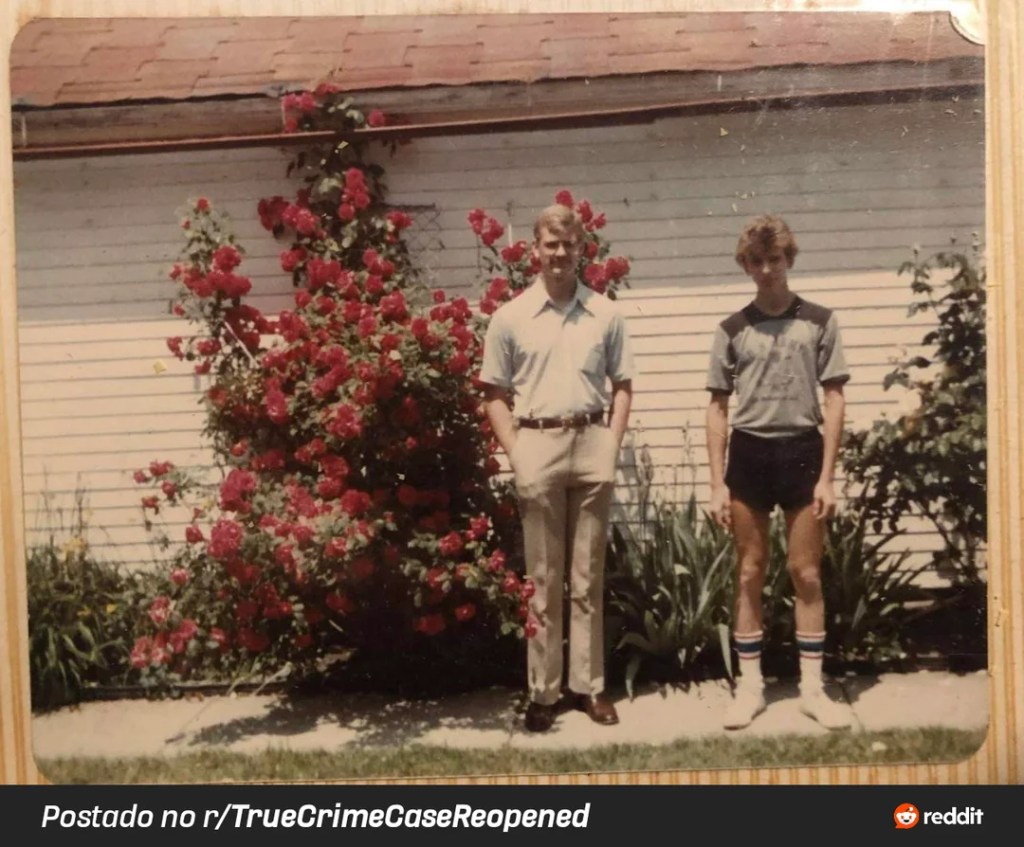
The reason it goes unexamined is easy enough to understand. Nothing about it fits the story people expect. There is no squalor here, no isolation, no absent family. There is a grandmother who cooked his meals and washed his clothes, a church on Sundays, a lawn to mow, a garden, a steady job. By any ordinary measure these were the most stable years of Jeffrey Dahmer’s adult life.
Three men were murdered in that house.
Both things are true, and the difficulty of holding them together is precisely why the period deserves attention. West Allis is where the comfortable explanations fail.
Catherine
Catherine Dahmer has been reduced, in most tellings, to a location — the grandmother’s house, the grandmother’s basement. She was a person, and the sources are unusually clear about what sort.
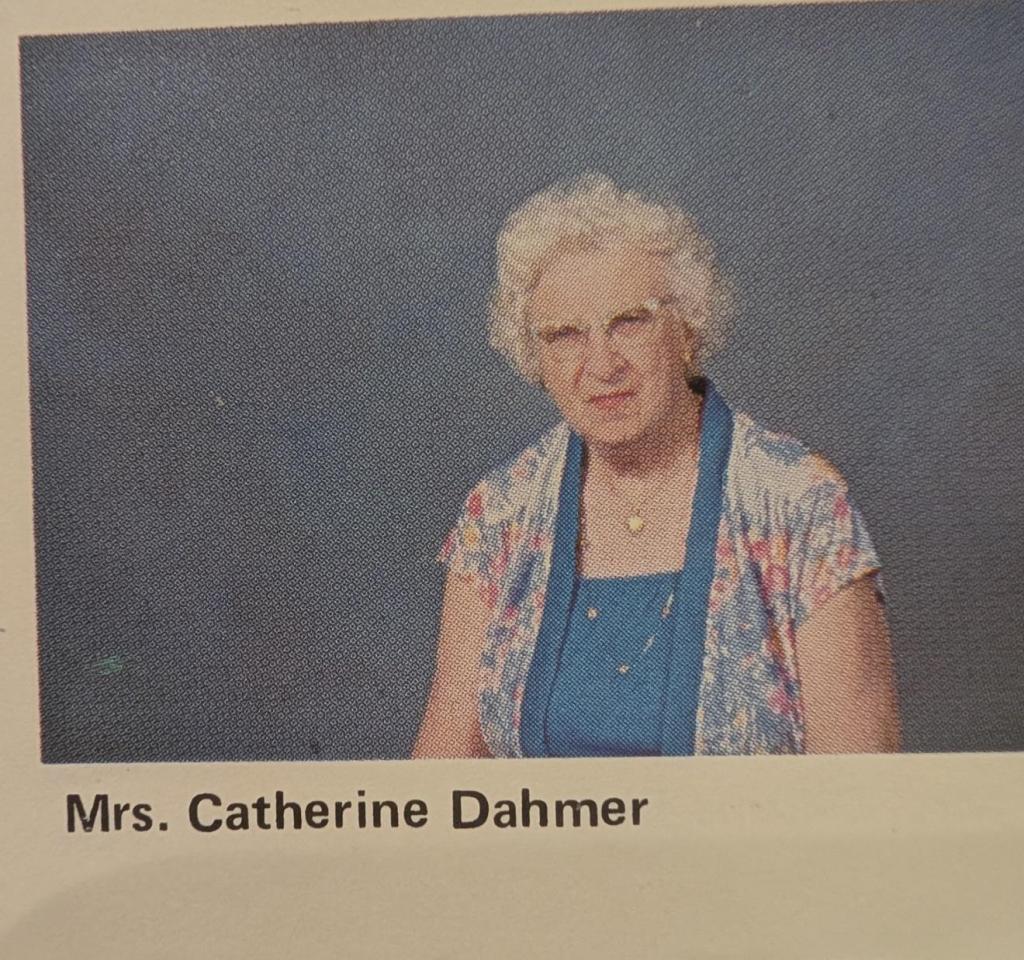
She was a lifelong Presbyterian who attended church every Sunday. Both Lionel’s memoir and Brian Masters’ account describe the same woman: kind, patient, unfailingly decent, working from the old-fashioned assumption that people will behave well if they are treated well. She was, by 1981, elderly and lonely, and the arrangement suited her as much as it suited anyone. Jeffrey would have room and board; in return he would help around the house and keep her company.
Asked directly whether he loved her, Jeffrey could not manage the word. He said instead that she had lived in that house a long time. It is a strange, sidestepping answer, and Masters reads it as an inability to make emotional contact rather than an absence of feeling — Jeffrey knew perfectly well that she was lovable and said so freely, but would not apply the verb to himself. Describing her, he had no such difficulty. He called her, in his own words, what you could call a perfect grandmother, and listed the qualities: kind, church-going, easy, supportive.
Masters makes an observation that is worth sitting with. Catherine Dahmer could have been a genuinely formative influence on her grandson, had he come to her earlier. By the time he arrived he was twenty-one, and it was too late. He could recognise her goodness. He could not absorb it.
What the house provided
He was sent there in the winter of 1981 because his father and stepmother had run out of options. He had been discharged from the army for drinking, sent to Ohio, arrested at a hotel within a fortnight for public drunkenness, and could not be trusted alone in the house or with the car. West Allis was a temporary measure. Lionel put him on a bus expecting him back within weeks.
Three months later, when Lionel and Shari drove up to visit, Jeffrey had decided he was staying. His father found him happier than he had been at any point since the army — mothered, fed, laundered for, with his days given a shape.
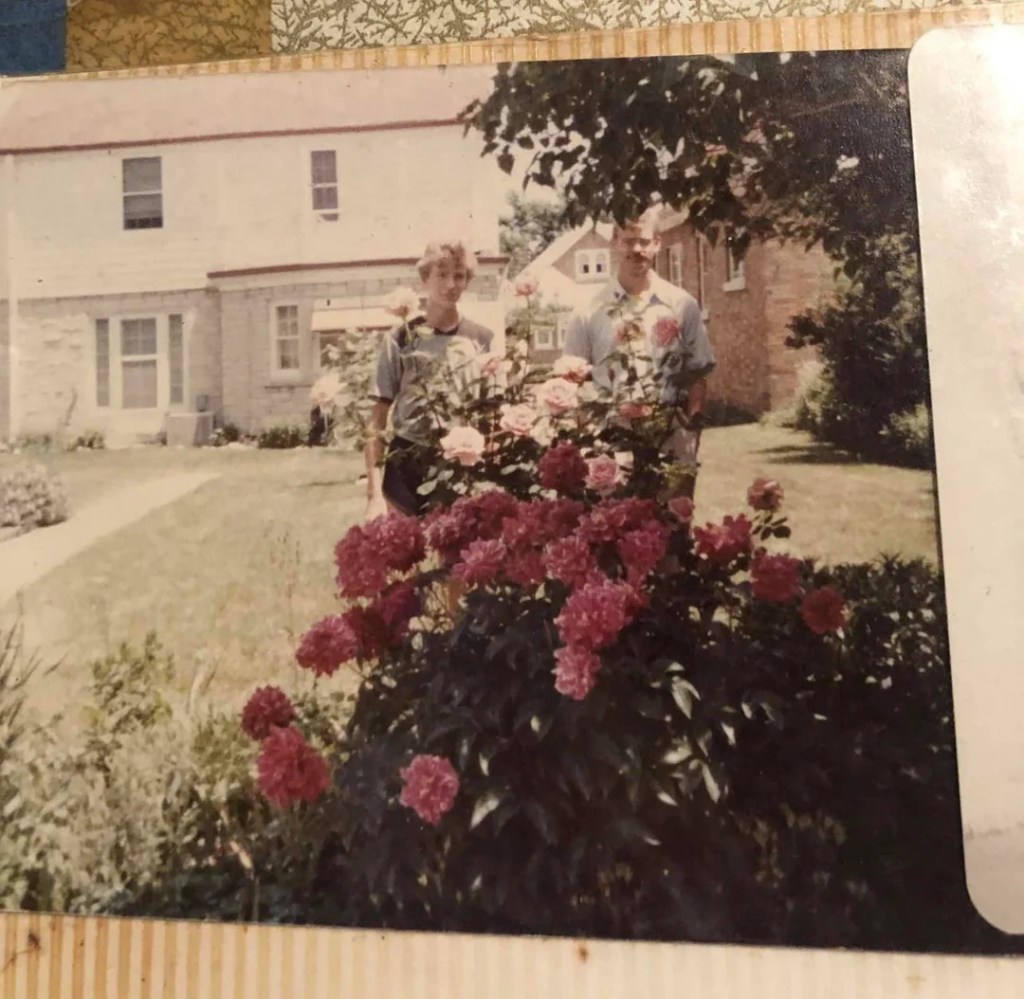
And that shape held for a while. He worked in the garden and mowed the lawn. He helped with the shopping and the cleaning. He went to church with his grandmother. He found work as a phlebotomist at the Milwaukee Blood Plasma Center, drawing blood — a skill he had learned as an army medic. He attended Alcoholics Anonymous. A young woman in the congregation took an interest in him, and his father encouraged him to call her. He never did.
After the plasma centre let him go — ten months, poor performance — there was a stretch of unemployment that ought to have been dangerous and was not. Masters describes something close to a genuine remission during 1982 and 1983: Jeffrey read the Bible alone as well as with his grandmother, gave money to street people, sent donations to missionaries. He was consciously trying to smother something in himself, and for a period it appeared to work. The memory of Steven Hicks receded. He imposed rules on his own body and kept them.
This is the part of West Allis that resists a simple reading. The conditions were exactly those that had ruined him before — no job, no structure, time on his hands — and this time they did not. What made the difference was a household: someone expecting him at meals, someone noticing when he came in, somewhere to be on a Sunday morning.
In January 1985 he was hired as a mixer at the Ambrosia Chocolate Factory, working the third shift, eleven at night until seven in the morning, six nights a week. He began paying his grandmother three hundred dollars a month in rent. His early performance reviews there were not merely adequate but warm — resourceful, congenial, neat, an asset to his department.
By every external signal available to his family, this was a young man slowly assembling a life.
What the record shows underneath
The external signals were wrong, and the documentation of how wrong is unusually complete.
On 7 August 1982, at the Wisconsin State Fair, he was arrested for exposing himself in a crowded area near the Coliseum. He was convicted twelve days later and fined. Two details are worth noting. The first is that the arresting officer’s account describes exposure rather than the urination Dahmer claimed. The second is that when asked for his address, he gave Bath, Ohio — his father’s house — rather than West Allis. Whatever else was disintegrating in him, he did not want his grandmother’s name on the charge sheet.
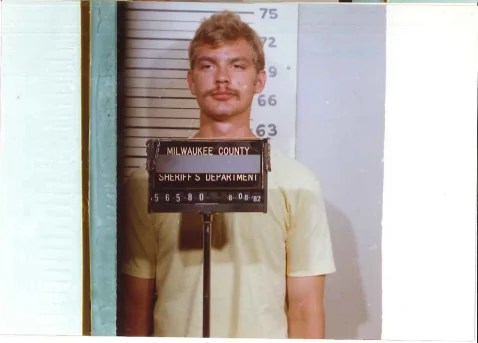
On 8 September 1986, two twelve-year-old boys reported a man masturbating by the Kinnickinnic River Parkway. Their description was accurate enough that a patrol officer stopped Dahmer nearby within the hour, and both boys identified him. He was charged with lewd and lascivious behaviour and indecent exposure, and received probation and court-ordered counselling.
Between and around these two arrests, a third thread runs. In 1985, sitting in the West Allis Public Library, a stranger dropped a note in his lap propositioning him. He did not act on it. But the sources — and Dahmer himself, repeatedly — identify that moment as the hinge. His defence counsel would later call it the critical moment of his life. What had been contained by Bible study and self-discipline began, from that point, to erode.
The court-ordered therapy after the 1986 arrest produced its own record. He kept every appointment and turned his chair away from the therapist, sitting in silence for the full fifty minutes. The one session where he spoke at any length was about the Christmas presents he had bought for his grandmother. When the therapist tried to open up the relationship, he stopped talking.
What they saw, and what they did with it
This is the most valuable material West Allis offers, because it is a record of ordinary people responding reasonably to warning signs and getting nowhere.
Catherine found a full-size male mannequin in his bedroom closet, fully dressed. She could not imagine where it had come from or why. Challenged, Jeffrey said calmly that he had stolen it from a shop on a dare, that he had liked the clothes, and that he had already thrown it away. The matter, as far as he was concerned, was closed.
She found a gun under his bed. Jeffrey described it as a target pistol; when his father came to look, it was a .357 Magnum with a two-and-a-half-inch barrel. A family conference followed. Lionel took the gun away, had a friend sell it, and gave his son the proceeds.
She noticed he was gone for whole weekends. She was stopped on her own staircase one morning and told to go back up because he was not dressed, and later saw him steering a badly drunk man toward the bus stop. She came home from Sunday service more than once to a smell in the garage she could not place and did not believe was the cat box.
Each time, Jeffrey had an answer ready. The odours were chemical cleaners. They were chicken parts he was experimenting on with bleach and acid. When Lionel flew in to investigate personally and pressed him, the answer became a dead raccoon collected from a gutter. Lionel searched the garage and the basement and found nothing but stored lamps, a projector, Christmas decorations, firewood, a washer and dryer.
The pattern in these exchanges is worth naming precisely, because it is not stupidity. Catherine identified every genuine warning sign in the house. She reported them all. Crucially, she often reported them to Shari rather than to Lionel, saying she did not want to burden him — which meant the person best placed to act received the information at one remove, filtered and softened, and always after the fact.
And Lionel accepted each explanation in turn. His memoir is unsparing about this. He describes allowing himself to believe there was a line in his son that would not be crossed, a boundary between self-destruction and harm to others. He describes conversations conducted entirely in half-sentences, both of them maintaining a wall neither would name. As he puts it: this dreadful silence we called peace.
It is the most honest sentence anyone connected to this case has written.
The murders
None of the above should be read as a portrait of domestic life with the deaths as an appendix. They happened in that house, while all of it was going on.
In September 1987, Dahmer killed Steven Tuomi at the Ambassador Hotel in Milwaukee, bought a large wheeled suitcase from a Woolworth’s at the Grand Avenue Mall, and brought the body back to West Allis by taxi while his grandmother slept. The driver helped him load the case.
On 17 January 1988, he met James Doxtator at a bus stop and brought him back to the house. Jamie had told his mother that if he ever left home he would keep in touch. He was reported missing the following day.
On 27 March 1988, he killed Richard Guerrero, aged twenty-three, in the same house. Guerrero’s father reported him missing two days later and placed notices with his son’s photograph in the local press. Nothing came of them.
On 25 March 1989 — by which time Dahmer had moved out and moved briefly back, awaiting sentencing — he met Anthony Sears outside a bar. A friend of Sears’, uneasy, drove them both to West Allis and extracted a promise that Sears would call within a couple of hours so he could collect him. Sears was killed at the house that night. His friend went back the next morning to look for him and did not know which door to knock on.
Three men died in Catherine Dahmer’s home. A fourth was carried into it in a suitcase.
Being eased out
The end came through an accumulation rather than a discovery.
In 1988 a man named Ronald Flowers was brought to the house, drugged, and survived. That incident, along with the late-night arrivals, the drinking, and the general uneasiness about his guests, prompted a family conference — Lionel, Catherine, and Lionel’s sister Eunice. Dahmer’s own description of the outcome was that he was sort of eased out. Two decisions came from that meeting: he would find his own place, and he would seek help for his drinking. Lionel took him to Family Services on West Highland Avenue that April. The alcohol programme lasted four sessions.
There was one further factor. Catherine had found objects in his room — statues of griffins, a copy of The Satanic Bible, black lights — arranged in something like an altar. For a lifelong Presbyterian this was not eccentricity but horror. Jeffrey’s account was that he was merely curious about the unknown and that none of it meant anything.
He moved out on 26 September 1988. The structure that had held him — imperfectly, incompletely, but genuinely — was gone.
On the first day in his new apartment he approached a thirteen-year-old boy, Somsack Sinthasomphone, offered him money to pose for photographs, drugged him, and assaulted him. The boy escaped, was hospitalised, and led police back to the apartment. Dahmer was arrested at the chocolate factory.
The first day.
What West Allis actually tells us
The temptation with this period is to reach for one of two easy conclusions: that the love of a good woman nearly saved him, or that it made no difference at all. Neither survives contact with the record.
The structure demonstrably worked. Employment, a household, a routine, someone waiting up — these produced the longest stretch of relative stability in his adult life, and the sources show him actively using it, reaching for religion and discipline as tools against something he knew was in him. That effort was real. It was not sufficient.
And the failure was not for want of noticing. Catherine Dahmer saw the mannequin, the gun, the absences, the drunk stranger, the smell in the garage. She reported all of it. The system around her — a father seven hours away who wanted to believe his son, a family conference that removed one pistol, four sessions of alcohol counselling, a therapist facing the back of a chair — absorbed every one of those signals and converted them into nothing.
She spent her last years in a nursing home with dementia, searching at night for a staircase that was not there. Jeffrey wanted to write to her from prison, to tell her he loved her and that he was sorry for what he had brought on her. He was not allowed a pen, in case he used it on himself.
Sources: Lionel Dahmer, A Father’s Story (1994); Brian Masters, The Shrine of Jeffrey Dahmer (1993); Milwaukee County court records; West Allis Police Department arrest reports as cited in Masters.

 Jeffrey Dahmer Memorial