
We have written before about Infinity Land, the game Jeffrey Dahmer invented at nine years old — fleshless stick figures moving across a drawn landscape, annihilated if they came too close to one another, surrounded by spirals descending toward a black hole at the centre. That article argued the game never really ended; that it scaled up.
This is about what it scaled into.
What he was building
In the summer of 1988, Jeffrey bought a long black table and two statues of griffins. He was twenty-eight and still living in his grandmother’s house in West Allis. The purchase was not decorative. He had been turning an idea over since the previous year, and these were its first physical components: the table would be the altar, and the griffins — eagle-headed, lion-bodied, traditionally guardians of treasure — would protect it.

The design, as he described it after his arrest, called for skulls arranged along the table and two complete skeletons standing at either end. Incense. Blue lighting. He would sit in front of it.
He never finished it. When the apartment was searched in July 1991 police recovered the table, the griffins, eleven assorted heads and skulls, and the two skeletons — one from Ernest Miller, one from Oliver Lacy, whom he had defleshed specifically for the purpose. He had also looked into buying a freeze-drying machine, wanting to preserve bodies whole rather than reduce them to bone, and abandoned the idea when he found one large enough would cost around thirty thousand dollars.
The griffins were damaged before the end. One of the men he attacked fought back hard enough to knock the table and send them over. He kept the broken statues anyway.
Why it is the same object
Set the temple beside the game and the correspondence is close enough to be uncomfortable.
Infinity Land was populated by figures stripped of flesh — not people with contours, but bone. The temple was to be built from skulls and skeletons: the same reduction, carried out on real bodies.
In the game, the figures were arranged across a landscape and destroyed if they came too close. In the temple, the skulls were to be placed along a table at fixed intervals, permanently positioned, permanently apart. The proximity rule survives intact — it simply becomes a seating plan.
The game had a black hole at its centre, and Jeffrey described that nothingness to a prison therapist as soothing rather than frightening. The temple had a black table at its centre, and he described what he wanted from it in almost the same register. He called it a place where he could feel at home.
And in both, the essential feature is authorship. The nine-year-old drew the borders and decided the physics of his world. The adult was constructing a room in which he set the arrangement, the lighting, the rules, and the population — a space where nothing could arrive unannounced, change its mind, or leave.
The child made a world he controlled because he could not control the one he lived in. The adult was still making one. He was simply using different materials.
What the court could not decide
The temple became one of the strangest disputes of the 1992 trial, and the disagreement was not really about the facts.
For the defence, Dr Carl Wahlstrom pointed to it as evidence of a mind operating outside reality, citing Jeffrey’s intention to build a power-bestowing shrine alongside his attempts to create compliant companions as reaching psychotic proportions.
For the prosecution, Dr Park Dietz argued that it demonstrated nothing of the kind. Jeffrey did not truly believe the shrine would give him power, only that it might put him in contact with some spiritual force — which made it superstition rather than delusion, and superstition is not madness.
Dr George Palermo went further and simply declined to believe the temple existed as a plan at all, saying Jeffrey had mentioned it to him in passing and that he had reason to doubt it.
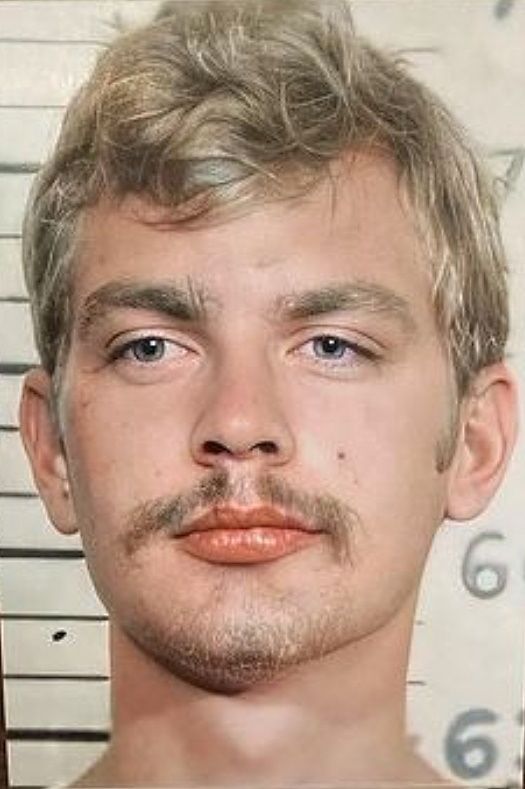
Brian Masters draws the distinction more usefully than any of them. A false idea is one that is factually wrong. A delusional idea is one that wrongly assigns power. The shrine was not a false idea — the table was real, the griffins were real, the skulls and the skeletons were real, and they were all found in the apartment. What was delusional was the expectation that sitting before them would confer anything at all.
He also places it in a longer tradition, and the comparison is bracing rather than flippant: churches across Europe have been built around body parts. Reliquaries hold bones. The faithful pin representations of damaged limbs to shrines in the belief that proximity to holy remains transmits power. The impulse to arrange the dead and draw strength from the arrangement is not, historically, a rare one.
What separates Jeffrey’s version is not the logic. It is that he supplied the relics himself.
Why a table
There is a further reading of the temple that belongs to Brian Masters, and it should be introduced as what it is: an interpretation, not a documented fact. We think it is worth stating anyway, because it asks a question nobody else thought to ask.
Why a table?
An altar, if you were designing one, would not obviously be a table. It might be lower. It might be smaller, or ornate, or raised. Jeffrey chose a long, flat, waist-height surface — and the reason that matters is what he actually used it for before any skull was ever placed on it. He draped the bodies of the men he killed across it. He arranged them on it and photographed their chests, abdomens and genitals. He made the first incision on it, before the dismemberment moved to the bathroom.
It was, functionally, an operating table.

On 19 March 1964, at the age of four, Jeffrey underwent a double hernia operation. We have written elsewhere about the psychology of early surgical trauma — that children under six suffer disproportionately because they cannot understand what is being done to them, that they become objects in the hands of strangers, that their emerging sense of autonomy is abruptly cancelled and nobody explains why. Afterwards, in pain that would have felt exactly like it, he asked his mother whether his penis had been removed. He told Dr Judith Becker about that question nearly thirty years later.
Masters’ argument is that control was taken from Jeffrey on an operating table at four and that he spent his adult life trying to take it back — that with his victims he was finally the surgeon rather than the passive child, handling their insides as his had been handled, cutting where he had been cut. On that reading, the black table is not an incidental piece of furniture. It is the operating table, rebuilt and owned, with him standing on the other side of it.
We flag the obvious limit: this is an interpretive claim, and Masters himself concedes it cannot be generalised — a great many children have hernia repairs and become nothing in particular. It explains rather more than a coincidence should, which is a reason to take it seriously and also a reason to be careful with it.
What is documented is narrower and stranger. At the 1992 trial, Dr Becker raised two things that had never been publicly examined: the hernia operation, and a childhood game called Infinity Land. Gerald Boyle prompted her gently on both. Neither was pursued.
Two keys, offered in open court, and nobody turned either one.
The thing worth saying plainly
There is a reading of the temple that treats it as the final proof of monstrousness — the horror-film altar, the serial killer’s trophy room. That reading is available and it is not entirely wrong.
But it misses what the Infinity Land parallel makes visible. The temple was not conceived as a display of what he had done. It was conceived as a place to sit. He described wanting to be in front of it, in the light and the incense, in the company of the dead — the only people, as he saw it, who had known him as he actually was.
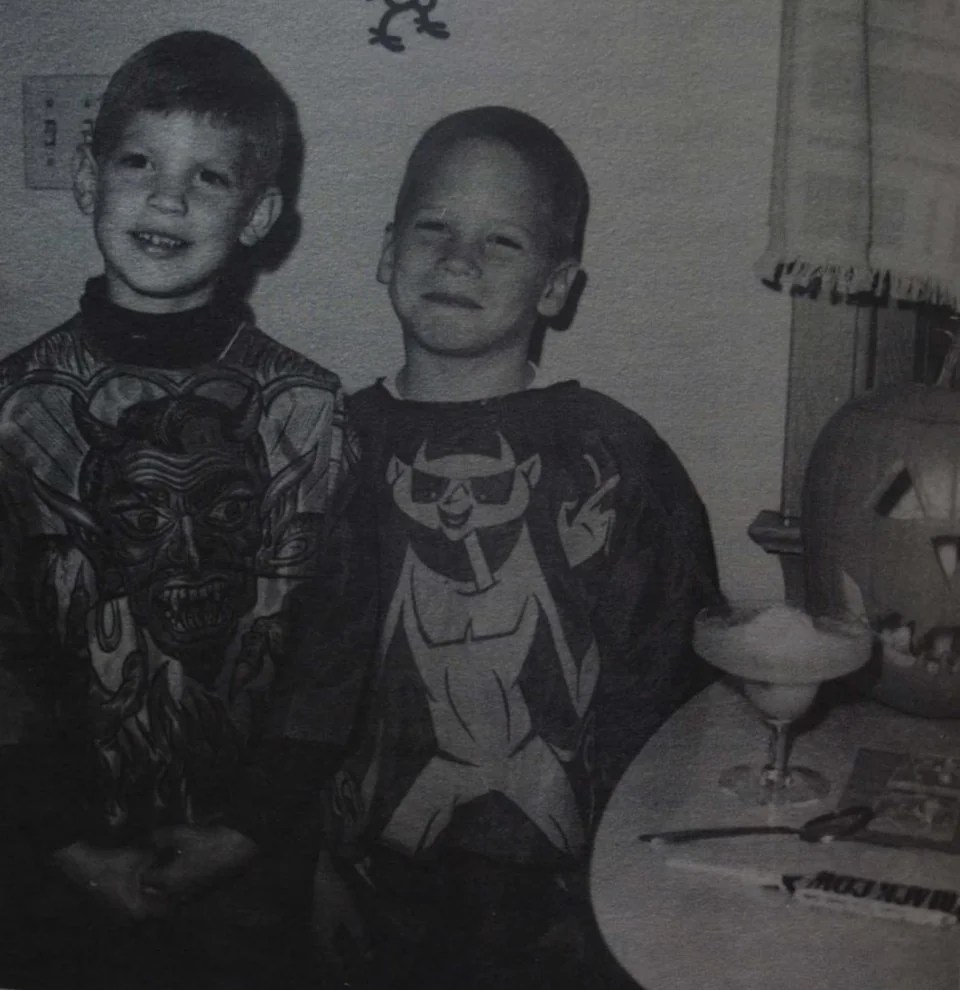
A child who cannot find safety in the world builds a small one he can govern. That is ordinary. Nearly every frightened child does some version of it, and the ones who do are not marked for anything.
What is not ordinary is continuing to build it at thirty-one, out of people.
The continuity is the disturbing part, and it is also the part that resists any comfortable conclusion. The same need runs from the drawn spirals to the black table. The need itself was never the problem. What he was willing to do to satisfy it was.
Sources: Brian Masters, The Shrine of Jeffrey Dahmer (1993); Lionel Dahmer, A Father’s Story (1994); trial testimony, Milwaukee County Circuit Court, 1992; Milwaukee Police Department inventory of Apartment 213.

 Jeffrey Dahmer Memorial