
Near the end of A Father’s Story, his own memoir, Lionel Dahmer arrives at the only piece of advice he says he can offer any father who comes after him. Not a lesson, not a warning sign to watch for — just three words, repeated: “Take care, take care, take care.” It is the closest thing to a conclusion a man can reach after spending a book, and a life, unable to answer the question underneath it: what did I miss, and could I have stopped this?
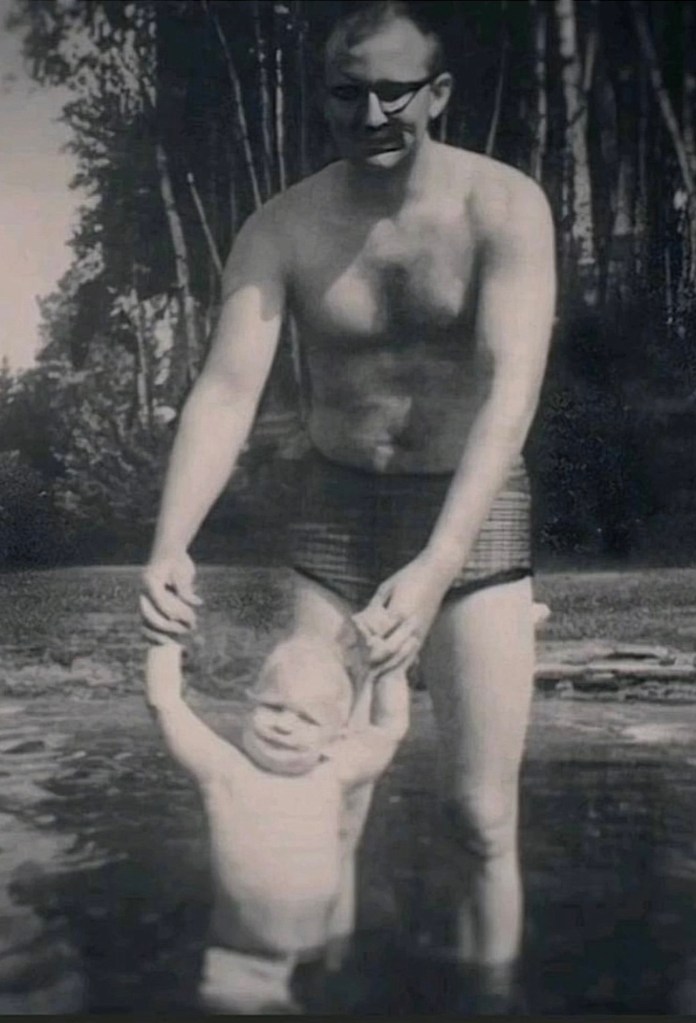
This is not the story of Jeffrey’s crimes. It’s the story of the man who raised him, watched him drift further from reach with every passing year, and has spent every year since trying to understand where he failed to hold on.
A boy who looked like himself
Lionel recognized his son in a mirror before he ever recognized danger in him. Jeff was a shy, awkward child, and Lionel had been exactly that kind of child too — inordinately shy, easily disoriented by change, socially unable to read the room. When Jeff’s first-grade teacher described a boy who paced the schoolyard alone and did “nothing” at recess, Lionel absorbed it through the lens of his own childhood: a phase, an adjustment, something a person could learn to live with, the way he had.
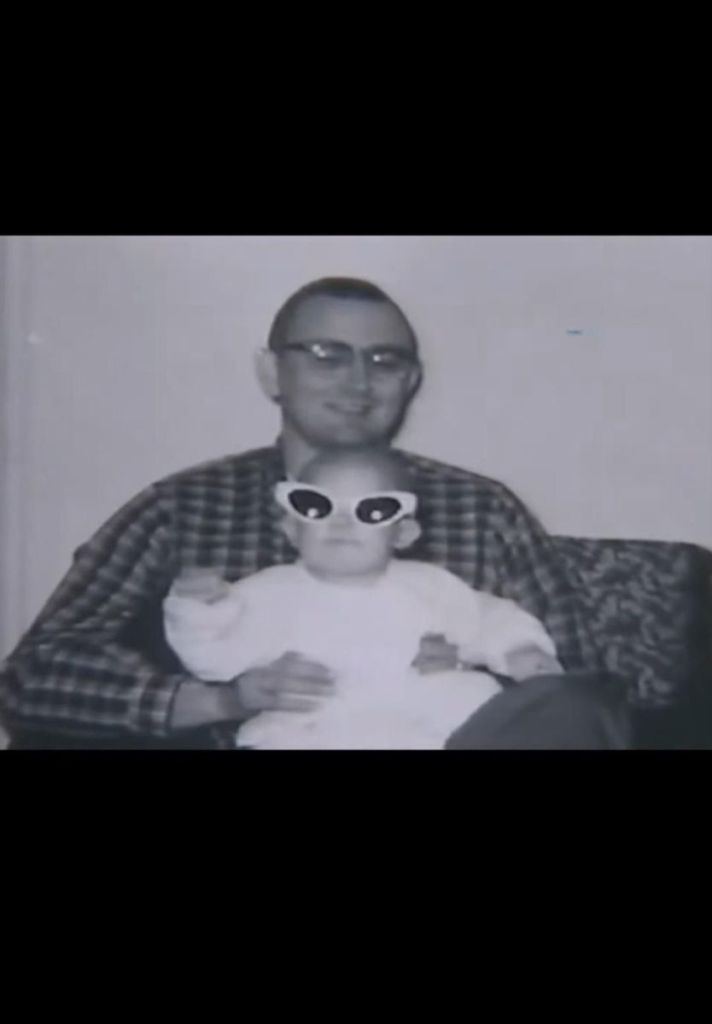
That identification cuts through the whole first half of the book. “I saw no reason why my son could not learn to live with them, too,” he writes of Jeff’s early isolation — and admits, decades later, that he was wrong. “While I had suffered from shyness, Jeff had begun to suffer from a near total isolation. While I had known the power of an odd fascination, Jeff had begun to move into the grip of a profound perversity.” The two conditions looked identical from the outside. Lionel now believes they were never the same thing at all.
One memory recurs for him more than any other. Coming home from work, he found Jeff alone at the edge of their lawn after a rainstorm, sobbing, arms flailing, mired in mud, their dog barking wildly around him — a small boy in a full-scale panic at the feeling of being pulled down into the earth. Lionel still asks himself, all these years later, whether that was a moment he should have read differently. He never resolves the question. He simply keeps returning to it.
The house he left him in
By 1978, Jeff’s parents’ marriage had collapsed entirely. Custody went to Joyce for David, the younger son; Jeff, nearly eighteen, was old enough to be left out of the arrangement altogether — which meant, for a stretch of that year, he was effectively left alone. Lionel had moved into a motel. Joyce and David eventually left too. Jeff stayed in the family house by himself.
When Lionel’s new partner, Shari, first walked through that house, she found it in poor shape — little food, a broken refrigerator — and, on the coffee table in the family room, a pentagram drawn in chalk. Lionel didn’t understand what he was looking at until later: Jeff had been performing séances alone in the house, trying to contact the dead.
Lionel moved back in immediately once he learned Jeff was alone. But the sequence itself — a boy left in an empty house for an unspecified stretch of a collapsing marriage, filling the silence with attempts to summon spirits — sits in the record as one of the more quietly disturbing details of his adolescence, and Lionel’s own book puts it there without much comment, simply narrated as one more thing that happened.
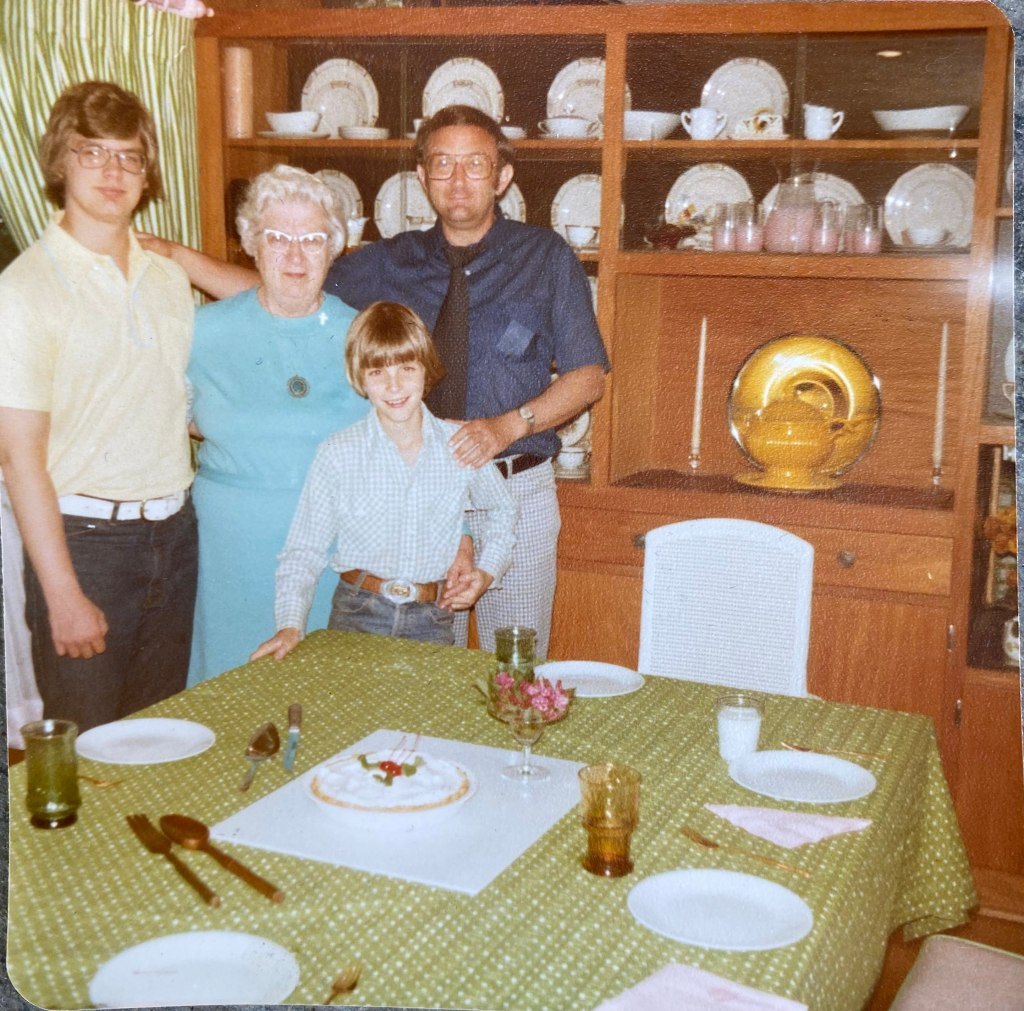
Not long after, Lionel and Shari drove Jeff to Ohio State University, a college he’d shown no enthusiasm for and was attending, by his father’s own account, “more or less on my orders.” What Jeff packed for the trip has stayed with Lionel: no books, no clothes anyone would expect of a freshman, but a snakeskin from Boy Scout camp and two photographs of his dog.
What a father chooses not to see
The most difficult passage in A Father’s Story isn’t about a single incident. It’s Lionel’s accounting of everything he didn’t see, laid out in a single unbroken run of admissions: he hadn’t recognized Jeff’s alcoholism until Shari found him drunk in his room. He hadn’t thought his son a thief until his own mother discovered a stolen mannequin in Jeff’s closet. He hadn’t understood Jeff was gay until information surfaced after an arrest for molesting a child — despite years of no dates, of taking a “friend” to prom, of never once expressing interest in a woman. And he had used the word “crazy” about his own son more than once, he admits, always in frustration, never once considering that he might mean it literally.
“It was a level of obliviousness, or perhaps denial, that was scarcely imaginable, and yet it was real,” he writes. “It was as if I had locked my son in a soundproof booth, then drawn the curtains so that I could neither hear nor see what he had become.”
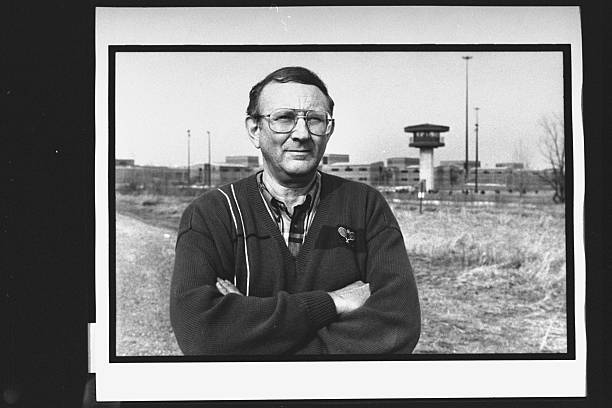
That is about as unflinching as a father’s self-assessment gets, and this memorial has no interest in softening it on his behalf. But it’s worth naming plainly what Lionel does not do in this passage: he doesn’t reach for excuses, and he doesn’t stop at diagnosing his own blindness — he goes further, into the much harder territory of asking whether he was the source of what he failed to see.
The question he cannot put down
After the arrest, in the same Inside Edition interview where Shari wept for the victims’ families, Lionel offered a theory: that Jeff’s “madness” might trace back to medication Joyce had taken during her pregnancy. He later admits the theory went essentially unexamined — a father grasping for any explanation that wasn’t simply this came from somewhere in me.
But the genetic question doesn’t stay external for long. In his own writing, Lionel turns it back on himself directly, cataloguing his own childhood fascinations — with hypnosis, with building explosive devices, with once wiring the living room couch to shock visiting cousins as a “joke” — and asks, in language he doesn’t try to make comfortable, whether “some of the compulsions that overwhelmed my son may have had their origins in me.” He wonders whether his own “need for control,” his own violent impulses arising from childhood powerlessness, might have “come to Jeff through me.” His own psychologist, he notes, eventually had to caution him against overstating any single cause — a reminder Lionel includes in his own book, seemingly aware that his rumination was in danger of becoming its own kind of compulsion.
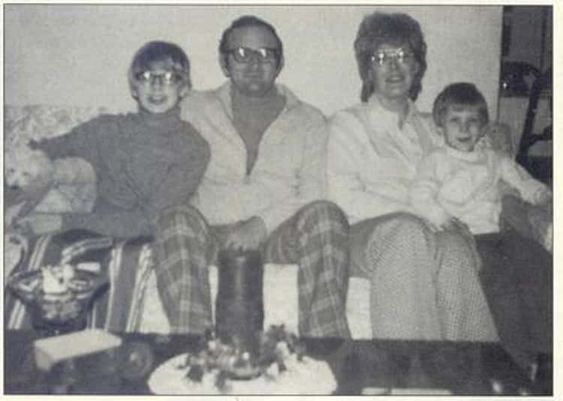
He never reaches a conclusion. He states this outright, more than once: he will never know how much of it was genetic, how much environmental, how much simple bad luck. What he does arrive at is a kind of standing verdict on fatherhood itself — that it is, in his words, “a grave enigma,” and that the only honest thing he can pass on to any father after him is the warning to pay closer attention than he did.
What was left, once there was nothing left to do
Once Jeff was sentenced and sent to Columbia Correctional Institution, eleven hours from home, Lionel writes that his role as a father had “almost disappeared” — reduced to visits, letters, and small, non-essential provisions. What grew in that reduced space, unexpectedly, was conversation. Father and son spent visits discussing intelligent design, evolution, the origins of life — Jeff, Lionel writes, had read thirteen books on the subject and engaged with real intellectual hunger. “It felt stimulating,” Lionel writes, “and I miss Jeff’s inquiring mind.” Alongside Roy Ratcliff’s ministry and Jeff’s baptism, this period represented something Lionel describes, without irony, as his son’s humanity “restoring itself.”
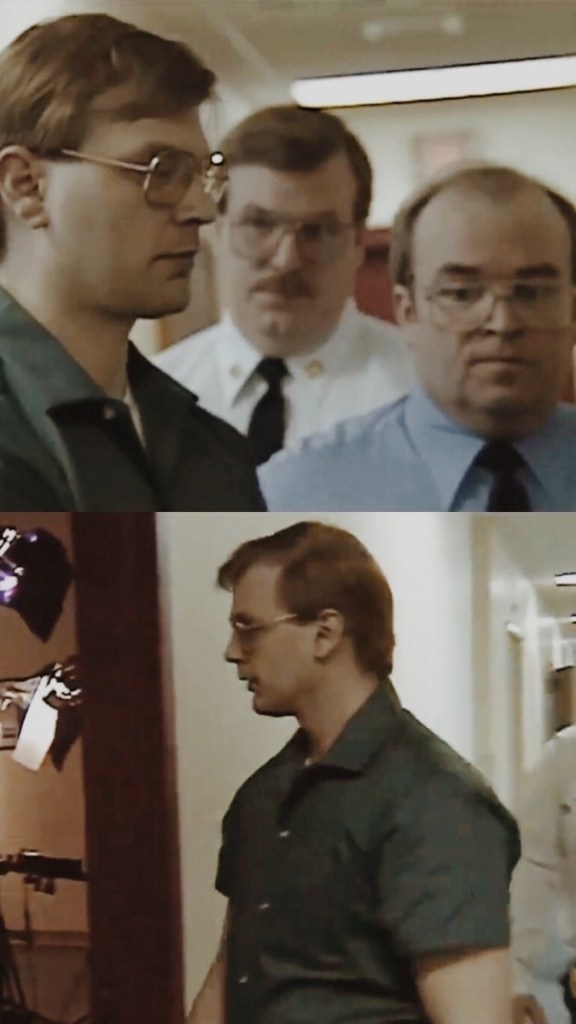
That restoration makes what follows harder, not easier. In July 1994, months before the attack that killed him, Jeff was attacked with a razor by another inmate. A prison chaplain reassured Lionel afterward that Jeff would be secure. Lionel later learned that Jeff had been left unsupervised for twenty to forty minutes with a different inmate — one with a documented history of attacking others and threatening to kill white people — despite an internal report flagging a specific threat against Jeff that CCI staff concluded was “not substantive.” When the fatal attack came that November, Lionel didn’t describe it as senseless or unforeseeable. He described feeling “lulled” and “betrayed” — and guilty, for not having pushed harder on prison security after the first warning sign.
Take care, take care, take care
Lionel Dahmer’s memoir does not end in resolution, and this piece won’t manufacture one on his behalf. He remains, in his own words, “a man in constant rumination” — uncertain whether nature or negligence or sheer chance produced what his son became, certain only that he will carry the not-knowing for the rest of his life. The mud on the lawn, the pentagram on the coffee table, the snakeskin in the college bag, the razor attack nobody took seriously enough — none of it adds up to an answer. It adds up to a father who kept looking anyway, long after looking stopped being able to change anything, and who left behind three words for anyone who might be standing where he once stood, not watching closely enough.
Sources cited
- Dahmer, Lionel. A Father’s Story.
- Masters, Brian. The Shrine of Jeffrey Dahmer.
- Schwartz, Anne E. Monster: The True Story of the Jeffrey Dahmer Murders.
- Kennedy, Patrick, and Robyn Maharaj. Grilling Dahmer: The Interrogation of the Milwaukee Cannibal.


