The Dehumanisation of Jeffrey Dahmer

There is a word for what happens when a society decides that a person no longer deserves the basic protections extended to other human beings. That word is dehumanisation. It is not a metaphor. It is a documented psychological process with a name, a mechanism, and a history — and it happened to Jeffrey Dahmer both while he was alive and continues, with remarkable consistency, after his death.

This article is about that process. About what was done to him, why it was done, and what it reveals about the people who did it.


What Was Done to Him

When Jeffrey arrived at Columbia Correctional Institution in Portage, Wisconsin in February 1992, he was placed in a cell and subjected to hours of relentless taunting from the surrounding cell block. Questions shouted through bars. Threats. Mockery. The noise escalated, got louder, cruder, more specific. Jeffrey said nothing. For hours, nothing at all. He sat in Cell 1 and waited.

This was not the worst of it.

Reports from that period describe Jeffrey being made to sleep naked on the floor of his cell during his first days at the institution. He was denied basic privacy. He was displayed, essentially, as a spectacle — the worst thing that had happened in Wisconsin in living memory, now contained and available for inspection.
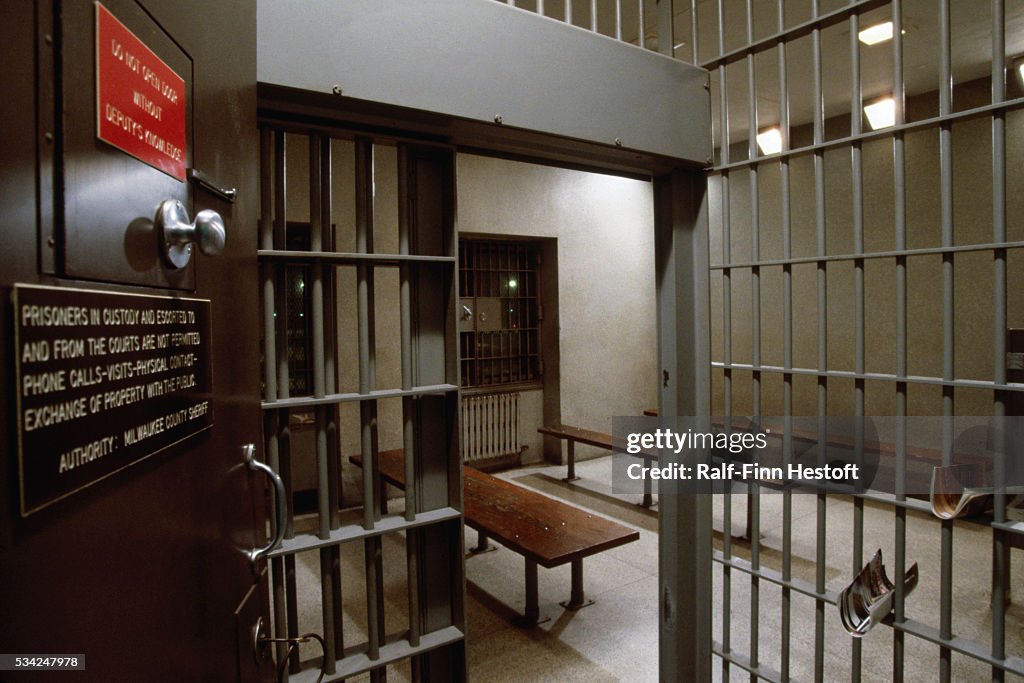
An open door leads to the jail cell used to confine Jeffrey Dahmer between trial sessions. (Photo by © Ralf-Finn Hestoft/CORBIS/Corbis via Getty Images)

During his trial in 1992, he sat behind eight feet of bulletproof glass, separated from the courtroom — not for any genuine security reason, but because his presence was considered too dangerous to exist in the same physical space as ordinary proceedings. He was tried, in a real sense, as something other than a man.

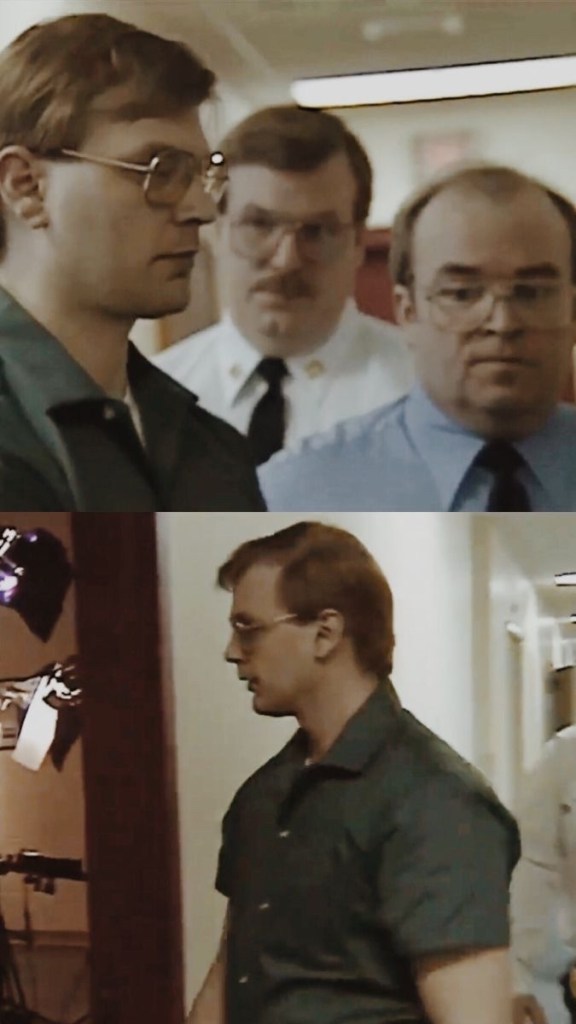
And then there were the shackles. Each day of his trial, Jeffrey was escorted to court handcuffed in a wheelchair — because the leg irons placed on him were so heavy that they made walking impossible. A 6’1” man, unable to bear the weight of his own restraints, wheeled through courthouse corridors like freight.

One day, as he was being wheeled toward the courtroom, a woman passing in the hallway recognised him and let out a bloodcurdling scream. Jeffrey, unperturbed, muttered quietly: “I guess I should’ve shaved.”

In a wheelchair. In shackles so heavy he could not walk. Being wheeled through a public building while a stranger screamed at the sight of him. And his response was a dry, quiet joke about not having shaved. That is not the response of a monster. That is the response of a person — exhausted, dignified in the only way left available to him, and still, somehow, human.


The Psychology of Dehumanisation

Psychologists have studied dehumanisation extensively, particularly in the context of how ordinary people become capable of cruelty toward other human beings. The mechanism is consistent: first, you remove someone’s humanity in your own mind. You assign them to a category — monster, animal, thing — that exists outside the circle of moral concern. Once that categorisation is complete, cruelty becomes not only possible but, for many people, feels righteous.

Jeffrey Dahmer was an almost perfect candidate for this process. His crimes were so extreme, so far outside anything most people could comprehend or contextualise, that the leap to monster felt not only natural but necessary. To acknowledge his humanity would be to sit with something deeply uncomfortable — that a person, a recognisable human being, had done these things. That the distance between him and everyone else was perhaps not as vast as we need it to be.

It is easier, and psychologically safer, to make him into something else entirely.

The inmates who taunted him on his first night in prison were not psychopaths. They were ordinary people who had been given permission — by the media, by the trial, by the collective verdict of society — to treat this particular human being as less than human. The guards who allowed Jeffrey to be made to sleep on the floor were not monsters. They were people acting within a system that had already decided Jeffrey was beyond the protections that system normally provides.


He Dealt With It in Silence

What is striking, in every account of Jeffrey’s time in prison, is how he responded to this treatment. Not with rage. Not with breakdown. With a kind of quiet, contained dignity that the people around him seemed entirely unprepared for.

When the taunting on his first night reached its peak — Did the male parts taste good? Do you prefer dark meat or white meat? — Jeffrey said nothing for hours. He waited. And then, when one inmate shouted Hey Jeff, how’s the corpse?, he answered, after a pause, with three words: Chunky. Delicious and tasty.

The ward went quiet.

It was not aggression. It was not a breakdown. It was a man refusing, in the only way available to him, to be entirely erased. He turned the taunting back on itself with a precision that silenced the room. Whatever you think of him, whatever he did — that moment was human. That was a person navigating something impossible with the tools he had.

Detective Dennis Murphy, who spent sixty hours taking his confession, said Jeffrey was cooperative, frank, and without guile. Reverend Roy Ratcliff, who baptised him in prison and visited him regularly until his death, described a man who was sincere, reflective, and genuinely spiritually searching. The FBI agents who interviewed him found him completely credible.

These were people who actually sat with him. Who treated him as a human being capable of communication and reflection. And what they found, consistently, was exactly that.


What Happens Today

Jeffrey Dahmer has been dead for thirty years. And the dehumanisation has not stopped.

His death photographs circulate freely on blogs and social media. His face — split open, unrecognisable, the result of a brutal beating by a fellow inmate — is shared, reposted, used as profile pictures by people who consider this an act of justice or entertainment. The images are not difficult to find. They are treated as public property, as a spectacle to be consumed.

Compare this to how the photographs of his victims are treated. The families of those seventeen men have fought for decades to keep graphic images of their loved ones private. Society, broadly, respects this. The victims are afforded the dignity of death. Jeffrey is not.

This double standard is not justice. It is not about the victims. If it were about the victims, their families’ pain would be the centre of the conversation — and most of the people sharing Jeffrey’s death photographs have no particular investment in those families at all.

It is about something else. It is about the satisfaction of seeing a specific person degraded, even in death. It is about the continuation of a process that began the moment he was arrested — the process of making him into something that does not deserve what the rest of us are given automatically.

That is not justice. That is cruelty with permission.


Disputed Even in Death: The Brain

Jeffrey had left clear instructions in his will: he wished to be cremated. No services. No headstone. Nothing. He wanted to be gone cleanly, on his own terms.

What happened instead was that before his body was cremated in September 1995, doctors removed his brain and preserved it in formaldehyde. His parents — long divorced — then fought a public legal battle over what to do with it. His mother Joyce wanted it donated to science, hoping researchers might find a biological explanation for what he did. His father Lionel wanted it cremated, in line with Jeffrey’s stated wishes.

The case went to court. A judge ultimately ordered the brain cremated in December 1995 — more than a year after Jeffrey’s death — without any scientific study being conducted.

Whatever one thinks of the arguments on either side, the basic fact remains: Jeffrey had expressed a clear wish about what should happen to his remains, and that wish was overridden — his body becoming, even after death, a matter for courts and public dispute rather than quiet, private dignity.


The Tapes He Didn’t Know Were Being Kept

In 2023, a four-part documentary series titled My Son Jeffrey: The Dahmer Family Tapes was released on Fox Nation. It features audio recordings of private conversations between Jeffrey and his father Lionel, made during prison visits and phone calls — conversations that Jeffrey had no reason to believe would ever be made public.

Lionel, by all accounts, recorded these conversations out of a genuine desire to understand his son — a father grappling with something incomprehensible, reaching for any thread of explanation. That impulse is human and understandable. But the decision to release those recordings to a documentary production, to broadcast them on television for public consumption, raises a question that nobody in the coverage seemed particularly interested in asking: would Jeffrey have wanted this?

Jeffrey, who confessed everything willingly to investigators, who spoke openly with Roy Ratcliff and with the detectives who interviewed him — Jeffrey who asked for no consideration at his sentencing and accepted whatever came — nevertheless had a private interior life. He had conversations with his father that existed in the space between two people, not for the world.

Thirty years after his death, those conversations were packaged and broadcast. His voice, his words, his private reaching toward his father in a prison cell — turned into content. The dehumanisation does not require malice. Sometimes it simply requires treating a person’s private life as raw material, available to anyone who wants it.


The Comparison That Nobody Makes

Ted Bundy confessed to nothing voluntarily. He manipulated, performed, charmed, and deflected until the very end — defending himself in court, flirting with the press, using every tool available to him to avoid accountability. He was a diagnosed psychopath with no genuine remorse. He died having never fully owned what he did.

Jeffrey Dahmer confessed to everything. He cooperated completely. He expressed genuine remorse in terms that those closest to him found credible. He repented. He was baptised. He spent his final years in quiet reflection with a prison chaplain.

Bundy is a cultural icon. Jeffrey is a target.

The difference is not the severity of the crimes — Bundy killed more people. The difference is that Jeffrey’s crimes were of a type that made dehumanisation easier. The cannibalism, the necrophilia — these are the elements that push him beyond the boundary of what people can hold as human. And once beyond that boundary, anything becomes permissible.


Why It Matters

We are not asking anyone to forget what Jeffrey did. We are not asking for sympathy that erases the suffering of seventeen families. Those two things can exist simultaneously — grief for the victims and the recognition that a human being deserves to be treated as one, even after death, even in prison, even in the face of crimes that are almost impossible to comprehend.
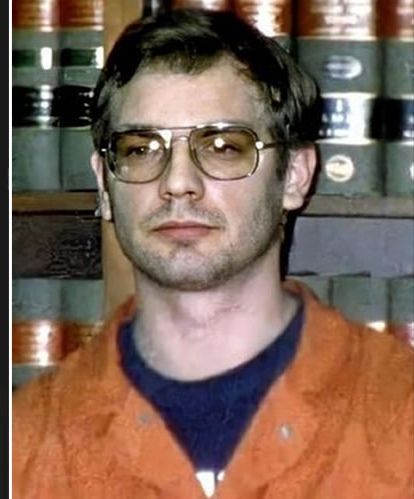
The people who post his death photographs are not more moral than the people who don’t. They are not more protective of the victims. They are simply people who have found a target that society has declared acceptable — and they are doing what people always do when a target is declared acceptable.

Jeffrey Dahmer was a human being. He was a deeply traumatised, profoundly ill, ultimately destroyed human being who caused incalculable harm. He was also a man who planted yellow roses, who got down on the floor to play with a cat named Jodi, who said much much better quietly to himself in the dark.

Both of these things were true. They will always have been true.

The dehumanisation does not change that. It only tells us something about ourselves.


Sources: Anonymous inmate memoir; Reverend Roy Ratcliff, Dark Journey Deep Grace (2008); Detective Dennis Murphy, various interviews; Brian Masters, The Shrine of Jeffrey Dahmer (1993); The Washington Post; Fox Nation, My Son Jeffrey: The Dahmer Family Tapes (2023); Psychology research on dehumanisation.
The Thin Line: Jeffrey Dahmer Through the Eyes of Georges Bataille

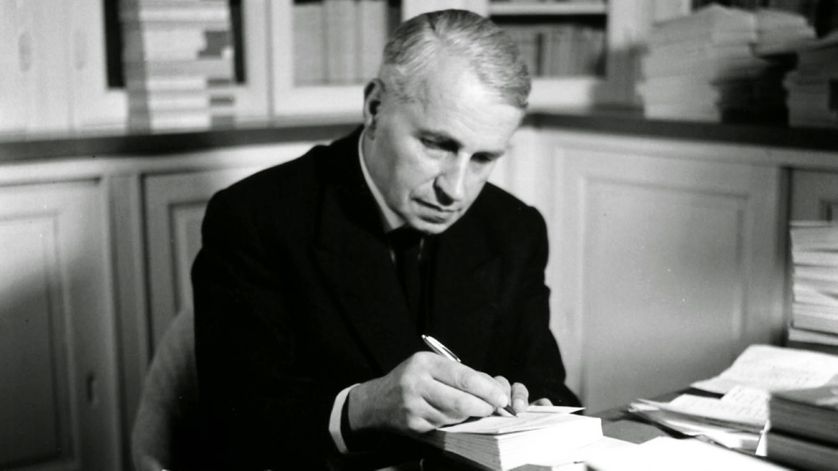
In 1957, the French philosopher Georges Bataille published a book called Erotism: Death and Sensuality. It was not about serial killers. It was not about crime. It was a philosophical study of the deepest impulses in human nature — the desire for intimacy, the pull of transgression, the relationship between love and death, and the strange territory where the sacred and the forbidden become indistinguishable from each other.

Bataille died in 1962. He never knew Jeffrey Dahmer’s name.

And yet Erotism reads, in places, like a philosophical map of Jeffrey’s inner world — written thirty years before anyone knew that world existed. Not because Bataille was describing a killer, but because he was describing something in human nature that Jeffrey took further than almost anyone ever has. The concepts Bataille spent a lifetime developing — discontinuity, continuity, transgression, the sacred dimension of taboo — illuminate Jeffrey’s own words in a way that no clinical diagnosis ever quite manages.

This article is an attempt to place those two things side by side, with care and with honesty.


The Problem of Discontinuity

Bataille begins Erotism with a philosophical observation so simple it is easy to miss its weight. Every human being, he says, is a discontinuous being. We are each enclosed within ourselves, bounded by skin and bone and the limits of our own consciousness. We are born alone. We die alone. Between any two people there is a gulf — fundamental and unbridgeable — that no amount of communication can fully close.

This discontinuity, Bataille argues, is the source of the deepest human suffering. We long for what he calls continuity — a dissolution of the separate self into something larger, a merging with another being that ends the terrible isolation of individual existence. This longing, he says, is at the root of three things: physical eroticism, emotional love, and religious experience. All three are, at their core, attempts to escape discontinuity. To breach the wall between the self and the other. To touch, however briefly, the continuity that death alone can fully restore.

Now consider what Jeffrey said, in his own words, about why he did what he did.

“It made me feel like they were a permanent part of me.”

“I wanted to keep them with me as long as possible, even if it meant just keeping a part of them.”

“I could completely control a person — a person that I found physically attractive — and keep them with me as long as possible.”

This is not the language of hatred. This is not even, primarily, the language of desire in the conventional sense. This is the language of someone trying — in the most extreme and catastrophic way imaginable — to solve the problem Bataille identified. The problem of discontinuity. The unbearable separateness of being a self.

Jeffrey did not want to destroy. He wanted to fuse. He wanted continuity. He wanted the boundary to disappear. Bataille writes that eroticism is, at its core, the attempt to substitute for individual isolated discontinuity a feeling of profound continuity. Jeffrey’s words are that theory spoken aloud — not as philosophy, but as confession.


The Thin Line Between a Kiss and Cannibalism

Bataille’s most unsettling argument — and the one most directly relevant to Jeffrey — is about what he calls the logic of eroticism pushed to its extreme.

Physical eroticism, he argues, is already a form of violation. The erotic act dissolves the boundaries of the self. It is, at its most fundamental, an attempt to break the separateness of two discontinuous beings — to achieve, however briefly, a state of fusion. He writes that the whole business of eroticism is to destroy the self-contained character of the participants. Nakedness, he says, is the first gesture of this dissolution: the removal of the barriers that maintain discontinuity. What follows is a temporary merging, a momentary continuity, before the boundaries are restored and the two people are separate again.

He then asks: what happens when this logic is pursued without limits?

The Marquis de Sade, Bataille notes, defined murder as the pinnacle of erotic excitement. Bataille does not celebrate this. He analyses it. He says that the destructive element pushed to its logical conclusion does not necessarily take us out of the field of eroticism. That if the drive behind eroticism is the dissolution of the separate self — the achievement of continuity — then death is, in a terrible sense, its ultimate fulfilment. Death is the only truly permanent dissolution of discontinuity. Death makes the bounded self continuous with everything again.

This is the thin line. Between the kiss — which reaches across the discontinuity toward the other — and the extreme that Jeffrey enacted, there is a difference of degree, not of kind. Both are movements toward the same impossible thing. Both are attempts to end the isolation that Bataille says defines human existence. The kiss fails, as all such attempts must fail — the boundary returns, the two people are separate again, the discontinuity is restored. Jeffrey’s attempts failed too, in the same way, which is perhaps why they escalated. Each time the boundary came back. The continuity was lost. The person was gone and Jeffrey was alone again in Cell 213.

De Sade himself wrote: “There is no better way to know death than to link it with some licentious image.” Bataille uses this to illustrate the connection between eroticism and death that most people refuse to look at directly. Jeffrey lived inside that connection. He did not choose it. It was given to him — by what combination of neurology, trauma, and chance we do not fully know — and he could not find his way out of it.


Taboo and Transgression: The Desire Created by the Prohibition

One of Bataille’s most radical arguments is about the relationship between taboos and desire. We tend to think of taboos as simply prohibitions — things we are forbidden from doing. Bataille argues that this misses the essential dynamic. Taboos, he says, do not suppress desire. They create it.

He writes: “A transgression is not the same as a back-to-nature movement; it suspends a taboo without suppressing it. Here lies the mainspring of eroticism and of religion too.”

The taboo and the transgression need each other. The prohibition is what makes the transgression possible, what gives it its weight and its charge. Without the taboo, there is no transgression — only an act. The law is not the enemy of the desire; it is its precondition. The sacred and the forbidden are, for Bataille, the same thing seen from different angles.

He illustrates this with religious cannibalism. In certain archaic practices, he writes, the eating of human flesh is both the most forbidden act and the most sacred. The taboo does not create the taste of the flesh — but it stands as the reason the ritual cannibal consumes it. The prohibition is precisely what makes the act holy. The pious cannibal knows full well that this is forbidden; knowing the taboo to be fundamental, he violates it. The desire and the law are inseparable.

Jeffrey understood this, at some level, without ever having read Bataille. He knew that what he desired was forbidden. He fought it for years — the long years at his grandmother’s house, the Bible reading, the missionaries he sent money to, the genuine attempt at control. The awareness that it was wrong was not separate from the desire. It was part of it. The boundary was not an obstacle. It was, in Bataille’s terms, the very thing that made the desire what it was.


Sacrifice and the Sacred: The Baptism

Bataille draws an extended comparison between the erotic act and sacrifice. In sacrifice, he argues, the victim’s death reveals continuity to the witnesses. The discontinuous being is destroyed and in its place what remains — what the spectators experience in the silence that follows — is the continuity of all existence. Death dissolves the particular back into the universal. The bounded self becomes unbounded. This, Bataille says, is the sacred.

He writes: “A violent death disrupts the creature’s discontinuity; what remains, what the tense onlookers experience in the succeeding silence, is the continuity of all existence with which the victim is now one.”

And then there is this: in May 1994, Jeffrey Dahmer was baptised in a steel tub inside Columbia Correctional Institution by Reverend Roy Ratcliff. He was convicted of seventeen murders. He had been in prison for two years. He would be dead in six months.

Jeffrey had arrived, by the end of his life, at something that Bataille’s framework can help us understand. He had been pursuing continuity through one path his entire adult life — the only path available to the thing in him that needed it. In prison, with Ratcliff visiting weekly, reading the Bible, discussing death and redemption and whether he deserved to continue living, he found another path to the same place. Religious eroticism, in Bataille’s terms, is the pursuit of continuity through the sacred — the dissolution of the self not through physical transgression but through union with something beyond individual existence.

Jeffrey told Ratcliff that he sometimes wondered whether he was sinning against God by continuing to live. He had internalized his own discontinuity as the deepest problem of his existence. The baptism — the immersion, the dissolution, the emergence — was perhaps the first time he had tried to reach continuity in a way that did not destroy another person in the process.

Bataille writes that the paths toward continuity vary. Their object, he says, has a great variety of aspects. Jeffrey had spent his life on one path. In his last year he tried another.


Where Bataille’s Theory Has Limits

It would be dishonest to use Bataille’s framework without acknowledging where it becomes insufficient.

Bataille’s analysis of transgression is ultimately descriptive. He is tracing the logic of certain human impulses — mapping the terrain between the sacred and the forbidden, between desire and death. He is not excusing. He is understanding. And understanding, as this memorial has always argued, is not the same as condoning.

But there is a dimension that Bataille’s theory of transgression does not fully account for, and it is the most important one: consent. Bataille writes about eroticism as a mutual dissolution. The sacrifice, even in its most archaic forms, was performed within a collective ritual framework. The transgression operated within a structure, however violent, that held some meaning for those involved.

Jeffrey’s victims did not choose dissolution. They did not consent to become part of someone else’s search for continuity. They were people with their own discontinuities, their own desires for continuity, their own inner worlds every bit as rich and real as Jeffrey’s. They were not symbolic victims in a ritual. They were Steven, James, Richard, Anthony, Raymond, Edward, Ernest, David, Curtis, Errol, Tony, Konerak, Matt, Jeremiah, Oliver, Joseph — and the first, Steven Hicks, eighteen years old, hitchhiking home from a concert.

Bataille helps us understand the logic of what Jeffrey did — the philosophical structure of the impulse, the deep human need it expressed in its most catastrophic form. He does not, and cannot, make it acceptable. The theory illuminates. It does not absolve.


Why This Matters

The reason to read Jeffrey Dahmer through Bataille is not to aestheticise what he did or to find it philosophically elegant. It is because the alternative — treating Jeffrey as simply monstrous, as categorically other, as something outside the human — is both intellectually dishonest and, ultimately, more dangerous.

Bataille wrote at the beginning of Erotism: “The human spirit is prey to the most astounding impulses. Man goes constantly in fear of himself. His erotic urges terrify him.” He was not writing about serial killers. He was writing about everyone. The impulses Jeffrey enacted at their most extreme — the desire for fusion, the longing for continuity, the relationship between desire and death, the terrible pull of the forbidden — are not alien to human nature. They are human nature, at its edges, in its darkest expression.

Jeffrey himself said it: “I don’t think there was something that happened that made me like this. Because this was always just how I was.” He was not describing a monster. He was describing a person whose inner life had taken a particular shape — one that Bataille’s philosophy, for all its difficulty and discomfort, helps us see more clearly than almost any other framework available to us.

Understanding that is not forgiveness for what was done. But it is the beginning of the kind of comprehension that might, one day, mean that someone like Jeffrey — someone carrying that particular configuration of need and isolation and desire — finds a different path before the irreversible moment arrives.

That seems worth understanding.


Sources: Georges Bataille, Erotism: Death and Sensuality (City Lights Books, 1986, translated Mary Dalwood); Jeffrey Dahmer, Inside Edition interview (1993); Jeffrey Dahmer, Dateline NBC interview with Stone Phillips (1994); Roy Ratcliff, Dark Journey Deep Grace (2011); Brian Masters, The Shrine of Jeffrey Dahmer (1993).

Read George Bataille here:

Doing a Dahmer: The Hidden Humour of Jeffrey Dahmer

There is a moment in Jeffrey Dahmer’s 1992 FBI interview that almost nobody talks about. He has spent hours describing, in flat, cooperative detail, the murders of seventeen men. The detective has asked him about dismemberment, cannibalism, necrophilia, acid baths, skulls in lockers. And at the very end of this extraordinary session, as the tape is about to stop, Jeffrey says:

“OK, thanks for the muffins and the book.”

He had been eating muffins throughout. He thanks them on the way out like it was a pleasant meeting.

This is Jeffrey Dahmer’s humour: quiet, dry, completely interior, and almost always invisible unless you’re paying very close attention. It was never performed for a crowd. It never announced itself. It simply existed — a private, flickering thing in a man who kept almost everything private.

Understanding it is one of the most human ways into understanding him.


“Doing a Dahmer” — The Performance of Otherness

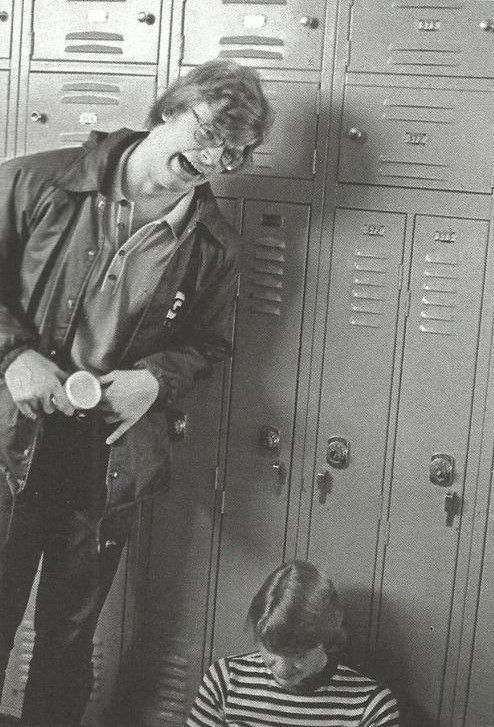
Jeffrey’s classmates at Revere High School in Bath, Ohio, remembered something they called “doing a Dahmer.” He would twist his body into an awkward shape, contort his face, and walk with a lurching, exaggerated gait — a deliberate imitation of someone with a developmental disability. It was strange, unexpected, and apparently very funny. The other kids loved it. They asked him to do it again.

What’s interesting is what this tells us. Jeffrey was not popular in any conventional sense — he was withdrawn, solitary, a drinker by his sophomore year, keeping the things that mattered to him entirely to himself. But this performance, this physical comedy, gave him a social currency he couldn’t access any other way. It was a mask that worked precisely because it was so obviously a mask. He was showing people something deliberately false in order to hide everything that was true.

Psychologically, this is a classic function of humour in isolated individuals — what researchers sometimes call humour as social camouflage. By making people laugh, Jeffrey controlled what they saw. He gave them a version of himself to engage with, while the real version remained untouched and unseen behind it. The joke was always, on some level, on them. They thought they were watching him be ridiculous. They had no idea what they were actually looking at.


Bleating, Seizing, Screaming — The Classroom

The “doing a Dahmer” walk was not his only act. In class, Jeffrey performed a wider repertoire of stunts — bleating like a sheep, faking epileptic seizures, screaming out random things in the middle of a lesson, and performing impressions of people with cerebral palsy. He presented himself, in general, as a sort of class clown, the bizarre kid who could always be relied upon to do something unexpected.

But there is a crucial detail in the accounts of those who were there: his classmates usually laughed at him rather than with him. His sense of humour was too dark, too strange, too far outside what anyone was comfortable with. He was funny in a way that made people uneasy. They laughed because they didn’t know what else to do.

This distinction matters. Jeffrey wasn’t a class clown in the ordinary sense — someone who performs to belong. He performed in a way that guaranteed he would never quite belong. The stunts were too far. The humour was too weird. And the result was the same as always: he was watched, he was noticed, and yet he remained completely alone in the middle of it. The laughter surrounded him and didn’t touch him.


Two Steps Forward, Three Steps Back

There was a neighbour in Bath who used to watch Jeffrey walk to school from a window. Jeffrey was aware of being watched. And so he developed a walk — two steps forward, three steps back, a lurching, backwards shuffle that got him nowhere fast. He kept it up for the entire time he knew he was being observed.

Nobody asked him about this. He never explained it. But it is one of the most revealing small details in the entire story.

Here was a teenager so acutely conscious of being watched that he turned observation itself into a private joke. Rather than performing normality for the neighbour’s benefit — as most self-conscious teenagers would — he did the opposite. He made himself impossible to read. You want to watch me? Fine. Watch this. The confusion on the neighbour’s face was the punchline, enjoyed entirely alone.

This is humour as control. As a young man who felt profoundly out of control in almost every area of his life — his parents’ disintegrating marriage, his sexuality, the fantasies pressing at him from inside — the ability to make someone else confused and uncertain must have been quietly satisfying. A small power in a life that felt powerless.


“I Always Wanted to Do That to a Human”

In 1978, a high school friend named Mike Costlow visited Jeffrey at the Bath Road house after a night of drinking and smoking marijuana. At some point Costlow noticed several stuffed animals around the room and asked about them. Jeffrey replied simply: “It’s taxidermy. I used to do taxidermy.”

Later that same day, when Costlow brought the subject up again, Jeffrey said quietly: “I always wanted to do that to a human.”

Costlow and his friend were stunned. They said, “You’re sick,” and brushed it off. They thought he was joking. He was, after all, known for his bizarre and twisted sense of humour. It was just another example of that. The kind of thing Jeffrey said.

This was the summer of 1978 — the same summer Steven Hicks was murdered at that house. Jeffrey had already done it. And nobody heard it.

This is perhaps the darkest version of Jeffrey’s humour — the moment where the joke and the confession were the same sentence, and the punchline was that no one would believe it. The armour of “he’s just being weird” was so effective that even the truth, spoken plainly, was dismissed as another performance. He had learned, long before, that the best place to hide something is in plain sight.


The Muffins

Back to those muffins.

The FBI interview of August 13, 1992 was conducted at Columbia Correctional Institution by a Special Agent and a detective from the Hollywood, Florida Police Department. They were there to investigate Jeffrey’s possible connection to the disappearance of Adam Walsh. The interview is extraordinary — Jeffrey is cooperative, candid, almost eager to help. He answers every question in the same flat, considered tone he used for everything.

At some point during the interview, someone brings muffins. Jeffrey eats them. The interview continues — murder, cannibalism, the army, Florida, his grandmother. More muffins, apparently. At the very end, the tape concludes, and Jeffrey’s last recorded words in that session are a polite, genuine thank you for the muffins and the book they brought him.

The detective, for his part, had his own moment of dry humour. When the subject of alcohol tolerance came up, he interjected: “I’m a cheap date.” Jeffrey responded naturally, completely at ease — two people making a small human joke in the middle of one of the most surreal conversations imaginable.

What does it mean that Jeffrey Dahmer could eat muffins and make small talk during a confession to mass murder? Clinically, it speaks to the extreme compartmentalisation that psychiatrists noted throughout his case — the ability to hold horror and ordinariness in separate rooms of the mind, moving between them without apparent friction. But it also speaks to something more specific about his humour. He was genuinely, consistently, quietly pleasant in conversation. Detective Dennis Murphy, who spent sixty hours taking his confession after the arrest, said he appreciated Jeffrey’s frankness and lack of guile. The muffins fit perfectly. He was just… a man eating muffins and being polite. As he always had been.


The Helicopter

In 1993, journalist Nancy Glass interviewed Jeffrey for Inside Edition. At some point during their conversation, Jeffrey asked her casually if she had seen the movie that was on television the night before. He couldn’t remember the title. He made a helicopter gesture with his finger, rotating it slowly in the air.

The one with the helicopter.

He was in prison for seventeen murders. He had been there for two years. And he was making small talk about a television movie, illustrated with a finger helicopter, exactly as any ordinary person might do after a slow evening in front of the TV.

This is perhaps the most disarming of all the humour — not a joke exactly, just the total, baffling ordinariness of it. The gap between what Jeffrey Dahmer was supposed to be and what he actually was in that moment is so vast it becomes almost comic. Nancy Glass, facing one of the most notorious killers in American history, got a finger helicopter and a question about last night’s TV.


“Ha Ha” — The Letters

When Jason Moss, a criminology student, corresponded with Jeffrey in prison, Jeffrey’s letters were described as gracious and scrupulously polite. But there was also this, in his final letter to Moss:

“Just don’t forget about me when your school work is done, ha ha.”

Written out like that — ha ha — in a letter from a man who almost never wrote to anyone, who knew his letters were extraordinarily rare, who was serving 936 years. Ha ha. The lightness of it is startling. He knew exactly how to use levity. He deployed it sparingly and precisely, which is what made it land.


The Séance

And then there is the séance. In the summer of 1978 — with Steven Hicks’s remains still in the crawlspace beneath his feet — Jeffrey invited classmates to the Bath Road house and told them it was haunted. He staged the whole thing. He told them there was a spirit that could be summoned. The lights went off. Something moved. Lynn screamed.

Was that funny to Jeffrey? Almost certainly, in some private way. It had all the elements his humour loved: misdirection, control of information, a performance that was entirely false concealing something that was entirely real, and the confusion of others enjoyed in silence.


“Chunky. Delicious and Tasty.” — Prison

Prison brought a different kind of humour — or so some accounts suggest. According to multiple sources, Jeffrey reportedly told fellow inmates and guards “I bite,” then watched their nervous reactions with quiet, private satisfaction. He allegedly moulded his prison food into shapes resembling body parts and used ketchup as blood, leaving the results on his tray to unsettle the men around him. And according to Reverend Roy Ratcliff himself, Jeffrey put up a poster on his cell wall advertising a “Cannibals Anonymous” meeting.

Then there is the account from an anonymous fellow inmate’s memoir. On the day Jeffrey arrived at Columbia Correctional Institution, the noise in the cell block was immediate and relentless — jeers, threats, questions shouted through the bars. “Did the male parts taste good?” “Do you prefer dark meat or white meat?” Jeffrey said nothing. For hours, nothing. The taunts escalated, got louder, cruder. Jeffrey remained completely silent in Cell 1.

Then, after supper, one inmate shouted: “Hey, Jeff, how’s the corpse?”

A pause. Then, much to everyone’s surprise, from Cell 1:

“Chunky. Delicious and tasty.”

The ward went quiet.

It is worth noting that not everyone accepts these accounts. A lawyer who worked closely with Jeffrey in prison disputed the taunting behaviour entirely, saying it simply wasn’t his style. And there is something that doesn’t quite fit — the Jeffrey described by Detective Murphy, by Reverend Ratcliff, by the FBI agents who interviewed him, was consistently quiet, polite, and contained. The elaborate food sculptures and the constant taunting feel almost theatrical for a man who preferred his humour invisible.

What is consistent, though, is the Cannibals Anonymous poster. That feels entirely like him — not aggressive, not performed for an audience, just a quiet, private joke pinned to a wall in a cell, amusing exactly one person. The person it was designed to amuse.


The Psychology of It

What all of these moments share is not cruelty — none of Jeffrey’s humour was cruel in the conventional sense. It was never mockery of others’ pain or weakness. It was always interior, always deflecting, always about controlling what was seen.

Psychologist and author Brian Masters noted that Jeffrey was “not good at coping with disappointment” — that the losses of his childhood had left him with a profound difficulty with vulnerability. Humour, for him, was armour. Not loud, aggressive armour but the quiet kind — the kind that keeps people at a comfortable distance while appearing to bring them close. The kind that lets you eat muffins and make small talk while carrying something impossible.

Detective Patrick Kennedy, who worked his case, put it simply: “He could be engaging, he could be bright, witty, he could make jokes. He was able to fool a lot of people.” But it wasn’t quite fooling people either — or not only that. It was also just… him. Jeffrey Dahmer, finding the small absurdity in things, keeping it to himself, letting it out in carefully measured doses to the people around him.

There is also, in all of it, a profound loneliness. The classroom stunts were performed to a room that laughed uncomfortably and kept its distance. The two-steps-back walk was performed for an audience of one — himself. The helicopter gesture was an attempt at ordinary human connection. The ha ha in the letter was a man trying, in the only way he knew, to be light. To be likeable. To be, for a moment, just a person talking to another person about nothing in particular.

He was, as those who knew him consistently noted, genuinely pleasant company. Quiet, polite, a good listener, occasionally funny in a dry and unexpected way. His grandmother loved him. The detectives who spent sixty hours with him respected him. The FBI agent who interviewed him believed him completely and found him totally cooperative.

That person — the muffin eater, the helicopter mime, the boy walking backwards to confuse the neighbour, the teenager bleating like a sheep in the middle of class — was as real as everything else. Maybe more real than anything else. Because the darkness in Jeffrey Dahmer was something he fought against, hid from, tried to outrun for years. But the dry wit, the quiet deflection, the private joke enjoyed alone — that was just him.

That was just Jeffrey.


Sources: Brian Masters, The Shrine of Jeffrey Dahmer (1993); Jason Moss, The Last Victim (1999); FBI Interview Transcript, Columbia Correctional Institution, August 13, 1992; Anonymous Inmate Memoir; Biography.com; Detective Patrick Kennedy, Channel 5 interview; Mike Costlow, Cleveland Plain Dealer interview.

The Séance at Bath Road

In the summer of 1978, Jeffrey Dahmer invited a small group of classmates to 4480 West Bath Road for a séance. He told them the house was haunted — that the spirit of a previous owner lingered there and could be called. The lights went off. Something moved in the dark. One of the girls screamed and fled into the night. Lionel Dahmer arrived home unexpectedly and broke up the gathering.

It was the last time Bridget Geiger — Jeffrey’s prom date from weeks earlier — ever saw him.

What none of them knew, and what gives this small story its terrible weight, is the timing. Steven Mark Hicks had been murdered at that house on June 18, 1978 — struck with a barbell, strangled, dismembered in the crawlspace. His remains were still on the property when Jeffrey lit those candles and told his friends the house had ghosts.

Brian Masters, in The Shrine of Jeffrey Dahmer, described this period as one of profound internal disintegration — Jeffrey drinking heavily, alone in the house most days after Joyce took David and left, waiting for a life that had already ended without his knowing it. The séance sits in that silence. A boy of eighteen, performing haunting for his friends, in a house that was already haunted — by something no one else could see.

Jeffrey never spoke of it directly. But he didn’t need to.


Source: Brian Masters, The Shrine of Jeffrey Dahmer (1993)