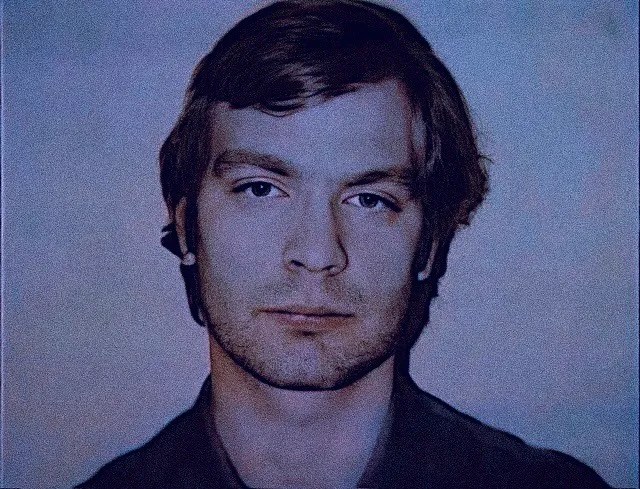
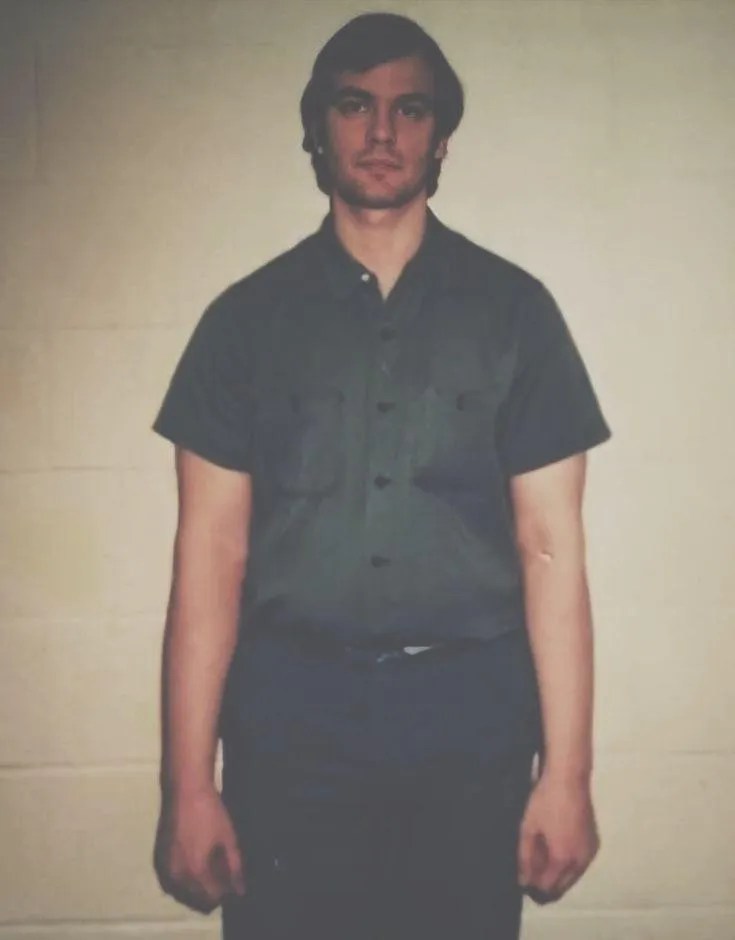
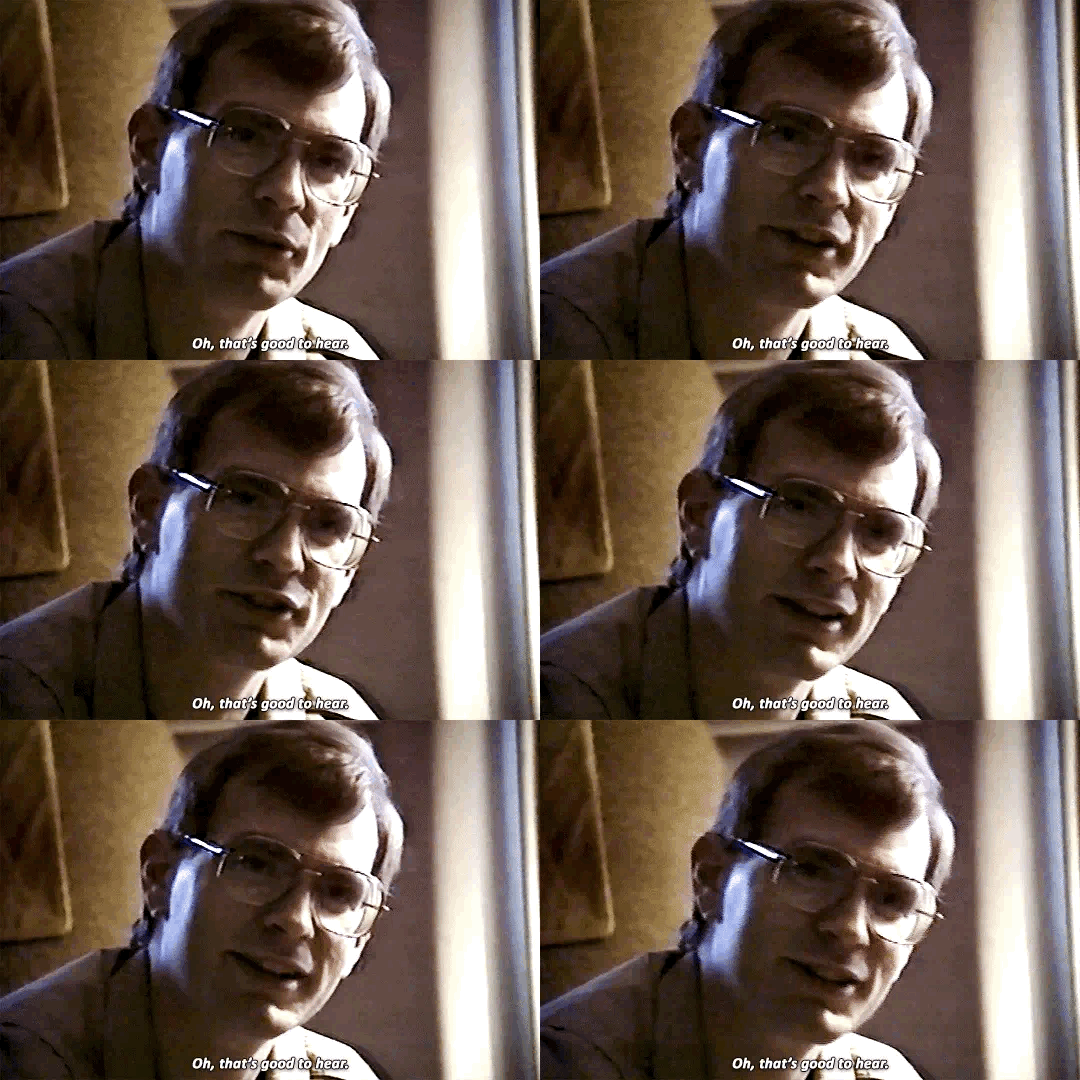
The jeffreydahmer.memorial was built on a conviction: that Jeffrey Dahmer deserves to be understood as a full human being, not reduced to the worst of what he did. Over time, a community has gathered here — researchers, writers, people with lived experience of loneliness, people with faith questions, people who simply couldn’t stop reading once they started. They come from different countries, different generations, different frameworks entirely.
We asked some of them five questions. What follows are their answers, in their own words.
How did you first hear about Jeffrey?
Some came to his story through the shock of the original news cycle. Others found him decades later, through a film, a novel, or a Netflix series watched during an ordinary evening.
Debbie, 66, found herself watching the news in 1991 by accident, immediately after serving on a jury in an unrelated murder trial — her first experience of the justice system. She came home exhausted from testimony about things she had never wanted to see, turned on the television, and heard a reporter describing body parts and drilled skulls. She lunged for the remote. For decades she kept it that way. Then, last December, recovering from a hip replacement, she flipped through Netflix and saw Dahmer: Monster. “Hey, I remember that dude,” she thought. She watched it. She started researching. “It hit me like a ton of bricks out of left field,” she says. “It’s definitely not something I was looking for or wanted. But here I am.”
Sylli, 46, heard about Jeffrey in 1991 when she was twelve years old and the story made headlines around the world. As a child, she couldn’t fully understand the complexity of what had happened. She only knew it was a story that stayed in her mind long after the news coverage faded. It wasn’t until 2022, when the Netflix series was released, that her interest was truly reignited. What started as renewed curiosity soon became something much deeper.
Gray, 22, came to Jeffrey the way many of her generation did — through the Netflix series, which led her immediately to the real case. “I found that the show does not come close to what actually happened,” she says. She went far past it.
Yarrow, 37, heard about Jeffrey in 2016 and found in his story something that would become personally significant in unexpected ways.
Eden G. encountered the name through a friend who loved film — a passing mention of My Friend Dahmer that lodged and eventually became something much more.
Lucy first came across Jeffrey through Poppy Z. Brite’s novel Exquisite Corpse, which quoted from his 1994 autopsy report. “His feet were still shackled because people were that afraid of him,” she recalls. “I found this to be weird then and even weirder now, especially considering that not only was Jeff deceased but had been rather placid in prison.” Years later, the Netflix series drew her back. She went looking for the real case.
Frisky, 40, saw him for the first time as a teenager, in a television interview. “Something inside me stirred feelings I had never experienced before,” she says. “He felt close and familiar, as if at some point in life I would come across something of his again, or get to know him more deeply.” She has never forgotten the feeling.
What called your attention to his story?
The answers to this question fall into patterns — but the patterns are wider and more varied than one might expect.
For many it was his honesty. Gray was struck by what she describes as the rarity of it: “Other serial killers, like Ted Bundy, don’t even come close to the level of self-reflection Jeffrey had done. He never once tried to lie his way out of the consequences of his actions, he knew what he had done.” She points to something he said in his confessions — that if nobody had caught him, he would have kept going — as evidence of a self-knowledge that moved her. “He knew himself and his compulsions so well that even he agreed that his getting caught was ‘better’ for everybody else and humanity in general.”
Lucy was struck by the same quality. “I think that his openness and honesty about his life and crimes makes it easier to connect with him. If he’d lied constantly or made excuses for his behaviour, this would have been difficult.”
For Sylli, it was the complexity that drew her deeper. “The more I learned, the more I realized that there were no simple answers. I became interested in understanding the person behind the headlines — the loneliness, the isolation, the psychology, and the many contradictions that existed within him. His story challenged me to look beyond black-and-white thinking.”
Frisky was drawn immediately to the human being behind the headlines. “What struck me most about his story was, quite literally, his loneliness and his complete lack of self-worth. I found myself wondering how such a handsome man could be so utterly alone. It was heartbreaking.”
How do you define your connection with him?
This is the hardest question, and the answers here are the most personal. They range widely — and that range is honest.
Gray describes a connection that is grounded in recognition. “Jeff, except of course for the gruesome killings, has a lot in common with me character-wise and mental health-wise. His coping mechanisms reminded me a lot of my own. The fact that he was heavily misunderstood and so extremely lonely that he had difficulties even forming normal human relationships also reminded me a lot of myself.” She is careful to locate the connection precisely: it is not spiritual, but human. It is the experience of seeing something of yourself in someone else’s story.
Sylli describes Jeffrey as “a quiet presence that accompanies me through my thoughts, my writing, and my creative work.” She thinks of him often in terms of nostalgia — not for the events of his life, but for a feeling she cannot easily name. “He is a source of inspiration, curiosity, and imagination.”
Lucy notes that the connection changed her social world as much as her inner one. “I have met quite a few friendly, like-minded people due to our common interest in Jeff. Being part of the online community who study and discuss Dahmer has definitely made a positive impact on my life.”
Yarrow speaks from a different framework entirely. A practicing druid, they describe Jeffrey as a constant presence and an ally — someone who, over time, has become part of their spiritual practice. For them, his story was also the beginning of a journey toward self-understanding: “Jeff having to accept himself as a gay man led me to accept myself as primarily attracted to men.”
Eden G. describes an experience that arrived unbidden and stayed. They see Jeffrey in dreams. Once, when their cat died and they were drifting toward sleep, they heard a voice they recognised as his. “I guess as a guide and a friendly soul that’s just floating around, paying attention to similar energy out and about the world.” For them, the connection is not chosen. It was received.
Frisky describes Jeffrey as her emotional anchor. She is in his presence every day — in her thoughts, in her prayers. Seeing his face, reading about him, learning something new about him lifts her spirits when she is low. She knows how that sounds. She offers it anyway, because it is true.
Debbie describes herself simply as hyperfixated, in the way her neurodivergent autistic brain hyperfixates on things. “It hit me like a ton of bricks out of left field.” She finds him handsome. She is sixty-six years old and completely unashamed. There is something refreshing in that.
Has this connection changed you?
Almost universally: yes.
Sylli describes the most unexpected transformation. Creativity had always been part of her, she says, but it remained in the background. Through her engagement with Jeffrey’s story, something dormant came back to life. She is now writing a novel. “In many ways, studying Jeffrey’s case led me back to myself. It helped me recognize abilities and creative instincts that I had overlooked for years.”
Gray found in his story a mirror for her own mental health experience, and through that mirror, a way to understand herself better. “Something about that honesty made me feel understood.”
Yarrow found self-acceptance. Through Jeffrey’s story — through the difficulty of his own reckoning with his sexuality in a time and place that offered no path forward — Yarrow was able to reckon with their own.
Eden G. says they might have gone down a different, darker path without it. They describe this as a kind of redirection, a steadying presence during difficult moments.
Frisky says simply: she is not the same person she was before. “I see everything differently now, even in my daily life. Something inside me has changed forever, but I can say with certainty that this change has been positive and empowering.”
What would you say to people who refuse to forgive or understand?
The responses to this question are the most carefully worded. All of them, in different ways, resist telling people how to feel.
Gray makes a distinction she considers essential. “Too many people treat forgiveness and forgetting as if they are the same thing, but they are not. Forgiveness does not mean excusing, justifying, or being okay with what someone has done. It means acknowledging the harm for what it is.” She adds: “Whether you choose to forgive is entirely your decision.”
Sylli takes the same position from a different angle. “I understand why many people struggle with forgiveness, and I would never tell anyone how they should feel. Understanding and excusing are two very different things. Seeking to understand someone’s psychology, struggles, or motivations does not mean approving of their actions.”
Lucy directs her response toward the specific problem of misinformation. “It does frustrate me to see people basing their opinions about the Jeffrey Dahmer case on what they’ve seen in the Netflix show when so much of it was fictionalised. I would encourage people to watch Jeff’s interviews, or footage of his father, Pat Kennedy, or Pamela Bass, to get a clearer picture of who he was as a person outside of his criminal activity.”
Frisky draws on her faith. “If the Lord is willing to forgive, then who are we as human beings to judge? In truth, no one has that right, not when compared to the immense love of our Heavenly Father.”
Eden G. is direct: “He did the crimes, and when he was alive he admitted to every single one of them. That alone is rare in serial killer cases. Not boasting — just admitting to it. That’s about as good as a criminal can do when it comes to responsibility.”
A Note from the Memorial
These seven voices represent something the memorial has always believed: that the people drawn to Jeffrey Dahmer’s story are not a monolith. They are researchers and writers, people in recovery and people in grief, people of faith and people of none, people who found self-acceptance here and people who simply couldn’t look away. They come from different countries, different decades of their lives, different ways of understanding the world.
What they share is a refusal to look away — and the conviction that looking away never helped anyone understand anything.
The memorial is grateful to everyone who shared their story here.