The Ethics of Humanisation: Why We Refuse to Look Away

There is a question that follows this memorial everywhere.

It arrives in comments, in emails, in the occasional hostile message from someone who found us through a search engine and didn’t like what they found. It is sometimes asked in good faith, sometimes not. But it deserves a serious answer either way.

The question is this: how dare you humanise Jeffrey Dahmer?

This article is our answer.

What Humanisation Actually Means

Let us be precise about language, because imprecision is where most of this debate goes wrong.

To humanise someone is not to excuse them. It is not to forgive them on behalf of people who were harmed. It is not to celebrate them, defend their actions, minimise their victims, or argue that what they did was anything other than what it was: terrible, real, and irreversible.

To humanise someone is simply to refuse to pretend they were not a person.

Jeffrey Dahmer was a person. He was born. He had a childhood. He had fears and habits and preferences. He suffered. He caused suffering. He died. Every one of those things is true simultaneously, and none of them cancels out the others.

When we say we are humanising Jeffrey Dahmer, we mean we are documenting the full reality of who he was — not the cartoon monster, not the true crime celebrity, not the symbol that has accrued around his name over thirty years. The person. The actual, complicated, damaged, damaging human being who existed in the world.

That is all we mean. It is, we think, enough.

The Criticism, Taken Seriously

The people who object to humanisation are not always wrong to object. Some of their concerns are worth taking seriously.

The most common argument is that humanising perpetrators disrespects victims — that attention and understanding directed toward someone like Jeffrey Dahmer comes at the expense of the people he killed and their families. This is worth sitting with. The victims of Jeffrey Dahmer were real people whose lives were ended violently, whose families carry grief that will never fully resolve. They deserve to be named, remembered, and honoured.

We agree with this completely.

The question is whether understanding Jeffrey Dahmer somehow prevents that. We do not think it does. Grief for victims and understanding of perpetrators are not in competition. They can — and should — coexist.

A second argument holds that humanisation creates dangerous sympathy — that understanding someone leads to excusing them, and excusing them leads to imitating them. This is a serious concern in the context of true crime culture, where parasocial relationships with killers can become genuinely unhealthy. We have seen this ourselves in the communities that surround figures like Jeffrey Dahmer, and we have written about it directly.

But there is a difference between unhealthy obsession and rigorous examination. One looks for permission. The other looks for truth. This memorial is trying to do the latter.

A third argument is philosophical: that some people, through their actions, forfeit their humanity. That Jeffrey Dahmer did things so far outside the bounds of acceptable human behaviour that to call him human is almost a category error.

We understand the impulse behind this argument. We do not accept it. Humanity is not a reward for good behaviour. It is a condition of existence. Jeffrey Dahmer was human in the way that all people are human — not because he deserved it, but because he was born.

Why Understanding Matters

There is a practical argument for humanisation that goes beyond ethics, and it is this: dehumanisation makes us less safe.

When we turn perpetrators into monsters — incomprehensible, alien, categorically different from the rest of us — we stop asking the questions that might prevent the next one. We tell ourselves that what happened was an aberration, a freak of nature, something that could not have been predicted or interrupted. We look away from the warning signs, the failures of family and school and mental health systems, the long slow accumulation of damage that precedes most violence.

Jeffrey Dahmer did not appear from nowhere. He was a child before he was a killer. He passed through institutions — schools, the Army, the justice system — that had opportunities to intervene and did not. He lived in a society that did not know how to reach people like him, partly because people like him had been rendered unthinkable.

Understanding how that happened does not excuse it. It might help prevent it from happening again. That seems worth something.

What This Memorial Is Actually Doing

We want to be direct about what this project is and is not.

This is not fan culture. We are not here because we find Jeffrey Dahmer attractive or exciting. We are not collecting memorabilia or writing fiction that romanticises his crimes. We are not arguing that what he did was acceptable or that his victims deserved what happened to them.

This is a research and documentation project. We are gathering primary sources, examining the historical record, and writing about what we find with as much rigour and honesty as we can manage. We believe that the historical record of Jeffrey Dahmer’s life has been distorted — by sensationalism, by the entertainment industry, by the true crime ecosystem that has grown up around him — and that distortion does no one any good.

We also believe, and will say plainly, that Jeffrey Dahmer’s humanity is not a controversial position. It is simply true. He was a person. Treating him as one is not radical. It is the minimum that honest examination requires.

What Humanisation Costs

We want to close with something that often goes unsaid in this debate.

Humanising Jeffrey Dahmer does not cost victims anything. It does not diminish their suffering or reduce the wrongness of what was done to them. It does not transfer anything away from them toward him.

What it costs is our comfort.

It is more comfortable to believe that people who do terrible things are fundamentally different from the rest of us. It is more comfortable to draw a clean line between the comprehensible and the monstrous, to place Jeffrey Dahmer firmly on the other side of it, and to stop thinking about him as a person.

We understand that comfort. We are choosing not to take it.

Not because it is easy. But because the truth deserves it. And because the people who came after him — the ones who are suffering right now in silence, accumulating damage, moving toward something terrible — deserve a world that is willing to look clearly at how these things happen.

That is why we are here. That is what we are doing.

We think it matters.


jeffreydahmer.memorial is a research and documentation project dedicated to the rigorous, humane examination of Jeffrey Dahmer’s life and the questions it raises. We are not affiliated with any entertainment production, true crime platform, or fan community.

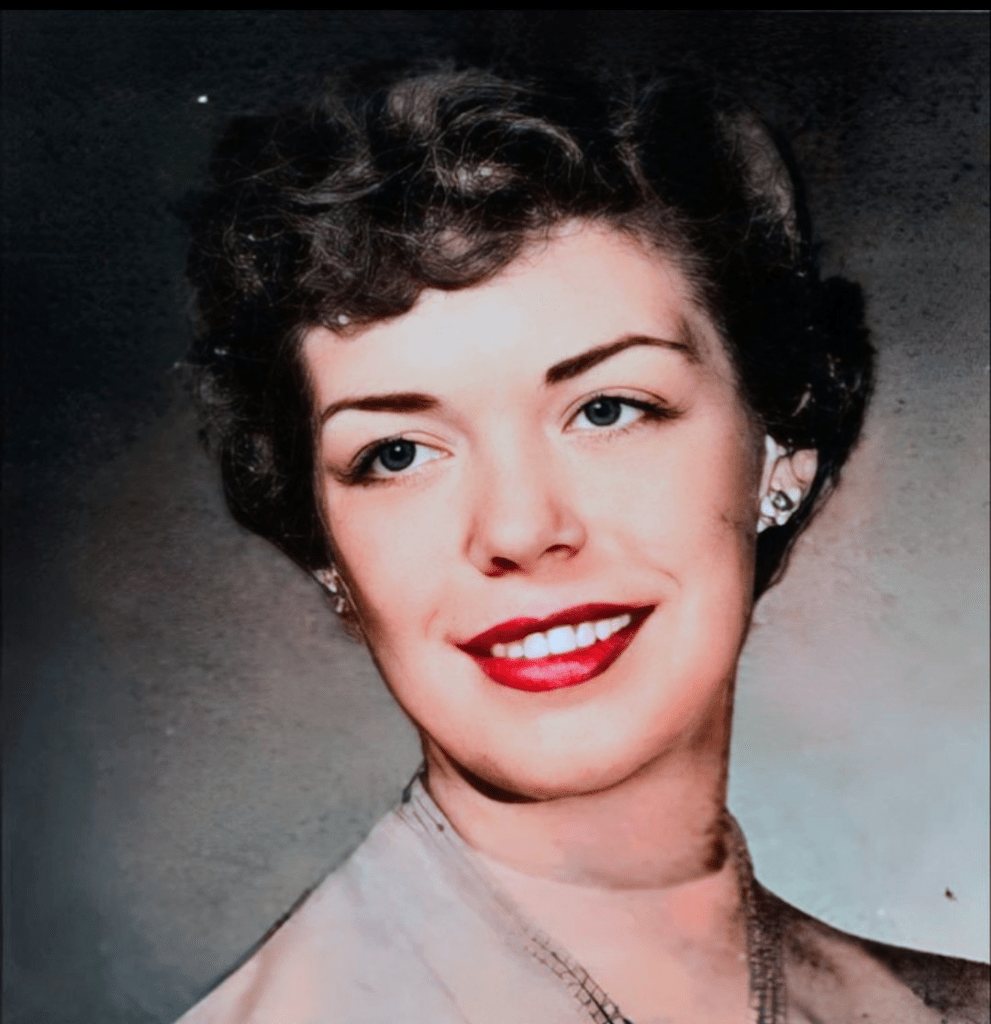
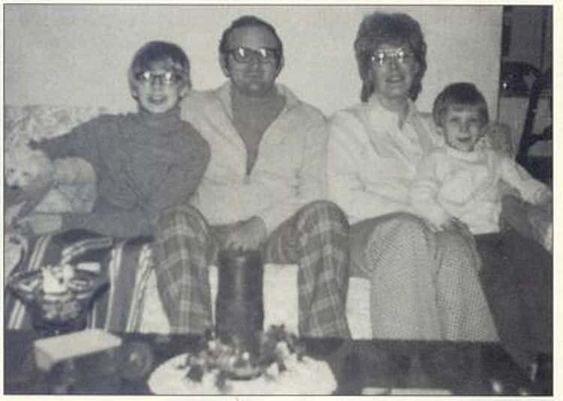
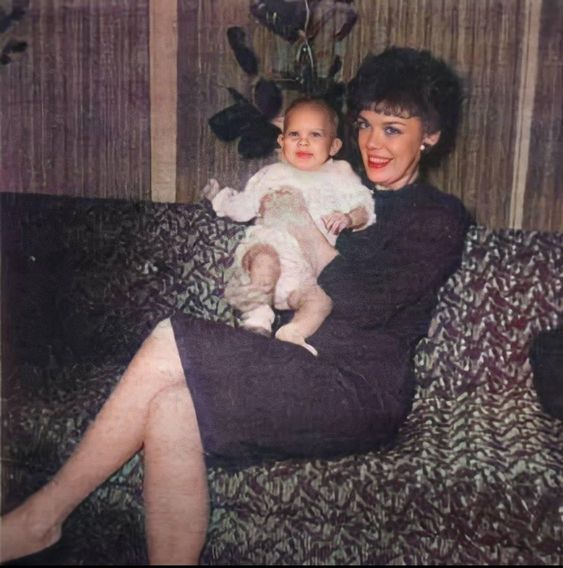
Still His Mother: The Life of Joyce Dahmer

She was writing him a letter when the phone rang.

It was an ordinary letter — the kind she had been writing him for two years by then. About the weather. About a book she had recently read. About the small, inconsequential movements of her days: what she had seen, what she had cooked, what her garden looked like that week. These were the letters of a woman who had learned, through extraordinary effort, what it meant to have a relationship with her son. They had arrived at a language, she and Jeffrey. A careful, gentle one. They had learned what to say and, more importantly, what not to say, and within those boundaries they had managed to build something that — against every conceivable odd — resembled closeness.

The call was from the warden. Jeffrey was dead.


The world had made up its mind about Joyce Dahmer long before it knew much about her. When Jeffrey’s arrest in July 1991 exploded across every news channel in America, the instinct to locate a source — a cause, a failure, a place to direct the horror — was immediate and powerful. Mothers have always been the easiest answer to that question. And so Joyce became the Monster’s Mother, a character more than a person, a symbol of everything that could go wrong in the formation of a human being.

It is worth pausing on what the world chose not to know about her.

Joyce Annette Flint was born into a household where she was not exactly welcomed as a full person. Her father was domineering and controlling; she described her childhood as one of ridicule and servitude, of being shaped almost entirely around someone else’s expectations and needs. She was taught, as most girls of her generation were taught, that a woman’s destination was marriage and family, that there was nothing else available to her, that wanting more was a kind of ingratitude. When she was twenty-two, her father made clear that a good girl was a married girl. She married Lionel Dahmer.

She would spend years inside that marriage surviving it. The household she and Lionel built together was one of frequent, bitter conflict — arguments that became the furniture of the rooms Jeffrey and David grew up in, the constant background radiation of family life. Lionel was a chemist, more comfortable, by his own eventual admission, with petri dishes and chemical compounds than with human beings. He was demanding and critical, of Joyce and of Jeffrey both, a man for whom nothing was ever quite right, ever quite enough. Joyce fought back. Jeffrey, quiet and introspective, absorbed it differently.

She knew, later, that this had mattered. She came to understand that what Jeffrey had witnessed — what he had been marinated in, day after day — had pushed him further and further into himself, into the solitary, hidden world he had been building since childhood. She blamed herself for not seeing it sooner. She blamed herself for many things.


There are questions that follow Joyce through every account of this story, and they deserve honest answers.

Did she know? Not in the way the question usually implies. She did not know about the killings. But she knew other things, and she chose — sometimes consciously, sometimes not — to look away from them. She knew Jeffrey was drinking, heavily and young. She knew he disappeared into the woods for hours at a time and came back different. When her younger son David came to her, visibly distressed, with what he had witnessed, she told him he was wrong and sent him away. She knew, or strongly sensed, that Jeffrey was gay, and she could not find a way to open that door for him, to tell him it was safe to walk through it. She has spoken of this with grief — that she sensed it, that he was afraid, and that she did not reach out her hand.

This is not the same as culpability for seventeen murders. But it is also not nothing, and Joyce, to her credit, never pretended otherwise. She did not take the easy route of total self-exoneration. She understood that the atmosphere of her marriage, the things she had ignored, the conversations she had not been able to have — all of it had contributed, in ways she could not fully measure, to who Jeffrey became.

Did she love him? Yes. Without condition and, eventually, without illusion.


When Jeffrey was arrested, Joyce was living alone in another state. She had left Ohio years earlier, after the divorce, after Jeffrey had remained with Lionel and she had built a different life — returning to college, earning a graduate degree, working at an AIDS clinic where she counselled dying young men, many of them gay. There is something almost unbearably ironic in this detail: Joyce Dahmer, who could not speak to her own son about his sexuality, spending her working hours as a compassionate presence to gay men in their final days. She was good at it. Her colleagues valued her. She had found, in that work, a version of herself she was proud of.

She learned about Jeffrey’s arrest from the television. No one in the family called her.

She sat and watched the six o’clock news, and then the six-thirty, and then the ten o’clock, and then the eleven, and Jeffrey was the lead story on every one of them, and no one called. Not Lionel. Not David. Not a cousin, a friend, an in-law. She was the mother of the man they were discussing, and she did not exist to any of them in that moment. She found out what had been found in apartment 213 the same way everyone else did.

She went into hiding for three months, on the advice of Jeffrey’s lawyer, who had not even known Jeffrey had a mother until she called him herself.

When she came back out, the world had finished deciding what she was. She returned to work, and then the photographs of her sons were removed from her desk. Then her desk was moved to a back room, away from the public. Then she was quietly let go. She applied for other positions. Once it emerged who she was, the positions were suddenly filled. She was branded — she used that word — in a way that could not be undone. The scarlet letters, she wrote, burned into her life permanently.

It was around this time that Lionel published his book.


She did not write much about what Lionel’s book represented to her, but she did not need to. She had watched him remain in his hometown, keep his job, be surrounded by family and friends, rebuild his public image as a grieving father trying to understand the incomprehensible. She had watched him receive something that approached sympathy. And she had received nothing but condemnation.

She asked, simply and directly: why? Why was she alone branded as the Monster’s Mother while the man who had also raised him, who had also missed the signs, who had also been absent and critical and insufficient — why was he allowed to move on? She offered her own answer: because she was a woman. Because mothers are held to account in ways that fathers are not, because the mythology of maternal responsibility makes mothers both the source of all goodness and the target of all blame when goodness fails. She believed it was as simple as that. She was probably right.


The suicide attempt came when she had nothing left to lose.

She sat with the pills and she thought about Jeffrey — not the monster, but the quiet boy she had never really known how to reach, the child who had kept her at arm’s length all his life. She thought about what she had not done. She thought about Lionel’s book. She swallowed the pills one at a time, and then turned on the gas oven, and lay down to wait.

A salesman, ringing her doorbell and getting no answer, looked through the window.

She woke in a hospital bed furious to be alive.

Her son David flew out to take care of her. He smashed his fists through a wall when he heard what she had done. He tried to bring her home with him. She refused, and pushed him away, and then sat with the fact that at least one of her sons had loved her enough to rage at losing her.


It was after the attempt that she went to see Jeffrey in prison.

She had been preparing herself, she thought, to comfort him. Jeffrey had something else in mind. He wanted to confess — not to the courts, not to a therapist, but to his mother. He wanted her to hear it from him. He went through each victim, one by one, describing what he had done, and he stressed, again and again, the same thing: that he had always made sure they were unconscious. That he had not wanted them to suffer. That he had not wanted to be cruel.

She had trained as a therapist. She assumed that role now, because it was the only way she could stay in the room. As his mother she would have shattered. As a professional she could listen.

When it was over, she kissed him goodbye and drove directly to the nearest emergency room, where she spent the night with uncontrollable physical illness.

She held onto the only thing she had: at least he showed them mercy. It was not much. She knew it was not much. But it was the thread, and she held it.


After that visit, they began to build something. She called him every week. He looked forward to the calls. She wrote him letters about her garden, about television programmes she had watched, about books, about the weather, about nothing in particular. He wrote back. They found a rhythm, a language, a way of being with each other that had never existed when he was free and living in the world.

All his life, Jeffrey had kept her at arm’s length. In prison, he reached out. She has said that the relationship they built in those two years was the closest they had ever been. There is a grief in that sentence that goes beyond loss — it is the grief of things that arrived too late, of the door finally opening when there is nowhere left to walk.

She was still writing him a letter when the warden called.


Joyce Dahmer died in 2000, six years after Jeffrey. She spent those years largely in seclusion, in a home with a garden she had made her sanctuary. She showed people Jeffrey’s baby book. It was important to her, she said, that they understand he had once been just a child — laughing, arms stretched out for a hug, full of the same ordinary wonder as any other small person. She was not asking for forgiveness for him. She was asking for the acknowledgment that he had been human, and that she had loved him, and that both of these things were true at once.

She was not a perfect mother. She was not a monster either. She was a woman shaped by a difficult childhood, trapped in a painful marriage, unable to break certain silences that might have mattered, and then destroyed by a society that needed someone to punish and chose her.

She bore it. She remained. She wrote the letters.

She was always going to be Jeffrey Dahmer’s mother. She chose, in the end, to be exactly that — not in shame, but in the stubborn, clear-eyed love of someone who had finally learned what it meant to show up for another person, even from the other side of a prison wall, even when the world told her she had forfeited the right.

She was still his mother.

She was always going to be.

The Love He Could Not Name: Jeffrey Dahmer, Homosexuality, and a World That Had No Place for Him

There is a moment in Jeffrey Dahmer’s psychiatric interview with Dr Frederick Fosdal, recorded on January 9, 1992, that stops you completely. Fosdal asks him about his sexuality — when he knew, what he felt, what options he saw. Jeffrey’s answer is quiet and precise:

“I was 14 when I had the consenting meeting with Tyson at the club house — it was never talked about — there was no outlet. There was never any opportunity for a good sex life — I never saw any opportunity to meet anyone like that — it was just an issue that was never discussed in the community at all.”

Never discussed. No outlet. No opportunity.

This is not a man describing a preference. This is a man describing a wall.


America in the 1970s: The World Jeffrey Grew Up In

Jeffrey Dahmer was born in 1960. He was nine years old when the Stonewall riots happened in New York City in June 1969 — the moment often cited as the birth of the modern gay rights movement. Gay men and women fought back against a police raid on a Greenwich Village bar, and the world noticed.

But Stonewall happened in New York. Jeffrey grew up in Ohio.

The distance between those two realities cannot be overstated. The 1970s were a decade of paradox for gay Americans. In urban centres — New York, San Francisco, Chicago — a visible, increasingly confident gay culture was emerging. The Castro district in San Francisco became a neighbourhood. Gay bars multiplied. Publications emerged. A community, however fragile, was forming.

But in small towns, in suburbs, in the heartland — none of this existed. Or rather, it existed somewhere else, in whispers, in rumour, in something you might have heard about if you were lucky enough to know where to look. For a teenager in Bath Township, Ohio, it might as well have been on another planet.

The legal landscape was brutal. In 1970, sodomy laws — criminalising same-sex intimacy — were still active in every American state. By the time Jeffrey reached adulthood, some states had begun repealing them, but Ohio’s sodomy law remained on the books until 1974, and the culture around it changed far more slowly than the legislation. Gay men were arrested, harassed, fired, institutionalised, and disowned throughout the decade. The American Psychiatric Association had only removed homosexuality from its Diagnostic and Statistical Manual of Mental Disorders in 1973 — meaning that for the first thirteen years of Jeffrey’s life, his sexuality was officially classified as a mental illness by the foremost psychiatric authority in the country.

Then came 1981. The first reports of what would become known as AIDS began appearing in medical journals. By 1982 it had a name. By 1983 it was an epidemic. By the mid-1980s, when Jeffrey was in his mid-twenties and living in Milwaukee, AIDS had transformed the cultural landscape around homosexuality into something even more terrifying — a plague, in the public imagination, visited specifically on gay men. The stigma compounded. The silence deepened. The already-narrow spaces where gay men could exist without fear became sites of shame and death in the eyes of a fearful country.

This was the world. This was the air Jeffrey Dahmer breathed as he tried to understand himself.


Bath Township, Ohio: No Language, No Mirror, No Exit

Jeffrey grew up in a household where emotional and psychological complexity was rarely addressed directly. Lionel Dahmer’s memoir is honest about this — a household of silences, of difficulties managed rather than spoken about, of a father who loved his son but did not know how to reach him, and a mother whose struggles with mental health consumed enormous amounts of the family’s emotional oxygen.

Neither parent ever discussed homosexuality with Jeffrey. Not once. Not in any form.

In the Fosdal interview Jeffrey reflects on this directly. When asked about his sexuality, he says that in the community he was living in, homosexuality was the ultimate taboo. He never met anybody of the same mindset as himself. He never saw any opportunity to live normally. And so when the desire first fully crystallised — at around fifteen or sixteen, he says — he could think of only one way to satisfy it, and that way was forceful and wrong. He knew it was wrong. But he had no other model, no other path, no image of what a life like his could look like.

This is crucial. Not having a model is not a trivial thing. Psychologists who work with LGBTQ+ adolescents consistently identify mirror absence — the inability to see yourself reflected anywhere in the world around you — as one of the most psychologically damaging aspects of growing up gay in an unsupportive environment. Without mirrors, identity formation becomes distorted. You cannot build a healthy sense of who you are when who you are does not appear to exist anywhere.

Jeffrey had no mirrors. No gay teachers he knew of. No gay relatives who were out. No books, no films, no television characters. No community. No language that applied to him.

What he had instead was shame — and the very particular kind of shame that comes not from something you have done, but from something you simply are.


The Double Life Begins

At fourteen, Jeffrey had a consensual sexual encounter with another boy — Tyson, at the clubhouse. He never spoke of it again. It was never mentioned between them. There was nowhere to put it, no framework to understand it, no adult to turn to. It simply happened and was buried.

Lionel, in A Father’s Story, reflects with pain on how little he knew of Jeffrey’s inner life during those years. He describes a boy who kept everything to himself, who would talk but never confide, whose innermost thoughts remained completely private. Jeffrey himself confirms this in the Fosdal interview, describing how he simply felt it was best to keep his private thoughts private — that he didn’t really trust them with anyone, not even family members. Not because he feared a violent response, but because there was simply no language available, no way to say it, no expectation that it could be received.

Brian Masters, in The Shrine of Jeffrey Dahmer, traces the gradual internalisation of this secrecy. By the time Jeffrey reached high school he was already leading what he would later call a double life — not yet in the criminal sense, but in the most fundamental sense: a person whose inner reality bore no relationship to what anyone around him could see or know.

He was already, by his mid-teens, essentially alone.


Milwaukee and What He Found There

When Jeffrey eventually made it to Milwaukee — first briefly, then permanently from 1981 onwards — he found, for the first time, a world where his sexuality had a geography. There were bars. There were bath houses. There were men like him, or at least men who wanted something similar.

But even here, what he found was not what he needed.

In the Fosdal interview Jeffrey describes his experience of Milwaukee’s gay scene with a flatness that is quietly devastating. He went to bars. He went to bath houses — he estimates seventy-five to a hundred encounters over the years. He was, by the social conventions of that world, engaging with his sexuality. And yet what he describes is not satisfaction but a deepening of the original wound.

“The only long-term attachments that I was interested in was of a sexual nature — as far as regular friendships — it never interested me too much. After work I like to just go and do my own thing — go to the bars — try to meet the ideal person that I was physically attracted to.”

He was looking for something specific that the bath house circuit could not provide — not just physical encounter but permanence. Compliance. Presence. He describes daydreams not of violence but of lying with a good-looking guy, kissing, touching, in total compliance with my wishes. He wanted someone to stay.

“I guess I never took the time to really nurture any long-term relationships.”

And then, in answer to whether he might have found that if he’d looked harder:

“No. I didn’t. I guess I didn’t look hard enough.”

There is something almost unbearably sad about that answer. The pause before it. The admission of his own role in the failure. The recognition, from inside a prison cell in 1992, that somewhere out there were people who might have wanted what he wanted — and that he hadn’t found them, and that everything that followed came in the space between what he needed and what he could find.


The Question That Cannot Be Answered, Only Held

In the Fosdal interview there is one exchange that has stayed with us since we first read this document. Fosdal suggests that perhaps, had Jeffrey been able to form a compatible relationship, none of this would have happened. Jeffrey responds:

“And if I didn’t have such a desire for the total control and domination — right — if I wasn’t so selfish. I have to admit what I was doing was the ultimate in selfishness.”

He accepted responsibility. He did not blame his sexuality, his loneliness, his era, his community. He named his own pathology clearly.

But we are left — as the memorial always is — holding the complexity. The desire for control and domination did not emerge in a vacuum. It emerged in a person who had spent fifteen years with no outlet, no language, no mirror, no community, no model of what love between men could look like. It emerged in someone for whom intimacy had never once been modelled as safe, reciprocal, or possible to sustain.

We are not saying the environment caused what he did. We are saying the environment did not help. And that is the minimum we owe to honest examination.

Fosdal asks him near the end of the interview whether he was lonely during his high school years. Jeffrey answers:

“During high school years it was frustrating to not be able to meet someone of my interests so it was frustrating — yeah it was lonely.”

“What about afterwards?”

“And afterwards.”

“Like in Milwaukee — are you lonely?”

“Uh-huh.”

He was lonely his entire life. In Bath Township with no language for what he was. In Milwaukee with seventy-five to a hundred encounters that left him exactly where he started. In prison, talking to a psychiatrist through the bars, describing daydreams of someone just lying there, kissing, touching, staying.

“I can take it to a point, but not years and years.”

He said that about loneliness. Years and years of it. He could take it to a point.

He reached that point. The world he lived in helped put him there.


Sources: Frederick A. Fosdal, M.D., psychiatric interview with Jeffrey Dahmer, January 9, 1992; Brian Masters, The Shrine of Jeffrey Dahmer, 1993; Lionel Dahmer, A Father’s Story, 1994. Historical context on LGBTQ+ legislation and the AIDS crisis drawn from documented public record.

The Cannibal Myth: Why Jeffrey Dahmer Does Not Fit the Clinical Definition

Of all the labels attached to Jeffrey Dahmer’s name, cannibal may be the most viscerally powerful and the least clinically accurate. Like the word necrophile — which we addressed in a previous article — it is repeated so confidently and so frequently that it has become accepted fact. And like the word necrophile, it is wrong. Not wrong in the sense that Jeffrey Dahmer never consumed human flesh — the documented record confirms that he did, on a limited number of occasions. Wrong in the sense that the word cannibal, as a clinical and psychological category, describes a specific profile and a specific motivation. Jeffrey Dahmer does not fit that profile. Understanding why matters.

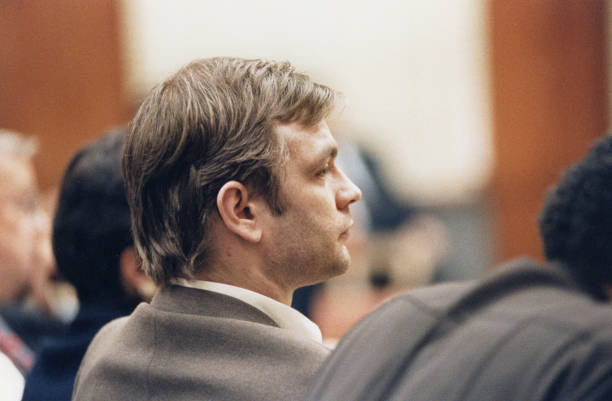
(Photo by Curt Borgwardt/Sygma/Sygma via Getty Images)

What Clinical Cannibalism Actually Is

Cannibalism as a paraphilic behaviour — that is, as a compulsive sexual or psychological fixation rather than a culturally or circumstantially motivated act — is classified in forensic psychology under the broader category of vorarephilia: a paraphilia in which the primary source of gratification is the act of consuming another person, or being consumed. In vorarephilic psychology, the consumption itself is the goal. It is the central fantasy, the organising compulsion, the thing toward which all other behaviour moves.

Research by Beier, Neutze, and Mundt (2009) on paraphilic disorders in forensic populations identified the defining characteristic of consumption-oriented paraphilias as the primacy of the consuming act in the individual’s fantasy and motivational structure. The consumption is not incidental. It is not instrumental. It is the point.

This distinction matters enormously when we examine Jeffrey Dahmer’s documented psychology.

What Jeffrey’s Own Accounts Tell Us

Jeffrey Dahmer was one of the most extensively interviewed violent offenders in modern American forensic history. His confessions were detailed, consistent, and remarkably self-aware. He had every reason — legal, psychological, personal — to construct his narrative carefully. And across every account, in the Fosdal psychiatric interview of January 1992, in the Kennedy interrogation transcripts, in his conversations with Roy Ratcliff, one thing is consistent: the consumption of human flesh was never described as a primary drive.

What Jeffrey described, consistently and with specificity, was a compulsion toward permanent possession. He wanted to keep the person with him. He wanted them to become part of him — inseparable, permanent, impossible to lose. In the Fosdal interview, he described his behaviour explicitly in terms of not wanting the person to leave. The fantasy was one of permanent union, of the other person becoming so thoroughly incorporated into his existence that separation became impossible.

In this context, the limited instances of consuming human flesh represented, in Jeffrey’s own psychological framework, the ultimate expression of that possession compulsion. Not a desire to eat, but a desire to keep. Not vorarephilia, but an extreme and catastrophic extension of the same attachment pathology that drove every other aspect of his behaviour.

He said it himself:

“I wanted to keep them with me. I wanted them to be a part of me.”

That sentence is the key. The motivation was not consumption for its own sake. It was permanent possession expressed through consumption.

The Forensic Psychiatric Assessment

Dr Judith Becker, Professor of Psychology and Psychiatry at the University of Arizona, testified at Jeffrey’s 1992 trial and provided the most detailed clinical evaluation of his paraphilic structure. Her assessment identified the primary paraphilia as organised around unconsciousness, control, and possession — not consumption. The behaviour involving human remains was assessed as an extension of the possession compulsion, not as an independent paraphilic drive.

Dr Fred Berlin of Johns Hopkins University reached similar conclusions. Neither evaluator identified a vorarephilic profile in Jeffrey’s psychology. Neither found evidence that the act of consumption was itself the source of gratification or the organising fantasy.

This is not a minor technical distinction. In forensic psychology, motivation is everything. The same external behaviour — consumption of human flesh — can arise from radically different psychological structures. In true clinical cannibalism, the motivation is the consumption. In Jeffrey Dahmer’s case, the motivation was possession, and the consumption was one instrument through which that impossible goal was pursued.

The Netflix Effect

The 2022 Netflix dramatisation Monster: The Jeffrey Dahmer Story placed enormous and disproportionate emphasis on cannibalism, including the now-notorious sandwich scene — which, as we have documented elsewhere, has no basis whatsoever in the factual record and was invented for dramatic effect.

The cultural result has been a significant distortion: in the popular imagination, Jeffrey Dahmer’s cannibalism has become central to his story in a way that the primary sources do not support. It is more viscerally shocking than somnophilia or possession compulsion or attachment pathology. It is more filmable. It is more clickable.

It is also more distorting. Every time we reduce Jeffrey Dahmer to the cannibal label, we close off the actual psychology — the attachment wounds, the developmental failures, the chronic loneliness, the possession compulsion — in favour of something that functions primarily as horror spectacle. We make him into a monster rather than a human being whose psychology, however catastrophic in its expression, is legible and documentable and connected to things that can actually be understood.

Why the Distinction Matters

This is not, to be clear, an attempt to minimise what happened. The acts documented in the forensic record are serious and devastating, and nothing in this article diminishes the weight of what Jeffrey Dahmer did or the harm caused to his victims and their families.

But accuracy matters. It matters for the same reason that the somnophilia distinction matters, and the same reason the myth-busting chapter of The Book of Jeff matters. When we apply inaccurate labels, we stop looking. We close the file. We decide that the explanation is the word — cannibal, monster, evil — and we move on without asking what the word actually describes, whether it applies, and what it would mean if it didn’t.

Jeffrey Dahmer was not primarily motivated by a desire to consume human flesh. He was motivated by a desperate, pathological, catastrophically expressed need to possess and to keep. That need had roots in early attachment failures, in profound and chronic loneliness, in a psychology that had never found a way to tolerate the ending of connection.

The cannibal label is simpler. The truth is more human.

And the truth is what we are here for.


Sources: Frederick A. Fosdal, M.D., psychiatric interview, January 9, 1992; Detective Patrick Kennedy, Grilling Dahmer, 2016; Dr Judith Becker, trial testimony, State of Wisconsin v. Jeffrey L. Dahmer, 1992; Dr Fred Berlin, trial testimony, 1992; Beier, Neutze and Mundt, Archives of Sexual Behavior, 2009; Brian Masters, The Shrine of Jeffrey Dahmer, 1993.

Left Alone: Jeffrey Dahmer, Abandonment, and the House on West Bath Road

There is a moment in the history of Jeffrey Dahmer’s life that does not receive the attention it deserves. It is not the moment of his arrest, nor the moment his crimes were discovered, nor even the moment he committed the first of them. It is an August afternoon in Ohio, sometime in 1977, when a seventeen-year-old boy watched a car pull out of the driveway and drive away — taking his mother, his little brother, and any remaining semblance of family structure with it — and was left entirely alone.

He would remain alone for weeks. No one came. No one knew.

The Marriage That Broke Him Second

The dissolution of Lionel and Joyce Dahmer’s marriage was not sudden. It was the long, grinding collapse of two incompatible people who had been held together by habit, geography, and the presence of children. Lionel Dahmer, in his own memoir, documents the accumulation of distance — the arguments, the helplessness, the silences that grew longer. Joyce suffered from severe depression and anxiety, and Lionel, by his own admission, was emotionally withholding and ill-equipped to meet her needs. She would ask him if he loved her, he writes, and his reassurances never seemed to satisfy her. He felt helpless. She felt invisible.

Jeffrey had grown up inside this. Brian Masters, in The Shrine of Jeffrey Dahmer, draws the connection directly: the combined inheritance of his father’s aloofness and his mother’s morose sensitivity were cancelling his own personality, negating it, before its development was complete. He had learnt early to take up as little space as possible, to speak little and do less, to manage his emotions in isolation rather than risk adding to the household’s already precarious atmosphere. His brother David would later say that Jeff never learnt to be open with his feelings of frustration, that he went out to the forest alone to cut down trees. They could hear him slamming against the trunks from inside the house.

By the time Jeff was sixteen and seventeen, the marriage had entered its terminal phase. Joyce’s father died in August 1977 and she told Lionel on her return that seeing her father’s dead body had made her feel certain their marriage was dead too. She initiated divorce proceedings. Lionel filed shortly afterwards. A custody battle followed — primarily over David, who was still a young child, while Jeff was nearly eighteen. Lionel moved out of the family home at 4480 West Bath Road and into a room at the nearby Ohio Motel. He had no telephone there, and was restrained by order of the Court from visiting the house.

Jeff was left in the house with his mother and David, but it was not stable. Masters documents that with his father living in the motel and his mother frequently running off to see relations in Wisconsin and taking David with her, Jeff was sometimes left to his own devices, and when that happened, his imagination festered. The children whose parents are visibly departing from their lives often experience something worse than the final abandonment itself: the anticipatory dread, the practice losses, the sensation of being the last one standing before the door finally closes for good.

24 August: The Door Closes

The divorce settlement was a meticulous, depressing document. Masters describes it: sofas, chairs, tables, curtains, beds, a toaster, a ping-pong table, stereo equipment, a barbecue — two full pages measuring in objects and belongings the failure of a relationship. Lionel would retain the stove and refrigerator. The curtains in the playroom. Joyce was awarded the car.

On 24 August, Joyce loaded that car and took David with her to Wisconsin. She did this in defiance of a court order. Her sister later said she was frightened of Lionel and what he might do. She is also said to have begged Jeff to go with them, but he was, in Masters’ words, paralysed by inertia. So she left, never to return, and as she went she urged Jeff not to tell his father what she had done.

Jeff was left alone in the house.

There was half a gallon of milk in the fridge, but nothing else. Some of the food in the larder was two years old. The house was in a mess. There was no car in the garage. He was isolated, in the literal sense now as well as the emotional.

It was some weeks before he was discovered by his father. Lionel had no telephone at the motel and was restrained by court order from visiting the house. He had no idea Joyce had left. When he finally learned the facts and went to the house with his new companion Shari Jordan, the scene they found was one of quiet devastation. Very little food. A broken refrigerator. A round wooden coffee table in the family room, on which a pentagram had been drawn in chalk — Jeff had been conducting a séance. He had been trying to contact the dead.

When Lionel questioned Jeff about where Joyce and David had gone, Jeff said only: They moved out. And then he shrugged. He claimed he did not know where they were, and though Lionel pressed him, he added nothing beyond that initial sentence. He had, weeks before, watched everything leave. He had been sitting with it alone since then. When his father finally came, there were other teenagers in the house, drifting through the rooms, touching things delicately, as if feeling for their textures, as if uncertainty about where they were had made them careful.

Shari Jordan, walking through the house for the first time, felt its unhappiness immediately. Looking at Jeff, she saw, in her own words, a lost little boy. She saw a young man who seemed shell-shocked by the divorce, ashamed and embarrassed by the disarray within his family. He had been seventeen years old when the car pulled out of the driveway. He had waited. Nobody came.

What Happens to the Brain When a Child Is Abandoned

The research on parental abandonment and adolescent development is neither surprising nor ambiguous. Its conclusions are consistent across decades of study in attachment theory, developmental psychology, and neuroscience, and they form a portrait of what happens inside a young person who experiences the loss of a caregiver — not through death, which carries its own kind of grief, but through departure, which carries something arguably more corrosive: the knowledge that the parent chose to go.

John Bowlby, the British psychiatrist whose work on attachment theory remains foundational to the field, established that the secure base provided by a caregiver is not a comfort for children — it is a developmental necessity. Without it, the child cannot properly explore, regulate emotion, or build an internal working model of the world as safe or coherent. Bowlby described the effects of disrupted attachment as directly comparable to mourning: a child who loses a caregiver, whether physically or psychologically, goes through stages of protest, despair, and then, most dangerously, detachment. That final stage — detachment — is the system protecting itself. It is the moment the child stops expecting the caregiver to return, and reorganises its entire emotional structure around that absence.

What makes abandonment in adolescence particularly damaging is the developmental moment at which it occurs. The teenage brain is undergoing its most significant structural reorganisation since infancy. The prefrontal cortex — responsible for impulse control, consequence assessment, and emotional regulation — is still years from completion. Research by developmental neuroscientist Sarah-Jayne Blakemore and others has shown that adolescents rely far more heavily on subcortical systems — the amygdala, the limbic system — for emotional processing, which is why stress responses in teenagers are more intense, more consuming, and harder to contextualise than those of adults. When the stressor is as profound as the departure of both parents in rapid succession, the developing brain has no adequate mechanism to contain it.

Studies on the effects of parental abandonment specifically — as distinct from parental death, which tends to receive more social recognition and support — consistently document elevated rates of complex trauma responses in adolescents. Mary Ainsworth’s work on attachment styles identified what she called anxious-avoidant attachment as a common outcome of parental emotional unavailability or physical departure: the child learns that reaching for connection leads to disappointment or rejection, and so retreats entirely, presenting to the world as self-sufficient while experiencing internally a profound dysregulation. Research published in journals including Child Development and Developmental Psychology has linked adolescent experiences of parental abandonment to significantly higher rates of dissociation, emotional numbing, impaired identity formation, and difficulty regulating aggression or impulse — not as character flaws, but as neurological adaptations to an environment that has become profoundly unsafe.

The isolation component matters enormously. A body of research by John Cacioppo and colleagues on the effects of chronic loneliness has demonstrated that social isolation activates the same neurological threat-response systems as physical danger. The isolated human brain perceives itself as under threat, continuously, and reorganises its processing accordingly — becoming hypervigilant, more reactive to negative stimuli, less capable of trust or connection. In adolescents, for whom peer belonging and family security are the twin pillars of psychological stability, sustained isolation during a period of already heightened vulnerability has effects that can be traced through the architecture of the brain for decades.

Jeff Dahmer spent weeks alone in a house with two-year-old food in the larder and a broken refrigerator. He drew a pentagram on a coffee table and tried to reach the dead. He invited strangers in to drift through the rooms. He was seventeen years old, and not one adult in his life knew where he was or what he was doing. Both his parents had departed. Neither came back.

The Imagination Festered

Masters uses a specific phrase about the period of increasing domestic chaos that preceded the final abandonment: Jeff was left to his own devices, he writes, and when that happened, his imagination festered. It is a remarkable word. Not grew. Not developed. Festered — as in a wound that has not been cleaned, that is turning in the dark.

Jeffrey Dahmer had been alone with his inner life for years before August 1977. He had built an elaborate private world — what Masters documents as Infinity Land, a fantasy of sole possession and absolute control, developed in childhood and carried silently into adolescence. He had discovered, already, that his sexual attraction was to men, and had no framework within which to place that knowledge. He had become increasingly isolated at school, increasingly dependent on alcohol, increasingly prone to fantasies that nobody around him knew existed. The aloneness of his inner life was already profound before his parents left. What the abandonment did was remove the last external structures that had been interrupting it.

Psychological research on fantasy and isolation draws a sharp distinction between fantasy that is integrated with reality — tested, modified, tempered by contact with other people — and fantasy that develops in a sealed system, with no external check. Fantasy that grows in isolation does not remain stable. It intensifies. It becomes more specific, more detailed, more necessary. For a teenager whose regulation depends almost entirely on fantasy because external regulation has disappeared, the inner world does not simply become his refuge. It becomes his only world.

This is what Masters is describing when he writes that Jeff’s imagination festered. Not that Jeff was simply left to his hobbies, or his music, or his aloneness. He was left to a developing system of fantasy that had no counterweight — no parent to interrupt it, no sibling to demand he return to the ordinary world, no daily structure that required him to be present in reality rather than inside his own head. The house on West Bath Road, empty and disordered, became the perfect incubator.

June 1978: The House Is Empty

By June 1978, Jeffrey Dahmer had turned eighteen. His father and Shari were living in the house, but on the day that would determine the rest of his life they were away. The house was empty. He had the car. He was driving home alone.

He saw a young man walking by the roadside without a shirt. Something in him — the confluence of everything that had been accumulating in the sealed system of his inner world — made him turn the car around. He told the young man, whose name was Steven Hicks, that his folks were away, that they would be left alone. Steven got in the car. He came back to the house. They drank and talked for a couple of hours, and then Steven said he ought to be going before it got dark.

What happened next was the consequence of many things — Jeffrey Dahmer’s psychology, his paraphilias, the fantasies he had been cultivating for years. But Masters, who is careful and precise about causation, locates the trigger of that specific night in a specific feeling. The talk of moving on, of the future, of going somewhere — it pressed upon Dahmer, Masters writes, like a creaking vice. He had no future. He was going nowhere. He was doomed to sit in that house and poison himself with thinking. He needed to exercise some control, for once, and be himself, whatever that self was.

He went to the cellar and got a barbell. He came back upstairs. Steven Hicks was still sitting in the chair, with his back to the door.

Masters’ account of the hours that followed is careful and sombre. And then, after everything, he writes this: a boy of eighteen in a solitary house in the quiet Ohio countryside took his first step towards madness.

A boy. Solitary. A house in the countryside. That is the framing Masters chooses. Not a monster. Not an aberration. A boy, alone, in a house, at the precise moment when all the structures that should have been there to interrupt the worst of what was inside him had collapsed and gone.

The Absence of Protection

None of this is a justification. Masters is not offering one, and neither is this article. Steven Hicks was a nineteen-year-old who had done nothing wrong, who had got into a car in good faith and would never return to his family. His death was a crime of real violence, and real harm, and it was the beginning of a pattern that would destroy sixteen more lives. The suffering of those people and everyone who loved them is absolute, and it is not diminished by anything written here.

But understanding is not the same as excusing. And one of the failures of the popular narrative around Jeffrey Dahmer — the narrative that begins with the word monster and ends there — is that it exempts us from understanding how something like this happens in a real family, in a real house, in a country that had all the knowledge it needed to intervene and did not.

A seventeen-year-old boy was left alone in a disordered house for weeks. He had two years of old food in the larder and half a gallon of milk in a broken refrigerator. He drew pentagrams and tried to reach the dead. Nobody knew. Nobody came. The one parent who had no telephone and was legally prevented from approaching eventually arrived and was devastated by what he found. The other parent had taken the court-ordered car in defiance of a judge and never came back.

Research tells us what we know in our bones: that children need continuity, presence, and protection to develop. That the adolescent brain is uniquely vulnerable to abandonment. That isolation in a teenager, especially an already-isolated teenager with an already-sealed inner world, does not resolve on its own. That the imagination, left without a counterweight, festers.

Jeffrey Dahmer was not protected. He was not monitored, not counselled, not checked on, not held. He was left with a broken refrigerator and a house full of strangers and a mind full of things no one had ever helped him name or manage. He was a lost little boy, as Shari Jordan recognised in a moment of startling clarity, and the world that encountered him saw only the shell of a young man who seemed fine.

He was not fine. He had been alone for a very long time. And the house on West Bath Road, in August 1977, was the moment the last door closed.


Sources: Lionel Dahmer, A Father’s Story, 1994; Brian Masters, The Shrine of Jeffrey Dahmer, 1993. Psychology references: John Bowlby, Attachment and Loss (1969–1980); Mary Ainsworth, Patterns of Attachment (1978); Sarah-Jayne Blakemore, The Mysterious Workings of the Adolescent Brain (2012); John Cacioppo and William Patrick, Loneliness: Human Nature and the Need for Social Connection (2008); research published in Child Development and Developmental Psychology on adolescent responses to parental abandonment and emotional neglect.

What You Don’t Know: Lesser-Known Facts About Jeffrey Dahmer

The Jeffrey Dahmer that true crime culture presents is a curated collection of horrors. The cannibal. The monster. The apartment of unspeakable things. But Jeffrey Dahmer was alive for thirty-four years, and within those years there are details so quiet, so human, so entirely absent from the popular narrative that they function almost as corrections. This article is a collection of those details. Each one is sourced. Each one is real.

He Was Born With Corrective Casts on His Legs

Joyce Dahmer’s baby scrapbook — preserved and later quoted by Brian Masters — notes that Jeffrey “scared us by having correctional casts on his legs from birth till four months.” He also needed small shoe lifts until around the age of six. He arrived in the world needing correction, already slightly at odds with the shape things were supposed to take. He weighed 6 pounds 15 ounces, was 18.5 inches long, had auburn hair and, as Masters describes them, luminously blue eyes.

His First Prayer

By the time he was two years old Jeffrey could speak. He called himself Jeffy, said potty, up pease, and TV. His first memorised prayer, recorded in Joyce’s scrapbook, was: “Now lay me down to sleep, I pray the Lord my soul to keep. God bless everyone. Make Jeffy a good boy. Amen.” He was two years old. He was asking God to make him good before he had any reason to think he might not be.

The Nighthawk Called Dusty

In his primary school years in Iowa, Jeffrey and his father Lionel spotted something in a parking lot that Lionel initially mistook for a ball of dust. Jeffrey looked closer and recognised a baby nighthawk — a small bird that had fallen from its nest. They took it home and raised it. Jeffrey named it Dusty. “It was almost like a pet,” he recalled years later. “It would come back when you called it, eat out of your hand and stuff like that.” In the years that followed, across every interview and psychiatric evaluation, he returned to Dusty unprompted. It may be the single happiest memory of his childhood.

He Played “I Am the Walrus” on Repeat

When Jeffrey enrolled at Ohio State University in 1978, his three room-mates found him almost immediately unbearable — not because of anything sinister, but because he would lie on the top bunk of his dorm room and play a Beatles album over and over again, singing along, particularly to the track I Am the Walrus. He also pinned a photograph of Vice-President Walter Mondale to the wall for no discernible reason. He attended almost no classes, recorded his lectures on tape and listened to them while drinking, and broke down and cried alone in his room. He dropped out at Christmas.

He Donated Blood to Fund His Drinking

Still at Ohio State, unable to cover his alcohol expenses on his father’s modest allowance, Jeffrey found a solution. He donated blood at the university plasma centres — twice weekly — until his fingernails had to be marked by the staff to prevent him donating more than once a week. He was nineteen years old.

The Prom and the McDonald’s

For his senior prom Jeffrey was set up with a sixteen-year-old girl called Bridget Geiger by two classmates who had difficulty finding him a date. Bridget accepted only on the condition he would not drink. When he arrived at her house he was not wearing a tuxedo — the sine qua non of the occasion — while she had dressed in a long party dress. He was so nervous trying to pin the corsage on her dress, almost afraid of touching her skin, that her mother had to do it for him. It was, visibly, his first date.

At the prom, shortly after arriving, Jeffrey disappeared. Bridget felt stranded and humiliated. When he reappeared, he claimed he had not eaten enough at dinner and had gone looking for a McDonald’s, and got lost. He had been absent for most of the prom and had clearly been drinking. He dropped Bridget home two hours early, shook her hand, and wished her goodnight.

He Was Sent to a Brothel Against His Will

Stationed in Baumholder, West Germany with the 2nd/68th Armour Division, Jeffrey was the subject of some concern among older soldiers because he had no girlfriend and had admitted he had never kissed a girl. A group of them decided to help. They took him to a well-known brothel in Vogelway. Two soldiers dragged him inside and introduced him to a girl. When they regrouped, Jeffrey was gone. He had quietly slipped out without doing anything. When pressed, he told them he had never wanted to go there in the first place and did not “need” any girl. One of the older men quietly formed the opinion that he might be homosexual — not based on any overtly feminine attributes, but because “he always seemed like he was hiding something.”

He Walked Eight Miles Through a Snowstorm and Remembered Nothing

During a Thanksgiving dinner at the home of fellow soldier Carlos Cruz in Germany, an argument broke out between Jeffrey and another soldier. Jeffrey quietly stood up at 10:30pm and walked out into the snow. Baumholder was approximately eight miles away, around a mountain, in freezing temperatures. Cruz searched for him but eventually gave up.

Four hours later Jeffrey appeared back at the door. He seemed confused and vague, had lost his glasses, and could not remember where he had been or what he had done. His jacket was not as cold as it should have been after four hours in sub-zero temperatures. Cruz noticed what appeared to be traces of blood on his clothing. Jeffrey sat down and stared at the kitchen table. He told Cruz he assumed he must have done “something bad.” A few days later he remarked: “You know, sometimes the best thing for the soul is to confess.”

He Was Significantly Short-Sighted

His army medical file includes an eyewear prescription dated April 11, 1979, issued at Noble Army Hospital, Fort McClellan, Alabama. The prescription reads: right eye − 5.50 with +0.50 cylinder, left eye −5.25 with +0.50 cylinder. He was significantly myopic — nearsighted enough that without his glasses the world beyond a few feet would have been a genuine blur — and had mild astigmatism in both eyes. The prescription was for a protective mask insert, meaning his lenses were being fitted into his M17A1 army gas mask so he could see clearly during drills and exercises.

It is worth setting this against the Thanksgiving snowstorm: when Jeffrey disappeared into the freezing dark and came back four hours later without his glasses, he had been moving through a world he could barely see. Whatever happened out there, he was doing it nearly blind.

He Lost the Hearing in One Ear

Jeffrey’s drinking in the army eventually reached a point where his repeated insubordination caused the entire platoon to be punished on his behalf. Several of the men turned on him and gave him a severe beating. He was bloodied, and the blow to the side of his head burst his eardrum. He lost the hearing in that ear, and suffered periodic attacks of ear pain connected to the injury for the rest of his life — Masters documents that the earache persisted even ten years later. His army medical records, preserved at the National Personnel Records Center, formally document the injury as otitis media, right ear, traumatic, with restrictions prohibiting any exposure to loud noise, dirt, dust, or moisture.

The records also document episodes of vertigo and dizziness — the expected consequences of inner ear damage, which disrupts the vestibular system responsible for balance. He was discharged from the army six months early, with an honourable discharge, but carrying permanent physical damage from the one place that was supposed to straighten him out.

He Was a Trained Army Medic

In May 1979, while stationed in the army, Jeffrey was sent to the Army Hospital School in San Antonio, Texas, where he completed a six-week course in medicine and emerged as a qualified medic. Masters documents this directly: it was, notably, the first time in his life that he had managed to settle into a sustained course of study and see it through to completion. He was then assigned to the Battalion Aid Station in Baumholder, where he drew blood, administered injections, and provided basic medical care to soldiers. His DD-214 discharge certificate lists his primary specialty as 91B19 — Medical Specialist — held for one year and nine months.

He was, in other words, trained to preserve life. He knew how the body worked from the inside — not from pathology or obsession, but from formal medical instruction. This is the same person who, years later, would take a job as a phlebotomist because it was close to what he knew. The same person who quit that job because he disliked hurting people with needles. The distance between the medic and the monster is one of the most disorienting facts in this entire story.

He Was a Phlebotomist Who Hated Hurting People — and Disliked Blood

After the Army discharge, Jeffrey moved to Milwaukee and took a job as a phlebotomist at the Milwaukee Blood Plasma Center — drawing blood from donors, a skill he had learnt during his army medical training. By all accounts he was technically competent. But he disliked the job, and his specific reason is documented: he could not stand sticking people with needles. He hated causing that small discomfort.

At some point during his time at the plasma centre, he also secretly concealed a vial of blood and took it to the roof of the building, where he drank it — driven, as Masters documents, by some obscure and fumbling curiosity about what it might taste like. He did not like it. He spat it out. It is worth pausing on that detail. The man so often labelled a cannibal tasted blood once, in private, out of a compulsion he could barely articulate, and immediately rejected it. He quit the job shortly after. The label has never fit the person.

He Slept on a Beach in Miami to Escape Himself

After his early Army discharge in March 1981, Jeffrey was given a travel voucher to anywhere in the United States. He chose Florida — specifically Miami Beach — because he could not face returning to the cold of Ohio. He took a room in a motel and found work at the Sunshine Subs sandwich bar, working seven days a week and spending everything he earned on drink. Florida did not turn out to be the escape he had hoped for.

During his six months in Miami, he made exactly one friend — an English girl called Julie, who worked illegally at the same sandwich bar on a visitor’s visa. She was the only female friend he would ever have, right up until his arrest in 1991. At one point she asked him if he would marry her to secure her US citizenship. He was not keen, and gently discouraged her interest.

When he ran out of money and could no longer afford the motel room, he took his belongings to the beach and simply slept there every night after his shift, under the stars. He eventually concluded that life like this would lead nowhere. He phoned his father, who sent him the fare home, and in September 1981 he returned to Ohio. He had tried to escape from himself. It hadn’t worked.

He Had Ragweed Hay Fever

Among the documents submitted with his army enlistment application in December 1978 was a letter from his Akron physician, Dr. C.B. Kroeger, confirming that Jeffrey suffered from ragweed hay fever — managed with Kenalog injections each season. Dr. Kroeger noted he had been treating him since 1976. It is one of the most ordinary details in the entire file: a young man with seasonal allergies, a doctor in Ohio who knew his name, a letter written on headed paper. A life that had, once, the texture of ordinary life.

His Blood Type Was O Positive

Jeffrey Dahmer’s blood type is recorded as O positive on his U.S. Army SF-88 Report of Medical Examination, completed at AFEES Cleveland, Ohio, at the time of his enlistment in December 1978. The document is preserved in full at the National Personnel Records Center as part of his military service file. It is a small and strangely human detail — the most common blood type in the world, shared by roughly forty-four percent of the population. He was not, in his biology, exceptional in any way.

He Bought Himself a Ring

Jeffrey liked jewellery. At some point during his adult years he saved up and bought himself a ring with a blue stone — a significant purchase, costing him over a thousand dollars. He wore it and loved it. Eventually, when money became tight, necessity took it away from him and he had to pawn it. It is a small and quietly human detail: a man who found pleasure in a beautiful object, who wore it proudly, and who had to let it go.

He Was Also a Victim

While serving time at the Milwaukee House of Correction following his 1988 conviction, Jeffrey was permitted to leave the facility during the day for work. One Christmas Eve, unable to face returning to the facility over the holiday, he spent the night in bars instead. He drank beers, then moved on to a strong liquor called Yukon Jack, and ended up in conversation with an older white man at the 219 Club. The next thing he remembered was waking in the stranger’s house to find himself, in Masters’ account, “hog-tied” — bound above a bed, being beaten and violated with a candle. He screamed loudly enough that the man eventually let him down. He dressed and left as quickly as he could. He was five hours late returning to the House of Correction. Masters documents that it was not until the following day that he was able to evacuate the candle.

He spoke of the incident later with a strange lightness, the detachment of someone who had learnt very early not to let pain show. But it happened. It is documented. And it is worth sitting with: the man the world called a monster was also, on a Christmas Eve in Milwaukee, a person who was preyed upon, restrained, and violated by a stranger. The world contains more than one kind of horror.

He Was Six Foot One

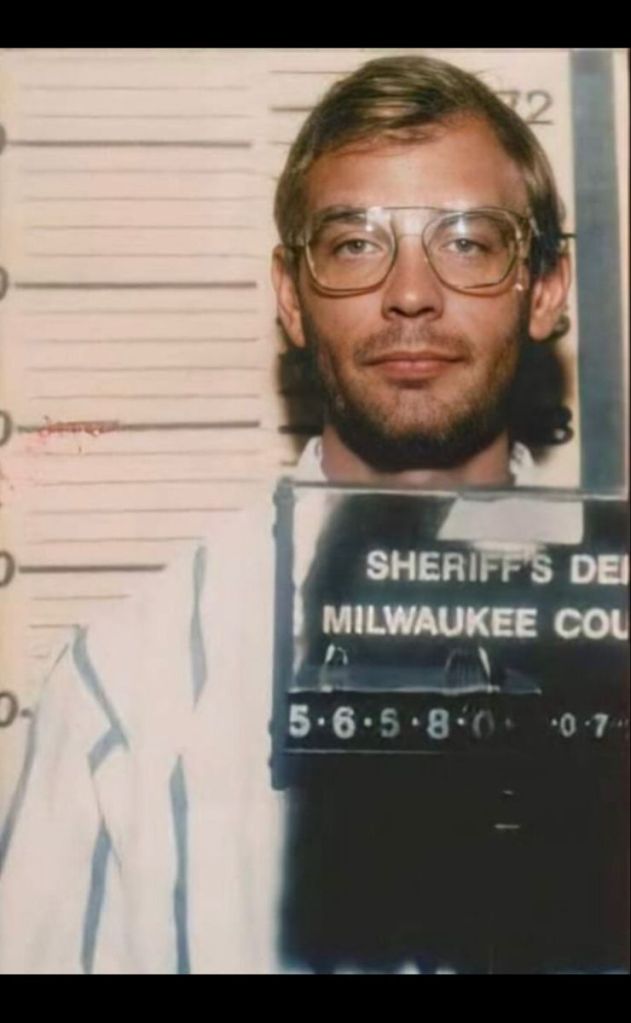
Jeffrey Dahmer’s height is visible in his Milwaukee Police Department arrest photograph, dated July 23, 1991 — the mugshot taken two days after his arrest. Standing against the height chart, he reaches just above the six-foot mark, approximately six feet one inch tall (around 185 centimetres). It is a detail that tends to surprise people who have only seen him in court photographs, seated and diminished. He was a tall man. Physically, he looked like someone you would not immediately worry about. That was part of how it worked.

He Vacuumed on Sundays

This is perhaps the most quietly ordinary detail in the entire documented record of Jeffrey Dahmer’s life. Neighbours at the Oxford Apartments — some of whom would later give evidence at his trial — noted that he vacuumed his apartment on Sunday mornings. Every Sunday. He was a reliable vacuumer. The apartment was, in many respects, neatly kept.

The Cats

Neighbourhood cats followed him. Residents of the Oxford Apartments recalled seeing Jeffrey at the large green dumpster in the backyard with a gathering of cats at his feet — not a couple, but, as one neighbour described it, twenty or more, going crazy trying to jump up and get at his rubbish. During his years at his grandmother Catherine’s house in West Allis, he also knew exactly how to brush her cat the way she liked. This detail is recorded in Lionel Dahmer’s memoir. He remembered it from prison, years later, without being prompted.

His Favourite Colour Was Yellow

Yellow. Not tentatively, not as an afterthought — yellow was a consistent thread across his entire life. Yellow roses in his grandmother’s garden, which he planted himself. A yellow toothbrush. A yellow bicycle. The yellow highlighters he ordered from the prison canteen in 1992. Even in the darkest place, he ordered yellow highlighters.

He Missed His Fish

The aquarium in Apartment 213 was meticulously maintained, with four books on fish care found in the apartment. Anne Schwartz, the journalist who was among the first inside the apartment after his arrest, noted that the fish tank was conspicuously clean and wholesome amid everything else — full of living plants and exotic fish that appeared to be well cared for. From prison, speaking to Lionel during a visit, Jeffrey said: “I really miss that fish tank. I used to spend hours just watching them.” He was serving nine hundred and fifty-seven years. He missed the fish.


Sources: Lionel Dahmer, A Father’s Story, 1994; Brian Masters, The Shrine of Jeffrey Dahmer, 1993; Patrick Kennedy and Robyn Maharaj, Grilling Dahmer, 2016; Anne E. Schwartz, Monster: The True Story of the Jeffrey Dahmer Murders, 1992; Frederick A. Fosdal, M.D., psychiatric interview, January 9, 1992; Milwaukee Police Department arrest photograph, July 23, 1991; Jeffrey L. Dahmer U.S. Army Service File (SF-88 Report of Medical Examination, DD Form 771 Eyewear Prescription, DD-214 Certificate of Release, DA Form 3349 Physical Profile, and associated medical records), National Personnel Records Center, St. Louis, Missouri, Record Group 319.

Before Everything: Jeffrey Dahmer’s Childhood and Teen Years

There was a boy before the story the world knows.

He was born on May 21, 1960, in Milwaukee, Wisconsin, to Lionel and Joyce Dahmer. He was their first child. By most accounts he was a happy, curious infant — doted on, loved, ordinary in all the ways that matter. Lionel would later describe a little boy who was bright and inquisitive, who moved through the world with a lightness that would not last.

What happened between that beginning and the morning of June 18, 1978 — when a young man named Steven Hicks hitchhiked along a road in Bath, Ohio, and Jeffrey Dahmer offered him a ride home — is the story this article attempts to tell properly, for the first time on this memorial.

Not the story of a monster in the making. The story of a child who needed help that never came.


The Early Years

Jeffrey’s early childhood was, by his own account and Lionel’s, largely unremarkable. He was a curious, energetic child who loved his dog and explored the world with the enthusiasm common to all small children. Lionel describes him as affectionate and bright. Joyce, for all the difficulties that would come later, was attentive to him in those early years.

The family moved frequently during Jeffrey’s childhood, following Lionel’s academic career — first to Ames, Iowa, then to Doylestown, Ohio. Jeffrey adapted, as children do, though the pattern of uprooting and resettling established early in his life would continue throughout it.

What the early years show, in retrospect, is a child who was sensitive and perceptive in ways that made him vulnerable to the disruptions that were coming. He noticed things. He felt things deeply. In a stable environment, these qualities might have become strengths. In the environment that was actually waiting for him, they became fault lines.


The Hernia Surgery — The First Turning Point

When Jeffrey was around four years old, he underwent surgery to correct a double hernia. It was a routine procedure, medically unremarkable. But what followed was not routine at all.

After the surgery, Jeffrey’s personality changed. The cheerful, outgoing child became withdrawn, quieter, somehow absent from himself in a way that persisted. Lionel noticed it. He would later describe a son who seemed, after that surgery, to have retreated somewhere inside himself that was difficult to reach.

The reasons are not fully understood. It may have been the experience of anaesthesia and physical vulnerability at an age when a child cannot conceptualise what is happening to their body. It may have been the disruption of routine, the hospital environment, the fear. It may have been something neurological — a sensitivity to the procedure or its aftermath that had consequences no one thought to investigate.

What matters is that the boy who came home from that surgery was different from the boy who went in. Something shifted. Something that had been open began to close.


Bath Road — The Last Happy Chapter

In 1968, when Jeffrey was eight years old, the family moved to Bath Township, Ohio. Lionel had completed his doctorate in analytical chemistry and taken a position that allowed them to settle properly for the first time. They moved into a house on Bath Road — a wooded, rural property with space and privacy and the particular freedom that comes from being a child in a place where the world feels large.

Jeffrey loved Bath Road. This is documented clearly in Lionel’s account and consistent with what Jeffrey himself later described. The woods behind the house were his territory — he explored them constantly, built things, climbed things, discovered things. He had a dog, a bicycle, the ordinary pleasures of a rural American childhood in the late 1960s.

It was here that his fascination with animals and their interiors began. He started collecting roadkill — animals he found already dead along the roads near the house — and examining them. He was curious about bones, about what held living things together, about what remained when the life was gone. Lionel, himself a scientist, initially interpreted this as a natural extension of scientific curiosity. He was not entirely wrong. The curiosity was genuine. But there was something else in it too — an intensity, a fixation that went beyond ordinary childhood interest in nature.

Jeffrey later described the bone collecting as something that gave him a feeling of control and order in a life that was becoming increasingly chaotic. The bones were clean, permanent, comprehensible. The world outside the woods was becoming less so.


Joyce’s Deterioration

The years on Bath Road were also the years in which Joyce Dahmer’s mental health deteriorated significantly. She suffered from anxiety and hypochondria that escalated into something more serious — a pattern of prolonged illnesses, periods of collapse, demands for attention and care that consumed the household’s emotional resources. Lionel describes a marriage under sustained strain, a home in which tension was the ambient condition.

Joyce was not absent in a simple sense — she was present, often intensely so, but her presence was unpredictable and frightening rather than stabilising. Jeffrey could not rely on her. He could not anticipate her moods or her needs. The household revolved around managing her, and no one was managing him.

Lionel, working long hours on his doctorate and later his career, was often genuinely absent — physically away for extended periods when Jeffrey needed him most. He acknowledges this in A Father’s Story with a guilt that runs through every page. He knew something was wrong with his son. He did not know how to reach him. He kept hoping things would improve.

They did not improve.


The Boy Nobody Noticed

What makes Jeffrey Dahmer’s childhood and adolescence so painful to examine is not that the warning signs were invisible. It is that they were present, and ordinary, and embedded in a life that also contained perfectly normal things — things that remind you, painfully, that this was a real child living a real life.

He played clarinet in the school band. He had learned tennis as a younger child and played with some enthusiasm. He was a Boy Scout for a period, participating in the badges and activities and group life that scouting involves. He was good at biology — genuinely, notably good, with a natural aptitude for the subject that his teachers recognised. There is a biology essay he wrote in high school that still circulates online, notable for its sophistication and its author’s evident passion for the subject.

These are not the details of a child who was lost from the beginning. They are the details of a child who was trying — who had interests, abilities, things he cared about — who was reaching for a normal life and finding it increasingly difficult to hold onto.

A fan club of sorts formed around him at Revere High School — a loose group of classmates who found his eccentricities entertaining, who enjoyed his company precisely because he was strange and funny and unlike everyone else. Jeffrey leaned into this. He developed a persona: the class oddity, the performer, the one who did things that made everyone laugh because he had calculated that being laughed at on his own terms was better than being invisible.

He called it — in so many words — putting on a show. He made himself the joke so that the joke would be his. It was a survival strategy. It was also a performance of a self that had very little to do with who he actually was.


The Drinking

Jeffrey began drinking in high school. The timing is consistent with what Lionel describes of the household atmosphere — a home in which both parents were increasingly absent in different ways, in which there was no one monitoring, no one present enough to notice that their teenage son had started carrying a cup of something alcoholic through the school halls.

The Styrofoam cup became something of a legend at Revere High School. His classmates noticed it. Some found it amusing — another piece of the Jeffrey performance. What it actually was, was a teenager self-medicating a level of anxiety, dissociation, and unnamed distress that had no other outlet.

Alcohol lowered the threshold of the feelings he could not manage. It made the strangeness quieter. It made the thoughts — the ones he would not name yet, the ones about men, about bodies, about the compulsions he was fighting alone — recede to a manageable distance.

He was not yet eighteen. He was already dependent.


The Hidden Homosexuality

Jeffrey Dahmer was gay. This is documented in his own words, in his confessions, in his accounts of his adolescence. He knew it in high school and he fought it — alone, without support, without language, without anyone to tell.

The late 1970s in rural Ohio were not a place or time in which a teenage boy could come out. The cultural context made homosexuality something to be hidden, suppressed, ashamed of. Jeffrey had no framework for understanding or accepting what he was feeling. He had no one to talk to about it.

He described the experience of his own sexuality as something alien and frightening — desires he did not ask for and could not reconcile with the life he was supposed to be living. The isolation of keeping this secret compounded every other isolation he was already experiencing. The drinking intensified. The withdrawal deepened.

A teenager fighting his own sexuality alone, without support or guidance, is a teenager in crisis. Nobody saw the crisis. Nobody asked.


The Abandonment

In 1977, Jeffrey’s parents’ marriage finally collapsed entirely. What followed was one of the most consequential failures in his entire story.

Lionel moved out. Joyce, in the midst of a severe mental health crisis and a bitter custody dispute over Jeffrey’s younger brother David, eventually left too — taking David with her to Wisconsin, leaving Jeffrey behind in the Bath Road house.

Alone. At sixteen years old.

Jeffrey could not cook for himself. He had no reliable income, no transport, no adult supervision, no one checking whether he was eating or sleeping or attending school. He was a child — because sixteen is a child, regardless of legal definitions — left in an empty house while both his parents pursued their own lives and their own crises.

Lionel would later describe the guilt of this period as something he carries permanently. He did not know how abandoned Jeffrey was. He was dealing with his own collapse. He returned when he could. It was not enough.

The image of Jeffrey Dahmer at sixteen, alone in that house in Bath, Ohio, watching his father drive away with a new girlfriend and his mother leave with his little brother but not him — is one of the most heartbreaking images in the entire documented record. It is not complicated. A child was left behind. Nobody came back in time.


Steven Hicks — June 18, 1978

Three weeks after graduating from Revere High School, Jeffrey Dahmer picked up a hitchhiker named Steven Hicks on a road near the Bath Road house. Steven was eighteen years old. He had been at a concert. He was heading home.

Jeffrey invited him back to the house. They drank beer together. They talked. For a few hours, Jeffrey had what he had been desperate for — company, connection, the ordinary warmth of another person’s presence in that empty house.

And then Steven said he wanted to leave.

Jeffrey later described what happened next in terms of an overwhelming compulsion — a terror of being alone again that he could not manage or override. He could not let Steven leave. The thought of the house being empty again, of being alone again, was unbearable in a way that overwhelmed everything else.

He killed Steven Hicks with a barbell. He buried him in the woods behind the house.

This was not the act of a predator who had been planning and rehearsing. This was the act of a profoundly disturbed, profoundly isolated young man who had never learned to tolerate being alone, who had been abandoned by everyone who was supposed to stay, who had no treatment for any of the conditions that were driving him, and who reached a breaking point in an empty house on a summer afternoon.

Nothing excuses what he did. Nothing can give Steven Hicks back to his family. But understanding what brought Jeffrey to that moment — the hernia surgery, the bone collecting in the woods, Joyce’s deterioration, Lionel’s absences, the drinking, the hidden homosexuality, the fan club performance, the Styrofoam cup, the abandonment at sixteen, the empty house — is not the same as excusing it. It is the same as telling the truth.


What Was Never Done

Jeffrey Dahmer was a child in crisis for most of his childhood. The signs were there — visible, documented, present. The withdrawn child after the hernia surgery. The bone collecting in the woods. The drinking in high school. The isolation. The performance. The abandoned teenager alone in an empty house.

At every juncture, the systems that might have helped him — family, school, medicine — either missed him entirely or responded inadequately. No one referred him for psychiatric evaluation. No one addressed the drinking. No one stayed.

He booked a therapy appointment once. He arrived at the lobby. He sat there. And then he left, because he didn’t know what to say, and the shame was too great, and no one came out to meet him.

That image — Jeffrey Dahmer sitting in a waiting room, wanting help, not knowing how to ask for it, leaving without it — is the image the memorial keeps returning to. Not the monster the world decided he was. The person who needed something that was never given to him.

The boy on Bath Road deserved better. So did Steven Hicks. Both things are true, and both things matter, and this memorial holds both of them.


Sources: Lionel Dahmer, A Father’s Story, 1994; Brian Masters, The Shrine of Jeffrey Dahmer, 1993; Trial and confession records, 1991–1992; Stone Phillips interview, Dateline NBC, 1994.

Not Death, But Stillness: Why Jeffrey Dahmer Was a Somnophile, Not a Necrophile

The word necrophile has followed Jeffrey Dahmer’s name for over thirty years. It appears in newspaper headlines, documentary voiceovers, true crime podcasts, Wikipedia articles, and casual conversation. It is repeated so often and so confidently that it has become accepted fact — one of the defining labels of who he was and what he wanted.

It is also, clinically speaking, inaccurate. Or at the very least, profoundly incomplete.

(Photo by Curt Borgwardt/Sygma via Getty Images)

This is not a semantic argument. The distinction between necrophilia and somnophilia is not a footnote — it is the difference between understanding Jeffrey Dahmer and misunderstanding him. And the memorial has always been committed to understanding him, even when that understanding is difficult, even when it requires sitting with complexity rather than reaching for the nearest available label.


What the Terms Actually Mean

Necrophilia, as defined clinically, is a paraphilia characterised by sexual attraction to corpses. The object of desire is death itself — the stillness, the decay, the fact of no longer being alive. It is a specific and well-documented condition with its own psychological literature.

Somnophilia is a paraphilia characterised by sexual attraction to sleeping or unconscious persons. The object of desire is not death but a specific quality of presence — a body that is there, warm, breathing, alive, but unresisting. Compliant. Still.

These are not the same thing. They share the element of non-responsiveness, which is why they are sometimes conflated. But their objects are fundamentally different. One desires death. The other desires a particular kind of living stillness — a person who will not leave, will not resist, will not reject.

Jeffrey Dahmer himself told us, repeatedly and clearly, which category he belonged to.


What Jeffrey Actually Said

In his psychiatric interview with Dr Frederick Fosdal on January 9, 1992 — one of the most detailed and honest accounts of his psychology we have — Jeffrey describes his fantasies with a precision that is clinically significant.

He did not describe wanting dead bodies. He described wanting compliance.

He talked about daydreams of lying with a good-looking man, kissing, touching — in total compliance with my wishes. He described wanting someone who would stay. He described the fantasy of having someone completely present and completely unresisting. Warm. Alive. There.

This is not the language of necrophilia. This is the language of somnophilia — the desire for a living body in a state of passive surrender.

In Patrick Kennedy’s Grilling Dahmer, the interrogation sessions reveal more. Jeffrey describes his earliest fantasies as centering on unconscious men — men he imagined finding, men who would be unable to leave. He describes the appeal of control, of having someone present who would not withdraw. The sexual fantasy was about the unconscious state, not the dead state.

The drugging of victims — the sleeping pills crushed into drinks, the attempts to induce deep unconsciousness — is the most telling evidence of all. Jeffrey was not trying to kill his victims in order to have sex with them. He was trying to render them unconscious so that they would stay. The deaths, when they occurred, were often a result of the drugging going wrong, or of the panic that followed when victims began to regain consciousness.

He wanted them sleeping. Not dead.


The Distinction in His Own Behaviour

The timeline of what happened in Apartment 213 is important here and is documented across multiple sources including the confession transcripts and the Fosdal interview.

The pattern, repeated across victims, was this: Jeffrey would meet someone, bring them back to the apartment, drug their drink, wait for unconsciousness, and then lie with the unconscious person. In many cases he would talk to them, touch them, position them. He described feelings of closeness, of companionship, of having someone present who would not leave him.

The killing, when it happened, was typically when the victim began to wake — when the unconscious state that Jeffrey had created began to dissolve, and with it the fantasy of someone permanently, peacefully present.

This is the most devastating irony in the entire case. He killed to preserve the unconscious state. Death was not the goal — it was the terrible consequence of trying to maintain the fantasy of living stillness when the living person began to reassert themselves.

Dr Judith Becker, one of the most respected forensic psychologists who evaluated Jeffrey, noted this distinction in her clinical assessment. Her evaluation pointed toward the primary paraphilia being oriented around unconsciousness and control rather than death per se. The necrophilic acts that occurred post-mortem were, in the clinical reading, secondary — what happened when the somnophilic fantasy could no longer be sustained with a living body.

This is not a defence. It is not a mitigation. It is an attempt to understand accurately.


The Mannequin: Evidence Beyond Doubt

There is a detail in the Jeffrey Dahmer case that rarely receives the attention it deserves — and yet it may be the single most clarifying piece of evidence in the entire debate between necrophilia and somnophilia.

Jeffrey stole a mannequin.

The incident is documented and confirmed. At some point during his time in Milwaukee, Jeffrey took a mannequin from a shop and kept it in his apartment. He described lying with it, holding it, experiencing a sense of comfort and closeness from its presence. When the mannequin was eventually discovered — by his grandmother, during one of the periods he was living with her — it was disposed of, and Jeffrey gave an explanation that satisfied her at the time.

Let us be precise about what a mannequin is. It is not a corpse. It has never been alive. It does not decay, does not smell, does not carry any of the qualities that define necrophilic attraction. A mannequin is simply a body-shaped object that holds a position, stays where it is placed, and does not leave.

What it shares with an unconscious person is exactly and only this: stillness and compliance.

This is the somnophilic core laid completely bare. Jeffrey was not aroused by death. He was not seeking the qualities of a corpse. He was seeking the quality of a presence that would remain — a body-shaped warmth that could not withdraw, could not reject, could not walk out of the door at the end of the night and leave him alone in the apartment on North 25th Street.

The mannequin is the fantasy stripped of everything except its essence. No drugging was required. No violence. Just a body that stayed.

He wanted someone to stay.

That sentence, which runs beneath almost everything we know about Jeffrey Dahmer, could not be more clearly illustrated than by a man alone in a Milwaukee apartment, lying beside a stolen mannequin, finding in its permanent stillness something he had been unable to find anywhere else.

It is one of the most quietly devastating images in the entire case. And it is not the image of a necrophile. It is the image of a profoundly lonely man whose mind had found the most distorted possible solution to the most human of all problems.


Why the Label Matters

Labels shape understanding. When we call Jeffrey Dahmer a necrophile — cleanly, completely, without qualification — we place the desire for death at the centre of his psychology. We make him a man who wanted corpses.

But that is not who he was.

He was a man who wanted someone to stay. Who wanted the impossible — complete presence without the possibility of rejection or abandonment. Who wanted the warmth and proximity of another person without the terrifying vulnerability of that person being conscious, autonomous, capable of leaving.

This is still a profound pathology. We are not arguing otherwise. But it is a different pathology — one rooted in loneliness and the terror of abandonment rather than in attraction to death itself. One that makes psychological sense when placed alongside everything else we know about him: the alcoholic isolation, the years without genuine connection, the seventy-five to a hundred encounters in Milwaukee bars and bath houses that left him exactly as alone as he had been before.

He was trying, in the most distorted and destructive possible way, to solve the problem of loneliness.

I can take it to a point, but not years and years.

He said that about loneliness. The somnophilic fantasy — the unconscious man who would stay, who would be warm and present and unresisting — was his mind’s solution to a problem it had been unable to solve any other way.

Understanding this does not make what he did forgivable. It makes it comprehensible. And comprehension, however uncomfortable, is always more useful than a label.


A Note on the Post-Mortem Acts

We cannot write this article honestly without addressing the post-mortem acts that did occur and are documented in the confessions and the Fosdal interview.

Jeffrey describes these with evident discomfort — a flatness in his voice that suggests shame rather than pleasure in the recounting. He describes them as escalations, as things that happened after the fact of death rather than as the purpose of what he did. He describes the fish tank, the loneliness of the apartment, the desire to have someone there. He describes talking to the remains, positioning them, treating them as if they were still present.

This is not necrophilia in the classical sense either. It is something more like a desperate extension of the somnophilic fantasy beyond the point where it could be maintained — an attempt to preserve presence even after presence was no longer possible.

It is profoundly disturbing. It is also profoundly human in its root impulse — the refusal to accept the finality of absence, the inability to let someone go. Distorted beyond all recognition, but human at its origin.

He wanted someone to stay. That is the sentence that underlies almost everything.


Conclusion

The memorial does not ask you to feel comfortable with Jeffrey Dahmer. It asks you to look clearly.

Calling him a necrophile is easy. It places him at the farthest possible distance from anything recognisably human — a man who wanted the dead, who desired what the rest of us find most horrifying. It is a label that allows us to stop looking.

The truth is harder and more uncomfortable. He wanted the living. He wanted warmth and closeness and someone who would not leave. He wanted the unconscious body of a man who could not reject him — because rejection, absence, loneliness had been the defining conditions of his entire life.

Somnophilia. Control. The terror of abandonment. The impossibility of connection.

That is what was in Apartment 213. Not a man who wanted death.

A man who could not bear to be alone.


Sources: Frederick A. Fosdal, M.D., psychiatric interview with Jeffrey Dahmer, January 9, 1992; Patrick Kennedy and Robyn Maharaj, Grilling Dahmer, 2016; Jeffrey Dahmer confession transcripts; Dr Judith Becker clinical evaluation, 1992; Brian Masters, The Shrine of Jeffrey Dahmer, 1993.

The Cats That Followed Him: Jeffrey Dahmer and Animals

There is a detail in the testimony of Jeffrey Dahmer’s neighbours that receives almost no attention in the coverage of his case. A colony of stray cats would follow him down the street.

Not away from him. After him. Choosing him.

Animals don’t perform comfort. They don’t extend trust out of politeness or social obligation. They either feel safe with a person or they don’t. The cats that followed Jeffrey Dahmer through the streets felt safe. That is a simple fact, and it tells you something the courtroom record never could.


From the Very Beginning

Jeffrey Dahmer’s relationship with animals began almost as soon as he was old enough to have one.

At eighteen months old, he had a goldfish and a pet turtle. His mother Joyce wrote of him at that age: “Jeff was so very gentle with the turtle.” He was a toddler, exploring his relationship with another living creature, and what she observed was gentleness. Not curiosity that tipped into harm. Not the roughness of a child who hadn’t learned. Gentleness, from the beginning.

In Iowa, where the family moved for Lionel’s graduate studies, Jeff encountered animals everywhere. A kitten called Buff. A squirrel called Jiffy who came to the window-sill looking for food and didn’t run away — mother and son were photographed pointing at him together, delighted. Snakes, toads, crabs, turtles, fish, wild rabbits all fed his curiosity and imagination. His nursery school teacher gave him a pet grey mouse, hoping it might help with his shyness. He spent time at a nearby research centre, watching barnyard animals for hours, fascinated by the sheer fact of living creatures doing what they do.

Then one day, he and his father spotted something on the pavement while cycling together — a baby nighthawk that had fallen from its nest. At Jeff’s urging, Lionel picked it up and together they took it home. Over the following weeks, they nursed it back to health, feeding it milk and corn syrup from a baby bottle, then solid food, then small bits of hamburger. It grew and grew until the day they finally took it outside to release it.

Lionel writes of that moment: “I cradled the bird in my cupped hand, lifted it into the air, then opened my hand and let it go. As it spread its wings and rose into the air, we, all of us — Joyce, Jeff, and myself — felt a wonderful delight. Jeff’s eyes were wide and gleaming.”

He called the bird Dusty. It would return when they whistled, even after being gone for days. It was, in Lionel’s words, “the single happiest moment of his life.”


Frisky

When the family moved to Doylestown, Ohio, Jeff was six years old and had just gained a little brother. Joyce worried he might be jealous. What she observed instead was that Jeff loved his new brother but something else held his heart more fully. She wrote: “Frisky comes first in his heart, though. They really romp and play.”

Frisky was a dog — cheerful, playful, loyal — given to Jeff to compensate for all the pets he had been made to leave behind in the various moves that punctuated his childhood. “We’d go out and play in the fields, run around,” he later remembered. “She was a good dog to have.”

Frisky followed the family from Doylestown to Barberton to Bath Road, Ohio — neighbours built her a dog house when they arrived. In Barberton, Lionel took Jeff and Frisky on two-mile walks to a farm to buy eggs. On Saturdays they drove together for chocolate ice cream sodas, a ritual carried over from Iowa. Frisky roamed the woods of Bath Road and brought home a dead woodchuck. She was, by every account, one of the most consistent and uncomplicated sources of love in a childhood that was in most other respects increasingly fragmented and unhappy.

When Jeff eventually packed his bag for Ohio State University — the only attempt at college he would ever make — among the few things he brought with him were a snake skin from Boy Scout camp and two photographs of his dog.

He did not bring much. But he brought Frisky.


What He Would Not Do

Brian Masters, in his extensive study of the case, states it plainly: “Jeffrey Dahmer never killed an animal himself.”

This is important to say clearly, because the mythology of serial killers includes the near-universal assumption of childhood animal cruelty, and that assumption has been routinely applied to Jeffrey. It does not fit.

What is documented is that he collected and dissected animal carcasses he found already dead — road kills, bones, creatures the civets had left under the house. He was fascinated by anatomy, by the interior of living things, by the architecture of a body. That fascination would later take a devastating direction. But it was never accompanied by cruelty to a living animal. He was not interested in suffering. He was not interested in power over a sentient creature. His experiments were always with what was already gone.

He maintained a small graveyard for animals near the house, with crosses and skulls marking the sites. His brother David knew about it and thought Jeff was “doing a good service” by burying dead creatures. Nothing about it struck anyone who knew him as sinister.

One incident makes his orientation toward animals vivid and unmistakable. His friend Jeff Six had a habit of deliberately driving into dogs on the road, which he seemed to find amusing. “In one day he went through four dogs,” Jeffrey remembered. The last one — a puppy — went flipping over the hood of the car. “That just sickened me. I told him to take me back and let me out.”

He never forgot the eyes of that wounded dog. Brian Masters writes that the reproach in those eyes represented perhaps the last moment when a flicker of genuine sentiment still stirred in him — and that it was brought to flame by that one small tragedy. He felt it. He left.


The Fish

In the final years before his arrest, when Jeffrey had moved into Apartment 213 on North 25th Street and the world around him was sliding into catastrophe, he found one last innocent interest. He bought a thirty-gallon aquarium from a shop on West Oklahoma Avenue, some tropical fish, and books on how to care for them properly.

He described it with a warmth that he applied to almost nothing else in his life: “It was nice, with African cichlids and tiger barbs in it and live plants. It was a beautifully kept fish tank, very clean. I used to like to just sit there and watch them swim around, basically. I used to enjoy the planning of the set-up, the filtration, read about how to keep the nitrate and ammonia down to safe levels.”

Brian Masters notes that it was only when talking about his fish that Jeffrey’s voice became animated. The aquarium sat on the black table that would later be described in court as a makeshift altar. But first, it held living things he tended carefully. He would walk around the fish store, fascinated by rare specimens.

Once, he saw a puffer fish. “It’s a round fish,” he said, “and the only ones I ever saw with both eyes in front, like a person’s eyes, and they would come right up to the front of the glass and their eyes would be crystal blue, like a person’s. Real cute.”

After his arrest, looking back on all of it, he said simply: “I really enjoyed that fish tank. It’s something I really miss.”

His co-workers at the Ambrosia Chocolate Factory confirmed what his apartment already showed — that he was always reading books about animals and fish when he was not working. Among the items Lionel catalogued in Apartment 213 were four books on the care of fish, a box of fish food, and the tank itself — still there, still lit.


What the Cats Knew

Neighbours observed him walking through the neighbourhood, and a colony of street cats would follow behind him. This is not a figure of speech or an embellishment. It was noted. It was real.

There is also a video — quiet, undramatic, briefly circulated — of Jeffrey sitting on the floor with a cat named Jodi, kissing her, stroking her. His hands are gentle. His face is soft. The cat does not pull away.

In prison, when Lionel visited, they talked about what he had been eating, the state of Lionel’s mother’s health, and the condition of the cats at home. It was ordinary conversation — the kind you have when there is little left to say but you still want to say something. The cats were worth mentioning. They were part of the world he was still connected to, even through prison glass.

At one of his visits to Catherine Dahmer, when Lionel brought news of his mother’s minor car accident, Jeffrey expressed concern and hoped she would stay home with her cat and not drive again. Brian Masters notes this as a rare moment when he was able to externalise, to think of somebody other than the self which drove him and monopolised his energies. He was thinking about an old woman and her cat.


What It Means

Jeffrey Dahmer was a man who grieved when he had to leave his pets behind. Who nursed a baby bird back to health and watched it fly away with gleaming eyes. Who carried photographs of his dog to college. Who built a fish tank and read about nitrate levels and stood in a pet shop, moved by the blue eyes of a puffer fish. Who walked down a Milwaukee street with cats at his heels.

None of this explains what he did. Nothing explains that. But it is part of who he was — a real and documented part, not a sentimentalised myth. The same person who caused devastating harm to other human beings was consistently, throughout his entire life, gentle with animals. They were not afraid of him. They chose him.

Brian Masters suggests the eyes of living creatures held a particular significance for Jeffrey — that they were the thing that could still reach him, the harbingers of whatever conscience remained. The wounded puppy that haunted him. The puffer fish with its blue human eyes. Jodi the cat, who pressed close and let herself be held.

He felt things. They were distorted, misdirected, catastrophically expressed in one dimension of his life. But the capacity was there, and animals knew it, and they came to him anyway.

We think he deserved to be seen properly in return.


A Note on Plants

Jeffrey’s care for living things extended beyond animals. His grandmother Catherine told journalist Anne Schwartz: “He loves flowers, roses. He doesn’t hesitate to show his love for me.” Schwartz herself noted that Jeffrey “fancied roses, his fish tank, and his laptop computer.” When he lived with Catherine in West Allis, he helped her with the flowerbed and the lawn. Lionel later suggested gardening as a possible vocation, because it was something Jeff had seemed to enjoy. Father and son drove together to nurseries to buy plants for the garden. The living room of Apartment 213, when police first entered it, contained a healthy pot-plant on a tall pedestal — one of the details that made the room appear, in Brian Masters’ words, “surprisingly neat and tidy.” The fish tank held living aquatic plants he tended alongside the fish. In a life characterised by isolation and withdrawal, he kept things growing.


Sources: Brian Masters, The Shrine of Jeffrey Dahmer, 1993; Lionel Dahmer, A Father’s Story, 1994; Anne E. Schwartz, Monster: The True Story of the Jeffrey Dahmer Murders, 1992. All direct quotations attributed to Jeffrey Dahmer are drawn from his documented interviews with Dr Kenneth Smail, his confession to Milwaukee Police, and his interview with Stone Phillips, Dateline NBC, 1994.

Without His Glasses: Jeffrey Dahmer in the Courtroom

He removed his glasses before the trial began.

It was a quiet, private decision — one that went largely unremarked in the coverage that followed. But Jeffrey Dahmer said it himself: he did not want to see people’s faces. The shame was too great. And so he sat through the most public moment of his life in a deliberate blur, the courtroom softened at its edges, the eyes of strangers mercifully indistinct.

That detail tells you more about who he was than almost anything else in the documented record.


The trial of Jeffrey Dahmer began in January 1992 in Milwaukee. By then, the world had already decided what he was. The press had named him. The headlines had done their work. What arrived in that courtroom was not quite a person anymore — it was a myth that had learned to sit quietly in a suit.

Except that it hadn’t, quite. Because people who sit quietly in suits occasionally push back on small inaccuracies. And Jeffrey Dahmer, it turned out, had standards.

At one point during the proceedings, the prosecution described him as overweight during his teenage years. Jeffrey corrected them. He was not fat. The record should reflect that he was not fat. In the middle of a trial for seventeen murders, with the weight of everything pressing down on that room, he drew a line at an inaccurate description of his adolescent body.

There is something almost unbearably human about that moment. Not monstrous. Not calculating. Just a man who knew what he looked like as a teenager and wanted the court to know it too.


The Legal Record

The legal record of the Dahmer case is extraordinarily detailed. Defence attorneys Wendy Patrickus and her colleagues were required, as part of their preparation, to document their client comprehensively — his physical appearance, his demeanour, his medical and psychiatric history. These notes exist in the legal archive and include physical descriptions of considerable intimacy.

This is not unusual in capital defence work. Attorneys building a case around mental illness and diminished capacity must know their client fully — must be able to present him as a human being to a jury, must anticipate every angle the prosecution might exploit. The documentation is clinical by necessity.

What it leaves behind, however, is a record of a man reduced to measurements and observations — catalogued with the precision of a medical file, the person inside the data noted only incidentally. Read against the image of Jeffrey sitting quietly in his blurred courtroom, unable to meet anyone’s eyes, it becomes something else entirely. A man already unable to be seen clearly, now being seen with forensic thoroughness by the people paid to defend him.


What These Details Add Up To

A person. That is all. A person who was ashamed — genuinely, deeply ashamed — of what he had done and what he was. A person who still cared, even there, about accuracy and dignity, who would not let a wrong thing stand unchallenged even when everything else had already collapsed. A person who had been reduced to a file, a measurement, a legal exhibit, and who sat quietly through it all in a deliberate blur, the world softened so he wouldn’t have to see what people thought of him.

(Photo by Curt Borgwardt/Sygma/Sygma via Getty Images)

The mythology of Jeffrey Dahmer is built on the idea that monsters don’t feel things. That they sit cold and calculating in courtrooms, unmoved. The record suggests something entirely different. The record suggests a man who felt so much that he couldn’t bear to look.

That is not an excuse. It was never an excuse. But it is the truth — and the truth is more complicated, more human, and more heartbreaking than the mythology ever allowed.

He took his glasses off. He didn’t want to see.

We think he deserved to be seen properly in return.


Sources: Trial records, 1992; Wendy Patrickus defence notes; Brian Masters, The Shrine of Jeffrey Dahmer, 1993; Lionel Dahmer, A Father’s Story, 1994.