Posts

Power of forgiveness

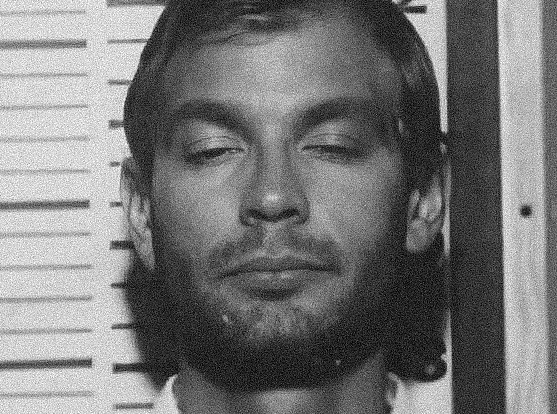
Jeffrey Dahmer, AI Art

Within the depths of remorse, the soul of a killer lingers, burdened by its actions. A victim of unfortunate circumstance, it found itself in the wrong time and place, meeting its untimely end at the hands of another human. Yearning for redemption, it reminds us of life’s fragility and the transformative power of forgiveness. The tale of the remorseful killer serves as a somber reflection on the fragile nature of existence. It compels us to confront our own vulnerabilities, urging us to consider the impact of our choices and actions. Through its story, we are reminded of the potential for redemption that resides within each of us, a flickering light amidst the shadows.

May this tale etch upon our hearts a profound lesson, reminding us to approach judgment with humility and to offer compassion where it is needed most. Let us navigate the intricate tapestry of life with gentle steps, mindful of the interconnectedness of our stories. For in understanding the plight of the remorseful soul, we gain a deeper understanding of our shared humanity.

The humanity within: Jeffrey Dahmer was a complex human being

Jeffrey Dahmer’s existence unveils the profound humanity that lurked within, challenging society’s tendency to reduce him to a monstrous label.

Young Jeffrey Dahmer

It is crucial to grasp that he was a complex human being with his own thoughts, emotions, and struggles. Recognizing Jeffrey’s humanity does not diminish the gravity of his actions; instead, it emphasizes the need to understand the intricate factors that led to his descent into darkness. By acknowledging his humanity, we confront the unsettling truth that anyone, under specific circumstances and influences, could potentially succumb to destructive paths.This acknowledgement compels us to examine the societal and psychological elements that contribute to such horrors. It calls for a compassionate society that fosters empathy, early intervention, and mental well-being, addressing the underlying complexities of human behavior.

In our pursuit of healing and prevention, let us not forget the humanity and soul within people like Jeffrey Dahmer. By acknowledging their humanity, we can build a future focused on compassion, understanding, and the well-being of all.

Jeffrey Dahmer: The unique existence of a troubled soul…

Jeffrey Dahmer occupies a distinctive place among serial killers. While his actions remain horrifying, it is crucial to delve into his unique existence, which sets him apart from other notorious figures. A closer examination reveals intriguing facets, including his display of remorse, unconventional motivations, and a deviation from the conventional sadistic nature associated with such individuals.


One striking aspect of Dahmer’s existence is the presence of remorse. Unlike many serial killers who show little to no guilt for their heinous acts, Dahmer expressed genuine remorse for the pain and suffering he caused. This element challenges our perceptions and underscores the complexity of his psychological makeup.

Jeffrey’s motivations diverge from the stereotypical sadism commonly associated with serial killers. While his crimes were undeniably monstrous, it is important to recognize that his primary drive was not deriving pleasure from inflicting pain. Instead, Jeffrey was driven by an overwhelming desire for control, companionship, and a twisted quest for a sense of connection that tragically manifested in horrific acts. Jeffrey Dahmer’s unique existence reveals a surprising human dimension that is not commonly found among serial killers.

His actions were not solely driven by sadistic impulses; rather, they were born out of a desperate need to fill an emotional void within himself. This distinction challenges our understanding of the motivations behind such crimes, highlighting the complex interplay of psychological factors that can drive individuals down dark paths. Jeffrey’s remorse and unconventional motivations mark him as a rarity among his notorious peers.

His willingness to express regret and introspection sets him apart from those who revel in their violence and show no remorse. This distinction provokes further questions about the intricate dynamics that shaped his troubled existence and the potential for redemption in even the most depraved minds.The existence of Jeffrey Dahmer defies easy categorization. It forces us to confront the enigmatic nature of human psychology and the intricate interplay of factors that contribute to extreme acts of violence.

While his crimes remain unforgivable, his display of remorse and unique motivations challenges us to grapple with the complexities of his troubled soul.


“I’d always see him drinking a beer and standing near the trash container in the backyard. And there’d be all these cats around him. I don’t mean a couple, I mean a lot of cats, following him all over the place. And the guy didn’t just go into his apartment, like most people open the door and go in. He squeezed in. He’d open the door just the littlest bit and squeeze through. He did that a lot.”

– Douglas Jackson, downstairs neighbor of Jeff Dahmer in the book ‘Step into My Parlor’.

Jeff and his mom


Joyce was 24 years old when baby Jeff was born. According to her, it was not planned to get pregnant so soon after she got married to Lionel. But Lionel has said that his birth control method was foolproof. It happened after two months of marriage anyway and unfortunately it wasn’t an easy pregnancy. Joyce said it was filled with nausea, pain and bed rest. Her doctor prescribed her medication for anxiety that made it a bit more bearable. Joyce said that Lionel demanded sex constantly near the end of her pregnancy and it caused her to go into premature labor. She was rushed into the hospital and after the emergency delivery, she woke up alone. No recognition of the birth of their son or the labor.

Lionel too has said it wasn’t an easy pregnancy. Everything seemed to bother her, every single noise or odor. This so afflicted her nerves that she began to develop uncontrollable muscle spasms, which distressed her even more. She would get some type of seizures. During these, her eyes would bulge like a frightening animal and she would begin to salivate, literally frothing at the mouth. Joyce has denied she had these seizures. But according to Lionel she got injections of barbiturates and morphine to help her relax. The doctor could not find any medical reason for these attacks. He said they were rooted in Joyce’s mental state.

Joyce grew up with an alcoholic father. According to the Shrine, Joyce often had said she felt helpless and lonely as a child but did not know why. She knew the emotion of abandonment very early. In the Silent Victims, Joyce also writes she has been abused by him.

On May 21, 1960 Jeff was finally born. When Lionel first saw his son, he was sleeping quietly. When he was allowed to go home, Joyce held him gently in her arms. The first few days there was a happiness that settled over Lionel and Joyce. Joyce kept a scrapbook about Jeff where all his first achievements were lovingly recorded. But the feeling of happiness only lasted for a short time. Joyce stopped pretty fast with breast feeding. It made her nervous and she dreaded it terribly. Brian Masters wrote that this abrupt change may have felt like a rejection or distance to the baby.

According to the book Serial Killers: the method and madness of monsters, the most common factor attributed to serial killer is the likely absence of infant bonding. “An infant that is denied human touch and affection develops a sense of only itself – it becomes completely oblivious to others. This is necessary for the infant to survive but can become a destructive trait in adulthood.”

Jeff himself has said he later in his life learned that Joyce had mental problems and that there were times she was gone a lot. But that she was never mean or unkind to him and she actually could be very comforting. He overheard his aunt saying that after he was born, Joyce had suffered a severe case of post partum depression and had to be hospitalized. He said he didn’t know at the time what it was but that he still felt responsible for it, like he had done something to cause her illness. Joyce writes in The Silent Victims she mourned the loss of her dreams, of her life, of her pride. She felt like she and Lionel became a recreation of her own family.

Around 1970 Joyce’s fragile health collapsed. She had been steadily increasing her consumption of drugs. Eventually she was taken to a hospital, where she spent a month in a mental ward. The Shrine says Jeff’s response to this was classic. He blamed himself for his mother’s illness. He had known for as long as he could remember that she had been depressed following his birth, and that he had therefore caused her illness. He also must have caused every relapse. He could not articulate his pain, for fear of tipping his mother over the edge again. He had to keep himself to himself, say little and do less, to protect her, to keep a little calm in the house. The more she saw of him the worse it would be for her. Jeff quite simply felt he did not belong and that if he were to belong he would only do harm. The fact that Jeff had not been troublesome or demanding as an infant ought not to earn suprise. The child who does not ask for attention, wheter or not because he has learnt not to expect it, betrays as inner deadness which can be mistaken for goodness and sweetness of character.

Joyce writes that as Jeff grew older he began to turn inward, became more and more withdrawn and introspective which mystified and disturbed her greatly. She also says that Jeff did came home drunk when he was a teenager and he did seem to spend an inordinate amount of time alone. When she decided to leave to Wisconsin, Joyce says she asked Jeff to come with her and David but that he decided to stay so he could attend the University. He said he could handle it and she should go ahead. Afterwards they spend some holidays together. They were not the warm, loving encounters she had hoped for but she made the best of it, having him for the holidays made a difference to her. Joyce said she felt compelled to stay in touch with Jeff. But he refused to answer.

When Jeff was assigned to group therapy by the terms of his probation, it was noted that Jeff seemed to be very uncomfortable in talking about his mother. In the reports of his probation officer Donna Chester, it was reported that on March 25, 91 Joyce had called him and they talked to each other for the first time in 5 years. She knows he was gay and had no problem accepting it. In the report it said, he was happy.

Joyce was reflective in The Silent Victims. She asked herself how she could be so careless that Jeff felt so insignificant in their lives. She felt like she should have done something earlier, should have known something was up and should have tried harder. Since Joyce had a dad who was an alcoholic, she admits she saw the signs with Jeff and asks herself why she never did anything to help him.

She writes, “I now realize how damaging the constant arguments, anger and physical confrontations were on the boys, especially Jeff. Although I was rarely angry with Jeff, he was constantly subjected to a barrage of fury and anger directed toward Lionel and he toward me. It must have been extremely frightening and paralyzing to him, it surely drove him off to spend more time alone, drove him further into himself.” “I am aware now that my own difficult childhood prefaced my children’s. I, after all, had learned my parenting skills from my parents. I never actually took the necessary steps to unlearn what came naturally to me. And my boys suffered because of it.” “Little did I or anyone else know that the ‘baggage’ Lionel and I were carrying would be so devastating to one quiet, lonely, withdrawn, little boy.”

After Jeff got arrested, it seemed the bond between him and his mom finally got better. They were talking and writing each other. Joyce visited him in jail often as she could and Jeff told her his whole story. He, almost desperately, wanted to make sure she knew he didn’t want the victims to suffer. That he wasn’t mean. To me, this is Jeff in some way wanting to have his mom’s approval, to not disappoint her even more. After this heavy conversation, it seemed mother and son established a comfortable routine. They finally seemed to have the relationship they always wanted but couldn’t find. Despite the circumstances. But unfortunately it wouldn’t last long.. A prison warden called Joyce to tell her the devastating news that Jeff had been killed.

My personal opinion:
I know some dislike Joyce a lot and I respect that, I can understand it. I have disliked Joyce a lot for a long time too but after going deeper into their relationship and realizing, most of the stuff we know about Joyce, comes from Lionel.. it has changed my views. Yes she obviously has made some huge mistakes. But I do believe towards the end of her life she was more self aware of it and even admitted it. I think she cared deeply about Jeff but had too much issues of her own to properly show it. Moms with PPD often dont get taken seriously, especially back in these days. I think this had a big influence on Joyce bonding experiences with Jeff and ultimately Jeff’s feelings of neglect and loneliness. It’s so important for babies to bond with their moms. She also supposedly had BPD. I can’t imagine how hard it must have been for Jeff growing up with a mom that was dealing with some severe mental health problems. But Lionel deserves to be held responsible for Jeff’s neglect in his childhood as much as Joyce. Lionel should have been more present and protecting Jeff. They both should have paid more attention to him but were too busy with each other. They both failed the little boy that was already lost but still had a chance to be saved.

wrong place, wrong time

jeff is such a case of wrong place, wrong time. an outlier, tossed into a timeline that was just wrong for him and those around him, but just right for those who wish to study him. a sacrificial lamb of a soul, showing the world the worst-case scenario of what could go wrong when someone’s neurodivergences are left ignored and suppressed.

metaphysically, it’s not even his fault that he existed as he was. he was stuck that way, and there was no undoing it, no deviating from that life path he had to take on. it really does seem fated in a sense. if all the world’s a stage, then someone had to play the role of the tortured criminal, and it just had to be him.

i wonder.. if reincarnation is real [which i believe it is — matter can neither be created nor destroyed, and i’m sure consciousness exists eternally in the same way]. did he know that he had to incarnate in that way? taking one for the team, so to speak? or was he ultimately just some selfish horny fuck and there’s nothing deeper to it than that?

i mean, when i see his eyes in photos, i SEE an ultimately good soul there. a good soul that’s been ravaged and broken by its own incarnation. but of course, we don’t really have the tools to measure such a thing scientifically. so it’s all just up in the air for now. doesn’t mean it doesn’t exist, though. it’s that sort of thing that keeps me wondering.

i do wonder how much self-awareness really does for a person in the end, though. jeff was as self-aware as he could be — on his own, with no outside help that matched his level cognitively — but he still killed 17 people. it’s just waking up to find you’re in hell. the existential horror of being jeffrey dahmer.

he experienced the bystander effect within himself. just a passive “i know i have to stop..” but an inability to INITIATE that action. it’s almost like executive dysfunction, but drawn out over a long period of time. and just like how all humans are biologically programmed to take the easier route, as it conserves energy, jeff acted on his impulses time after time. a sort of paralysis while still in motion. in many ways, he was paralyzed mentally.

same kind of thing with any addiction that grabs hold of you and doesn’t let go. people seem to think that if you can act at all, then you have a choice to stop whatever you’re doing. well, brain chemicals don’t work that way. he was able to stop for 9 years, yes, but that took all of his strength. eventually the muscles grew tired and he collapsed under the weight of his obsessions. and after that, he just gave in. he was tired of fighting it. he resigned himself to his fate.

just the same as with any addict relapsing. anything can trigger it. even something as small as a dirty note given to you in a library.

and back to the incarnating thing.. i wonder if maybe his “soul” or whatever knew someone had to live that life. someone had to be the bad guy, the poster child for the result of our stubborn refusal to understand mental health, our unrelenting desire to equate accountability with rage and punishment instead of understanding and compassion.

just like how someone had to betray jesus in order to get the ball rolling for his death and resurrection, i guess. someone had to play that role, and judas was the one who drew the short straw. maybe jeff had to be a sort of judas figure for the mental health field, causing the chaos that will set the much-needed transformation in motion. a devastating yet necessary catalyst.

¡ guess i just don’t want to blame him for being human. there was a lot going on in his mind, in his body, and he had no actual help for it that resonated with him. nothing that stuck. no one who truly GOT him.

i just wonder how strong any of us would’ve been against a biochemical cocktail like what he was stewing in for his whole life. especially when communicating it and being understood was impossible.

yes, people did try to help him, but it was in all the wrong ways.

the man was truly fighting himself all on his own.

[ • dahmers-ashes • ]

Jeff and STPD


Jeff Dahmer, was according to the Psych Reports, diagnosed with Schizotypal Personality Disorder.

A little background info:
This type of personality disorder falls under the cluster A of personality disorders. The STPD diagnostic criteria for DSM-5 consist of:

  • ideas of reference
  • odd beliefs of magical thinking
  • unusual perceptual experiences and bodily illusions
  • odd thinking and speech
  • suspiciousness or paranoid ideation
  • inappropriate or constricted affect
  • behavior or appearance that is odd, eccentric or peculiar
  • lack of close friends of confidants, other than first degree relatives
  • excessive social anxiety that doesn’t diminish with familiarity and tends to be associated with paranoid beliefs.

Five of nine criteria are required for a diagnosis of STPD.

STPD remained significantly associated with bipolar I and II disorder, PTSD, BPD and NPD. Twin studies have provided evidence that STPD is determined by both familial-genetic and unique environmental factors. A number of forms of psychological trauma and chronic stress have been associated with STPD. Over half of patients with STPD have had > 1 episode of major depressive disorder and 30 to 50% of them have major depressive disorder when schizotypal personality disorder is diagnosed. These patients often also have a substance use disorder. 

People with STPD often come across as aloof, flat or emotionally distant, and are preoccupied with fantasy and daydreaming. People with this disorder may ignore ordinary social conventions (for example, not make eye contact), and because they do not understand usual social cues, they may interact with others inappropriately or stiffly. They are very uncomfortable relating to people. They interact with people if they have to but prefer not to because they feel like they are different and do not belong. However, they may say their lack of relationships makes them unhappy. Signs and symptoms of schizotypal personality disorder, such as increased interest in solitary activities or a high level of social anxiety, may be seen in the teen years. The child may be an underperformer in school or appear socially out of step with peers, which may result in teasing or bullying.

Now let’s look at Jeff and some of his behavior that could be related to his STPD:

  • If we look at his childhood there are obvious signs he kept to himself. He didn’t have many friends, he didn’t interact a lot with other kids at a young age. There were two incidents that are mentioned in The Shrine that could have “started” his STPD. The incident with the tadpoles, where the teacher gave Jeff’s present to her, to another kid he thought of as a friend. He killed the tadpoles with motor oil when he found out. This could have been a trigger for him to be suspicious of people who are kind to him. The other incident is with a choking game he played with the other kids. When it was Jeff’s turn to choke a kid, the kid ran to the teacher to tattle on him. Another betrayal in his early life that could have started his paranoid and suspicious beliefs.
  • In his teens we can see some of the behavior that is odd and peculiar. The things he did that were seen as Doing a Dahmer. I know this was also a way to hide his true self, his dark thoughts he was already having but it could also be related to early signs of STPD if you think about it.
  • He obviously never had any close relationships besides his parents and grandmother. Not that he was particularly close to his parents but yeah.
  • His paranoid beliefs also can be seen in his alarm system he bought but never fully installed. He might have thought just to look of it might scare people away if they wanted to break in. 
  • Examples of his odd thinking of beliefs can be seen in him thinking the yellow eye contacts could give him the same power as The Emperor in Star Wars. Jeff seemed to be obsessed with obtaining a certain power or control over people. 
  • His idea of creating a Shrine. The Shrine he was building was for remembering the physical appearance of his victims but also another way for him to get some sort of power. 
  • Jeff mentioned often it was like he was possessed by an evil force that gave him these compulsions he could not get rid of. He truly thought he was Evil.
  • Another odd or magical belief could be him thinking that wearing a victim’s face or eating their body parts would make them one with him. That they would continue to live on inside of him 
  • Some people mistake Jeff for being a psychopath because of his lack of expressing or showing emotion. But this is also a typical sign of STPD. Dr. Norman Goldfrab mentioned: His voice was devoid of emotional shading of life and that Jeff was “suspicious of the motives of others, a classic schizoid trait.” Dr Evelyn Rosen’s has said that Jeff had a “schizoid personality disorder with paranoid features.” And added a dire prognostication: “Jeff is not psychotic, but not much is needed to push him and alcohol serves this purpose.”
  • Schizoid personality disorder is also a personality disorder often mentioned in The Shrine but Jeff was never officially diagnosed with it according to the Pscyh Reports. The symptoms between STPD and Schizoid Personality Disorder do show similarities
  • While people with schizotypal personality disorder may experience brief psychotic episodes with delusions or hallucinations, the episodes are not as frequent, prolonged or intense as in schizophrenia. It is possible, if we believe Tracy Edwards story, that Jeff might have experienced at that time a brief psychotic episode. 
  • Jeff’s crimes were based on his bizarre fantasies. His whole life was focused on chasing the ultimate fantasy he had of the perfect orgasm and control.

A study has shown that people with Stpd have more chances of having olfactory identification impairment which can explain how it was possible that Jeff lived in a small apartment with rotting bodies and cutting open to viscera without getting sick of the smell himself.

These are the first few signs of his STPD that I came up with. I am open to feedback and things you might know about him that could relate to his STPD. Just to be clear, I am not an expert on personality disorders. During my study I had only one short term on mental health conditions, so my own knowledge is limited. The things I mentioned with Jeff’s behavior related to STPD is how I see it. I just found it weird how little this disorder is mentioned in Jeff’s case.

The Baptism of Jeffrey Dahmer

Title: The Baptism of Jeffrey Dahmer: A Profound Encounter with Roy Ratcliff (1994)

Introduction:
In the realm of criminal history, few names elicit as much horror as Jeffrey Dahmer’s. However, amidst the darkness that surrounded him, there exists an intriguing chapter involving his baptism conducted by Roy Ratcliff in 1994. This blog entry aims to shed some light on this significant event and the person who performed the ceremony.

Roy Ratcliff
  1. Who Was Roy Ratcliff?
    Roy Ratcliff, a Church of Christ minister, played a critical role in the life of Jeffrey Dahmer during his incarceration. Ratcliff was a volunteer pastor at the Columbia Correctional Institution in Portage, Wisconsin, where Dahmer was serving multiple life sentences. Ratcliff’s primary focus was spiritual counseling and offering prisoners a chance for redemption.
  2. The Baptism:
    In May 1994, Ratcliff and Dahmer developed a rapport through regular meetings, discussions, and Bible studies. Eventually, it was agreed upon that Dahmer would undergo baptism, symbolizing his newfound faith in Christianity. Ratcliff carried out the baptism ceremony in the prison chapel. It was a private event attended by a small group of witnesses, including Dahmer’s father and some prison staff.
  3. Significance and Controversy:
    Dahmer’s baptism intrigued the media and sparked widespread debate. Some perceived it as a genuine spiritual transformation, while others cynically viewed it as a desperate plea for leniency. Ratcliff defended his decision, stating he believed in the power of forgiveness and the potential for redemption in even the most heinous individuals.
  4. The Aftermath:
    Sadly, just two months later, Jeffrey Dahmer was brutally murdered by a fellow inmate. Nevertheless, Ratcliff’s act of performing the baptism exemplifies his commitment to ministering to those society deems irredeemable. While the precise impact of this event in Dahmer’s life remains open to interpretation, it serves as a reminder of the complexity of human nature and the importance of extending compassion even to the most reviled individuals.

Conclusion:
The baptism of Jeffrey Dahmer performed by Roy Ratcliff in 1994 offers a thought-provoking glimpse into the role of faith and redemption in the lives of criminals. Ratcliff’s decision to conduct the ceremony showcased the transformative power of spirituality and the belief in the potential for change, even in the face of unimaginable atrocities. This event will forever be a part of both men’s stories, forever shrouded in the duality of hope and the darkness that surrounded them.

Michael Lofton conducts an interview with the minister who administered the baptism of Jeffrey Dahmer, prior to his tragic demise at the hands of a fellow inmate. During the conversation, they delve into the topic of Dahmer’s religious conversion and explore the genuineness of his faith. Additionally, the minister shares their personal encounters with Dahmer, reflecting on the seven months of weekly ministry they provided leading up to his untimely death.

Roy Ratcliff had an “Life Changing encounter…”

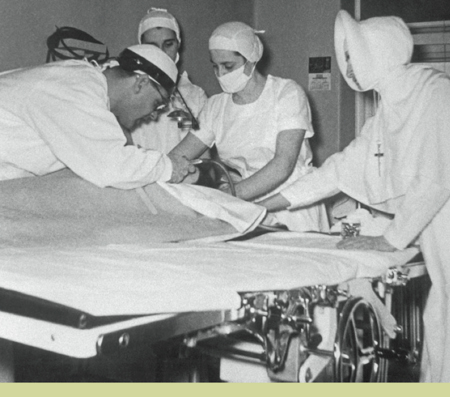
Impressed by Dahmer’s sincerity, Ratcliff arranged for his baptism in a whirlpool within the prison. On May 10, 1994, Ratcliff performed the baptism, marking a significant turning point in Dahmer’s life. Determined to support his spiritual journey, Ratcliff committed to weekly Bible study sessions with the convicted murderer.

As Ratcliff delved deeper into Dahmer’s story, he was struck by the dichotomy between the monster described in the media and the person he had come to know. While Dahmer occasionally mentioned his crimes, he never provided an explanation for his actions. Ratcliff, along with the rest of the nation, could only speculate on the motivations behind Dahmer’s gruesome acts.

Despite public backlash and criticism, Ratcliff firmly believed in Dahmer’s capacity for repentance and transformation. He received mixed reactions, with some questioning his judgment while others commended his unwavering faith in the power of redemption. Ratcliff held firm in his belief that even the most evil individuals could turn to God and be saved.

Over time, Ratcliff observed a gradual change in Dahmer’s demeanor. The once self-destructive man began to show a genuine desire to help fellow inmates, particularly through Bible study sessions. Dahmer’s father, Lionel, also noticed the positive shift in his son’s outlook on life.

Tragically, Dahmer’s journey toward redemption was cut short. In a horrifying turn of events, he was attacked and killed by another inmate while performing janitorial duties. Ratcliff, who had formed a deep bond with Dahmer, felt a profound sense of betrayal and loss. Just days before his death, Dahmer had expressed gratitude to Ratcliff and looked forward to their continued friendship.

Ratcliff presided over a memorial service for Dahmer, where he stood alongside Dahmer’s family. The event also brought together the sister of one of Dahmer’s victims, who expressed her newfound ability to forgive Dahmer, offering a glimpse of healing and redemption for all those affected by his crimes.

A decade after Dahmer’s passing, Ratcliff remains committed to his ministry and has expanded his work in prison settings. Inspired by his encounter with Dahmer, Ratcliff developed a profound empathy for those incarcerated, recognizing the importance of compassion and support in their journey towards rehabilitation and spiritual growth.

The encounter with Dahmer challenged Ratcliff’s preconceptions and taught him that no one is beyond the reach of God’s grace. It serves as a powerful reminder that even in the darkest corners of humanity, there exists the potential for transformation and the capacity for forgiveness.

In addition to the profound spiritual journey that Roy Ratcliff shared with Jeffrey Dahmer, their connection deepened into a genuine friendship. Dahmer’s gratitude for Ratcliff’s support and guidance was evident when he sent Ratcliff a Thanksgiving Day card, expressing his appreciation for their friendship and eagerly anticipating their future meetings.


This unexpected gesture touched Ratcliff deeply, as it symbolized the bond they had formed despite the immense challenges and societal judgment surrounding their relationship. The card became a poignant reminder of the potential for human connection and the capacity for transformation, even in the darkest circumstances.

Ratcliff cherished the card and looked forward to the prospect of continuing their Bible study sessions and sharing their spiritual journey. Little did he know that it would be their last communication, as just days later, Dahmer’s life was tragically cut short.

This heartfelt act of gratitude serves as a testament to the profound impact Ratcliff had on Dahmer’s life. Their friendship transcended societal boundaries, reminding us all of the power of compassion, forgiveness, and the potential for redemption, even in the most unlikely of circumstances.

the tragic teacher

jeff never thought his life could be helpful to anyone, but he really has helped me a ton. he’s helped me think more deeply about people, about psychology, about the different ways in which the system fails us all, and about the complex nature of morality and human nature in general.

jeff is a teacher and subject both, perhaps inadvertently so. he didn’t recognize his own power. but i’m always going to be grateful to him for that. his actions were horrific, but his existence has somehow still helped us all here in this community. those who’ve wished to study him deeply have uncovered a lot of profound truths along the way.

like a retrograde planet, jeff’s existence bungled things up quite a bit, but it also taught us a lot in the process. and there are always going to be retrogrades. on a grand scale, we need them.

and i hate even saying that because it seems like an insult to his victims. they certainly didn’t deserve to die or be violated in all those horrible disgusting ways. it’s sort of making me squirm to even have this thought at all right now. but i guess death gets us all at some point; it’s just a matter of how it happens and what — or who — brings it. and sometimes society as a whole needs a shock to it in order to recognize that the current setup is absolutely fucked and needs to change. it’s just how the huge complex rube-goldberg contraption called “the world” is set up.

unfortunately, someone has to play the bad guy. like how judas had to betray jesus in order to get the ball rolling for his death and resurrection. without judas, the whole thing would never have happened. he hated himself for what he did, too, and he hung himself because of it.

i see jeff very similarly. he’s a catalyst for change.

and now somehow i’m linking this with the trolley problem. a few casualties for the good of the whole later on down the line? it’s cruel. it’s brutal. it’s a horrible reality. but the only way we can improve things as they are, i guess, is by fighting fire with fire at some point.

i don’t know. this might all be bullshit and i might regret saying it in about 5 minutes. i feel like i’m being insulting to jeff’s victims by saying it. but i’m also not married to these thoughts, either — they’re just swimming through my head, and i might read over them again in an hour and hate them. but maybe there’s a similarity there in that i’m thinking brutal thoughts and am self-aware at the same time, just as jeff was self-aware and yet couldn’t stop causing destruction.

i think his fame was necessary. he had to slam into our collective consciousness like a meteor and leave a huge crater so we can later fill it with new lessons and knowledge.

it makes sense that he came to light during the early 90s, with all that harsh outer-planet shit that was going on right then. capricorn and scorpio, saturn and pluto dominance. saturn is the grim reaper swinging his scythe; pluto destroys and rebuilds. jeff was absolutely a harbinger of all this outer-planet energy.

maybe in his next life, jeff will go on to be an even greater force for helping people than he was for harming them. maybe he’s already doing that right now. he just needed to go through a really nasty incarnation first.

maybe he needed to experience firsthand what horrors one human is capable of before he could help change this in the next life. i do wonder how many of us have at least one past life where we were a murderer or a rapist or some other awful person, and that’s what’s made us wiser in the end and we just aren’t aware of it.

the difference with jeff is that he seemed to retain some awareness that this was wrong. he’s bridged the gap so we can peer into the other side. he’s relatable because we need to be able to recognize these traits in ourselves.

only then can we take the first step toward righting our wrongs.

[ • dahmers-ashes • ]