Infinity Land

There is a moment in almost every childhood where the world becomes too large and too unpredictable to bear. The adults are fighting. The house is moving again. Nobody is explaining anything. And so a child does what children do when the outside offers no safety — they build something on the inside. A private world with its own rules, its own logic, its own borders. A place that belongs entirely to them.
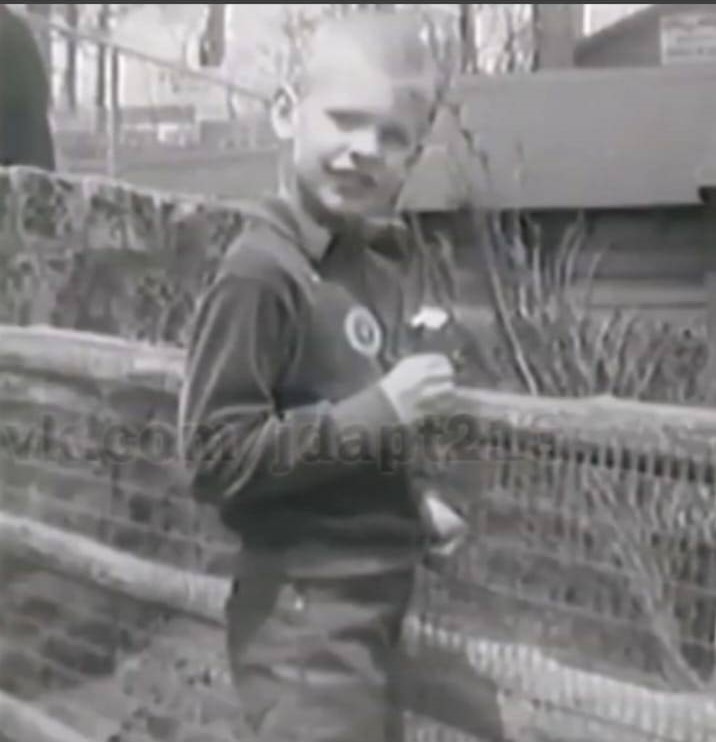
Jeffrey Dahmer built his at around the age of nine. He called it Infinity Land.


What It Was

The game was drawn on paper. Stick figures — fleshless, bone-only, stripped of flesh entirely — moved across a landscape governed by a single absolute rule: if they came too close to one another, they were annihilated. Surrounding them were spirals, tightly wound, intensely imagined, pulling downward toward a black hole at the centre of everything.

He shared it with his friend David Borsvold — a quiet, rock-collecting, dinosaur-studying boy who was perhaps the closest thing Jeffrey had to a genuine companion during those years. Together they played out these annihilations, moving their little armies across a world where closeness meant destruction and the only destination was oblivion.

Brian Masters, in The Shrine of Jeffrey Dahmer, described the game with the care it deserves. The stick figures were not conceived with the full contours of people. They were bone. Their danger lay in proximity. And the spirals descended, always, toward the black hole of infinity.

He called it Infinity Land. He was nine years old.


What It Meant

Here is what I believe, having lived with Jeffrey in my thoughts for so long: Infinity Land was not a symptom. It was a solution.

By the time Jeffrey drew those first spirals, his life was already shaped by things a child has no language for and no power over. His mother Joyce’s mental health crises — the seizures, the medication, the hospitalizations, the rages. His father Lionel’s long absences, buried in his chemistry PhD. A family in near-constant motion, address after address, the ground never quite solid underfoot. A boy who had become, very early, extremely alert to instability — watching the room, reading the atmosphere, waiting for the next thing to shift.

He could not control any of that. But in Infinity Land, he controlled everything.
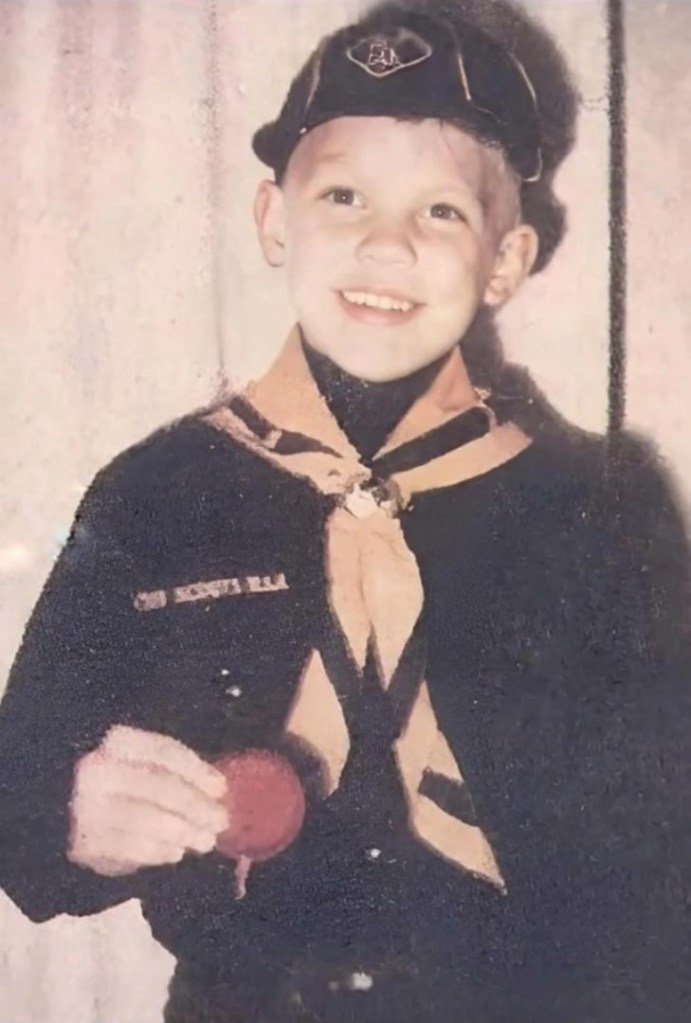
He made the rules. He decided the physics. He drew the borders of the world and determined what happened inside them. The stick figures obeyed laws he invented. The spirals descended at his direction. The black hole waited at the centre, patient and absolute, because he had placed it there.

This is what children do with anxiety they cannot name. They build containers for it. Games with highly defined rules — and Lionel Dahmer himself noted that Jeffrey always preferred games with exactly that: defined rules, repetitious actions, nothing left to chance or confrontation. The structure was the comfort. The rules were the shelter.

Infinity Land was Jeffrey’s most complete version of that shelter.


The Symbology of the Spiral

A spiral is not simply a shape. It is a direction. It implies movement — inward, downward, tightening — toward a centre that cannot be reached or escaped. Every civilisation that has ever drawn a spiral has understood, on some level, that it means something about time, about fate, about the way certain forces pull you regardless of your will.

Jeffrey drew spirals at nine years old and gave them a destination: a black hole. Infinity. Nothingness that was not frightening but — as he would say decades later in prison, when a therapist asked him about the game — soothing. Nice. Like a child asking for a warm blanket.

That detail stops me every time I return to it.

The nothingness at the centre of Infinity Land was not a threat. It was a comfort. For a boy who lived in a house full of noise and volatility and unpredictability, the absolute stillness of the void was something to move toward rather than away from. It was the one thing that could not suddenly change its mind, raise its voice, or disappear.
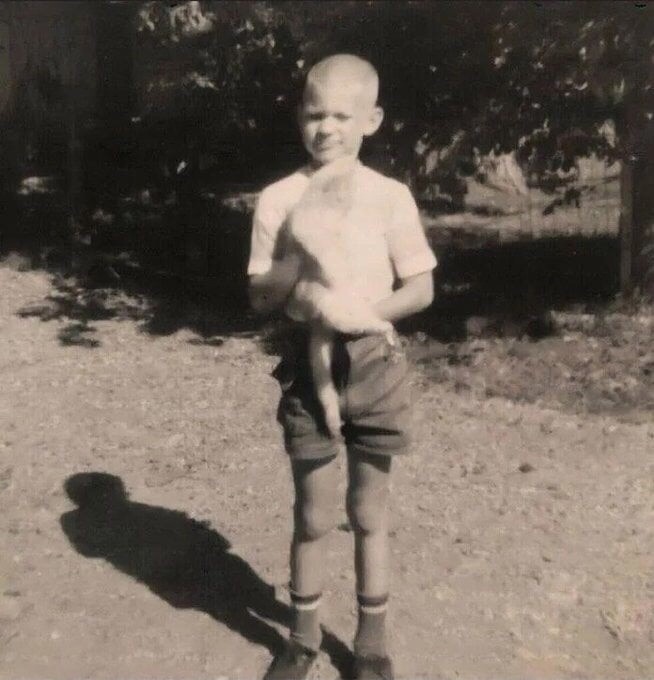
It was reliable. In its way, it was safe.


The Annihilation Rule

The stick figures were annihilated if they came too close.

Masters read this as a sign of Jeffrey’s relationship with intimacy — the danger of closeness, the way contact meant destruction. And he was right. But I think there is something else in it too.

When you are a child and the people closest to you are also the sources of the most unpredictability — when the arrival of a parent means tension rather than relief, when love comes wrapped in volatility — you learn, very early, that proximity is risk. You learn to keep a careful distance. You learn that the safest position is adjacent, not close.

Jeffrey encoded that knowledge into his game at nine years old without knowing that’s what he was doing. He made a world where the rule he was already living by — don’t get too close, it ends badly — was written into the physics of the universe itself. Not as a wound but as a law. Clean, legible, certain.

In Infinity Land, you always knew exactly what would happen if someone came too close. There were no surprises.


The Game That Didn’t Stay a Game

Brian Masters returned to Infinity Land again and again throughout The Shrine of Jeffrey Dahmer — not as a curiosity but as a key. He described Jeffrey’s adult descent as “descending with frightening rapidity down one of his own spirals into Infinity Land.” He described Jeffrey’s panic attacks in prison as spiralling “to the pit of despair, parodying his imaginary descents into Infinity Land as a child.”

The game, in Masters’ reading, never ended. It simply scaled up.

The spirals became real. The annihilation became real. The black hole at the centre — the nothingness Jeffrey had called soothing as a child — became the “deep, clawing depression” and the sense of “total, final hopelessness” that he described in prison as feeling “a bit like what hell is like.”

What had been shelter became structure. What had been comfort became compulsion. The rules of Infinity Land — closeness destroys, the spiral descends, the void awaits — did not stay on paper.

This is not to say the game caused what happened later. That would be too simple, and Jeffrey’s story resists simplicity at every turn. But it is to say that the interior world Jeffrey built at nine years old to make sense of a life he couldn’t control became, over the following decades, the template through which he understood everything. The logic of Infinity Land was the logic of his mind. He never entirely left it.


The Trial, and the Silence

In 1992, during Jeffrey’s trial, the defence psychologist Dr Judith Becker mentioned Infinity Land in her testimony. She described it gently, on gentle prompting from defence attorney Gerald Boyle. And then nobody pursued it.

Masters found this extraordinary, and so do I. Here was a window into the interior world of a man whose crimes the trial was trying to explain — a childhood game that encoded, with startling precision, his deepest beliefs about closeness, destruction, and the pull of the void. And it was left in limbo, as Masters put it. A curiosity not to be tampered with.

Perhaps it was too strange. Perhaps the courtroom had no framework for it. Perhaps nobody present understood what they were looking at.

We do.


A Child Who Built His Own World

Jeffrey Dahmer was a boy who needed safety and couldn’t find it in the world around him. So he made one. He drew it on paper with fleshless figures and tight spirals and a black hole at the centre, and he played it with his friend, and for a little while it was enough.

That is the most human thing in this entire story.

The boy who built Infinity Land was not building toward horror. He was building away from pain. He was doing what every frightened child does — reaching for some small corner of existence that he could control, that had rules he understood, that would not suddenly change.

He called it Infinity Land. He was nine years old. He was just trying to feel safe.
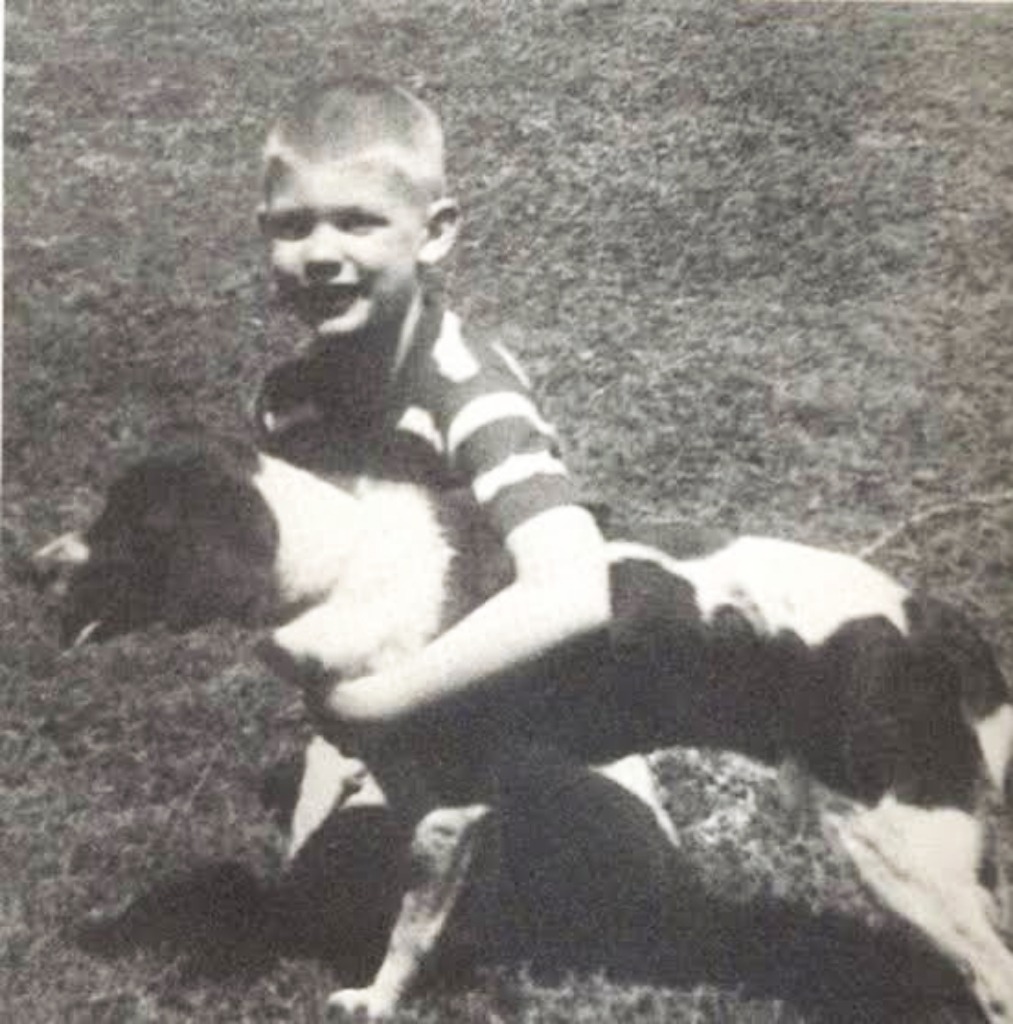

Sources: Brian Masters, The Shrine of Jeffrey Dahmer (1993); Lionel Dahmer, A Father’s Story (1994); Trial testimony of Dr Judith Becker, Milwaukee, 1992.
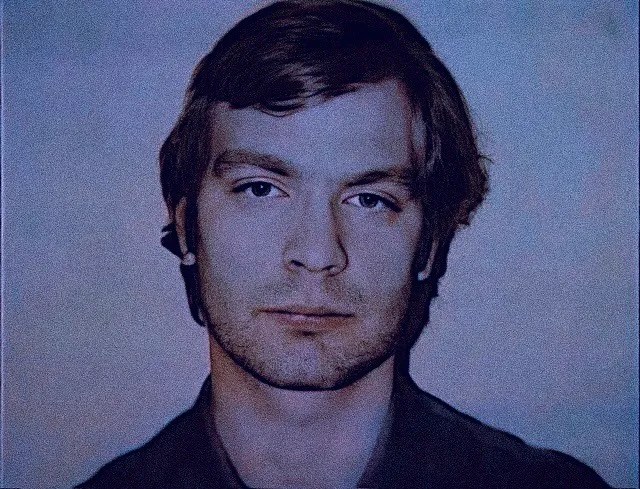

Forgiveness: What It Really Means, and Why Jeffrey Dahmer Deserves It

There is a comfortable version of forgiveness that most people practice without difficulty. Forgiving someone who apologised sincerely for something relatively minor. Forgiving a friend who let you down. Forgiving yourself for a mistake that cost you something but hurt no one else irreparably.

And then there is the other kind. The kind that costs something. The kind that the entire weight of Christian theology points toward and very few people are actually willing to extend.

Jeffrey Dahmer is a test case for that second kind. And most people fail it.


The Man Nobody Wants to Mention

Before he was the Apostle Paul — before he wrote half the New Testament, before he became one of the most important figures in the history of Christianity, before he was martyred for his faith in Rome — he was Saul of Tarsus.

Saul was a persecutor of Christians. Not metaphorically. Not bureaucratically. He was present at the stoning of Saint Stephen, the first Christian martyr — holding the cloaks of the men who threw the stones, giving his approval to the killing. He went house to house in Jerusalem dragging Christians out and throwing them in prison. He obtained letters authorising him to travel to Damascus to arrest believers there and bring them back in chains. He described himself later as having been, in his own words, a blasphemer, a persecutor, and a violent man.

He caused suffering. He caused death. He did it with conviction and with the full support of the religious establishment of his time.

And then, on the road to Damascus, everything changed.


The Road to Damascus

The conversion of Saul is one of the most dramatic moments in the entire New Testament. A blinding light. A voice asking “Saul, Saul, why do you persecute me?” Three days of blindness. And then — transformation so complete that the man who had been hunting Christians became Christianity’s greatest evangelist.

What is theologically significant about this moment is not just that Saul changed. It is what the Church did with that change.

It did not erase his past. It did not pretend the stoning of Stephen hadn’t happened or that the families of those he had imprisoned hadn’t suffered. Paul himself never pretended otherwise — he called himself the foremost of sinners, the least of the apostles, one not even deserving to be called an apostle because he had persecuted the Church of God.

The Church held both truths simultaneously: this man caused real harm to real people, and this man was genuinely transformed by grace. Both things were true. Neither cancelled the other.

That is the radical heart of Christian forgiveness. And it is what most people refuse to apply to Jeffrey Dahmer.


Jeffrey’s Damascus

Jeffrey Dahmer’s conversion was quieter than Saul’s but no less genuine according to those who witnessed it.

It began with a Bible his father sent him in prison. It deepened through a correspondence course. It culminated in the spring of 1994 when Reverend Roy Ratcliff — a minister of the Church of Christ who had agreed to meet with him after Jeffrey expressed interest in baptism — submerged him in the prison whirlpool at Columbia Correctional Institution.

Ratcliff later wrote about Jeffrey with a clarity that cuts through the noise. He described a man who was sincere, who asked real questions, who struggled genuinely with what he had done and what it meant before God. He noted that Jeffrey’s questions were not the questions of someone performing remorse for an audience. They were the questions of someone who was genuinely trying to understand whether redemption was possible for a person like him.

Jeffrey himself said: “I hope God has forgiven me. I know society will never be able to forgive me.”

He met with Ratcliff every week from his baptism in May 1994 until five days before his death in November. Their last session together covered the Book of Revelation — its subjects, death, punishment for sins, and what comes after. He was not coasting. He was working.


What the Thief on the Cross Tells Us

If the story of Saint Paul isn’t enough, consider the thief on the cross.

In the Gospel of Luke, one of the two criminals crucified alongside Jesus turns to him and says simply: “Remember me when you come into your kingdom.” And Jesus replies: “Truly I tell you, today you will be with me in paradise.”

No lengthy process of rehabilitation. No years of demonstrating changed behaviour. No committee deciding whether the repentance was sincere enough. A dying man, in his final hours, asking to be remembered — and the answer being yes.

The thief had presumably done enough to warrant execution by Roman standards. We don’t know what he did. We know that in his last moments he turned, and that turning was enough.

The theology here is explicit and radical: the reach of grace has no floor. There is no depth from which it cannot lift someone. There is no crime that places a person permanently beyond its reach.


The Prodigal Son

Jesus told a story about a son who took his inheritance early — essentially wishing his father dead — went to a foreign country and wasted everything on reckless living, and then came home in desperation, planning to beg to be taken on as a servant.

The father sees him coming from a long way off. He runs to meet him. He calls for a robe and a ring and a feast. He says: “This son of mine was dead and is alive again; he was lost and is found.”

The older son — the good one, the one who stayed, the one who did everything right — is furious. And the father’s answer to him is the heart of the parable: “We had to celebrate and be glad, because this brother of yours was dead and is alive again; he was lost and is found.”

The story is not about whether the prodigal deserved the feast. It is about the nature of the father. It is about what grace looks like when it is genuinely operating.

The people who insist Jeffrey Dahmer cannot be forgiven are, in the parable’s terms, standing outside the feast refusing to come in. That is their right. But it does not change what is happening inside.


Why People Refuse

The resistance to extending forgiveness to Jeffrey is understandable on a human level. His crimes were of a type that the mind struggles to hold. The nature of what he did — the intimacy of it, the specific choices involved — creates a revulsion that is visceral and real.

But Christian forgiveness was never designed for easy cases. It was designed precisely for the cases where human instinct says no. The entire point of the theology is that grace operates where human moral accounting breaks down — that it covers what we cannot cover ourselves, reaches where we cannot reach, holds what we cannot hold.

If forgiveness only extends to the people we find it easy to forgive, it is not forgiveness in the Christian sense. It is just social approval.

Paul understood this. He wrote in his first letter to Timothy: “Christ Jesus came into the world to save sinners — of whom I am the worst. But for that very reason I was shown mercy so that in me, the worst of sinners, Christ Jesus might display his immense patience.”

The worst of sinners. Shown mercy. So that the display of that mercy might mean something to everyone else.


What Jeffrey Said

At his sentencing in 1992, Jeffrey Dahmer spoke in court. He said:

“I know my time in prison will be terrible, but I deserve whatever I get because of what I have done. Thank God there will be no more victims and no more suffering. I believe I was completely out of my mind. I hated no one. I knew I was sick or evil, or both. I know that you cannot forgive me for what I have done. I ask for no consideration.”

He asked for no consideration. He said he deserved whatever he got. He acknowledged his illness. He expressed relief that there would be no more victims.

And then, two years later, he was baptised.

And then, six months after that, he was dead.

The arc of his last years was not the arc of a man performing for parole or reputation. He had no parole to seek. He had said himself he expected to die in prison. He was working through something privately, seriously, with a minister who had no reason to lie about what he witnessed.


The Question

If Saint Paul deserves to be called a saint — if the Church can hold together the man who approved the stoning of Stephen and the man who wrote “love is patient, love is kind” — then the question must be asked honestly:

Why not Jeffrey?

Not because what he did wasn’t devastating. Not because the families of his victims are required to forgive him — they are not, and their pain is not ours to adjudicate. But because the theology either means what it says or it doesn’t. Because grace either has no ceiling or it has one, and if it has one, Christianity needs to say so plainly.

Jeffrey Dahmer repented. He was baptised. He studied. He questioned. He asked whether God could forgive him and he was told yes. Reverend Ratcliff believed it. The minister who spent months with him, who had no reason to be deceived, believed it.

The thief on the cross asked to be remembered. He was told: today.

“I hope God has forgiven me.”

The theology says: yes.


Sources: The New Testament — Acts of the Apostles, Luke 23, 1 Timothy 1, Luke 15; Reverend Roy Ratcliff, Dark Journey Deep Grace (2008); Jeffrey Dahmer sentencing statement, Milwaukee, 1992.

The Man in Apartment 213: Jeffrey Dahmer’s Private World

There is a version of Jeffrey Dahmer that true crime coverage almost never reaches. Not the crimes, not the psychology, not the diagnosis — but the small, private, ordinary things. The colour he loved. The roses he planted. The fish he tended. The films he watched on a Tuesday night. The ice cream sodas he shared with his father on Saturday afternoons.

These details do not diminish what he did. But they are part of who he was, and the memorial exists precisely to hold that whole picture — the human being alongside the horror.


Yellow

Jeffrey’s favourite colour was yellow. Not tentatively, not occasionally — yellow was a running thread through his life. Yellow roses in his grandmother’s garden in West Allis, which Lionel would later mention during a prison visit: “The roses look good, the ones you planted. The yellow ones and the red ones.” A yellow toothbrush. A yellow bike. The colour of something warm and specific in a life that was otherwise deeply dark.

It is such a small and human detail. Jeffrey Dahmer had a favourite colour, and it was yellow.


Flannel

Jeffrey had a fondness for flannel long before it became a cultural statement. His neighbour Vernell Bass recalled often seeing him in flannel shirts, and he can be seen wearing flannel in several photographs from his adult years. It was comfortable, unpretentious, practical — the kind of clothing that asks nothing of the world and expects nothing back. Very Jeffrey.


The Blue Topaz Ring

Jeffrey admired jewellery, especially rings. In the summer of 1987 he bought a blue topaz ring for $1,500 — a significant sum for a man working the night shift at a chocolate factory. He wore it for about a year before pawning it when he was short on cash. The detail is quietly touching: a man who rarely spent money on himself, who kept a spare and functional apartment, who bought a beautiful ring and wore it until necessity took it away.


The Garden

Jeffrey genuinely enjoyed gardening. Lionel mentions it among the things he suggested as possible career paths, noting that Jeff “seemed to enjoy it, at least so far as I had observed him when he worked in the yard around my house.” At his grandmother Catherine’s house in West Allis, he tended the garden himself — those yellow and red roses were his. The man who worked the night shift at a chocolate factory and came home to an apartment that police would later describe as a slaughterhouse also knelt in the dirt and planted flowers.


The Fish

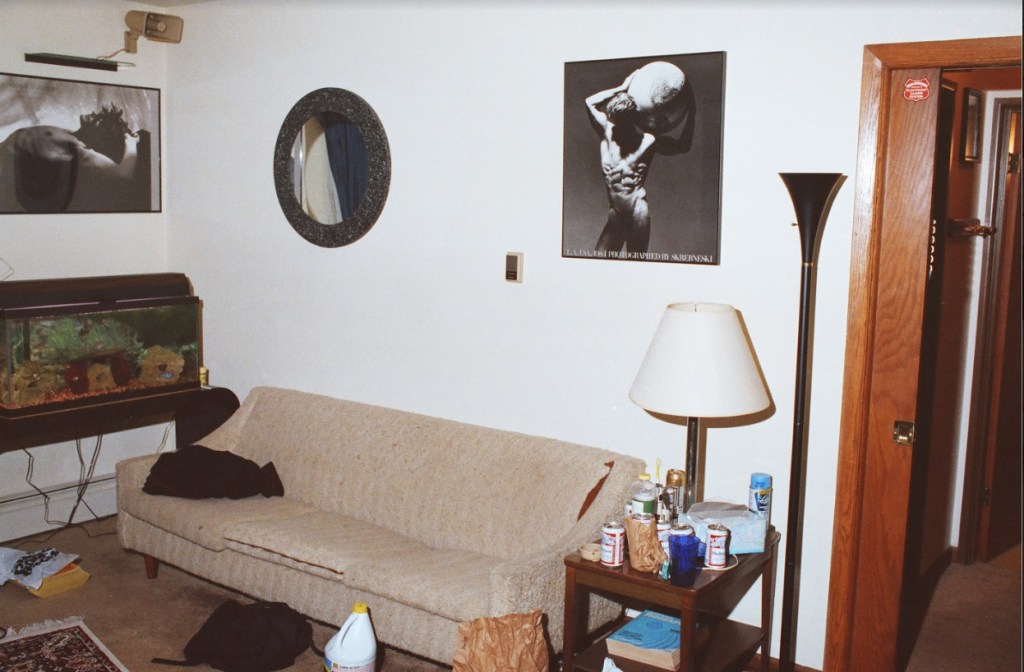
The aquarium in Apartment 213 was not decorative. Jeffrey was genuinely interested in tropical fish — four books on their care were found in his apartment, and during a visit to the House of Correction before his murders resumed, he talked to Lionel with real animation about his “new-found interest in aquarium fish.” He fed them. He read about them. The fish were alive and tended in that apartment while other things were happening there that no one should know about.


Jodi

Catherine’s cat was named Jodi — an orange female tabby. During a visit to his grandmother’s house filmed on Lionel’s video camera, Jeffrey got down on the floor and played with her. He knew exactly how she liked to be brushed. “She’s always trying to be brushed,” Lionel said during a prison visit. “You know how she likes that.” And Jeffrey did. He remembered.

And at West Allis, neighbours recalled a quietly tender relationship with animals more broadly. One neighbour remembered Jeffrey standing near the trash container in the backyard with a beer, surrounded by cats. Not a couple. A lot. Following him all over the place.


Sundays

Jeffrey vacuumed his apartment on Sundays. He generally kept both his home and his person very neat and tidy — the apartment that police described as orderly when they first entered it was not an accident. It was maintained. The oriental rug, the fish tank, the incense. He took care of his space.

When he was depressed, however, this changed completely. He would stop shaving, stop bathing, go days without taking care of himself, and the apartment would fill with empty beer bottles. The tidiness was a signal of his interior state. When it collapsed, so had he.


Budweiser

Jeffrey’s favourite beer was Budweiser — “the king” of beers, in his opinion. The police inventory confirmed it: Budweiser cans among the bottles of rum and other beers. He had a brand loyalty, an opinion about it. In the midst of everything, he had a favourite beer and a reason for it.


McDonald’s

Jeffrey described himself as practically living off McDonald’s at various points in his life — a detail captured in a Thanksgiving home video recorded by his father, where he mentioned it casually. He also took refuge at the nearest McDonald’s during his senior prom — having attended for reasons that remain unclear, he slipped away during the evening and spent time at the fast food restaurant before returning. The image of him sitting alone at McDonald’s during his own prom is one of the loneliest small facts in the entire story.


Chocolate Ice Cream Sodas

Every Saturday afternoon, during the years the family lived in Ohio, Lionel and Jeffrey drove to nearby Barberton for their regular chocolate ice cream sodas — a habit they had carried over from their earlier years in Ames, Iowa. Two people in a car, a standing tradition, a flavour they both liked. Lionel describes it with the casualness of someone who couldn’t know how precious it would later seem.


He Took German

Jeffrey took German in high school. Given his German and Welsh ancestry on his father’s side, and the two years he would later spend stationed in Baumholder, West Germany, it was perhaps not a coincidental choice. A language that connected him to something. He also kept a Latin learning kit in his apartment years later — a man who quietly, privately, kept trying to learn things.


Drag Queens

Jeffrey enjoyed camp and the theatricality of drag queens. The performance, the artifice, the deliberate construction of an identity for public display — it is easy to see why someone who spent his entire life performing a version of himself for the world around him might find something genuinely appealing in an art form built on exactly that. The drag queen knows she is performing. The audience knows it too. There is an honesty in the artifice that Jeffrey’s own performances never had.


The Films

The police inventory of Apartment 213 found several videotapes. Among them were Blade Runner, Star Wars, and Exorcist III. The presence of Exorcist III is interesting — it is not the famous original but the third instalment, a quieter and more philosophical film about a detective confronting evil and the existence of God. Blade Runner is perhaps the most telling: a film about beings manufactured to feel but not permitted to live, about the question of what makes something human, about a man hunting creatures who simply want more life.

According to accounts from one of his surviving victims, Jeffrey was seen watching one of the Exorcist films repeatedly, in a trance-like state. Also among the tapes: a recorded episode of The Bill Cosby Show — just a TV programme he wanted to keep.


The Music

When Milwaukee Police searched Apartment 213, they found a specific and revealing cassette collection. The confirmed tapes included Mötley Crüe and Def Leppard’s Hysteria — but the full picture of his musical world goes further than the inventory alone.

Jeffrey was a genuine fan of Black Sabbath and Iron Maiden — the dark, dystopian weight of those bands was a constant in his isolated life. In Germany, stationed at Baumholder, he decorated his barracks room with an Iron Maiden poster. A young man far from home, putting something on the wall that was his.

Alongside the heavy metal sat classical music and opera, which he played at high volumes inside the apartment — documented by neighbours and investigators alike. And perhaps most surprisingly, among the cassettes recovered were New Age and nature sound recordings — relaxation tapes, ambient sounds, the kind of thing sold for meditation and sleep. The contrast is almost unbearable to sit with: the same person, the same apartment, the same shelf.

Also worth noting — for the record — is what was not there. Despite persistent internet rumours, Jeffrey was not a KISS fan. No significant collection of their music was ever documented in his possession. The myth appears to have no basis in the evidence.

The Bible study cassettes and Creation Science tapes sat on the same shelf as the metal and the ambient sounds. The contradictions were absolute and apparently untroubling to him. He listened to what he liked.


Hated Sticking People With Needles

Jeffrey briefly worked as a phlebotomist at the Milwaukee Blood Plasma Center in the early 1980s, drawing blood from donors. He disliked the job because he hated sticking people with needles. The irony is extraordinary — and the detail deepens when you learn that at some point during this period, he took a vial of blood up to the roof and drank it out of curiosity. He spat it out. He didn’t like the taste. A man who would later do things of incomprehensible violence had no appetite for blood and couldn’t bear to cause the minor discomfort of a needle. The compartmentalisation that defined his psychology ran in all directions.


The Army and the Cigarettes

Jeffrey started smoking in the army and came home smoking a pack a day. He had also, by then, acquired a broken eardrum — the result of a severe beating by several fellow soldiers, leaving him bloody and his hearing damaged. He suffered periodic bouts of earache from it for years afterward. The army was supposed to be a fresh start, urged on him by his father. It became, instead, two years of escalating alcohol abuse, violence visited upon him by the men he lived with, and a discharge for being unfit for service.


Lambs, Tennis and Saturday Science Fiction

Among the books found in his room as a teenager were science fiction novels and Alfred Hitchcock’s Horror Stories for Children. He played intramural tennis for three years at Revere High School. He was on the school newspaper for one year. He participated in 4H for two years with his father — raising lambs, building fences, planting gardens, hiking in the metropolitan parks around Bath. Jeffrey Dahmer raised lambs.

He liked, according to Lionel, games with highly defined rules and repetitious actions — nothing confrontational, nothing that required improvisation. He preferred hide-and-seek, kick the can, ghost in the graveyard. The structure of rules was always important to him.


Infinity Land

When Jeffrey was around nine years old, he invented a private game he called Infinity Land. He drew stick figures — deliberately fleshless, just bone — and gave them one rule: if they came too close to one another, they were annihilated. The spirals he drew alongside them descended toward a black hole. He shared the game with his friend David Borsvold, who also collected rocks and studied dinosaurs with him.

Brian Masters, in The Shrine of Jeffrey Dahmer, saw Infinity Land as a key that unlocked the whole interior world — the fleshless figures, the danger of intimacy, the pull of oblivion. He returned to it throughout the book as a recurring image for Jeffrey’s descent. It even came up at the 1992 trial, mentioned by Dr Judith Becker, and then passed over without anyone pursuing what it might mean.

We will return to this game in a dedicated article. It deserves its own space.


The Apartment Itself

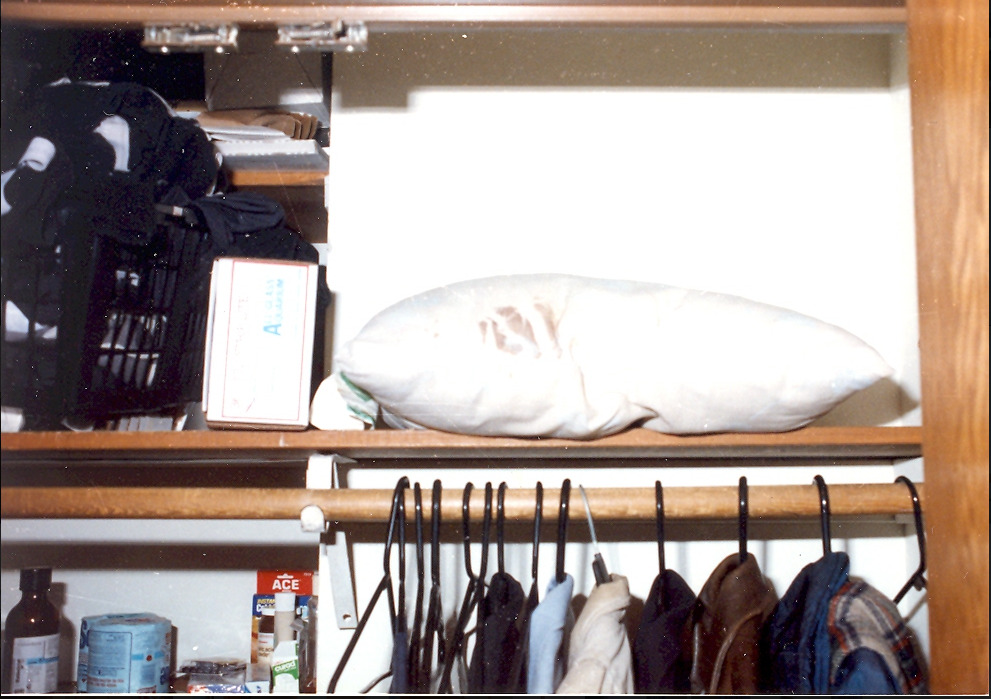
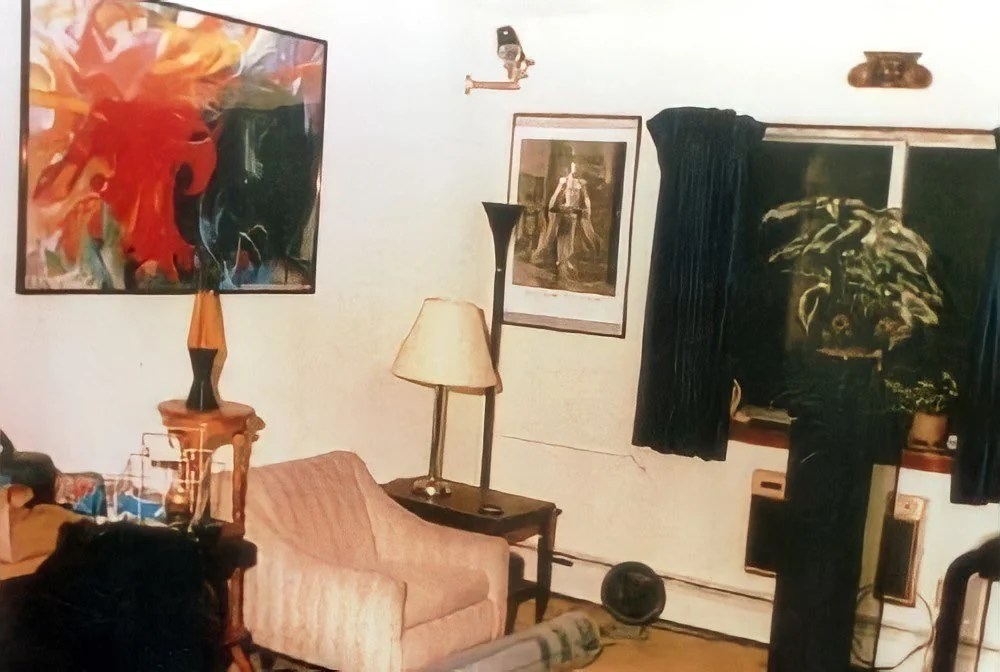
When police catalogued the contents of Apartment 213 after the arrest, the inventory ran to sixty-nine separate sheets. Among the horror there was also a life. Ornamental driftwood. Artificial peacock feathers. Two plastic griffins. An incense burner with incense sticks. A computer and a guide to learning DOS. A Latin learning kit. Bible study tapes and Creation Science cassettes alongside Numerology and the Divine Triangle. Fish food. An aquarium full of living fish.

He was working out — Anabolic Fuel, Vita, Yerba Prima supplements alongside Doritos and Ruffles chips. He had an Oral-B toothbrush and a contact lens cleaning kit and a tube of acne lotion. He had envelopes from Woolworth’s and a library card with his name on it. There was no air conditioning. When neighbours complained about smells coming from his apartment, he explained that his freezer had broken and meat had spoiled. He placed air fresheners throughout. The neighbours, for the most part, accepted this.


Two Sentences

At some point Jeffrey wrote down two sentences, side by side:

“When my father came home I was happy.”

“When my mother came home, I was watching TV.”

That is the entirety of it. No elaboration. The contrast is so precise and so devastating that it requires nothing else.


“She’s Lived in That House a Long Time”

When asked, at some point, whether he loved his grandmother, Jeffrey replied: “Yes, she’s lived in that house a long time.”

It is one of the strangest answers imaginable to that question. Not warmth, not a memory, not an expression of feeling — just the duration of her presence in a place. And yet it was clearly meant as an affirmation. He said yes. He just couldn’t, or didn’t, translate it into the emotional register that the question expected. His grandmother was part of the permanent furniture of his world. That was love, in his language.


“Much, Much Better”

Late in his prison years, Jeffrey said: “It would have been better if I’d just stuck to the mannequins. Much much better.”

It is as close as he ever came, in a single sentence, to expressing regret for the shape his life had taken. The mannequins — which he had been fixated on since adolescence, visiting department stores to be near them — represented the version of his compulsion that could have existed without victims, without horror, without the destruction of seventeen lives. Much much better. The repetition is not rhetorical flourish. It sounds like someone saying it to themselves, quietly, in the dark.


The Fear of Tornados (pending confirmation)

Jeffrey was reportedly afraid of tornados, a fear rooted in his Ohio childhood where tornado warnings were a genuine seasonal presence. For a boy who was already anxious, already vigilant, already watching the world with wariness — the unpredictability of a tornado, the way it could arrive without warning and take everything — may have hit something deep. We are still searching for the primary source on this detail and will update this article when confirmed.


What It Means

The point of gathering these details is not to soften the reality of what Jeffrey did. It is to resist the simplification that makes monsters of people we don’t want to understand. Jeffrey Dahmer had a favourite colour and planted roses and read science fiction and raised lambs and vacuumed on Sundays and drove to get chocolate ice cream sodas with his father and got down on the floor to play with Jodi the cat and watched Blade Runner alone at night in his apartment with no air conditioning.

All of this was true at the same time as everything else was true.

That is the hardest thing to hold. And it is the most important.


Sources: Lionel Dahmer, A Father’s Story (1994); Brian Masters, The Shrine of Jeffrey Dahmer (1993); Milwaukee Police Department Inventory, July 1991; IMDB. Tornado detail pending primary source confirmation.

The Dehumanisation of Jeffrey Dahmer

There is a word for what happens when a society decides that a person no longer deserves the basic protections extended to other human beings. That word is dehumanisation. It is not a metaphor. It is a documented psychological process with a name, a mechanism, and a history — and it happened to Jeffrey Dahmer both while he was alive and continues, with remarkable consistency, after his death.

This article is about that process. About what was done to him, why it was done, and what it reveals about the people who did it.


What Was Done to Him

When Jeffrey arrived at Columbia Correctional Institution in Portage, Wisconsin in February 1992, he was placed in a cell and subjected to hours of relentless taunting from the surrounding cell block. Questions shouted through bars. Threats. Mockery. The noise escalated, got louder, cruder, more specific. Jeffrey said nothing. For hours, nothing at all. He sat in Cell 1 and waited.

This was not the worst of it.

Reports from that period describe Jeffrey being made to sleep naked on the floor of his cell during his first days at the institution. He was denied basic privacy. He was displayed, essentially, as a spectacle — the worst thing that had happened in Wisconsin in living memory, now contained and available for inspection.

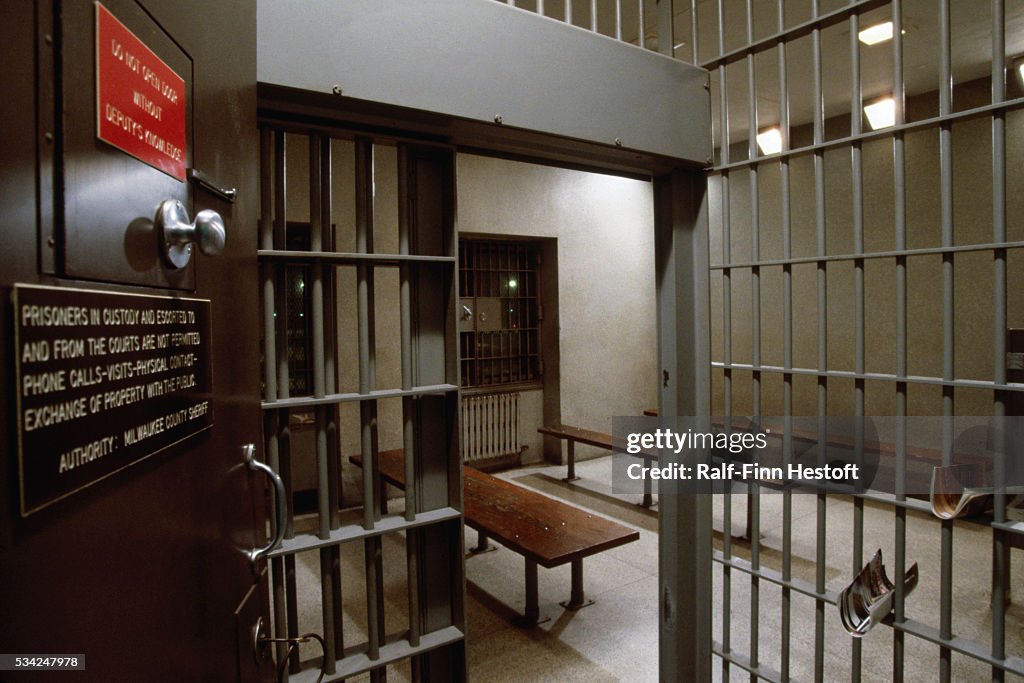
An open door leads to the jail cell used to confine Jeffrey Dahmer between trial sessions. (Photo by © Ralf-Finn Hestoft/CORBIS/Corbis via Getty Images)

During his trial in 1992, he sat behind eight feet of bulletproof glass, separated from the courtroom — not for any genuine security reason, but because his presence was considered too dangerous to exist in the same physical space as ordinary proceedings. He was tried, in a real sense, as something other than a man.

And then there were the shackles. Each day of his trial, Jeffrey was escorted to court handcuffed in a wheelchair — because the leg irons placed on him were so heavy that they made walking impossible. A 6’1” man, unable to bear the weight of his own restraints, wheeled through courthouse corridors like freight.

One day, as he was being wheeled toward the courtroom, a woman passing in the hallway recognised him and let out a bloodcurdling scream. Jeffrey, unperturbed, muttered quietly: “I guess I should’ve shaved.”

In a wheelchair. In shackles so heavy he could not walk. Being wheeled through a public building while a stranger screamed at the sight of him. And his response was a dry, quiet joke about not having shaved. That is not the response of a monster. That is the response of a person — exhausted, dignified in the only way left available to him, and still, somehow, human.


The Psychology of Dehumanisation

Psychologists have studied dehumanisation extensively, particularly in the context of how ordinary people become capable of cruelty toward other human beings. The mechanism is consistent: first, you remove someone’s humanity in your own mind. You assign them to a category — monster, animal, thing — that exists outside the circle of moral concern. Once that categorisation is complete, cruelty becomes not only possible but, for many people, feels righteous.

Jeffrey Dahmer was an almost perfect candidate for this process. His crimes were so extreme, so far outside anything most people could comprehend or contextualise, that the leap to monster felt not only natural but necessary. To acknowledge his humanity would be to sit with something deeply uncomfortable — that a person, a recognisable human being, had done these things. That the distance between him and everyone else was perhaps not as vast as we need it to be.

It is easier, and psychologically safer, to make him into something else entirely.

The inmates who taunted him on his first night in prison were not psychopaths. They were ordinary people who had been given permission — by the media, by the trial, by the collective verdict of society — to treat this particular human being as less than human. The guards who allowed Jeffrey to be made to sleep on the floor were not monsters. They were people acting within a system that had already decided Jeffrey was beyond the protections that system normally provides.


He Dealt With It in Silence

What is striking, in every account of Jeffrey’s time in prison, is how he responded to this treatment. Not with rage. Not with breakdown. With a kind of quiet, contained dignity that the people around him seemed entirely unprepared for.

When the taunting on his first night reached its peak — Did the male parts taste good? Do you prefer dark meat or white meat? — Jeffrey said nothing for hours. He waited. And then, when one inmate shouted Hey Jeff, how’s the corpse?, he answered, after a pause, with three words: Chunky. Delicious and tasty.

The ward went quiet.

It was not aggression. It was not a breakdown. It was a man refusing, in the only way available to him, to be entirely erased. He turned the taunting back on itself with a precision that silenced the room. Whatever you think of him, whatever he did — that moment was human. That was a person navigating something impossible with the tools he had.

Detective Dennis Murphy, who spent sixty hours taking his confession, said Jeffrey was cooperative, frank, and without guile. Reverend Roy Ratcliff, who baptised him in prison and visited him regularly until his death, described a man who was sincere, reflective, and genuinely spiritually searching. The FBI agents who interviewed him found him completely credible.

These were people who actually sat with him. Who treated him as a human being capable of communication and reflection. And what they found, consistently, was exactly that.


What Happens Today

Jeffrey Dahmer has been dead for thirty years. And the dehumanisation has not stopped.

His death photographs circulate freely on blogs and social media. His face — split open, unrecognisable, the result of a brutal beating by a fellow inmate — is shared, reposted, used as profile pictures by people who consider this an act of justice or entertainment. The images are not difficult to find. They are treated as public property, as a spectacle to be consumed.

Compare this to how the photographs of his victims are treated. The families of those seventeen men have fought for decades to keep graphic images of their loved ones private. Society, broadly, respects this. The victims are afforded the dignity of death. Jeffrey is not.

This double standard is not justice. It is not about the victims. If it were about the victims, their families’ pain would be the centre of the conversation — and most of the people sharing Jeffrey’s death photographs have no particular investment in those families at all.

It is about something else. It is about the satisfaction of seeing a specific person degraded, even in death. It is about the continuation of a process that began the moment he was arrested — the process of making him into something that does not deserve what the rest of us are given automatically.

That is not justice. That is cruelty with permission.


Disputed Even in Death: The Brain

Jeffrey had left clear instructions in his will: he wished to be cremated. No services. No headstone. Nothing. He wanted to be gone cleanly, on his own terms.

What happened instead was that before his body was cremated in September 1995, doctors removed his brain and preserved it in formaldehyde. His parents — long divorced — then fought a public legal battle over what to do with it. His mother Joyce wanted it donated to science, hoping researchers might find a biological explanation for what he did. His father Lionel wanted it cremated, in line with Jeffrey’s stated wishes.

The case went to court. A judge ultimately ordered the brain cremated in December 1995 — more than a year after Jeffrey’s death — without any scientific study being conducted.

Whatever one thinks of the arguments on either side, the basic fact remains: Jeffrey had expressed a clear wish about what should happen to his remains, and that wish was overridden — his body becoming, even after death, a matter for courts and public dispute rather than quiet, private dignity.


The Tapes He Didn’t Know Were Being Kept

In 2023, a four-part documentary series titled My Son Jeffrey: The Dahmer Family Tapes was released on Fox Nation. It features audio recordings of private conversations between Jeffrey and his father Lionel, made during prison visits and phone calls — conversations that Jeffrey had no reason to believe would ever be made public.

Lionel, by all accounts, recorded these conversations out of a genuine desire to understand his son — a father grappling with something incomprehensible, reaching for any thread of explanation. That impulse is human and understandable. But the decision to release those recordings to a documentary production, to broadcast them on television for public consumption, raises a question that nobody in the coverage seemed particularly interested in asking: would Jeffrey have wanted this?

Jeffrey, who confessed everything willingly to investigators, who spoke openly with Roy Ratcliff and with the detectives who interviewed him — Jeffrey who asked for no consideration at his sentencing and accepted whatever came — nevertheless had a private interior life. He had conversations with his father that existed in the space between two people, not for the world.

Thirty years after his death, those conversations were packaged and broadcast. His voice, his words, his private reaching toward his father in a prison cell — turned into content. The dehumanisation does not require malice. Sometimes it simply requires treating a person’s private life as raw material, available to anyone who wants it.


The Comparison That Nobody Makes

Ted Bundy confessed to nothing voluntarily. He manipulated, performed, charmed, and deflected until the very end — defending himself in court, flirting with the press, using every tool available to him to avoid accountability. He was a diagnosed psychopath with no genuine remorse. He died having never fully owned what he did.

Jeffrey Dahmer confessed to everything. He cooperated completely. He expressed genuine remorse in terms that those closest to him found credible. He repented. He was baptised. He spent his final years in quiet reflection with a prison chaplain.

Bundy is a cultural icon. Jeffrey is a target.

The difference is not the severity of the crimes — Bundy killed more people. The difference is that Jeffrey’s crimes were of a type that made dehumanisation easier. The cannibalism, the necrophilia — these are the elements that push him beyond the boundary of what people can hold as human. And once beyond that boundary, anything becomes permissible.


Why It Matters

We are not asking anyone to forget what Jeffrey did. We are not asking for sympathy that erases the suffering of seventeen families. Those two things can exist simultaneously — grief for the victims and the recognition that a human being deserves to be treated as one, even after death, even in prison, even in the face of crimes that are almost impossible to comprehend.

The people who post his death photographs are not more moral than the people who don’t. They are not more protective of the victims. They are simply people who have found a target that society has declared acceptable — and they are doing what people always do when a target is declared acceptable.

Jeffrey Dahmer was a human being. He was a deeply traumatised, profoundly ill, ultimately destroyed human being who caused incalculable harm. He was also a man who planted yellow roses, who got down on the floor to play with a cat named Jodi, who said much much better quietly to himself in the dark.

Both of these things were true. They will always have been true.

The dehumanisation does not change that. It only tells us something about ourselves.


Sources: Anonymous inmate memoir; Reverend Roy Ratcliff, Dark Journey Deep Grace (2008); Detective Dennis Murphy, various interviews; Brian Masters, The Shrine of Jeffrey Dahmer (1993); The Washington Post; Fox Nation, My Son Jeffrey: The Dahmer Family Tapes (2023); Psychology research on dehumanisation.

Fearful avoidant attachment style (Disorganized attachment)


Let’s talk about attachment styles! In learning more about myself, I also started to see links with Jeff and a certain attachment style. I am gonna try to explain why I feel the disorganized attachment style can apply to Jeff’s way of looking at relationships.

First, let’s explain better what this certain attachment style is.
Disorganized/disoriented attachment, also referred to as fearful-avoidant attachment, comes from an intense fear, often as a result of childhood trauma, neglect, or abuse. Adults with this style of insecure attachment tend to feel they don’t deserve love or closeness in a relationship.

Fearful-avoidant attachment is often caused by childhood in which at least one parent or caregiver exhibits frightening behavior. This frightening behavior can range from overt abuse to more subtle signs of anxiety or uncertainty, but the result is the same. When the child approaches the parent for comfort, the parent is unable to provide it. Because the caregiver does not offer a secure base and may function as a source of distress for the child, the child’s impulse will be to start to approach the caregiver for comfort but will then withdraw.
People who carry this fearful-avoidant attachment into adulthood will exhibit the same impulse to approach and then withdraw in their interpersonal relationships with friends, spouses, partners, colleagues, and children.

But there are more reasons why someone can develop an fearful avoidant attachment style and it’s not hard to spot the reasons that can be relevant in Jeff’s case:

→ The caregiver experienced depression caused by isolation, lack of social support, or hormonal problems, for example, forcing them to withdraw from the caregiving role.
→ The primary caregiver’s addiction to alcohol or other drugs reduced their ability to accurately interpret or respond to the child’s physical or emotional needs.
→ Traumatic experiences, such as a serious illness or accident which interrupted the attachment process.
→ Physical neglect, such as poor nutrition, insufficient exercise, or neglect of medical issues.
→ Emotional neglect or abuse. For example, the caregiver paid little attention to the child, made scant effort to understand their feelings, or engaged in verbal abuse.
→ Physical or sexual abuse, whether physical injury or violation.
→ Separation from the primary caregiver due to illness, death, divorce, or adoption.
→ Inconsistency in the primary caregiver. The person experienced a succession of nannies or staff at daycare centers, for example.
→ Frequent moves or placements. For example, constantly changing environments due to spending the early years in orphanages or moving between (foster) homes.

Now stop here for a second. We know Joyce had trouble being there for Jeff emotionally ever since he was a baby. She was dealing with PPD after Jeff was born and didn’t emotionally connect with baby Jeff. It is very important for infants to feel safe and have this connection. According to the book Serial Killers: the method and madness of monsters, the most common factor attributed to serial killers is the likely absence of infant bonding. “An infant that is denied human touch and affection develops a sense of only itself – it becomes completely oblivious to others. This is necessary for the infant to survive but can become a destructive trait in adulthood.”

During his childhood, Jeff’s home environment wasn’t a really safe one. Lionel and Joyce fought a lot. Joyce wasn’t there emotionally and Lionel was gone a lot for work and his own education. Joyce was dealing with her own mental health. She admits in her chapters in The Silent Victims that she wasn’t ready to be a mom and made mistakes. She writes, “I now realize how damaging the constant arguments, anger and physical confrontations were on the boys, especially Jeff. Although I was rarely angry with Jeff, he was constantly subjected to a barrage of fury and anger directed toward Lionel and he toward me. It must have been extremely frightening and paralyzing to him, it surely drove him off to spend more time alone, drove him further into himself.”. Joyce also got admitted into a mental facility for her mental health when Jeff was 15. This too can be a traumatic experience for Jeff and he lost his mother figure for some time.

We also shouldn’t forget the hernia operation that I feel was a critical turning point in a young Jeff’s life. This really made an impact on him mentally and he really felt violated (the beginning of his splanchnophilia). We can assume both his parents didn’t offer enough comfort before and after surgery to make the child feel safe again. And we also know that in the first 8 years of his life, Jeff moved around a lot. That can cause the feeling of unsafety and insecurity too.

People with fearful avoidant attachment want to form strong interpersonal bonds but also want to protect themselves from rejection. This leads them to seek out relationships but avoid true commitment or to leave as soon as a relationship gets too intimate. Fearful-avoidant attachment is often considered the worst in terms of potential negative outcomes. For example, multiple studies have shown that there is an association between fearful-avoidant attachment and depression.
Research found that it’s the negative view of the self and the self-criticism that accompanies fearful-avoidant attachment that leaves those with this attachment style vulnerable to depression, social anxiety, and negative emotions, in general.
Meanwhile, another study found that, in comparison to other attachment styles, fearful-avoidant attachment is predictive of more sexual partners in one’s lifetime and a greater tendency to consent to sex even when it’s unwanted.

Jeff never really tried to form a real romantic relationship. He probably didn’t even know what it meant. But reading this, you can see similarities in Jeff’s way of thinking. Jeff had serious abandonment issues. If it was real or imaginary, it doesn’t matter. It felt very real to Jeff. So real that in order to avoid being rejected or alone again, he started killing his victims so they never had the chance to leave him.
He also admitted to having sex with a lot with strangers. He didn’t kill every guy he had sex with. But he never learned how to emotionally connect with people. His personality disorders also played a factor in this but it is safe to say it all started in childhood. His teacher in first grade told Lionel that Jeff impressed her as being inordinately shy and reclusive. She told Lionel that he had not been able to engage in conversation with other children. He had not responded to their casual approaches, nor made any approaches of his own. On the playground, he’d kept to himself, merely pacing about the schoolyard, doing what she described as “nothing”.

A person with a fearful avoidant attachment style may crave closeness and reassurance from their partner, fearing that they will abandon them. In another instance, they may begin to feel trapped or afraid of how close they are with their partner and attempt to distance themselves.

A person with a fearful avoidant attachment style may display some of the following characteristics:
→ find it difficult to open up to others and discuss their feelings
→ have difficulty trusting others
→ have a negative view of others
→ have a negative view of themselves
→ have difficulty regulating their emotions
→ dissociation
→ lack healthy coping strategies for stress
→ withdraw in times of intimacy and closeness

But back to adult Jeff and his view of (romantic) relationships. Apparently people with a fearful-avoidant attachment style also have associations with symptoms of borderline personality disorder. Which is one of the personality disorders Jeff has been officially diagnosed with. A person with a fearful-avoidant attachment style is often at an increased risk for behavioral addictions and/or compulsive behaviors surrounding sex. Some theories suggest that persons with a fearful-avoidant attachment style may use sex or have higher rates of sexual partners as a way of trying to get their core needs met for connection and belonging that typically went unmet in childhood.

Jeff his compulsive behaviors surrounding sex were a little extreme in comparison to what the people in the article mean but it was still a compulsion to find the best looking guy to have sex with. To have complete control over them. To make sure they never could leave. In the bathhouses were Jeff started drugging his victims he admits in a interview Dr. Frederik Fosdal that he had sex with 200 different men. He said “You don’t develop a lasting friendship there.” and that he was not routinely rejected or disappointed. Jeff said that there were very shallow relationships amongst each other in the bath houses.
In the Psych Reports we can also read in the interview notes of Dr. Fosdal that he didn’t believe Jeff tried hard enough to find a compatible partner and that Jeff got abandoned over and over again with his heart broken so that he had to do what he ended up doing.

Dr Fosdal said “I’m not impressed – that you started so many relationships and that you were abandoned and jilted and had your heart broken time and time again and finally you resort to what you did.”
Jeff: “No I didn’t — no.”
Fosdal: “I would assume that there are a lot of people out there that would have liked to have an ongoing relationship. It’s just a matter of finding each other.
Jeff: “Uh-huh, no I didn’t. I guess I didn’t look hard enough.” 

It seems Dr Fosdal forgets that Jeff needed more than what a partner mostly likely is willing to give but it can also be why Jeff never tried to look for a real steady relationship is because he felt like he didn’t deserve one or the fear of being abandoned and ending up alone again is what kept him from it. It’s easier to have shallow relationships that only revolve around sex. His fearful avoidant attachment style could have played a role in this.

One more snippet of the interview:
Fosdal: “In talking about your personality style you are a kind of stand-offish kind of guy in general with people. There is no reason why you should be extremely warm and honest and get real close to a gay man.”
Jeff: “Yes, that was my mindset. I was never one that was really interested in getting involved with a big group of people or anything – even from my earliest childhood.”
Fosdal: “Where you lonely? Did you miss people – were you missing something?”
Jeff: “During high school it was frustrating to not be able to meet someone of my interests so it was frustrating – yeah it was lonely.”
Fosdal: “Like in Milwaukee – are you lonely?”
Jeff: “Uh huh”
Fosdal: “You felt lonely – being lonely and being by yourself – kind of sad – Some people don’t mind it.”
Jeff: “I can take it to a point, but not years and years.”
Fosdal: “See, maybe had you been a little more susceptible to form a relationship with some other guys – maybe none of this might have happened.”
Jeff: “And if I didn’t have such a desire for total control and domination – right – if I wasn’t so selfish. I have to admit what I was doing was the ultimate in selfishness.”

I must admit Dr Fosdal seems a bit naive. He made it sound like a boyfriend would have fixed Jeff when we all know that wasn’t so easy. Jeff’s issues went far deeper than that. But I wanted to share this part because Jeff admits to being lonely and it seems he wanted to connect with people. Not big groups but maybe one person. Someone special that he could share his interests with. But his fear of rejection withheld him from this. He never learned to open up, his home environment never was a safe enough place to share his emotions even if he wanted. His emotional needs were never met by his parents so why would a potential boyfriend accept him and his needs? Why even bother to try to open up if you end up getting left alone anyway? Jeff sought out other disturbing ways to keep someone with him forever.

Again I want to make clear that there were more deeply rooted problems with Jeff than just having a disorganized attachment style. Even if this was already a thing back in the days and he worked on his attachment style, in his case that wouldn’t have solved his desire to have complete control and dominance over someone and his personality disorders. But I just wanted to point out that if we forget his crimes for a second and just focus on his desire to want to be with someone, if it was possible for him to have a normal romantic relationship, if he wanted to connect with a guy and learn to be better at communicating his needs, he would have had to deal with a fearful avoidant attachment style like many of us in the present time. If he were in a relationship or maybe just dating, he would constantly have the fear of not being good enough. He probably would have a really hard time being vulnerable and opening up to his partner. He would constantly fight the urge to leave before the other person leaves him. He probably look for any sign from his partner that they didn’t really like him. It would not be easy to form an emotional connection with Jeff even if he didn’t have his dark intrusive thoughts. 

Sources [x] [x] [x]

TRUECRIME REALLY CAUSING DAMAGE? THE SILENT IMPACT OF SOCIAL MEDIA


Ever noticed how we’re all caught up in the whirlwind of true crime stories? The intrigue, the suspense—it’s like we’re all amateur detectives piecing together mysteries. But, let me spill the beans on something even more mysterious, and way more dangerous: the silent chaos brewing right under our thumbs. Yep, you guessed it—social media. While everyone’s pointing fingers at the creators of true crime content, there’s a bigger game being played behind the scenes. Let’s unravel the true villain—social media—and how it’s messing with us in ways we never imagined.

Not Just About True Crime:
Before we dive into the real deal, let’s hit pause on the true crime binge. It’s gripping, no doubt, but it’s a mere side act in the grand circus of social media. True, those who create true crime content might raise eyebrows, but there’s a far more sinister puppeteer pulling the strings—the platforms that fuel our obsession and dictate our emotions.

Feeling the Numb:
Imagine this: scrolling, tapping, liking, sharing—our fingers dance on screens, but our hearts stay put. Social media’s incessant stream of information has a knack for numbing our emotions. It’s like a digital drug that leaves us emotionally distant, all while we’re bombarded with a cocktail of viral trends, heartwarming videos, and heart-wrenching stories. It’s a curious paradox: we’re more connected than ever, yet the real connections seem to fade away.

Impact on Us and the Young’uns:
Now, let’s talk about the real victims—the generations growing up in the era of endless selfies and retweets. Social media is their playground, but it’s a playground with virtual swings and pixelated playmates. Real conversations? They’re fading into the background, replaced by emojis and abbreviations. It’s like teaching them to spell with emojis before they even learn their ABCs.

The Blind Spot:
Picture this: amidst all the buzz about true crime and the glossy filters of the social media world, there’s a blind spot we’re all missing. A blind spot that’s growing into a chasm. It’s the erosion of empathy and genuine human connection. As we scroll past posts and stories, we’re losing touch with the depth of emotions that make us human. The real story isn’t just about the content; it’s about the feelings we’re leaving behind.

Shake Up and Wake Up:
Time for a wake-up call, dear readers! It’s time to shift the spotlight from the superficial to the substantial. Let’s put down the magnifying glasses we use for true crime stories and focus on what really matters—the way we’re letting social media reshape our lives. We need to be the detectives of our own digital journey, sifting through the feeds mindfully and leading by example for the younger generation.

Wrap It Up in a GIF:
So, in a world of true crime fascination and endless social media feeds, the real crime isn’t just the content creators—it’s the way we’re letting these platforms alter our emotional landscape. Let’s be the heroes who flip the script, steering our focus towards the genuine connections and feelings that truly matter. 🕵️‍♂️🌐

Necrophilia or somnophilia?


When we hear his name, Jeffrey Dahmer, one of the first things that pop into our heads probably will be “necrophilia“. His attorney, Mr Boyle, based his defense mostly on this “illness”. But necrophilia isn’t or wasn’t seen as a mental disorder. The definition of necrophilia is a bit complex. When people talk of necrophilia they usually mean sex with dead bodies. And yes that’s accurate. But necrophilia also means being sexually attracted to a dead person. The most common motive for necrophilia is possession of an unresisting and unrejecting partner. So in what sense was Jeff a true necrophile? Or is the term somnophilia a better fit for him? Maybe both?

Somnophilia generally refers to a sexual interest in engaging in sexual activity with a sleeping person. Other definitions have since been offered, although they tend to be inconsistent. This appears to be largely due to their emphasis on different elements of the interest (e.g., the specific state, the context, the recipient’s reaction, the lack of consent). For example, while Money’s original definition in 1986, was directed towards sleeping people, subsequent definitions were broadened to encompass ‘unconscious’ people. Somnophilia is also sometimes regarded as being synonymous with sleepysex. However, sleepysex refers to one or both partners being in near-sleep states whilst engaging in sexual behaviors. Here, sexual arousal is thought to stem from the intimacy of the interaction. These two additional concepts increase the scope of the term somnophilia, making it unclear as to whether it refers to an interest in sleeping people, waking people up, having sex in a sleepy state, or all of the above. Based on this, and the dearth of empirical data on somnophilia, it is difficult to form any firm conclusions about its definition.

Somnophilia has been theorised to lie along a continuum with necrophilia due to the passivity of the target individual. Some have even suggested that somnophilic behaviour functions as a substitute for necrophilia as it bypasses the crimes associated with the latter. Deehan and Bartels recently examined this proposed link empirically. They found that, in community-based male participants, fantasising about somnophilic behaviour and necrophilic behaviour were positively correlated. In their study, Deehan and Bartels also found that a subset of people interested in sexual activity during sleep were more interested in being the passive/sleeping person – which the authors termed ‘dormaphilia’. This bears a similarity to other paraphilias that have a seemingly complementary opposite (e.g., sadism and masochism; or exhibitionism and voyeurism). Deehan and Bartels did a study on somnophilia. They recruited 232 participants online to discuss the content, origin, sexual appeal, emotional appraisal, and behavioural enactment of their somnophilic and dormaphilic interests and fantasies. 30.4% participants mentioned the act of taking control, being dominant, and, as Participant 82 stated, having “total power” over the passive partner. Some participants described being able to control their partner’s body, as well as controlling what occurred within the sexual encounter without having to interact with their partner (“Somnophilia puts me in charge, and it allows things to be attempted that can’t be done if the other person is awake” – Participant 48). Some also mentioned the passive partner’s inability to resist the situation or the advances of the active partner. Here, the appeal of somnophilia lay in the guarantee of control.

People who have somnophilia may not wish to cause harm or force violence on someone but they receive sexual arousal and orgasm by intruding on and touching or fondling a sleeping person. If these urges are acted on as part of a consensual fantasy scenario, this can be perfectly safe, fun and legal. Those who can’t control urges around somnophilia may seek treatment.

Sources: 1 , 2

Brain Masters made in The Shrine also an interesting observation about Jeff’s polaroids and necrophilia:

Police officers found 74 Polaroid pictures in Dahmer’s drawer, which does not take into the scores he had taken and subsequently destroyed. This was not a hobby, it was imperative – pressing, impatient, ineluctable. There are some of the body whose bowels had fallen out, which implies that the photographer was working in conditions of unspeakable foulness. Why? Because the taking of photographs is an inherent part of the compulsion itself. It was strong enough to banish the smells, render them impotent, and unable to interfere.

The camera completes the objectification of the victim, destroys the last vestige of his individuality, robs him of his independent being. Just as murder creates a compliant corpse, so the photography of that corpse demonstrates total ownership and control – it is a step further in the same direction. The person, once threatenjngly alive, now exists only in so far as the photographer allows him to exist through images of his creating. It is the translation of life into death, of sentience into petrification, of will into object, the dissolution of all into one triumphant thing – the photograph.

Erich Fromm has analysed what he calls the necrophilous character, which may show itself in seemingly innocuous acts. Men who feel more tender towards their cars than their wives are demonstrating the dangers of inanimation (literally, soullessness). They wash it lovingly, even when they could afford to pay someone else to do it, they may give it a nickname, they caress it and gaze at it. The car has become, in such cases, almost a love object, which does not, unlike a love subject, occasionally refuse one’s attentions. The murderer is doing precisely the same in turning his love object into a still image, turning love (aliveness, mutuality) into pornography (passivity, self-gratification). With his camera, he conceptualises and conquers that which was once a free being, and in this way, uses the camera as a kind of weapon or instrument of control. The camera is a thing which records things, framing them, solidifying them.

It is important to recognise that the camera does not enhance. It reduses (in so far as the person photographed is now no more than an image), and it insultingly proclaims ownership, too. It has become a substitute for involvement, and in that regard, Dahmer’s photography of his corpses, his dismemberment, his trophies, is a loud signal of the condition which afflicts him – necrophilia.


Based on this, I think Somnophilia also applied to Jeff, maybe even more than necrophila. A lot of sources use necrophilia to indicate a person having sex with corpses. Not only to indicate being sexually attracted to a dead person. Jeff himself said he would prefer to have a complete compliant person (alive) to do whatever he wished sexually, not to consider the other person’s needs. One of the reason why he started drugging the men in the bathhouses and why he tried to make ‘zombies’. So technically he is a necrophiliac because he had sex with the dead bodies of his victims, but he was more aroused by their unconscious state because it made him have complete control.

Please share with us your thoughts on this!

The Potential Link Between Jeffrey Dahmer’s Surgery and His Disturbing Behavior/ DR JUDITH BECKER

Dr. Judith Becker/ Dahmer trial

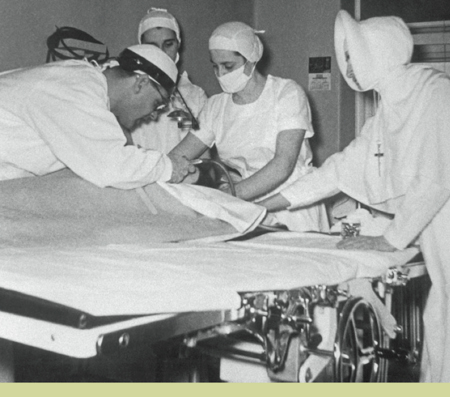
In the case of Jeffrey Dahmer, Dr. Judith Becker, an expert in forensic psychiatry, has speculated about a potential connection between his childhood hernia surgery and his later behavior. Her statement raises questions about the influence of traumatic medical experiences on individuals, particularly in relation to Dahmer’s disturbing actions of cutting up bodies.

During the 1960s and 70s, it was not uncommon for babies & young children to undergo surgeries without adequate anesthesia. These experiences were often painful and traumatic, leaving a lasting impact on the psychological well-being of the individuals involved. That was compounded also by the fact that studies in the 1940s had incorrectly stated that babies and infants lacked the capability to feel pain, after they seemed to be unresponsive to pinpricks for example. This was later explained by a failure to correctly interpret infant body language.


Jeffrey Dahmer’s Surgery and potential coping mechanisms

Jeffrey Dahmer, as a child, underwent a hernia surgery. It is believed that this surgery, in the early 60s, may have been performed without sufficient anesthesia. Dr. Judith Becker has speculated that this traumatic experience could have influenced Jeffrey’s later behavior, particularly his inclination towards violence and the gruesome act of dismembering and cutting up bodies. After the operation, 4y.o. Jeffrey asked his parents if someone had cut off his penis. This inquiry raises the distressing possibility that he may have felt pain or confusion during the procedure, which could have influenced his subsequent behavior.

Dr. Judith Becker’s Statement

Dr. Becker about Jeff during an interview for a documentary

Dr. Becker ( expert witness during legal proceedings), presented her speculation regarding the potential connection between Jeff’s surgery and his subsequent behavior. Her statement suggests that traumatic medical experiences, such as Jeffrey’s surgery, can have profound psychological effects on individuals, potentially shaping their behavior in unsettling ways. The impact of traumatic experiences on individuals’ psychological development is a multifaceted issue. While traumatic events can contribute to the development of psychological conditions and maladaptive behaviors, it is important to consider other factors, such as genetic predisposition, environmental influences, and individual coping mechanisms, when examining the root causes of disturbing behavior.

Continued Research and Awareness

Dr. Becker’s speculation regarding Dahmer’s surgery and its potential influence on his behavior underscores the need for further research and understanding in the field of trauma. Investigating the relationship between childhood medical trauma and long-term psychological outcomes can provide valuable insights into the complexities of human development, aiding in the identification of interventions to mitigate the potential negative impacts.

The significance of the operation in the trial against Jeffrey Dahmer did NOT receive adequate attention and was not taken as seriously as it should have been. Despite the potential trauma and pain Jeffrey may have experienced during this surgery, the court proceedings focused primarily on his later disturbing actions.The case of this experience and his subsequent disturbing behavior highlights the significance of traumatic medical experiences in shaping an individual’s psychological well-being. While Dr. Becker’s statement offers a speculative perspective, it prompts us to consider the potential connections between traumatic events and aberrant behaviors.


BONUS

Dr Becker telling studends about Jeffrey Dahmers case and how she was involved 🙂

Jeffrey Dahmer: The unique existence of a troubled soul…

Jeffrey Dahmer occupies a distinctive place among serial killers. While his actions remain horrifying, it is crucial to delve into his unique existence, which sets him apart from other notorious figures. A closer examination reveals intriguing facets, including his display of remorse, unconventional motivations, and a deviation from the conventional sadistic nature associated with such individuals.


One striking aspect of Dahmer’s existence is the presence of remorse. Unlike many serial killers who show little to no guilt for their heinous acts, Dahmer expressed genuine remorse for the pain and suffering he caused. This element challenges our perceptions and underscores the complexity of his psychological makeup.

Jeffrey’s motivations diverge from the stereotypical sadism commonly associated with serial killers. While his crimes were undeniably monstrous, it is important to recognize that his primary drive was not deriving pleasure from inflicting pain. Instead, Jeffrey was driven by an overwhelming desire for control, companionship, and a twisted quest for a sense of connection that tragically manifested in horrific acts. Jeffrey Dahmer’s unique existence reveals a surprising human dimension that is not commonly found among serial killers.

His actions were not solely driven by sadistic impulses; rather, they were born out of a desperate need to fill an emotional void within himself. This distinction challenges our understanding of the motivations behind such crimes, highlighting the complex interplay of psychological factors that can drive individuals down dark paths. Jeffrey’s remorse and unconventional motivations mark him as a rarity among his notorious peers.

His willingness to express regret and introspection sets him apart from those who revel in their violence and show no remorse. This distinction provokes further questions about the intricate dynamics that shaped his troubled existence and the potential for redemption in even the most depraved minds.The existence of Jeffrey Dahmer defies easy categorization. It forces us to confront the enigmatic nature of human psychology and the intricate interplay of factors that contribute to extreme acts of violence.

While his crimes remain unforgivable, his display of remorse and unique motivations challenges us to grapple with the complexities of his troubled soul.


“I’d always see him drinking a beer and standing near the trash container in the backyard. And there’d be all these cats around him. I don’t mean a couple, I mean a lot of cats, following him all over the place. And the guy didn’t just go into his apartment, like most people open the door and go in. He squeezed in. He’d open the door just the littlest bit and squeeze through. He did that a lot.”

– Douglas Jackson, downstairs neighbor of Jeff Dahmer in the book ‘Step into My Parlor’.