A Mind in Pieces: The Psychiatric Diagnoses of Jeffrey Dahmer

Jeffrey Dahmer was not simply a serial killer. He was a profoundly mentally ill human being who received almost no professional help during the years when intervention might have mattered. By the time psychiatrists formally evaluated him, it was in a courtroom, under oath, in the context of determining whether he should be held legally responsible for seventeen murders.

The diagnoses that emerged from those evaluations — and from subsequent academic research — tell a story that is more complex, more human, and more heartbreaking than most coverage ever acknowledges. This article attempts to compile and explain them properly, in one place, for the first time on this memorial.


The Legal Context

Jeffrey pleaded guilty but insane to fifteen counts of murder in January 1992. The trial that followed was not about whether he had committed the crimes — he had confessed to everything. It was about whether he understood what he was doing was wrong, and whether a mental disease had rendered him unable to control his behaviour.

The defence called three expert witnesses. Forensic psychiatrist Carl Wahlstrom diagnosed Jeffrey with necrophilia, borderline personality disorder, schizotypal personality disorder, alcohol dependence, and a psychotic disorder. The prosecution’s forensic psychiatrist Park Dietz diagnosed him with substance use disorder, paraphilia, and schizotypal personality disorder. Independent experts George Palermo and Samuel Friedman also testified, with Palermo concluding Jeffrey had a severe mixed personality disorder with antisocial, obsessive-compulsive, sadistic, fetishistic, borderline and necrophilic features.

Despite the weight of diagnoses, the court ruled him sane — primarily because he maintained comprehension of the legal and moral wrongfulness of his acts, took steps to hide his crimes, and tended to plan the murders beforehand, proving the crimes were not impulsive and uncontrollable acts in the context of mental illness.

Legal sanity and mental illness are not the same thing. Jeffrey was mentally ill and legally sane simultaneously. Both things were true.
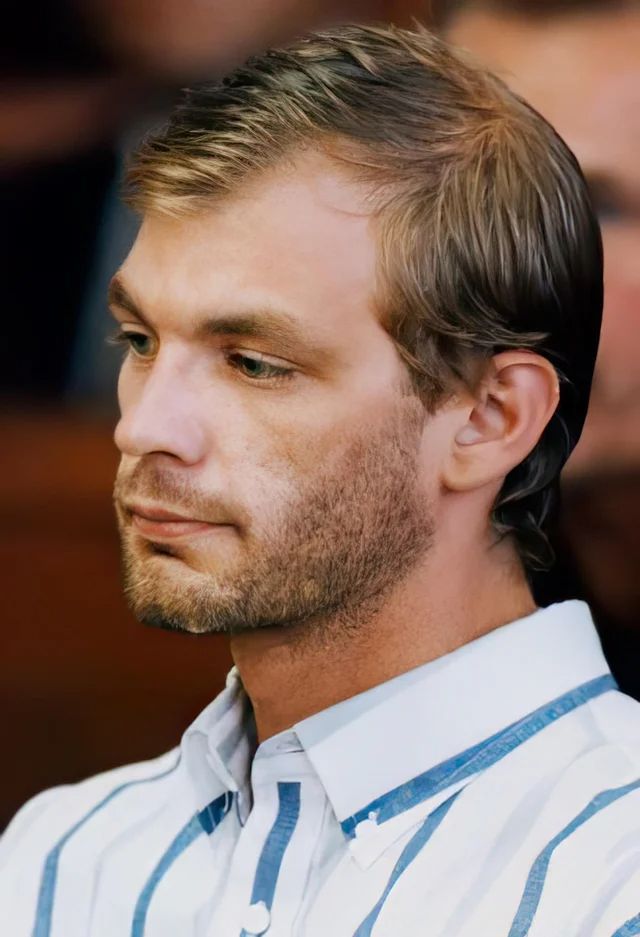

Borderline Personality Disorder

Borderline personality disorder is characterised by intense emotional instability, a profound fear of abandonment, unstable and turbulent relationships, impulsive behaviour, and a fragile, shifting sense of self. It is not a disorder of coldness or detachment — it is almost the opposite. People with BPD feel things intensely, sometimes overwhelmingly, and their inner world is one of profound instability.

Jeffrey’s BPD manifested in specific and recognisable ways. The desperate need for connection — the longing, as clinical psychologist Samuel Friedman testified, for companionship — that drove his crimes was not the flat indifference of a psychopath. It was the anguished reaching of someone who could not form or sustain relationships through any ordinary means and whose disorder had catastrophically distorted the expression of that need.

The pattern of his adult life — the alcohol as emotional regulation, the isolation, the sense of being fundamentally different and fundamentally alone — is entirely consistent with untreated BPD in a person who had never received appropriate support.


Schizotypal Personality Disorder

This is the diagnosis that appears most consistently across all the expert evaluations, and it is the one most relevant to understanding Jeffrey’s interior world.

Schizotypal personality disorder involves ideas of reference — the belief that ordinary occurrences have special meaning — magical thinking, the sense of having some form of special power or perception, unusual perceptual experiences, and excessive social anxiety rooted not in negative self-judgement but in paranoid fears about others.
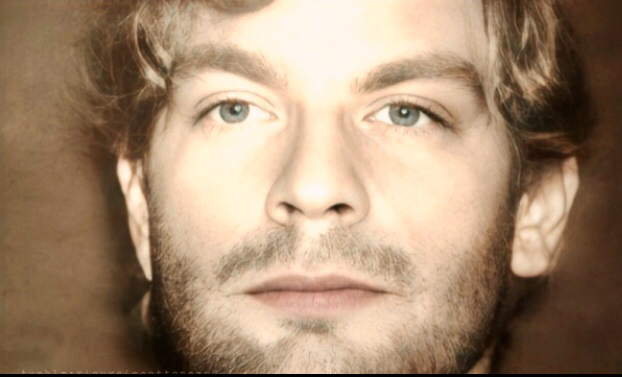
The yellow contact lenses, the ritual use of films before going out, the sense that certain objects and moments carried a charge others couldn’t perceive — these are textbook schizotypal presentations. So is the profound social isolation, the inability to form close friendships, the feeling of being fundamentally unlike other people.

Research suggests that childhood trauma, neglect, abuse, stress, and family dysfunction can increase the risk of developing schizotypal traits. People with the most severe cases usually have a combination of childhood trauma and a genetic basis for their condition. Jeffrey’s childhood — the parental conflict, Joyce’s mental health crises, the constant upheaval, the emotional unavailability of both parents — maps directly onto that profile.


Alcohol Use Disorder

Jeffrey had an alcohol abuse problem and started drinking heavily in high school. His drinking led him to become withdrawn and socially awkward. Eventually, his alcohol use disorder would force him to drop out of college.
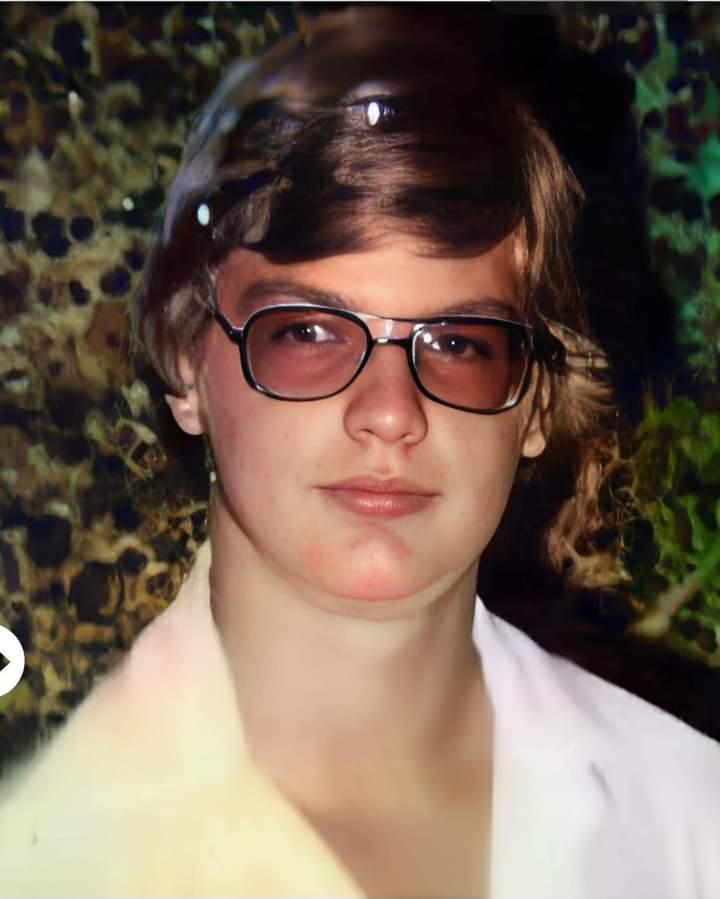
Alcohol was Jeffrey’s primary coping mechanism from adolescence onward. It lowered the threshold for acting on impulses he was otherwise able to suppress. It was what the army discharged him for. It was what filled his apartment in the form of empty Budweiser cans when he was depressed. It is what Lionel tried repeatedly and unsuccessfully to address.

Untreated alcohol use disorder in the context of BPD and schizotypal personality disorder is a particularly dangerous combination — each condition amplifying the others, each closing off the exits that might otherwise have been available.


A Physical Blow During Basic Training

Before Jeffrey ever reached Germany, his body had already sustained damage that belongs in any honest account of his psychiatric history. During basic training at Fort McClellan, Alabama, his persistent drinking got the entire platoon punished for his insubordination — and several of the men made sure he felt the consequences personally. The beating was severe enough to rupture his ear-drum, a wound that left him with recurring ear-aches for years to come. A blow forceful enough to cause that kind of damage is also the kind of physical trauma known to worsen pre-existing psychiatric conditions, erode impulse control, and deepen emotional dysregulation. It is one more layer of pressure added to an architecture that was already beginning to crack.
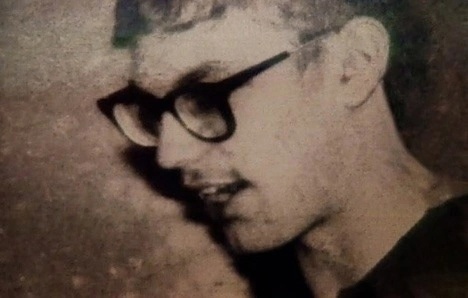

A Psychotic Disorder

The diagnosis of a psychotic disorder — distinct from psychosis as a symptom within another condition — acknowledges that Jeffrey experienced periods of significant detachment from reality. Symptoms including delusions, hallucinations, and disorganised thinking may have made him detached from reality at certain moments.

This is not the same as saying he was psychotic during his crimes. The prosecution’s case rested precisely on the evidence that he was not — that he planned, concealed, and understood what he was doing. But psychotic episodes, when they occurred, would have contributed to the overall disintegration of a mind that was already fragmented across multiple serious conditions.


The Trance States

There is one detail in the documented record that receives almost no serious attention, and it is one of the most potentially significant: the trance-like states.

Brian Masters documents at least one account of Jeffrey entering what can only be described as a dissociative or fugue-like episode — a period of apparent absence, of being present in body but not in mind, during which his behaviour seemed to shift beyond his ordinary conscious awareness. Jeffrey himself, at various points, described experiences consistent with dissociation — a sense of watching himself from outside, of compulsion overtaking volition, of not quite being present during the worst of what he did.
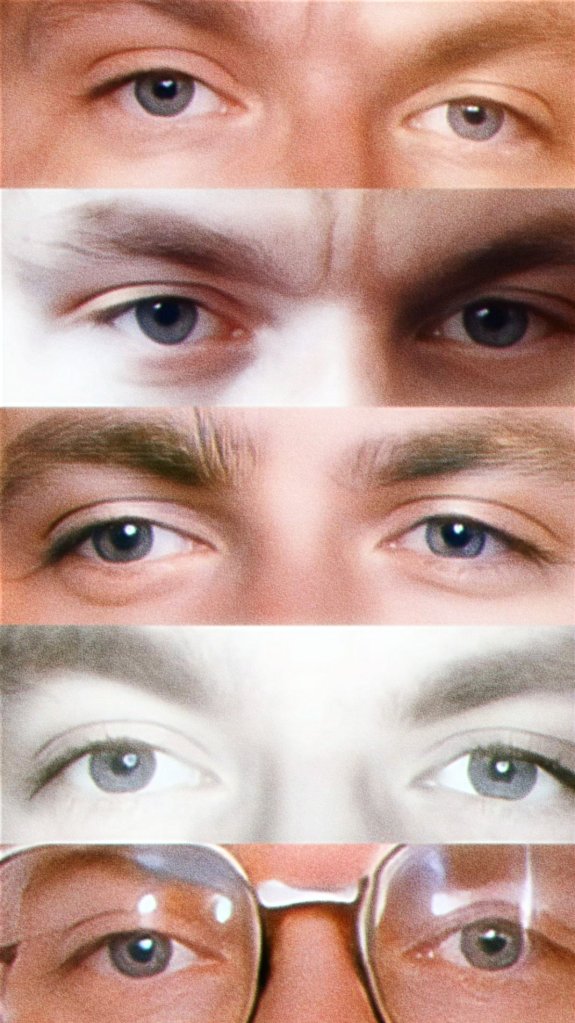
This has been largely ignored by the researchers and forensic professionals who evaluated him. It deserves not to be.

If these episodes were frequent rather than isolated, their origin could plausibly have been neurological rather than purely psychiatric. Temporal lobe involvement — temporal lobe epilepsy, complex partial seizures, or structural abnormalities in the temporal region — is associated with dissociative states, compulsive and repetitive behaviour, altered perception, and in some cases paraphilias. It was, on paper, exactly the kind of thing a neurological examination might detect.

As it turns out, that examination was performed. A competency evaluation conducted in April 1992 confirms that Jeffrey underwent an electroencephalogram (EEG), a CAT scan of the brain, and a chromosomal analysis. All three were reported as negative for pathology — no structural abnormality, no seizure activity, no chromosomal anomaly. This does not rule out every possible neurological contribution to the trance states, and EEGs in particular can miss intermittent or deep-seated abnormalities, especially when not conducted during an actual episode. But it meaningfully narrows the most obvious biological explanation. Joyce’s instinct that something physical might be found was tested, and the tests that existed in 1992 did not find it. The trance states remain real, documented, and significant — but the evidence available points toward a psychological and developmental origin rather than an undetected structural one. See our companion piece, “The Mind That Wouldn’t Stay,” for a fuller exploration of the dissociative reading.


Insomnia, Depression, and the Medication He Was Given

One documented but often overlooked aspect of Jeffrey’s medical history is his prescription for Halcion — a benzodiazepine sedative containing triazolam — prescribed by a physician for insomnia. Jeffrey worked the night shift at the Milwaukee Ambrosia Chocolate Factory and told his doctor he needed help adjusting to that schedule. The prescription was legitimate. The use he put it to was not.

That he required a sedative prescription at all is significant. Insomnia is a common companion to anxiety, depression, and the kind of psychological fragmentation that characterised Jeffrey’s inner life. Benzodiazepines like Halcion are also prescribed for anxiety — it is not possible to know from the documentary record whether anxiety was part of the clinical picture that prompted the prescription, but it would be entirely consistent with everything else we know about him.
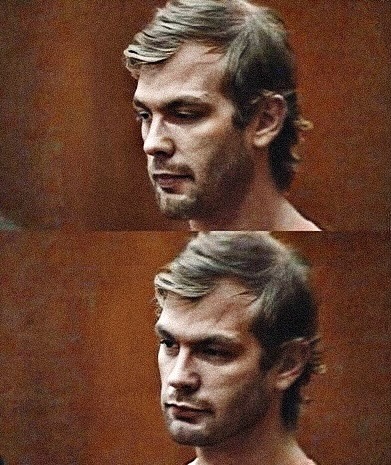
Created with RNI Films app. Preset ‘Agfa Optima 200 Warm’

Depression is not formally listed among his trial diagnoses, but it is strongly implied throughout the record. The periods of total collapse — when he would stop shaving, stop bathing, let the apartment fill with empty beer cans, and cease functioning in any ordinary sense — are consistent with depressive episodes. Lionel mentioned his son’s suicidal thoughts after conviction. Jeffrey himself said, in various formulations over the years, that he did not care whether he lived or died.

By April 1992, we know this was addressed, at least in part: the competency evaluation prepared ahead of his trial documents a prescription for Prozac — two 20mg capsules each morning — from his treating psychiatrist Dr. Richard Arnesen, alongside sessions three times a week with clinical psychologist Dr. Patricia Allen. What isn’t documented is whether that level of care continued through the remainder of his incarceration; see our companion piece, “August 24, 1993: A Crisis Report,” which examines what the record shows roughly a year and a half later. What is clear is that the suffering was real and consistent — present since adolescence, visible on paper as early as the 1986 MMPI, and addressed only partially and only very late.


The Asperger’s Hypothesis

More recently, researchers have proposed an additional framework. A study by Silva, Ferrari and Leong in the Journal of Forensic Sciences (2002) proposed that Jeffrey was most likely on the autistic spectrum, specifically with the hypothesis of him having Asperger’s disorder.
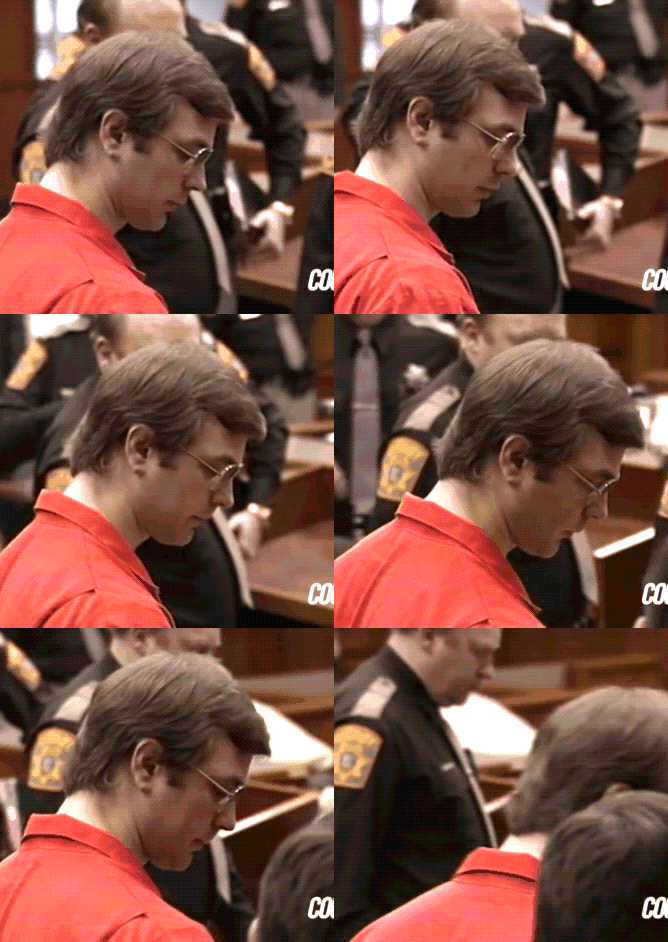
The case for this is not trivial. Jeffrey’s social difficulties went beyond anxiety or paranoia — there was something in the texture of his social interactions, his inability to read and respond to ordinary social cues, his preference for solitary rituals and highly structured activities, his intense and specific interests, that some researchers believe points toward autism spectrum presentation.

His own words at various points support this reading: “The subtleties of social life were beyond my grasp. When children liked me, I did not know why. Nor could I formulate a plan for winning their affection. I simply didn’t know how things worked with other people.” That description is not of someone who doesn’t want connection. It is of someone who cannot navigate the basic social architecture through which connection normally forms.


What Was Not Diagnosed: The Absence of Psychopathy

It is worth stating clearly what Jeffrey was not diagnosed with, because the popular image of him as a psychopath — cold, calculating, without feeling — is contradicted by the clinical record.
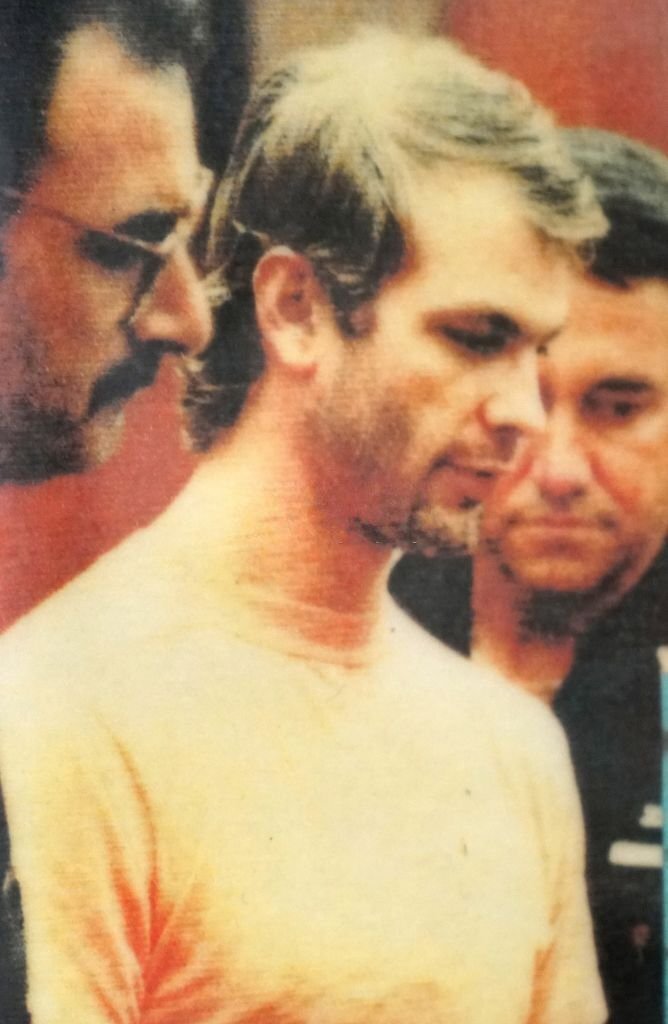
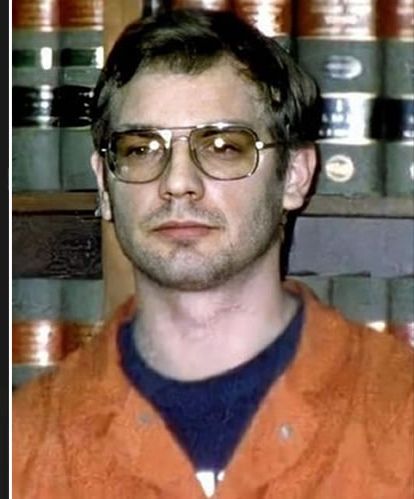
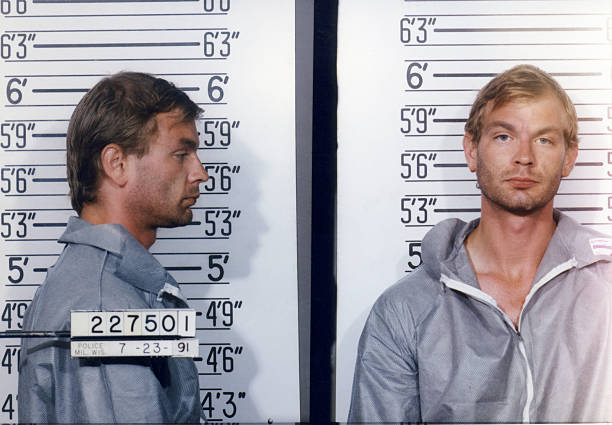
Photograph of Jeffrey Dahmer taken during his trial. (Photo by: Universal History Archive/ Universal Images Group via Getty Images)

Psychopathy, characterised by a fundamental absence of empathy and remorse, shallow affect, and manipulative interpersonal behaviour, does not fit. Other evidence does not support a diagnosis of psychopathy. Jeffrey wept during his confession. He expressed genuine remorse at his sentencing. He underwent sincere religious conversion. Reverend Roy Ratcliff, who spent months with him, described a man with genuine emotional depth and authentic spiritual searching. These are not the behaviours of a psychopath.

He had empathy. It was distorted, misdirected, catastrophically expressed — but it was there.


The Central Question

The question that runs through all of this is not whether Jeffrey was mentally ill. He clearly was, significantly, with multiple overlapping conditions that had been present since childhood and that received essentially no treatment until he was in prison for murder.

The real question is what might have happened had any of this been identified and treated earlier. The BPD, the schizotypal traits, the alcohol dependence, the insomnia, the depression that was never formally named — these were not invisible. They were present, and they were ignored.
(Photo by Curt Borgwardt/Sygma via Getty Images)

There were points of potential intervention throughout his life — the withdrawn child after the hernia surgery, the isolated teenager collecting animal bones, the army discharge for alcoholism, the beating that ruptured his ear-drum, the earlier arrest. At each of these junctures, the system that might have helped him either missed him entirely or responded inadequately.

Jeffrey Dahmer was not a monster who emerged fully formed from nowhere. He was a severely ill person, carrying a constellation of serious conditions through a childhood and adolescence that offered him almost nothing in the way of support, understanding, or care.

That does not explain away what he did. Nothing explains that away. But it is part of the truth — and the memorial exists to hold the whole truth.


A Final Note, Corrected

This article originally claimed that no neurological examination was ever performed on Jeffrey Dahmer — no CAT scan, no MRI, no EEG — and that the questions about a possible biological origin for his trance states and compulsive behaviour were never seriously pursued while he was alive.

That claim was incorrect, and the record deserves to be set straight. A competency evaluation dated April 27, 1992, conducted ahead of his trial, confirms that Jeffrey underwent an electroencephalogram, a CAT scan of the brain, and a chromosomal analysis. All three were reported as negative for pathology. He was also administered a substantial battery of psychological testing across multiple dates in 1991 and 1992, building on earlier testing from 1986 and 1989, including the Wechsler Adult Intelligence Scale, the Rorschach, and the Minnesota Multiphasic Personality Inventory — corroborating findings of high IQ and an absence of psychotic thinking.

So the picture is more complete, and more carefully examined, than this article previously suggested. The biological question Joyce had always asked — was there something in the brain — was in fact tested, at least to the extent 1992 neurology allowed. The tests came back clean.

What remains true is this: those tests happened before trial, in the context of determining legal competency and sanity — not in the context of ongoing psychiatric care during his three years at Columbia Correctional Institution afterward. No further neurological investigation is documented during his incarceration, and the trance states, the dissociative episodes, the compulsive patterns that defined his adult life were not revisited neurologically after 1992. The brain itself was never studied after death, despite Joyce’s wish that it be — a separate and still-accurate fact, addressed in our article “The Dehumanisation of Jeffrey Dahmer.”

What we got wrong was the claim that no examination ever took place. What remains accurate is that the examination that did take place was early, limited to the tools available in 1992, and was never revisited as his case — and his trance states — continued to raise unanswered questions for the rest of his life.

After his death on November 28, 1994, there was a brief window. Joyce requested that Jeffrey’s brain be preserved for scientific study, believing that research might yield something useful — not to excuse what he did, but to understand it. Lionel opposed it. The dispute went to court. In the end, the brain was cremated along with the rest of his remains.

Whatever was there — if anything — is gone. We will never know.


Sources: Trial testimony of Dr. Carl Wahlstrom, Dr. Park Dietz, Dr. George Palermo, Dr. Samuel Friedman, Dr. Fred Berlin, 1992; Jeffrey L. Dahmer, Competency Evaluation, Case No. F-912542, April 27, 1992 (primary source document); DSM-5 diagnostic criteria; Silva, Ferrari & Leong, Journal of Forensic Sciences 2002; Strubel, Comorbid Psychopathologies 2007; Brian Masters, The Shrine of Jeffrey Dahmer 1993; Lionel Dahmer, A Father’s Story 1994; Wikipedia. Note: formal diagnosis of depression is not documented in available trial records; its presence is inferred from behavioural accounts.

November 28, 1994: The Last Morning

Jeffrey Dahmer woke up on the morning of November 28, 1994 — a Monday, Thanksgiving week — and did what he had been doing every morning for nearly three years. He got up. He got dressed. He went about his day.

He had no idea it was the last one.


The Morning

By late 1994, Jeffrey had been at Columbia Correctional Institution in Portage, Wisconsin for almost three years. He was no longer in protective isolation. After a first year spent largely separated from general population, he had gradually been integrated — attending classes, eating communal meals, performing work duties. He had earned, through quiet compliance and genuine religious engagement, a degree of ordinary prison life that most had assumed he would never be allowed.

He had been baptised six months earlier, in May 1994, submerged in the prison whirlpool by Reverend Roy Ratcliff of the Church of Christ. They had met every week since. Five days before his death — on November 23 — Jeffrey and Ratcliff had their final Bible study session together. They discussed the Book of Revelation. Its subjects: death, punishment for sins, and what comes after.

On the morning of November 28, Jeffrey left his cell to conduct his assigned work detail. He had been on cleaning duty for three weeks. That morning he was assigned to the gymnasium with two other inmates — Jesse Anderson, convicted of murdering his wife, and Christopher Scarver, serving life for a murder committed in 1990.

The three were taken to the gym by corrections officers, unshackled, and left to clean the bathrooms. They were left unsupervised for approximately twenty minutes.


What Happened in the Gym

Scarver had despised Jeffrey from the moment they arrived at Columbia at roughly the same time in 1992. He had kept his distance, watching from across the yard, repulsed by what he knew of Jeffrey’s crimes. He had carried a newspaper clipping about those crimes in his pocket for a long time — a physical reminder of his disgust.

That morning, while Scarver was filling a mop bucket with water, someone poked him in the back. He turned around. Both Jeffrey and Anderson were laughing quietly. He couldn’t tell which of them had done it.

Scarver retrieved a 20-inch metal bar from the weight room. He followed Jeffrey into a staff locker room and confronted him — showing him the newspaper clipping, asking him directly if he had done those things.

Jeffrey was shocked. He started looking for a way out. Scarver blocked the door.

According to Scarver, Jeffrey’s last words were: “I don’t care if I live or die. Go ahead and kill me.”

Scarver brought the bar down. He crushed Jeffrey’s skull with two blows. He then crossed the gym to where Anderson was working and did the same to him. The entire thing took roughly twenty minutes.

At approximately 8:10 in the morning, a corrections officer discovered Jeffrey on the bathroom floor with catastrophic head wounds. He had been beaten across the skull and his head had been repeatedly slammed against the wall.

He was still alive. He was rushed to a nearby hospital.

He was pronounced dead one hour later. He was 34 years old.


The Guard Question

Jeffrey was not supposed to be in an unsupervised situation with other inmates. He had known enemies in the prison — he had survived an earlier attack in July 1994 when inmate Osvaldo Durruthy slashed at his throat with a razor blade embedded in a toothbrush as he sat in the prison chapel. He had received only superficial wounds that time.

Scarver himself later said he believed it was no accident that he ended up alone with Jeffrey that morning. Prison officials, he claimed, knew how much he despised Jeffrey. They knew the history. And on November 28, they left the three of them together, unshackled, unsupervised, for twenty minutes.

Whether this was negligence or something more deliberate has never been officially established. The Wisconsin Department of Corrections blamed staffing issues. The investigation concluded without any guards being held accountable.

But the question remains. It has never been fully answered.


Joyce

When news of Jeffrey’s death reached his mother Joyce, her response cut through everything:

“Now is everybody happy? Now that he’s bludgeoned to death, is that good enough for everyone?”

It was the cry of a mother. Whatever she had done and not done, whatever had passed between them — in that moment, she was simply a woman whose child had been killed.


No Services

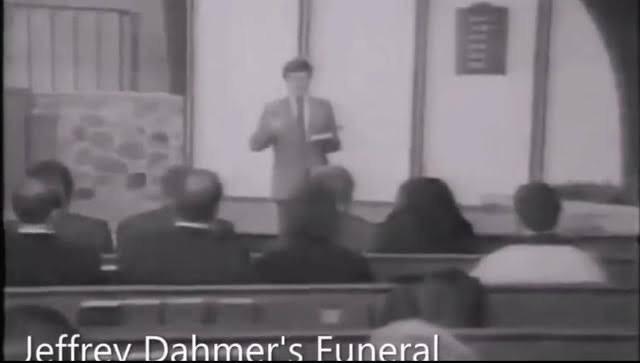
Jeffrey had left instructions in his will. He wanted no services conducted. No funeral. No headstone. No ceremony of any kind.

His wishes were respected, in that sense. There was no public funeral. No gathering. No words spoken over him in a church or at a graveside. The man who had been the subject of global media coverage for three years was disposed of, in the end, with complete silence.

His body was held by investigators — it was evidence in his own murder case — for nearly a year. Christopher Scarver was sentenced in May 1995 for the killings. Only then were Jeffrey’s remains released to his family.

On September 17, 1995 — almost ten months after his death — Jeffrey Dahmer’s body was cremated. His ashes were divided equally between his parents. Lionel took his half back to Ohio. Joyce took hers to California.


The Brain

Before cremation, doctors had opened Jeffrey’s skull and removed his brain. It had been preserved in formaldehyde at the Dane County Medical Examiner’s Office since his autopsy.

What followed was one final, painful dispute between his parents.

Joyce wanted the brain donated to science. She believed, and had always believed, that something biological had contributed to what Jeffrey became — and she wanted to know what. She told the Milwaukee Journal Sentinel: “Jeff always said that if he could be of any help, he wanted to do whatever he could.”

Lionel refused. He wanted the brain cremated with the rest of his son’s remains. He argued that Jeffrey had requested cremation and that this request extended to every part of him. To retain the brain against his wishes, Lionel said, would be legally and morally wrong.

Two scientists had written to the court requesting access. One, Jonathan Pincus of Georgetown University, described it as “an unparalleled chance to possibly determine what neurological factors could have contributed to his bizarre criminal behaviour.”

The case went to the Wisconsin state court. On December 13, 1995 — more than a year after Jeffrey’s death — Columbia County Circuit Judge Daniel George ordered the brain cremated. The scientists never studied it. Whatever was there — whatever might have explained something, or explained nothing — was gone.


What Was Left

Jeffrey Dahmer died at 34. He had been in prison for two years and nine months. He had been baptised six months before his death. He had met with his pastor five days before it. He had, by every account of those closest to him, been sincere in his faith and genuine in his remorse.

He died in a bathroom, on a Monday morning, before most people had finished breakfast. He died because he was left unsupervised with a man who hated him, for twenty minutes, in a maximum security prison. He died with his head on the floor.

He had asked for no ceremony. He got none.

He had asked to be cremated. He was — eventually, in pieces, disputed even in death, his brain held in a jar while his parents fought over it in court.

He had said, months before he died, that he sometimes wondered whether he was sinning against God by continuing to live. Reverend Ratcliff, who loved him, had no answer for that.

“I don’t care if I live or die.”

He had been saying some version of that for years. His mother had called him weekly and whenever she expressed concern for his safety, he told her: “It doesn’t matter, Mom. I don’t care if something happens to me.”

He meant it. He had meant it for a long time.

The baptism, the Bible study, the weekly meetings with Ratcliff — those were not the actions of a man who had given up. They were the actions of a man trying, quietly and seriously, to make something meaningful from whatever time remained. He was not performing. The people who were there said so.

He deserved more time.


Photographs of Jeffrey Dahmer deceased exist and have circulated widely online. The Memorial does not share them and will not share them. As we do not publish photographs of the victims out of respect for their dignity and humanity, we extend that same respect to Jeffrey. A person’s death is not public property. We ask anyone using those images for display — on social media, forums, or elsewhere — to please consider removing them. They do not dignify the human being who passed away. They never have.


Sources: Wikipedia; Biography.com; The Washington Post; Los Angeles Times; Reverend Roy Ratcliff, Dark Journey Deep Grace (2008); Christopher Scarver, New York Post interview (2015); Wisconsin Department of Corrections records.

How Jeffrey Smelled: English Leather and the Scent of Apartment 213

There is something extraordinarily intimate about a person’s fragrance. More intimate, perhaps, than almost anything else we can know about them. A scent bypasses the intellect entirely — it goes straight to memory, to feeling, to the body’s oldest and most instinctive responses. To know what someone smelled like is to know something no photograph can tell you.

Jeffrey Dahmer wore English Leather.


The Cologne

English Leather by Dana is one of the great American colognes — drugstore-priced, unpretentious, and genuinely complex underneath its modest presentation. It was originally created in the 1930s by the Vienna-based MEM company, and because its scent was similar to what Russian saddlers used to tan leather, it was originally called “Russian Leather.” In 1949, it was introduced in the United States as “English Leather” — the name change a quiet casualty of the Cold War.

By the time Jeffrey was wearing it in the 1980s and early 1990s, English Leather had been a fixture of American drugstore shelves for forty years. It was the kind of cologne a man bought without ceremony, without fuss. Affordable, reliable, masculine in the old-fashioned sense of the word. You could find it next to Old Spice and Brut on the same shelf. Jeffrey, who lived simply and spent little on himself — who pawned his blue topaz ring when cash ran short — would have appreciated exactly that.


What It Smells Like

English Leather opens with Italian bergamot and kaffir lime — vivid, tangy citrus notes that create an immediate sharp freshness. The heart settles into leather, oakmoss and vetiver, the signature leather accord woven throughout. The base is warm and woody: sandalwood, cedarwood, musk.

In practice — on skin, in the air, in a room — it moves through three distinct phases.

The first impression is bright and citrusy, slightly sharp, a clean burst that announces itself without aggression. Then, as the cologne settles, something darker and richer emerges — the leather note, dry and genuine, accompanied by the green earthiness of oakmoss and the slightly smoky, almost metallic depth of vetiver. As the scent matures, the signature leather heart softens the opening accords, mingling with vetiver and oakmoss, before the woody base notes take over and create a warm foundation.

The final dry-down is the most intimate stage — sandalwood and cedarwood, soft and warm, with a musky undertone that stays close to the skin. This is what lingers. This is what someone standing near Jeffrey would have caught hours after he first applied it.

Reviewers note it can still be detected on skin six hours later and on clothing twelve to twenty-four hours after application. English Leather is not a shy fragrance. It was present. It was there in the room.


The Character of the Scent

English Leather is, above all, a scent of contradictions held in balance — and that feels appropriate.

It is simultaneously clean and dark. The citrus top notes suggest freshness, order, Sunday morning tidiness — the Jeffrey who vacuumed on Sundays, who kept his apartment neat, who shaved and took care of himself when he was doing well. But the leather and wood base is something older and more instinctive — animal, earthy, rooted.

One reviewer described it as evoking a spacious, musty 1980s hotel lobby — dimmed lighting, carpeted staircases, wood and gold fittings, and the slight smell of stale smoke. Strange and subtle, with an allure that is almost comforting or nostalgic. That description feels uncannily right for Jeffrey’s world.

It is not a flashy cologne. It does not announce wealth or ambition or seduction in any obvious way. It is the scent of someone who has chosen something and stuck with it — unpretentious, consistent, quietly present. Very Jeffrey.


To Wear It

English Leather is still available today, still produced by Dana, still affordable — you can find it online for under fifteen dollars. For those who want to know, in the most direct and physical way possible, something of what it was like to stand near Jeffrey Dahmer on an ordinary evening — this is the closest you can get.

The bergamot first. Then the leather settling in. Then, hours later, just the warm wood and musk, close and quiet.

He was there. He smelled like this.


Sources: Dana Classic Fragrances; Fragrantica; FragranceX; Daily Lather. English Leather by Dana, originally launched 1949.

Infinity Land

There is a moment in almost every childhood where the world becomes too large and too unpredictable to bear. The adults are fighting. The house is moving again. Nobody is explaining anything. And so a child does what children do when the outside offers no safety — they build something on the inside. A private world with its own rules, its own logic, its own borders. A place that belongs entirely to them.

Jeffrey Dahmer built his at around the age of nine. He called it Infinity Land.


What It Was

The game was drawn on paper. Stick figures — fleshless, bone-only, stripped of flesh entirely — moved across a landscape governed by a single absolute rule: if they came too close to one another, they were annihilated. Surrounding them were spirals, tightly wound, intensely imagined, pulling downward toward a black hole at the centre of everything.

He shared it with his friend David Borsvold — a quiet, rock-collecting, dinosaur-studying boy who was perhaps the closest thing Jeffrey had to a genuine companion during those years. Together they played out these annihilations, moving their little armies across a world where closeness meant destruction and the only destination was oblivion.

Brian Masters, in The Shrine of Jeffrey Dahmer, described the game with the care it deserves. The stick figures were not conceived with the full contours of people. They were bone. Their danger lay in proximity. And the spirals descended, always, toward the black hole of infinity.

He called it Infinity Land. He was nine years old.


What It Meant

Here is what I believe, having lived with Jeffrey in my thoughts for so long: Infinity Land was not a symptom. It was a solution.

By the time Jeffrey drew those first spirals, his life was already shaped by things a child has no language for and no power over. His mother Joyce’s mental health crises — the seizures, the medication, the hospitalizations, the rages. His father Lionel’s long absences, buried in his chemistry PhD. A family in near-constant motion, address after address, the ground never quite solid underfoot. A boy who had become, very early, extremely alert to instability — watching the room, reading the atmosphere, waiting for the next thing to shift.

He could not control any of that. But in Infinity Land, he controlled everything.

He made the rules. He decided the physics. He drew the borders of the world and determined what happened inside them. The stick figures obeyed laws he invented. The spirals descended at his direction. The black hole waited at the centre, patient and absolute, because he had placed it there.

This is what children do with anxiety they cannot name. They build containers for it. Games with highly defined rules — and Lionel Dahmer himself noted that Jeffrey always preferred games with exactly that: defined rules, repetitious actions, nothing left to chance or confrontation. The structure was the comfort. The rules were the shelter.

Infinity Land was Jeffrey’s most complete version of that shelter.


The Symbology of the Spiral

A spiral is not simply a shape. It is a direction. It implies movement — inward, downward, tightening — toward a centre that cannot be reached or escaped. Every civilisation that has ever drawn a spiral has understood, on some level, that it means something about time, about fate, about the way certain forces pull you regardless of your will.

Jeffrey drew spirals at nine years old and gave them a destination: a black hole. Infinity. Nothingness that was not frightening but — as he would say decades later in prison, when a therapist asked him about the game — soothing. Nice. Like a child asking for a warm blanket.

That detail stops me every time I return to it.

The nothingness at the centre of Infinity Land was not a threat. It was a comfort. For a boy who lived in a house full of noise and volatility and unpredictability, the absolute stillness of the void was something to move toward rather than away from. It was the one thing that could not suddenly change its mind, raise its voice, or disappear.

It was reliable. In its way, it was safe.


The Annihilation Rule

The stick figures were annihilated if they came too close.

Masters read this as a sign of Jeffrey’s relationship with intimacy — the danger of closeness, the way contact meant destruction. And he was right. But I think there is something else in it too.

When you are a child and the people closest to you are also the sources of the most unpredictability — when the arrival of a parent means tension rather than relief, when love comes wrapped in volatility — you learn, very early, that proximity is risk. You learn to keep a careful distance. You learn that the safest position is adjacent, not close.

Jeffrey encoded that knowledge into his game at nine years old without knowing that’s what he was doing. He made a world where the rule he was already living by — don’t get too close, it ends badly — was written into the physics of the universe itself. Not as a wound but as a law. Clean, legible, certain.

In Infinity Land, you always knew exactly what would happen if someone came too close. There were no surprises.


The Game That Didn’t Stay a Game

Brian Masters returned to Infinity Land again and again throughout The Shrine of Jeffrey Dahmer — not as a curiosity but as a key. He described Jeffrey’s adult descent as “descending with frightening rapidity down one of his own spirals into Infinity Land.” He described Jeffrey’s panic attacks in prison as spiralling “to the pit of despair, parodying his imaginary descents into Infinity Land as a child.”

The game, in Masters’ reading, never ended. It simply scaled up.

The spirals became real. The annihilation became real. The black hole at the centre — the nothingness Jeffrey had called soothing as a child — became the “deep, clawing depression” and the sense of “total, final hopelessness” that he described in prison as feeling “a bit like what hell is like.”

What had been shelter became structure. What had been comfort became compulsion. The rules of Infinity Land — closeness destroys, the spiral descends, the void awaits — did not stay on paper.

This is not to say the game caused what happened later. That would be too simple, and Jeffrey’s story resists simplicity at every turn. But it is to say that the interior world Jeffrey built at nine years old to make sense of a life he couldn’t control became, over the following decades, the template through which he understood everything. The logic of Infinity Land was the logic of his mind. He never entirely left it.


The Trial, and the Silence

In 1992, during Jeffrey’s trial, the defence psychologist Dr Judith Becker mentioned Infinity Land in her testimony. She described it gently, on gentle prompting from defence attorney Gerald Boyle. And then nobody pursued it.

Masters found this extraordinary, and so do I. Here was a window into the interior world of a man whose crimes the trial was trying to explain — a childhood game that encoded, with startling precision, his deepest beliefs about closeness, destruction, and the pull of the void. And it was left in limbo, as Masters put it. A curiosity not to be tampered with.

Perhaps it was too strange. Perhaps the courtroom had no framework for it. Perhaps nobody present understood what they were looking at.

We do.


A Child Who Built His Own World

Jeffrey Dahmer was a boy who needed safety and couldn’t find it in the world around him. So he made one. He drew it on paper with fleshless figures and tight spirals and a black hole at the centre, and he played it with his friend, and for a little while it was enough.

That is the most human thing in this entire story.

The boy who built Infinity Land was not building toward horror. He was building away from pain. He was doing what every frightened child does — reaching for some small corner of existence that he could control, that had rules he understood, that would not suddenly change.

He called it Infinity Land. He was nine years old. He was just trying to feel safe.


Sources: Brian Masters, The Shrine of Jeffrey Dahmer (1993); Lionel Dahmer, A Father’s Story (1994); Trial testimony of Dr Judith Becker, Milwaukee, 1992.

Forgiveness: What It Really Means, and Why Jeffrey Dahmer Deserves It

There is a comfortable version of forgiveness that most people practice without difficulty. Forgiving someone who apologised sincerely for something relatively minor. Forgiving a friend who let you down. Forgiving yourself for a mistake that cost you something but hurt no one else irreparably.

And then there is the other kind. The kind that costs something. The kind that the entire weight of Christian theology points toward and very few people are actually willing to extend.

Jeffrey Dahmer is a test case for that second kind. And most people fail it.


The Man Nobody Wants to Mention

Before he was the Apostle Paul — before he wrote half the New Testament, before he became one of the most important figures in the history of Christianity, before he was martyred for his faith in Rome — he was Saul of Tarsus.

Saul was a persecutor of Christians. Not metaphorically. Not bureaucratically. He was present at the stoning of Saint Stephen, the first Christian martyr — holding the cloaks of the men who threw the stones, giving his approval to the killing. He went house to house in Jerusalem dragging Christians out and throwing them in prison. He obtained letters authorising him to travel to Damascus to arrest believers there and bring them back in chains. He described himself later as having been, in his own words, a blasphemer, a persecutor, and a violent man.

He caused suffering. He caused death. He did it with conviction and with the full support of the religious establishment of his time.

And then, on the road to Damascus, everything changed.


The Road to Damascus

The conversion of Saul is one of the most dramatic moments in the entire New Testament. A blinding light. A voice asking “Saul, Saul, why do you persecute me?” Three days of blindness. And then — transformation so complete that the man who had been hunting Christians became Christianity’s greatest evangelist.

What is theologically significant about this moment is not just that Saul changed. It is what the Church did with that change.

It did not erase his past. It did not pretend the stoning of Stephen hadn’t happened or that the families of those he had imprisoned hadn’t suffered. Paul himself never pretended otherwise — he called himself the foremost of sinners, the least of the apostles, one not even deserving to be called an apostle because he had persecuted the Church of God.

The Church held both truths simultaneously: this man caused real harm to real people, and this man was genuinely transformed by grace. Both things were true. Neither cancelled the other.

That is the radical heart of Christian forgiveness. And it is what most people refuse to apply to Jeffrey Dahmer.


Jeffrey’s Damascus

Jeffrey Dahmer’s conversion was quieter than Saul’s but no less genuine according to those who witnessed it.

It began with a Bible his father sent him in prison. It deepened through a correspondence course. It culminated in the spring of 1994 when Reverend Roy Ratcliff — a minister of the Church of Christ who had agreed to meet with him after Jeffrey expressed interest in baptism — submerged him in the prison whirlpool at Columbia Correctional Institution.

Ratcliff later wrote about Jeffrey with a clarity that cuts through the noise. He described a man who was sincere, who asked real questions, who struggled genuinely with what he had done and what it meant before God. He noted that Jeffrey’s questions were not the questions of someone performing remorse for an audience. They were the questions of someone who was genuinely trying to understand whether redemption was possible for a person like him.

Jeffrey himself said: “I hope God has forgiven me. I know society will never be able to forgive me.”

He met with Ratcliff every week from his baptism in May 1994 until five days before his death in November. Their last session together covered the Book of Revelation — its subjects, death, punishment for sins, and what comes after. He was not coasting. He was working.


What the Thief on the Cross Tells Us

If the story of Saint Paul isn’t enough, consider the thief on the cross.

In the Gospel of Luke, one of the two criminals crucified alongside Jesus turns to him and says simply: “Remember me when you come into your kingdom.” And Jesus replies: “Truly I tell you, today you will be with me in paradise.”

No lengthy process of rehabilitation. No years of demonstrating changed behaviour. No committee deciding whether the repentance was sincere enough. A dying man, in his final hours, asking to be remembered — and the answer being yes.

The thief had presumably done enough to warrant execution by Roman standards. We don’t know what he did. We know that in his last moments he turned, and that turning was enough.

The theology here is explicit and radical: the reach of grace has no floor. There is no depth from which it cannot lift someone. There is no crime that places a person permanently beyond its reach.


The Prodigal Son

Jesus told a story about a son who took his inheritance early — essentially wishing his father dead — went to a foreign country and wasted everything on reckless living, and then came home in desperation, planning to beg to be taken on as a servant.

The father sees him coming from a long way off. He runs to meet him. He calls for a robe and a ring and a feast. He says: “This son of mine was dead and is alive again; he was lost and is found.”

The older son — the good one, the one who stayed, the one who did everything right — is furious. And the father’s answer to him is the heart of the parable: “We had to celebrate and be glad, because this brother of yours was dead and is alive again; he was lost and is found.”

The story is not about whether the prodigal deserved the feast. It is about the nature of the father. It is about what grace looks like when it is genuinely operating.

The people who insist Jeffrey Dahmer cannot be forgiven are, in the parable’s terms, standing outside the feast refusing to come in. That is their right. But it does not change what is happening inside.


Why People Refuse

The resistance to extending forgiveness to Jeffrey is understandable on a human level. His crimes were of a type that the mind struggles to hold. The nature of what he did — the intimacy of it, the specific choices involved — creates a revulsion that is visceral and real.

But Christian forgiveness was never designed for easy cases. It was designed precisely for the cases where human instinct says no. The entire point of the theology is that grace operates where human moral accounting breaks down — that it covers what we cannot cover ourselves, reaches where we cannot reach, holds what we cannot hold.

If forgiveness only extends to the people we find it easy to forgive, it is not forgiveness in the Christian sense. It is just social approval.

Paul understood this. He wrote in his first letter to Timothy: “Christ Jesus came into the world to save sinners — of whom I am the worst. But for that very reason I was shown mercy so that in me, the worst of sinners, Christ Jesus might display his immense patience.”

The worst of sinners. Shown mercy. So that the display of that mercy might mean something to everyone else.


What Jeffrey Said

At his sentencing in 1992, Jeffrey Dahmer spoke in court. He said:

“I know my time in prison will be terrible, but I deserve whatever I get because of what I have done. Thank God there will be no more victims and no more suffering. I believe I was completely out of my mind. I hated no one. I knew I was sick or evil, or both. I know that you cannot forgive me for what I have done. I ask for no consideration.”

He asked for no consideration. He said he deserved whatever he got. He acknowledged his illness. He expressed relief that there would be no more victims.

And then, two years later, he was baptised.

And then, six months after that, he was dead.

The arc of his last years was not the arc of a man performing for parole or reputation. He had no parole to seek. He had said himself he expected to die in prison. He was working through something privately, seriously, with a minister who had no reason to lie about what he witnessed.


The Question

If Saint Paul deserves to be called a saint — if the Church can hold together the man who approved the stoning of Stephen and the man who wrote “love is patient, love is kind” — then the question must be asked honestly:

Why not Jeffrey?

Not because what he did wasn’t devastating. Not because the families of his victims are required to forgive him — they are not, and their pain is not ours to adjudicate. But because the theology either means what it says or it doesn’t. Because grace either has no ceiling or it has one, and if it has one, Christianity needs to say so plainly.

Jeffrey Dahmer repented. He was baptised. He studied. He questioned. He asked whether God could forgive him and he was told yes. Reverend Ratcliff believed it. The minister who spent months with him, who had no reason to be deceived, believed it.

The thief on the cross asked to be remembered. He was told: today.

“I hope God has forgiven me.”

The theology says: yes.


Sources: The New Testament — Acts of the Apostles, Luke 23, 1 Timothy 1, Luke 15; Reverend Roy Ratcliff, Dark Journey Deep Grace (2008); Jeffrey Dahmer sentencing statement, Milwaukee, 1992.

The Thin Line: Jeffrey Dahmer Through the Eyes of Georges Bataille

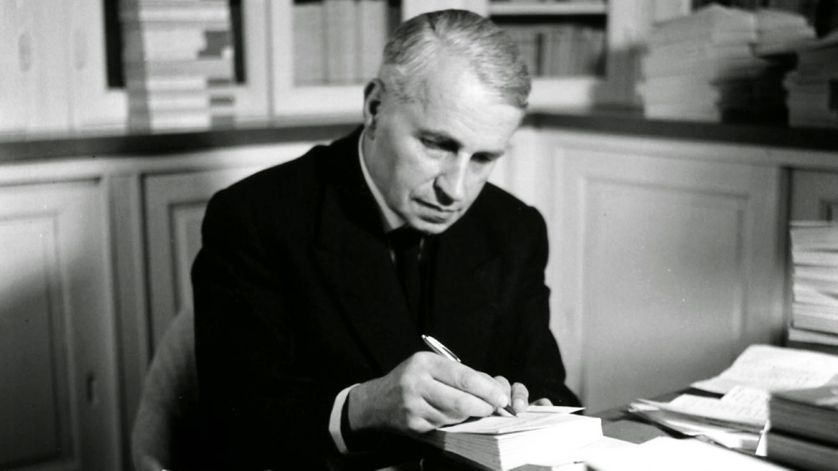
In 1957, the French philosopher Georges Bataille published a book called Erotism: Death and Sensuality. It was not about serial killers. It was not about crime. It was a philosophical study of the deepest impulses in human nature — the desire for intimacy, the pull of transgression, the relationship between love and death, and the strange territory where the sacred and the forbidden become indistinguishable from each other.

Bataille died in 1962. He never knew Jeffrey Dahmer’s name.

And yet Erotism reads, in places, like a philosophical map of Jeffrey’s inner world — written thirty years before anyone knew that world existed. Not because Bataille was describing a killer, but because he was describing something in human nature that Jeffrey took further than almost anyone ever has. The concepts Bataille spent a lifetime developing — discontinuity, continuity, transgression, the sacred dimension of taboo — illuminate Jeffrey’s own words in a way that no clinical diagnosis ever quite manages.

This article is an attempt to place those two things side by side, with care and with honesty.


The Problem of Discontinuity

Bataille begins Erotism with a philosophical observation so simple it is easy to miss its weight. Every human being, he says, is a discontinuous being. We are each enclosed within ourselves, bounded by skin and bone and the limits of our own consciousness. We are born alone. We die alone. Between any two people there is a gulf — fundamental and unbridgeable — that no amount of communication can fully close.

This discontinuity, Bataille argues, is the source of the deepest human suffering. We long for what he calls continuity — a dissolution of the separate self into something larger, a merging with another being that ends the terrible isolation of individual existence. This longing, he says, is at the root of three things: physical eroticism, emotional love, and religious experience. All three are, at their core, attempts to escape discontinuity. To breach the wall between the self and the other. To touch, however briefly, the continuity that death alone can fully restore.

Now consider what Jeffrey said, in his own words, about why he did what he did.

“It made me feel like they were a permanent part of me.”

“I wanted to keep them with me as long as possible, even if it meant just keeping a part of them.”

“I could completely control a person — a person that I found physically attractive — and keep them with me as long as possible.”

This is not the language of hatred. This is not even, primarily, the language of desire in the conventional sense. This is the language of someone trying — in the most extreme and catastrophic way imaginable — to solve the problem Bataille identified. The problem of discontinuity. The unbearable separateness of being a self.

Jeffrey did not want to destroy. He wanted to fuse. He wanted continuity. He wanted the boundary to disappear. Bataille writes that eroticism is, at its core, the attempt to substitute for individual isolated discontinuity a feeling of profound continuity. Jeffrey’s words are that theory spoken aloud — not as philosophy, but as confession.


The Thin Line Between a Kiss and Cannibalism

Bataille’s most unsettling argument — and the one most directly relevant to Jeffrey — is about what he calls the logic of eroticism pushed to its extreme.

Physical eroticism, he argues, is already a form of violation. The erotic act dissolves the boundaries of the self. It is, at its most fundamental, an attempt to break the separateness of two discontinuous beings — to achieve, however briefly, a state of fusion. He writes that the whole business of eroticism is to destroy the self-contained character of the participants. Nakedness, he says, is the first gesture of this dissolution: the removal of the barriers that maintain discontinuity. What follows is a temporary merging, a momentary continuity, before the boundaries are restored and the two people are separate again.

He then asks: what happens when this logic is pursued without limits?

The Marquis de Sade, Bataille notes, defined murder as the pinnacle of erotic excitement. Bataille does not celebrate this. He analyses it. He says that the destructive element pushed to its logical conclusion does not necessarily take us out of the field of eroticism. That if the drive behind eroticism is the dissolution of the separate self — the achievement of continuity — then death is, in a terrible sense, its ultimate fulfilment. Death is the only truly permanent dissolution of discontinuity. Death makes the bounded self continuous with everything again.

This is the thin line. Between the kiss — which reaches across the discontinuity toward the other — and the extreme that Jeffrey enacted, there is a difference of degree, not of kind. Both are movements toward the same impossible thing. Both are attempts to end the isolation that Bataille says defines human existence. The kiss fails, as all such attempts must fail — the boundary returns, the two people are separate again, the discontinuity is restored. Jeffrey’s attempts failed too, in the same way, which is perhaps why they escalated. Each time the boundary came back. The continuity was lost. The person was gone and Jeffrey was alone again in Cell 213.

De Sade himself wrote: “There is no better way to know death than to link it with some licentious image.” Bataille uses this to illustrate the connection between eroticism and death that most people refuse to look at directly. Jeffrey lived inside that connection. He did not choose it. It was given to him — by what combination of neurology, trauma, and chance we do not fully know — and he could not find his way out of it.


Taboo and Transgression: The Desire Created by the Prohibition

One of Bataille’s most radical arguments is about the relationship between taboos and desire. We tend to think of taboos as simply prohibitions — things we are forbidden from doing. Bataille argues that this misses the essential dynamic. Taboos, he says, do not suppress desire. They create it.

He writes: “A transgression is not the same as a back-to-nature movement; it suspends a taboo without suppressing it. Here lies the mainspring of eroticism and of religion too.”

The taboo and the transgression need each other. The prohibition is what makes the transgression possible, what gives it its weight and its charge. Without the taboo, there is no transgression — only an act. The law is not the enemy of the desire; it is its precondition. The sacred and the forbidden are, for Bataille, the same thing seen from different angles.

He illustrates this with religious cannibalism. In certain archaic practices, he writes, the eating of human flesh is both the most forbidden act and the most sacred. The taboo does not create the taste of the flesh — but it stands as the reason the ritual cannibal consumes it. The prohibition is precisely what makes the act holy. The pious cannibal knows full well that this is forbidden; knowing the taboo to be fundamental, he violates it. The desire and the law are inseparable.

Jeffrey understood this, at some level, without ever having read Bataille. He knew that what he desired was forbidden. He fought it for years — the long years at his grandmother’s house, the Bible reading, the missionaries he sent money to, the genuine attempt at control. The awareness that it was wrong was not separate from the desire. It was part of it. The boundary was not an obstacle. It was, in Bataille’s terms, the very thing that made the desire what it was.


Sacrifice and the Sacred: The Baptism

Bataille draws an extended comparison between the erotic act and sacrifice. In sacrifice, he argues, the victim’s death reveals continuity to the witnesses. The discontinuous being is destroyed and in its place what remains — what the spectators experience in the silence that follows — is the continuity of all existence. Death dissolves the particular back into the universal. The bounded self becomes unbounded. This, Bataille says, is the sacred.

He writes: “A violent death disrupts the creature’s discontinuity; what remains, what the tense onlookers experience in the succeeding silence, is the continuity of all existence with which the victim is now one.”

And then there is this: in May 1994, Jeffrey Dahmer was baptised in a steel tub inside Columbia Correctional Institution by Reverend Roy Ratcliff. He was convicted of seventeen murders. He had been in prison for two years. He would be dead in six months.

Jeffrey had arrived, by the end of his life, at something that Bataille’s framework can help us understand. He had been pursuing continuity through one path his entire adult life — the only path available to the thing in him that needed it. In prison, with Ratcliff visiting weekly, reading the Bible, discussing death and redemption and whether he deserved to continue living, he found another path to the same place. Religious eroticism, in Bataille’s terms, is the pursuit of continuity through the sacred — the dissolution of the self not through physical transgression but through union with something beyond individual existence.

Jeffrey told Ratcliff that he sometimes wondered whether he was sinning against God by continuing to live. He had internalized his own discontinuity as the deepest problem of his existence. The baptism — the immersion, the dissolution, the emergence — was perhaps the first time he had tried to reach continuity in a way that did not destroy another person in the process.

Bataille writes that the paths toward continuity vary. Their object, he says, has a great variety of aspects. Jeffrey had spent his life on one path. In his last year he tried another.


Where Bataille’s Theory Has Limits

It would be dishonest to use Bataille’s framework without acknowledging where it becomes insufficient.

Bataille’s analysis of transgression is ultimately descriptive. He is tracing the logic of certain human impulses — mapping the terrain between the sacred and the forbidden, between desire and death. He is not excusing. He is understanding. And understanding, as this memorial has always argued, is not the same as condoning.

But there is a dimension that Bataille’s theory of transgression does not fully account for, and it is the most important one: consent. Bataille writes about eroticism as a mutual dissolution. The sacrifice, even in its most archaic forms, was performed within a collective ritual framework. The transgression operated within a structure, however violent, that held some meaning for those involved.

Jeffrey’s victims did not choose dissolution. They did not consent to become part of someone else’s search for continuity. They were people with their own discontinuities, their own desires for continuity, their own inner worlds every bit as rich and real as Jeffrey’s. They were not symbolic victims in a ritual. They were Steven, James, Richard, Anthony, Raymond, Edward, Ernest, David, Curtis, Errol, Tony, Konerak, Matt, Jeremiah, Oliver, Joseph — and the first, Steven Hicks, eighteen years old, hitchhiking home from a concert.

Bataille helps us understand the logic of what Jeffrey did — the philosophical structure of the impulse, the deep human need it expressed in its most catastrophic form. He does not, and cannot, make it acceptable. The theory illuminates. It does not absolve.


Why This Matters

The reason to read Jeffrey Dahmer through Bataille is not to aestheticise what he did or to find it philosophically elegant. It is because the alternative — treating Jeffrey as simply monstrous, as categorically other, as something outside the human — is both intellectually dishonest and, ultimately, more dangerous.

Bataille wrote at the beginning of Erotism: “The human spirit is prey to the most astounding impulses. Man goes constantly in fear of himself. His erotic urges terrify him.” He was not writing about serial killers. He was writing about everyone. The impulses Jeffrey enacted at their most extreme — the desire for fusion, the longing for continuity, the relationship between desire and death, the terrible pull of the forbidden — are not alien to human nature. They are human nature, at its edges, in its darkest expression.

Jeffrey himself said it: “I don’t think there was something that happened that made me like this. Because this was always just how I was.” He was not describing a monster. He was describing a person whose inner life had taken a particular shape — one that Bataille’s philosophy, for all its difficulty and discomfort, helps us see more clearly than almost any other framework available to us.

Understanding that is not forgiveness for what was done. But it is the beginning of the kind of comprehension that might, one day, mean that someone like Jeffrey — someone carrying that particular configuration of need and isolation and desire — finds a different path before the irreversible moment arrives.

That seems worth understanding.


Sources: Georges Bataille, Erotism: Death and Sensuality (City Lights Books, 1986, translated Mary Dalwood); Jeffrey Dahmer, Inside Edition interview (1993); Jeffrey Dahmer, Dateline NBC interview with Stone Phillips (1994); Roy Ratcliff, Dark Journey Deep Grace (2011); Brian Masters, The Shrine of Jeffrey Dahmer (1993).

Read George Bataille here:

Origin of the Anonymous and Mysterious Leaked Photograph

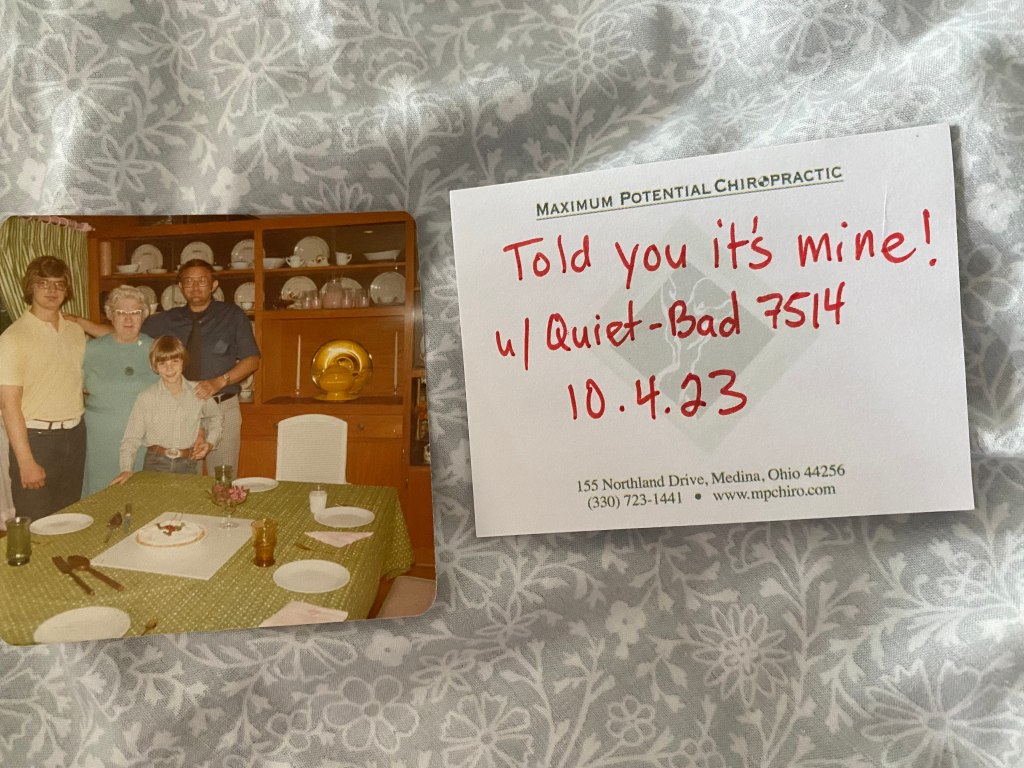
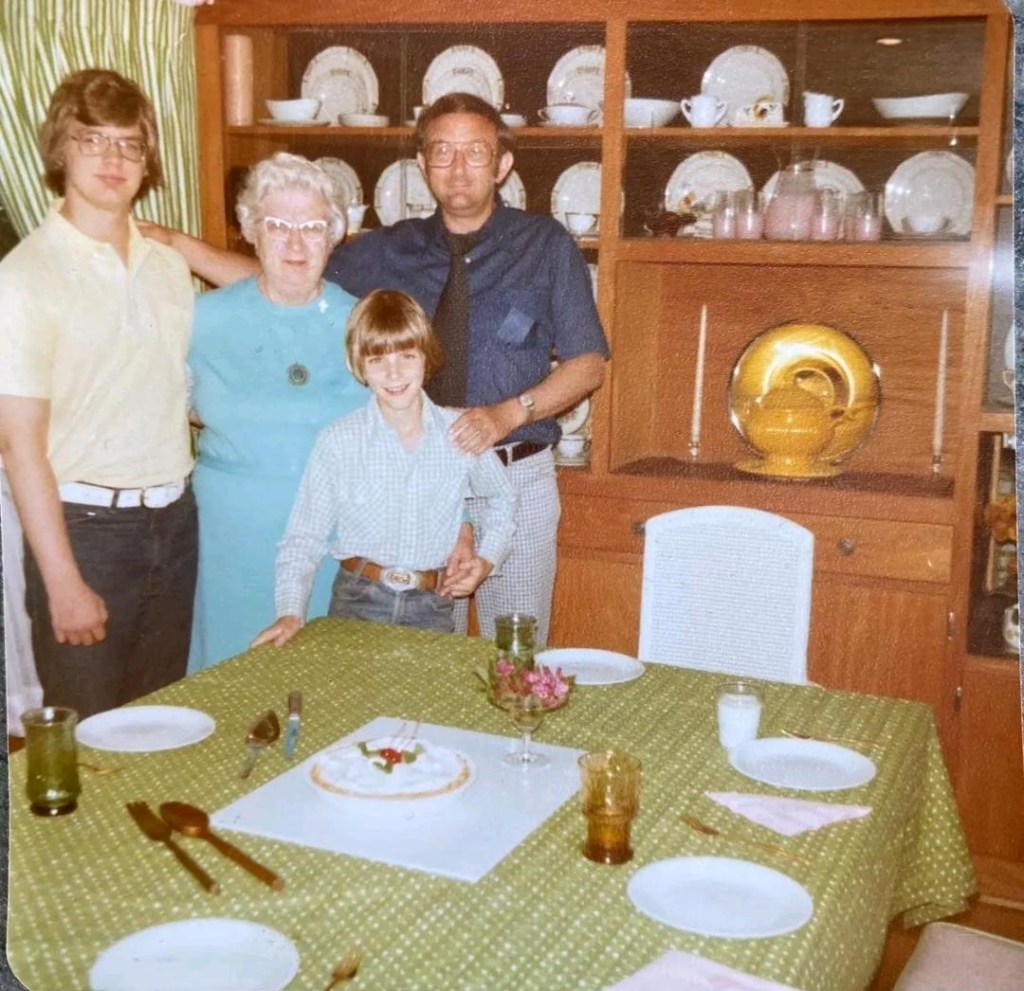
After the leaking of a previously unknown photo of Jeffrey Dahmer, the Jeffrey Dahmer Memorial was contacted by the legitimate owner of the photograph, so that we could help preserve its real origins. For obvious reasons, this person wishes to stay anonymous, however, the message is clear:

“This photo was not leaked by David or any other member of the Dahmer family” – they said. – “It is part of a private collection and it was leaked without consent.”

Anonymous
Proof photograph, taken on the 4th of October 2023

Those who leaked this photograph, did it with the intention of taking credit for the find or with the intent to create doubt and confusion. There is no hidden free publicity.

Leaked photograph of Anonymous’ private collection

The Jeffrey Dahmer Memorial wants to help preserve everything related to Jeffrey and his family and we are glad to be able to help clarify the origin of this photograph.

Jeremiah Weinberger: A Detail Missed by Police?

While analyzing the magazine that can be seen in the photos taken by police of Jeffrey Dahmer’s apartment, a few of our authors found a gruesome detail that we think might have been missed by the police, at the time.

Jeffrey’s apartment detail I

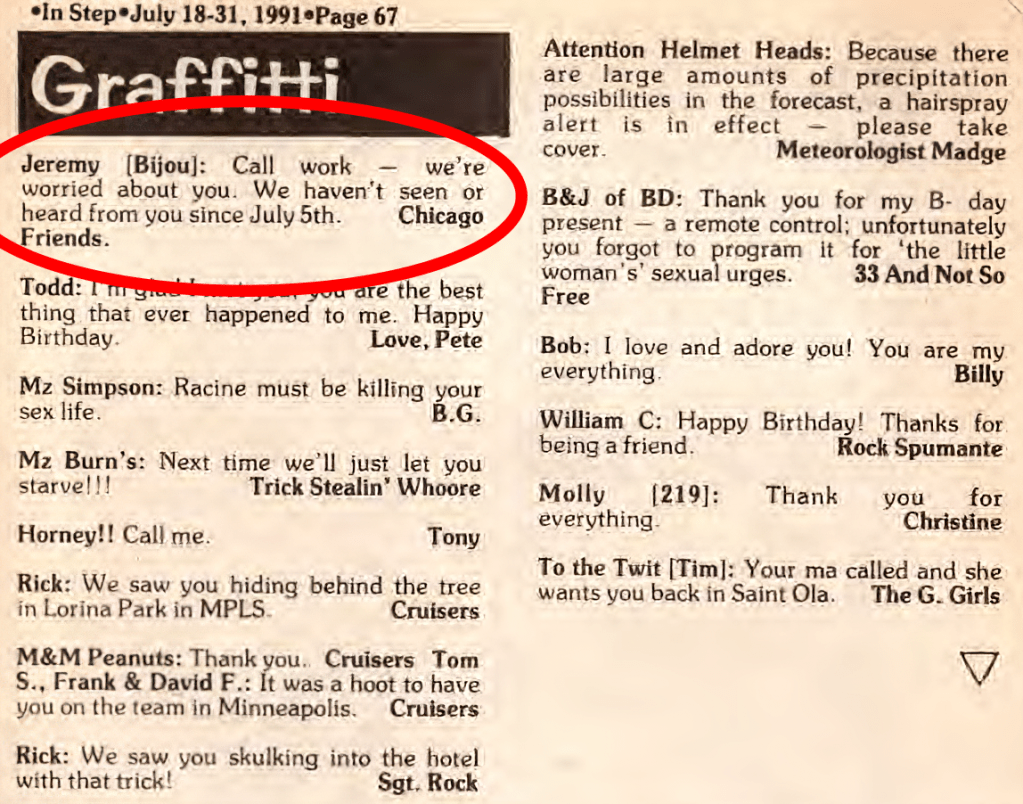
This is an In Step magazine, it is an almanac for all gay activities in Milwaukee (and surroundings). It includes drawings, articles, sex ads and, even, personal ads, which intrigued us so, we decided to cut-out the ads and read them, one by one. It did not take long to find a very curious and gruesome detail, on page 67, in a column of personal ads:

Personal ads column on In Step magazine

We, firmly, believe that this ad is from the friends of the victim Jeremiah Weinberger, who Jeffrey found in Chicago.

We wonder if this detail has just slipped away, or maybe it just isn’t a known fact. In any case, this is, to us, new information and we would like to share it with you.

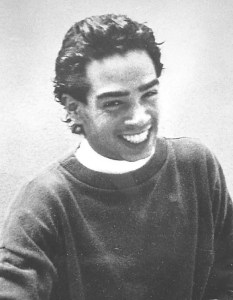
Who was Jeremiah Weinberger?

Jeremiah Weinberger was a 20 year old, natural from Porto Rico. According to USA Today: ” (…) he resided in Chicago in the 1990s and was working as a customer service representative for a video store.”

The store was Images of the World, which was the video sales department of Bijou, an adult theater in the Old Town area. On weekends he worked at the Bijou.

“He was like a live wire. Very close to his family, a very honest and sincere person. You got a contact high just being around him.” – a former co worker said about Jeremiah.

He is, also, reminded by his room-mate Tim Gideon as being meticulous and an art lover. “His desk was always straight, and he knew where everything was. He always dressed nice and always worried about what he wore and how he looked.“

Jeremiah was last seen on July the 6th.

Jeremiah Weinberger

Investigation and article by our authors: Necro and Yoanna

TRUECRIME REALLY CAUSING DAMAGE? THE SILENT IMPACT OF SOCIAL MEDIA


Ever noticed how we’re all caught up in the whirlwind of true crime stories? The intrigue, the suspense—it’s like we’re all amateur detectives piecing together mysteries. But, let me spill the beans on something even more mysterious, and way more dangerous: the silent chaos brewing right under our thumbs. Yep, you guessed it—social media. While everyone’s pointing fingers at the creators of true crime content, there’s a bigger game being played behind the scenes. Let’s unravel the true villain—social media—and how it’s messing with us in ways we never imagined.

Not Just About True Crime:
Before we dive into the real deal, let’s hit pause on the true crime binge. It’s gripping, no doubt, but it’s a mere side act in the grand circus of social media. True, those who create true crime content might raise eyebrows, but there’s a far more sinister puppeteer pulling the strings—the platforms that fuel our obsession and dictate our emotions.

Feeling the Numb:
Imagine this: scrolling, tapping, liking, sharing—our fingers dance on screens, but our hearts stay put. Social media’s incessant stream of information has a knack for numbing our emotions. It’s like a digital drug that leaves us emotionally distant, all while we’re bombarded with a cocktail of viral trends, heartwarming videos, and heart-wrenching stories. It’s a curious paradox: we’re more connected than ever, yet the real connections seem to fade away.

Impact on Us and the Young’uns:
Now, let’s talk about the real victims—the generations growing up in the era of endless selfies and retweets. Social media is their playground, but it’s a playground with virtual swings and pixelated playmates. Real conversations? They’re fading into the background, replaced by emojis and abbreviations. It’s like teaching them to spell with emojis before they even learn their ABCs.

The Blind Spot:
Picture this: amidst all the buzz about true crime and the glossy filters of the social media world, there’s a blind spot we’re all missing. A blind spot that’s growing into a chasm. It’s the erosion of empathy and genuine human connection. As we scroll past posts and stories, we’re losing touch with the depth of emotions that make us human. The real story isn’t just about the content; it’s about the feelings we’re leaving behind.

Shake Up and Wake Up:
Time for a wake-up call, dear readers! It’s time to shift the spotlight from the superficial to the substantial. Let’s put down the magnifying glasses we use for true crime stories and focus on what really matters—the way we’re letting social media reshape our lives. We need to be the detectives of our own digital journey, sifting through the feeds mindfully and leading by example for the younger generation.

Wrap It Up in a GIF:
So, in a world of true crime fascination and endless social media feeds, the real crime isn’t just the content creators—it’s the way we’re letting these platforms alter our emotional landscape. Let’s be the heroes who flip the script, steering our focus towards the genuine connections and feelings that truly matter. 🕵️‍♂️🌐